Showing posts with label Series Review. Show all posts

Thursday, 10 October 2019

Series Review: Kamen Rider Decade

Kamen Rider Decade [2009]

"Final attack ride! D-D-D-Decade!"

Overall Series Review:

Kamen Rider Decade is the tenth Kamen Rider series in the Heisei era... and is perhaps one of the most infamous ones. Kamen Rider Decade is styled as a "Crisis on Infinite Earths" style crossover, where this tenth Kamen Rider, the titular Decade, travels through the various worlds of the previous Kamen Rider series and tries to unravel some sort of cosmic mystery while also looking for his own destiny. It's unapologetically fan-wanky, and given that the main character is an amnesiac man with the ability to transform into the previous nine main Kamen Riders, definitely will raise some eyebrows. Throw in the fact that this enigmatic world-walker is also the "Destroyer of Worlds", able to go to every world but being rejected by all of them, is also an interesting (if, again, fanwanky) story.

And... and people who discover the existence of Decade through encountering the character in other, later series (I myself first encountered Decade in a Gaim movie, and later on in Wizard and the early episodes of Zi-O) might be fooled into thinking that Kamen Rider Decade might be a series that's worth watching. And... and it kind of is, just due to the sheer short length of the series. Unlike the other Heisei series, which ran in the ballpark of 40-50 episodes, Decade ran for 31 episodes and was infamous for being truncated and cancelled, ending on a cliffhanger that's barely resolved in a couple of hodgepodge movies later on. And the quality of Decade's own series is extremely... rocky. A lot of the buildup to the mysteries surrounding Decade and his supporting cast is well-done, but the truncated nature and the lack of any real resolution is going to frustrate anyone who enters this series expecting a whole meal.

A memetic line from the epilogue movie, after all, is "Decade has no story", and while that's a hilarious line to meme about considering the rocky nature of the show's story... it's more that "Decade spends all of its runtime building up to a final act that probably should've taken 10+ episodes to tell, but was forced to be crammed into two episodes and end at a cliffhanger".

And, honestly, it's testament to Decade's actor, Inoue Masahiro, who is easily the go-to legacy actor who keeps coming back every two years or so to have a cameo in a movie or even in the series itself. Hell, he essentially fulfills the role of a fourth Kamen Rider throughout the twentieth Heisei series, Kamen Rider Zi-O! And when given a decent script, or when he's written as a travelling, enigmatic Kamen Rider... Decade is awesome, and Inoue Masahiro portrays the traveling Kamen Rider just sort of... dicking around in his travels through dimensions. Masahiro clearly loves being Decade, and in his appearances outside his home series, Kamen Rider Decade tend to be pretty damn cool.

Of course... in his own series? Bluntly... it kinda sucks. And it's not just because of the truncated ending either. The concept of a dude who travels through worlds and just kind of wants to fit in (and maybe rescue his original dimension) but is rejected by all, only being able to introduce himself as "a travelling Kamen Rider, remember that!", while also being hailed as the horrifying Destroyer of Worlds... it's interesting, but the fact that a series that's supposed to be a celebration and a homage to the nine previous series that came before it ended up being the Decade cast travelling into "Alternate Worlds" (officially termed "Alternate Reality", or AR) vaguely based on one of the previous nine series ends up making the show genuinely feel more like a parody at times. Tsukasa is meant to go and attempt to find his 'role' in each of the nine worlds (and later a couple of extra ones based on Showa series), but the fact that some of the AR worlds barely resemble the series they're supposed to represent other than vaguely featuring the same suits and characters with slightly-different names to the ones we know and love is probably why the whole AR world nonsense was dropped entirely ten years later when we got to Zi-O. Which, one could argue, as messy as it was, is a far more cohesive and respectful homage series than Decade was.

Like, take the early Ryuki-based arc, for example, which ended up being honestly kind of a bizarre parody where the mysterious Rider War was a bizarre kangaroo court where lawyers transform into Kamen Riders and defend their clients through combat... when only a single character in the original Ryuki had a day-job of a lawyer. Or the practical farce of the Blade arc, where the entire premise of the show is reduced into what's essentially a parody of the competitive nature of a corporation. Or the Faiz arc, which ended up being... a school drama for some reason? Honestly, other than an excuse to reuse the suits, none of the story arcs really end up being particularly good tributes to the original series they're supposed to. And if Decade was meant to be a primarily comedic show like those Hyper Battle DVD's, it'd be one thing. But we go through these bizarre doppelgangers that have similar names to the Kamen Riders we know and love... but act completely differently. At that point, why not just make all-new characters?

(Confusingly, the characters seen in the Den-O arc are explicitly the "prime universe" Den-O characters, while Kamen Rider Black/Black RX's actor reprises his role while explicitly being AR versions. It's a headache.)

At least the core cast is decent. I'll go into slightly more detail after the break, but the main character, Kadoya Tsukasa, is kind of a dick -- not the first main character to be a dick, but at least his general frustration and tiredness isn't rewarded with lavished praises like some other previous protagonists that rubbed me the wrong way *coughkabutocough*. He does dickish things, but the writers are also pretty happy to toss some crap his way, and he's likable enough as a main lead, at least for what we see of him here. Of course, the inconsistent writing does mean that just as Tsukasa seems to about to have some depth, it gets wiped clean in time for the next arc, and honestly, the best of Tsukasa's characterization actually ends up happening in the two tie-in movies and not the series itself.

The supporting cast is a bit more problematic. Initially, Decade is accompanied by the grandfather/granddaughter pair of the camera shop he works in, Hikari Eijiro and Hikari Natsumi. Eijiro's just a kooky old grandpa you see in every other Japanese show, while Natsumi... she's around a lot, but she's mostly jut there to be a serious foil to Decade's fooling around, and struggles to really have a personality of her own. Shortly after the first couple of arcs, the AR Kamen Rider Kuuga, Onodera Yuusuke, tags along with them... and he has a massive reputation of being a gigantic loser among the fanbase. And I honestly have to agree. He's a whiny kid, which doesn't immediately mean he's a bad character, but for someone who's supposed to be a homage to one of the more important legacy characters out there, Yuusuke honestly only shows up to be beaten up -- either in human or in rider form -- by the enemy of the week so Decade can show up and win. Secondary riders tend to have a raw deal in these earlier shows, but man, I genuinely don't think Yuusuke even ever won a single fight.

Around the one-third mark, we're introduced to the real secondary rider, Daiki Kaito, Kamen Rider DiEnd, has a cool suit and a hilarious name, and his ability of summoning random obscure riders from previous shows is neat, but the character is mostly a one-note thief who's friends with our main cast because... uh... I'm genuinely not sure why. DiEnd sort of just went from a dickish rival who goes around stealing shit from every world into being basically bash-buddies-worthy-rival with Decade just because... show mandates, I guess? DiEnd's actor is pretty charismatic and makes it work, but ultimately it's kinda hard to buy his character development.

Eventually, after moving through the nine worlds of the Heisei series (Kuuga, Kiva, Ryuki, Blade, Faiz, Agito, Den-O, Kabuto and Hibiki) and acquiring the forms of all nine original protagonists over the course of 20 episodes, we sort of start building up to something as Decade sort of tries to tread into some original territory. Two mysterious characters that follow our main cast throughout the series just to say cryptic things -- the trenchcoated prophet man Narutaki (onore dikeido!) and the enigmatic female bat toy Kiva-la -- seem to hint at something far grander about Decade's purpose. We get a relatively interesting storyline as we go through a couple of arcs involving the "World of the Dark Riders", a crossover with the Sentai show at the time, and the World of Diend... but then we randomly shoehorn tributes to Showa series Kamen Rider Black and Kamen Rider Amazon, before rushing a finale within two episodes to try and tie in to the huge prophetic rider war in the prologue of the first episode.

And... and to say that the plot of the final two episodes is convoluted is an understatement. The two Showa two-parters at least sort of try and introduce what passes for a main villain in Apollo Geist, himself hailing from the Showa series Kamen Rider X, but what Apollo Geist is, and how he relates to Decade's destiny as the Destroyer of Worlds, as well as Narutaki's hammy-but-cryptic warnings, or the vision Natsumi sees of Decade fighting against an army of Riders assembled from all of the designs from the various series and slaughtering them all. Then all the AR worlds collide, all the random minor characters keep fighting each other and seem to erase themselves from existence, and it's implied that the destruction of the world is due to Decade's presence... it's genuinely convoluted, and the genuinely random appearances of the real Kiva and Blade from their original series (especially for someone who haven't watched Kiva at the time of watching this show) to seemingly replace the AR versions and fight Decade... it's all convoluted and never really explained well. Considering the show ends with Decade being confronted with what's implied to be the original versions of the Kamen Riders (or evil, corrupted versions in the Director's Cut), it remains ambiguous just what the fuck is going on, and if these AR worlds are unnatural to begin with.

And... and honestly, as much as I do count Kadoya Tsukasa as one of my favourite Kamen Riders of all time, his actual series is a clusterfuck of a mess. And it's really hard to blame the series considering how obviously it was truncated, and how subsequent movies and other side material released afterwards hint at what Decade was meant to be, but with the series itself going back and forth between trying to play up the twists (are Kivala and grandpa Eijiro actually evil sleeper agents?) and just forcing a happy "everyone is happy and they are best friends forever huzzah!" theme down our throats.

It is practically essential to watch Movie War 2010 to get a properly satisfying ending to Decade, but even then the conclusion there is somewhat confusing and honestly feels like it's a rushed retelling of the cliffs' notes of what Decade's original final act is meant to be... before we rush into the typical crossover movie mishmash of gratuituous action scenes and team-ups. It's at least a conclusion, but not the most satisfying one due to how it's told.

At least the action scenes are pretty well-done, with a lot of fun action scenes due to the nature of "everything available in the past 10 years are toys for us to play." The music is great, with Gackt's Journey Through the Decade being one of the better Heisei phase 1 themes, and that little jingle that plays whenever Tsukasa gets serious is one of my favourite instrumental themes ever.

600full-kamen-rider-×-kamen-rider-double-&-decade--movie-war-2010-screenshot
I've seen people tell me that Kamen Rider Decade is what happens when an amateur fanfiction writer writes his own series and inserts his super-awesome OC character, but only has a vague understanding of the series he's supposed to be homaging and ends up butchering everything else in his fanfiction, yet forces on through with a bizarre supposedly-epic plot that gets even more convoluted as the series goes along, before the writer gets tired and just concludes it randomly. Honestly... I did enjoy parts of watching Kamen Rider Decade. Tsukasa is charismatic and fun enough of a lead to see, and as someone who's watched parts of previous shows before touching Decade, I can kind of appreciate some of the homages like seeing the ridiculous fanwanky nature of Black and Black RX team up together. But honestly... Decade is a series that's perhaps best skipped until you've watched most of the other Heisei series, and even then, I'd argue that you would get a far, far better representation of Tsukasa's story by watching his cameo appearances in other series.

Saturday, 31 August 2019

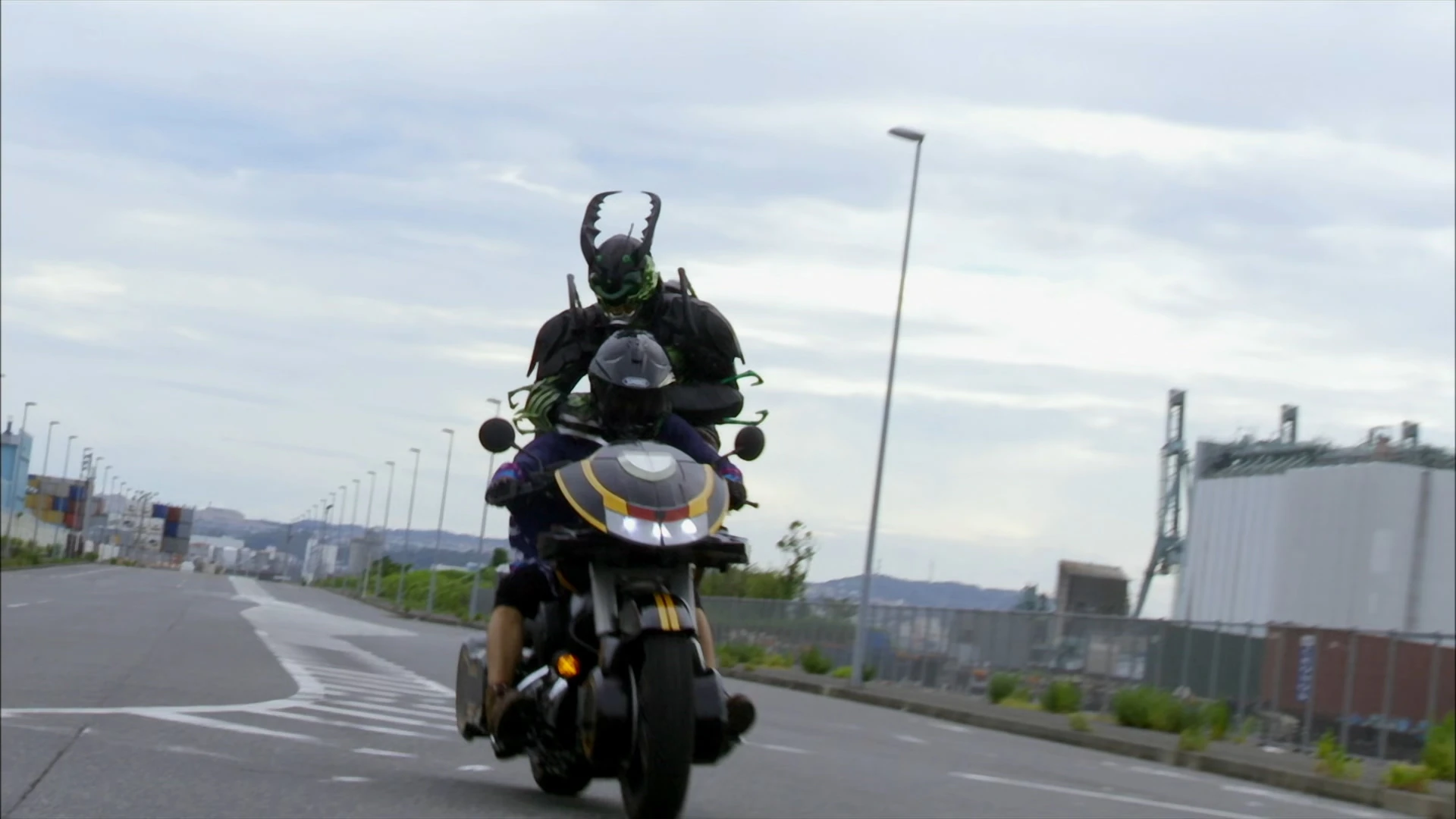
Series Review: Kamen Rider Kabuto

Kamen Rider Kabuto [2006-2007]


"Cast off! Change: Beetle!"

When I got into Kamen Rider as a franchise, I learned a lot about the other previous 'legend Riders' from crossovers. And out of all of the fancy older Kamen Riders, the one that has the most style, that catches my attention the most, is this dude with a slick metallic stag beetle outfit, an almost robotic look, constantly switching forms as he uses "Cast Off" to shed his metal armour pieces to access a sleeker form, and then "Clock Up" to move super-duper fast. Multiple crossover movies would basically have Kabuto team up with his fellow super-fast rider, Faiz, basically having him move in bullet time while the whole world slows around them, fighting against monsters that also move too fast for the eye to see.

And from style alone, Kabuto is perhaps one of my favourite-looking riders. No offense to any other Riders out there, Kabuto is probably who I point to for the most "classic" looking Kamen Rider design. And that's without taking into account just how goddamn cool the whole Cast Off and Clock Up mechanic ended up being.

And being intrigued, as I was, I ended up looking at what's going on with Kabuto's story. It's... it's pretty interesting. A Men in Black style organization called ZECT, who utilizes multiple Kamen Riders to hunt down an alien race called the Worm, who has the ability to perfectly mimic human beings even down to their memories? That honestly sounds like a pretty awesome sci-fi superhero stuff! Sure, it's kinda basic, but after going through some of the... weirder series, I was definitely interested to give Kabuto a try. Everyone I have met had something good to say about Kabuto as a series. I think it's one of the series people like to throw around as a great jumping-on spot to the franchise, and is credited as one of the larger causes of influx of non-Japanese fans into the franchise.

And... and honestly? I respectfully disagree, because I do have a couple of bones to pick with Kabuto. I still like the series enough to watch it to its end in a relatively timely manner, and I very much enjoy the style, but the more I delved into Kabuto as a series, the more I genuinely feel that the reason why Kabuto has so many defenders among the English speaking fandom is that it's one of the first Rider series to get a timely English-subbed release that didn't stop halfway through, making it many people's first complete series. And it's understandable -- it's got enough cool things going on, and it's definitely a relatively solid series (ending notwithstanding), but I definitely think it's far from being one of the best.

Overall, Mostly Spoiler-Free Series Review:

Kabuto's signature pose
Now, to be fair... Kabuto isn't a terrible series. I've seen other shows that fare a lot worse than Kabuto. But while it certainly has some of the cleanest looking suits both on the Rider and monster side, and certainly has competent actors... the actual 49-episode show is a genuine drag to go through, and a good chunk of it is thanks to how you view Souji Tendou, the protagonist -- the self-styled "man who walks the path of heaven, ruling everything", a gigantic egomaniac who really treads the fine line where his ego is irritating or vaguely funny. And for a good chunk of the series, Tendou's ego falls into the irritating part. The show's also hurt pretty badly by poor pacing, with B-plots being stretched way longer than it should, as well as some bizarre disconnect in the tone the show's trying to show. We could have an episode where we get super-serious revelations about the tragic nature of Sasword, and then cut back to some bizarre deadpan humour about Tendou engaging in a cooking contest with cursed knives and a bizarre Jiiya doppelganger living in the mountain. Unlike most Kamen Rider shows, a lot of the humour in Kabuto is always played straight and utterly deadpan, and that honestly tends to lead to a lot of the supposedly-comedic moments sort of falling flat on their faces.

Throw in the fact that a lot of the revelations aren't sufficiently built up to, and that a lot of the Natives/Worms storyline doesn't really have much of a payoff, and the second half of the series in particular already feels like a mess. And Kamen Rider shows aren't known for their tightly-knit storytelling, but a stronger and more likable cast of characters would've made ignoring some of the bizarre flaws or unexplained plot holes a lot more bearable. Like, what's up with all of the bizarre space/time nonsense? It's brought up in one arc to justify where Dark Kabuto goes to, or where the Hyper Zecter comes from, and then never really mentioned ever again. Where did the Hopper Zecters come from? For that matter, are the Zecters really sentient, and how do they choose the owners? And even then, a lot of the concepts they built up -- the mystery behind the creation of the Zecters, the Shibuya meteorite, the mysterious time-traveling Hyper Kabuto, the specifics of Tendou's backstory... a lot of them all lead to pretty damn underwhelming reveals.

The Worms themselves are honestly what I personally feel to be the biggest waste, because after the first handful of arcs showing just how emotionally horrifying it is to realize that someone who walks and talks like someone you love might be an alien invader ends up being basically reduced to a generic shock-value revelation, and eventually, everything from the true nature of ZECT, the Native tribe, and the three-way war end up being just so utterly underwhelming and under-explained. We don't really see the Worms as actual people, and even when some members of the cast are revealed to be Worms, the focus is less about how they have been fooling everyone, but how other characters should shut up and appreciate who they are... while still massacring other random Worms. It's a huge disconnect, especially compared to other sympathetic monsters in other Kamen Rider series like the Greeed, the Gamma or the Roidmude.

Plus, the plot revelations just sort of randomly stack up without much buildup or payoff starting around the 30's -- something that Kabuto's staunchest defenders would admit -- making the last 15 to 20 episodes feeling particularly bizarre as the show tries to juggle comedy and underwhelming revelations. And unlike some shows (like Decade or Hibiki), Kabuto doesn't even have the excuse of executive meddling to justify any of these. Even a lot of the actual deaths that happen in the final 2-3 episodes felt less like huge resolutions, and more the show remembering that these characters have backstories that needed to be resolved.

Which is a shame, because the initial opening episodes of Kabuto are pretty solid. We establish the two main characters -- Arata Kagami and Tendou Souji. Arata's a typical Kamen Rider protagonist. A go-getter and just a regular dude who wants to help people out -- kinda generic, perhaps, and a bit of a wimp, but finds himself basically denied the chance to even do his job of protecting people from the Worms when the Kabuto Zecter flies to Tendou instead. Tendou, meanwhile, is an arrogant ass... who has that massive, inflated ego for a reason -- he is just that good. He quite literally is perfect, able to basically beat up any Worm or Rider in his path, he can cook, he can paint, he can speak French... he quite literally is a perfect man and everyone around him other than Arata and Hiyori acknowledges just how awesome he is.

And the thing about making a character with a big ego? You can't make him too perfect without flaws, and expect him to be likable. As problematic as Decade was, that's what the writing team does right. Tsukasa is kind of a Mary Sue himself, having random skills and having a massive ego, but the show and Decade's supporting cast constantly berate and tell Tsukasa off when he's being a dick. Whenever anyone in Kabuto tries to tell Tendou off, they either eventually kowtow to Tendou because of reasons -- there are a lot of the early scenes where Hiyori basically ends up finding herself cooking for Tendou because he tells her to, or things of that sort. The universe quite literally revolves around Tendou because he's so beloved by the writers, and while it's somewhat amusing for like two or three episodes, by the time I was in episode ten and Tendou just keeps looking more and more perfect while still acting like a massive dickbag, I just find myself really disliking him. As the series goes on, Tendou tends to pull new power-ups out of thin air, with the Hyper Zecter and the other non-Gatack Zecters quite literally being drawn across space-time to give him a power-up because he's just that worthy, but Tendou himself goes through very, very minimal character development -- he basically ends up vaguely respecting Arata in the last five or six episodes. Emphasis on the 'minimal'.

There are admittedly some huge revelations that inform us of what his actual plan is, but when we do get those revelations, Tendou's attitude in the earlier episodes berating everyone else for being naive for protecting some Worms and being sentimental ends up painting Tendou as a massive, massive hypocrite (Tendou's reason to wipe out the worms is to allow his Worm-sister Hiyori, who is also amnesiac, to live peacefully). The problem is, both the writing and the scripting are so firmly in Tendou's side that it paints Arata's questioning of Tendou as Arata being the unreasonable one. The climax even has Tendou go around destroying seeming anti-Worm weaponry without bothering to tell anyone else that the anti-Worm weaponry actually is a generic doomsday device that turns humans into Worms, expecting everyone to let him do what's best for them, while at the same time not even trying to explain himself.

The difference between Tendou's writing with other "me-first" characters like, say, Batman, is that Batman-centric narratives will highlight that Batman's loner attitude, while pragmatic, is harmful. With Tendou? He quite literally is the best, and even the writing doesn't acknowledge any of his many flaws. I'm not sure -- maybe if the writing was a bit more hammy, maybe if Tendou's actor was allowed to be a bit more expressive, I wouldn't be so soured by Souji Tendou? We've had assholish protagonists like Takumi and Tsukasa, or egomaniacs like Sento and Sougo, that still end up feeling likable, because their flaws were written as flaws, thus making them relatable. The end result is a bizarre show where Tendou has the personality of an arrogant "the world revolves around me" rival-type character and Arata's the typical plucky protagonist, but they never go through any of the expected character development, and Tendou's specialness continues through the end.

Gatack Zecter
And I guess we'll quickly go through the side-characters in quick succession before we jump to the spoiler section. Kabuto is a show rich in riders, with Gatack, TheBee (hee hee hee), Drake, Sasword, Punch Hopper and Kick Hopper all being pretty well-defined secondary characters, and that's without counting the non-transforming ones. But that's honestly not really enough to carry the series forwards. Gatack/Arata is perhaps the one we spend the most time with, but while he definitely is better written than Tendou and has a lot of neat character moments, the show wiffle-waffles on how they want Arata to be. Is he always second best to Tendou, or is he going to carve his own path? Arata's overall story is pretty neat, but it suffers from the fact that it's basically the same character arc with a lot of other characters in the franchise as a whole, and his naivety and emotional outbursts are repeated way too many times.

Rider FormsTheBee, despite having the best Rider name ever, never really has a proper, permanent user, jumping from minor character to minor character until eventually just phased out entirely -- it's basically a way to work Yaguruma and Kageyama into the show and make early ZECT feel more alive, before their eventual expulsion from ZECT and the two of them being the most hilarious parody characters in the show, the Hopper Bros. Which are admittedly kind of hilarious, with Kageyama and Yaguruma basically going around as this pair of emo punks talking about how they can "see hell" and acts all emo and shit, but they never really outgrow their ridiculous antics which they also play straight with deadpan humour (it works for the Hopper Bros, though), but the way it's concluded felt sudden and shoehorned.

SaswordThe two other Riders that are kinda wild-cards are Kazama Daisuke (Kamen Rider Drake), who basically weaves in and out of the show for short three-episode arcs a couple of times, an aesthetic who has a relationship with an amnesiac little girl called Gon, and... and he's honestly just kinda there, y'know? An interesting recurring character, but not enough to be super memorable. Kamishiro Tsurugi (Kamen Rider Sasword) is the exact opposite. He shows up around halfway through the series, and is basically just in every episode proclaiming that he is "the man who stands at the top of [X]!", and Tsurugi is kind of a parody of Kabuto himself, basically claiming to stand at the top of cooking, or romance, or failing, or anything at all, while actually being the sheltered princely son of the Discabil family. While Sasword does have a tragic story involving his past, it's ultimately dragged on and on until you just really don't care anymore, while the actual character just cavorts around and acts like a complete buffoon, repeating the same old "sheltered rich boy has no idea how the real world works" plotline over and over again.

The non-rider characters don't fare much better. A lot of them are just there to add extra bodies to either ZECT or the civilian hangout of the show, the shop where Hiyori works in, but ultimately despite a bunch of the ZECT characters hanging on till the end, the only one that honestly really matters ends up being Hiyori, who turns out to be super-duper important to the plot despite her amnesia, and... and she ends up being spirited away for 20+ episodes, before returning back and basically being used as nothing much more than a plot device. The actual main villains of the show are pretty bland, with the Native Worm representatives being pretty obviously not on the good guys' side and not having a lot of personality, while Dark Kabuto, despite being a clone of Mr. Perfect Heaven's Path himself, ends up being so notably outclassed that I never actually bought him as a threat.

And... and ultimately, I ended Kabuto with a sense that the show could be so much more. It took me a long, long while to finally finish the series, with me going through Drive, OOO and Ryuki in-between the time that I started episode 1 of Kabuto and ended at episode 49, because it's honestly kind of hard to really sit through. I do admit that the Clock Up fights are really fun, but they eventually just kind of drop the super-speed stuff entirely when Kabuto gets his Hyper Mode. Which is a shame -- Kabuto genuinely looks visually great, and I will always enjoy any action scene featuring him, but as far as the actual series goes, I honestly do find it as perhaps one of the weaker entries among the Heisei Kamen Rider series. Power to you if you actually love Kabuto, but between the hard-to-like protagonist and the inconsistent tone and pacing, I really do feel like this one could've been a lot better.


Thursday, 15 August 2019

Series Review: Kamen Rider Amazons, Season 2

Kamen Rider Amazons, Season 2 [2017]


I tried writing this review a couple of times before. Like, I did the review for Amazons season 1 a while back, and I talked about how it's a pretty neat, fast-paced little mini-season that played with a more mature, more gory set of characters and concepts, and ended up as a pretty damn refreshing take on the Kamen Rider franchise and formula. 

And then there is season 2 of the series, released a year later... and... I'm pretty sure that the second season of Amazons was received pretty interestingly. And when I watched the second season, I thought it was just because the two main characters from the first season -- Haruka and Jin -- are pushed to the background in favour of a brand-new main character. Plus there's a time-skip, and a huge, huge retool on the exact focus of the series. And... and I don't really think that's the biggest problem of the series. Amazons' second season had a lot of problems, and definitely ended up being weaker than the first season, but the change in protagonist or the jarring time-skip isn't one of them. A lot of what made the first season pretty strong is still there. The gore, the characters being confused about the place in the world, the moral ambiguity and tragedy, the mysterious conspiracy stuff... yet they all get pulled in so many different directions that it ends up being stretched thin and honestly? Not done all that well. 

[SPOILER WARNING from this point on]

Picking up some time after the climax of the first season, the second season ends up in a world where random regular people are starting to transform into Amazons because of a mysterious contagion. We have no idea where our main characters are, and we mostly follow a bunch of the new civilians as well as a newly-formed government extermination team, 4C, as they go around this new world. And while all of this is going on, we're introduced to our new main character, Chihiro, a mysterious boy with a mysterious past (he was raised by Amazons, and has hunger pangs and whatnot), and, of course, eventually becomes Kamen Rider Amazon Neo, transforming with a new belt and basically becoming the first new Kamen Rider. We quickly see him meet Iyu, a seemingly robotic Crow Amazon in employ of 4C. Unlike last season's very emotional Mamoru, Iyu behaves exactly like a pre-programmed robot, and shows little to no emotion. 

And for the bulk of the first half of the season, we basically hover around these two characters as they fight a bunch of random enemies, and ever so slowly peel back the mystery behind Chihiro and Iyu's respective backstories, and how our main characters from the previous season feature into it. We get a typical storyline where Chihiro tries his god-damned best to find the soul of the human inside Iyu, and throughout the season it's kept wonderfully ambiguous whether Iyu's response to Chihiro is her actually finding a little bit of humanity and emotion, or if she's just responding as she would want to. There were so many times where Iyu just reverts back to robot-murder-machine mode, and I do think that for all of the faults that season 2 of Amazons may have, actress Shiramoto Ayana did an amazing job as Iyu. 

While all of this is going on, of course, we get to learn where all of our main characters from the previous series have gone. Nozama Peston Service has disbanded, with Fukuda sticking around in 4C. Haruka's foster-sister Mizuki ends up apparently growing up from being a schoolgirl into a goddamn sniper agent. We also get to meet a couple of new characters, like Kurosaki, the assholish and jobs-first-emotions-never team leader of 4C and the polar opposite of Shido Makoto from Nozama. This does mean that honestly, other than Kurosaki kind of being a dick, the entirety of the 4C organization ends up just kind of feeling there. Even the supposed evil mastermind, Tachibana Yugo (played by Dr. Maki himself!) doesn't even really do much. 

And rounding up the new side-cast, we have "Team X", a bunch of genuinely throwaway street punks who just sort of eats up screentime until the expected "oh shit, these minor characters die and become Amazons!" The only member of Team X to stick around is Nagase Hiroki, whose most notable feature is that he's acted by Akaso Eiji, who would later go on to play Banjou Ryuuga, the secondary rider of Kamen Rider Build. And, to be fair, with the pretty flat role he's given, Akaso Eiji does a pretty decent job, particularly when his other buddies start dying off. 

It's not enough to really drive the season forwards, though, and while Haruka does show up as kind of a wild card three episodes in, a lot of the conflict and relationships just feel muddled, with characters just staring at each other and not really talking while vague storylines are going on. Mamoru the Mole Amazon would show up a while later, apparently now the leader of a tribe of human-hating Amazons, but, again, like Haruka, this honestly just feels like them going "hey, remember this? Boy, we'll do something super exciting... later!" As the letters count down and we get little bit by little bit of tiny, enigmatic revelations, the episodes honestly just kind of feel like they are just going around and around the same old "Chihiro takes Iyu for a date, tries to bring her emotions back, the shitty real life comes and kicks Chihiro in the dick" storyline. 

A lot of the episodes aren't terrible, and the actors do a pretty good job with the material they are given, but the pacing honestly just feels pretty bland and slow, and eventually, the audience could probably tell what the huge plot twist is supposed to be while the season goes on twiddling its thumbs and honestly just going around and around in a circle. It's in stark comparison to Amazons' first season, where even the filler episodes felt like they added something to the overall plot of the season, whereas Amazons season 2 had episodes where Haruka or Mamoru or Jin return to menace our new heroes (for one reason or another) feel very bland. And I get it, they were going for more of a melancholic, tragic tone, but eventually when the revelations about Chihiro's origin story, told with a bunch of exposition about lysogenic cells and whatnot are finally doled out to some of our characters, it feels honestly exhausting than anything. 

So basically (and huge spoiler warning again), turns out that Jin infected Nanaha and she turned into an "Origin" Amazon, basically sort of driving her quasi-insane and she goes around as the jellyfish amazon sort of attacking everyone. Chihiro is also an Origin type, was hidden away from Jin, and killed her mother, but ended up getting amnesia. Mamoru's gone super crazy and bitter (a characterization jump that is more told and less shown) and is behind the infection of the water source turning people into Amazons. Iyu is really a corpse revived with Amazon cells. Iyu's dad was a scientist that tried to study Jin, Nanaha and Chihiro's special cells and ended up being transformed into a psychotic Amazon instead. Shogo Kano's actually secretly working with Reiko for... reasons. Haruka's also involved in some of the backstory points, although not as much. 

And don't get me wrong, a lot of these story points aren't bad. With better pacing and a better storyline, we could've had something pretty great going on. The problem is that the revelations were dragged on for far too long, and for the most part a lot of them are just unsatisfying. Throw in the problem that Iyu is literally a robot and Chihiro's character isn't particularly interesting due to how he's in 99% angst mode, and the middle part of the season becomes pretty slow to watch, and as we build up to the climax and start killing off characters, it's not even tense -- it's just me watching to see how everything ends. Shogo gets ripped in half brutally and gets killed while delivering a report to Reiko (who, by the way, really doesn't do much).

Mamoru and Nanaha's Amazon form eventually get killed, too, and while Jin and Nanaha's angry sad screaming scene is raw and well-done, the sub-plot of the Nozama squad reconciling and eventually confronting Mamoru genuinely felt half-assed, and Mamoru's characterization in this second season really felt like it came out of nowhere. And then when Chihiro gets into an argument with 4C's head honchos it doesn't really feel all that climactic due to how petulant Chihiro's been throughout the entire season. 

Eventually the last couple of episodes basically has Chihiro and Iyu running from the rest of the world... and I do get the theme of what they were going for. Chihiro is an uncontrollable monster that everyone has a reason to murder. Jin because he's on his one-track-mind crusade to wipe out all Amazons from the face of the earth; Haruka because he knows it's a matter of time before Chihiro goes super-crazy and kills everyone (and also to protect Mizuki) and 4C because of a combination of the two (and because Chihiro killed a bunch of their members when he went berserk). And the reason why Chihiro fights so much? He just wants to survive, and there's definitely a huge, huge amount of tragedy that all Chihiro wants to do is to survive and protect Iyu, who finally regains her human personality... before she dies because of the Suicide Squad style self-destruct program implemented in her bracelet. And perhaps in one of the most infamous scenes from the season, Chihiro ends up facing off against Jin and Haruka in the final episode... and the scene cuts away, and later on reveals that Chihiro was killed off-screen. 

And... and the entirely depressing tone was one thing, as is the rather haphazard pacing, but I really do think that the ending delivered was pretty much unsatisfying. Chihiro ends up being killed off-screen just as he's finally starting to grow into his own character. A lot of the resolution ends up being more of a headscratcher than anything, and characters like Reika and old man Tenjo end up sort of just spouting ominous stuff that really end up being more loose ends than anything. 

And... and, I wouldn't go so far as to call Amazons' second season to be completely terrible or unwatchable. There's enough good story and acting in it all to enjoy, and the action scenes are still pretty great, especially if you're a fan of season 1's more brutal approach. There were some scenes where they do admittedly go over-the-top with the gore -- Iyu's backstory flashback, as well as the elephant/mosquito hospital mini-arc in particular are pretty disgusting -- but at least from a practical standpoint, it's pretty neat, gloomy filters notwithstanding. Still, though, as an actual season, I walked out of this one mostly disappointed and dissatisfied. It's an interesting experiment, but I feel like I agreed with a lot of the harsher criticisms with Amazons' sophomore season than I do the praises. 

Amazons' second season gets a bit of a coda in a movie, Kamen Rider Amazons: The Last Judgment, which attempted to resolve the conflict between Haruka and Jin, considering how the two were so sidelined in the second season. We get pretty horrifying implications and visuals when Haruka comes across an Amazons livestock-breeding facility led by the villain-of-the-movie, Mido Einosuke, a.k.a. Amazon-Neo-Alpha, who decides to make an Amazons farm and brainwash these Amazon kids to essentially later be turned into fucking steak, which, logistically speaking, is just so utterly silly and impractical. Which is just so cartoonishly over-the-top that while watching this movie, I was equally horrified at the visuals of humans being butchered and eaten by other humans, and also laughing inside at the sheer bizarrenness of these villains having access to an army of superhumans, but using them as high-quality beef. 

Eventually, the whole point of the movie is that both Haruka and Jin are respectively pushed so hard by their conflict that they ended up breaking their individual "one rule". However depraved Jin may be in dealing with other Amazons, however much he is willing to be the judge, jury and executioner even involving his own wife and son, he will never take a human life... but ends up being forced to kill Neo-Alpha himself. Haruka, meanwhile, resolved to never eat a human or Amazon meat, but is forced to eat one of the dying people in the orphanage in order to survive. And... and it's an interesting take, for sure, leading to a more conclusive battle where one of them dies and the other leaves to wander the world, but the movie, like the second season, really took its time going around and around the same old discussion topic or two until we reach the allotted time for the climax. At least Haruka and Jin's final confrontation was done well, whether you agree with the conclusion or not. 

Oh, and Nozama and 4C are also involved in this movie, but felt very, very redundant. Throw in a bunch of bizarre unanswered questions like why Jin is suddenly no longer blind, or who sponsored Mido's orphanage-farm, and the general depressing tone of the movie overall, and it's a movie that felt kind of just... there, I guess? The general movie just felt so bloated and I honestly feel like the Haruka/Jin storyline probably would've worked better tacked on as a final episode after the Chihiro conflict, instead of introducing this whole convoluted orphanage/farm storyline and putter around for one and a half hours and not really doing anything but repeat the same tired old themes from the series. 

And it's kind of a shame. I wouldn't say that either the movie or the second season are bad. There certainly are enough neat parts of it, and if nothing else, seeing the actors try their best to push the story forwards is admirable enough... but ultimately, while the actual backbone of the story is certainly solid, the execution really leaves a lot to be desired. 

Saturday, 27 July 2019

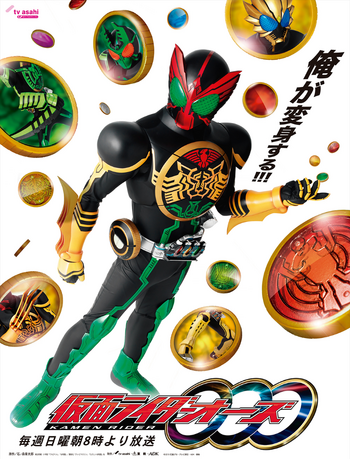
Series Review: Kamen Rider OOO

Kamen Rider OOO [2010-2011]

"Ta To Ba TA TO BA Tatoba!"

So OOO (pronounced O's, like Oz) is perhaps one of the more recent Rider shows I've watched, probably one of the final "Heisei Phase II" shows I've watched. Mostly because... well, while the cast seemed pleasant, there just wasn't a whole ton that drew me into the show, y'know? At least, initially. Being spoiled about the ending of OOO in a Build movie or something also helped in me going "well, what the fuck's the point in me watching anymore?"

And... and, well, I'm kind of glad I did manage to finally bite the bullet and watch the series.

Overall, Mostly Spoiler-Free Series Review:

So OOO was definitely very... very much like your generic Heisei-era Kamen Rider show in its early days, and as the second show in Heisei Phase II, there definitely seemed to be a bit of the writers and showrunners figuring out the pacing and tone of the show as they go -- it's pretty obvious that they're trying to ape the formula of the highly popular and successful Double before it, but with a little twist -- the two "partners", so to speak, aren't so much two good guys working together and combining into a superhero like Double, but rather just an airheaded "I'll help everyone in the world" handsome hobo, and a floating hand that parasitizes some poor schmuck policeman who is just flat out a villain in his first couple dozen episodes, making it clear that he's only staying with our good guys out of a lack of choice.

And this sort of partnership could have been really been annoying with less impressive actors, but I really do appreciate just how much they handled the "defrosting ice-cold villain" trope well in this show. Everyone who watches the show often agrees that Ankh and his dynamic with our heroes is probably the best part of the show.

But while undoubtedly one of the more light-hearted series in Kamen Rider -- even with the constant black comedy of Ankh killing and/or completely taking over the body of officer Shingo, the pacing and the writing of the story is perhaps its greatest strength. The story constantly revolves around themes of greed and desire, but in a way that feels organic and not shoehorned in like some other shows with their own distinct themes (sorry, Wizard and Ghost). Every character of the day and major character have their own desires, and we get some decent speeches on what part of a person's life is most important -- births and beginnings or the end and the final introspective look at what a person's life amounted to. It's some surprisingly deep themes for a kid's show.

2017 (HG Final)The protagonist, Hino Eiji, initially seems to be the perfect counter and the most frustrating partner that the greedy and desire-laden Ankh could've been partnered up with. He's an airheaded, bumbling hobo moron that notes that he doesn't have any more desire beyond helping out people and having underwear for the next day (that underwear joke, despite showing up in every single one of Eiji's appearances in the future, only lasted about two episode). It seems like the show was going to get into some heavy-handed talk about how desire is always evil, but then the show actually ends up subverting my expectations that it won't be handled well and ends up deconstructing Eiji's lack of desire as something that's as unhealthy as excessive desire.

OOO's secondary cast is, interestingly enough... probably the most rounded-out of most of the Heisei show. These Heisei shows tend to like to introduce new characters and new faces halfway through the season, and in some shows in particular like Ex-Aid or Wizard or Den-O, it is really hard to care for final villains that didn't quite has enough development or screentime. OOO actually introduces a massive cast straight off the bat in its first two episodes, and the only ones to show up in the middle of the series -- and at a relatively early point, too -- is probably Date and Dr. Maki, both of whom are relatively well-integrated as well.

The pacing is pretty much well-done as far as characterization goes (if not for the plotting, and what the bad guys are doing is pretty much obvious from the get-go). We don't get huge episodes where the character just does a full 180 on their characterization thanks to traumatic events that happened in a single episode, but the character development on people like Ankh and Date are gradually realized over the course of the season's run, making these people genuinely feel like, well, real people.

OOO also manages something that a lot of Kamen Rider shows struggle with, and that's to make a villain ensemble seem threatening while at the same time making it feasible for them to be taken out every single episode. They're not spectacular, complex and well-layered villains, but I'll remember them a lot more readily than some other villains. The fact that all of the main Greeed, like Ankh, are depowered and they have to hunt down all of their Core Medals to grow and achieve their original, full form, means that the insane speed at how medals are obtained and stolen away ends up shifting the power balance of Kamen Rider OOO significantly. I've seen a lot of these "collect all of the toys" shows, but none that has a handle on distributing power-ups as well as OOO.

There are some parts of OOO that isn't perfect, of course. The first half is pretty slow and very episodic, not helped by an anniversary two-parter that feels genuinely shoehorned and trying to be meta for the sake of being meta. The final villain of the show, while certainly a character that's built up, also feels somewhat disappointing in execution. And there definitely are some secondary characters I wished they did more with.

But ultimately, while OOO as a show doesn't do a whole ton, it's just pretty pleasant to watch thanks to the two leading men being pretty damn great at their jobs. I've always felt like OOO is probably one of the 'safest' shows -- it has a unique story to itself and a unique vibe, the quality is consistent throughout the entire series, and the characters are well-written. It's just that the ending is a smidge bit anti-climactic from a fighty-fight standpoint (although certainly very emotional), some characters are under-utilized... it's definitely not bad, and definitely an above-average show, but while it doesn't WOW me by doing something unexpected, it's just such a solid meal, so to speak, all throughout. It's got some problems, but while it perhaps feels a bit generic, it's definitely an entertaining show all around and one I'll recommend. 

Friday, 24 May 2019

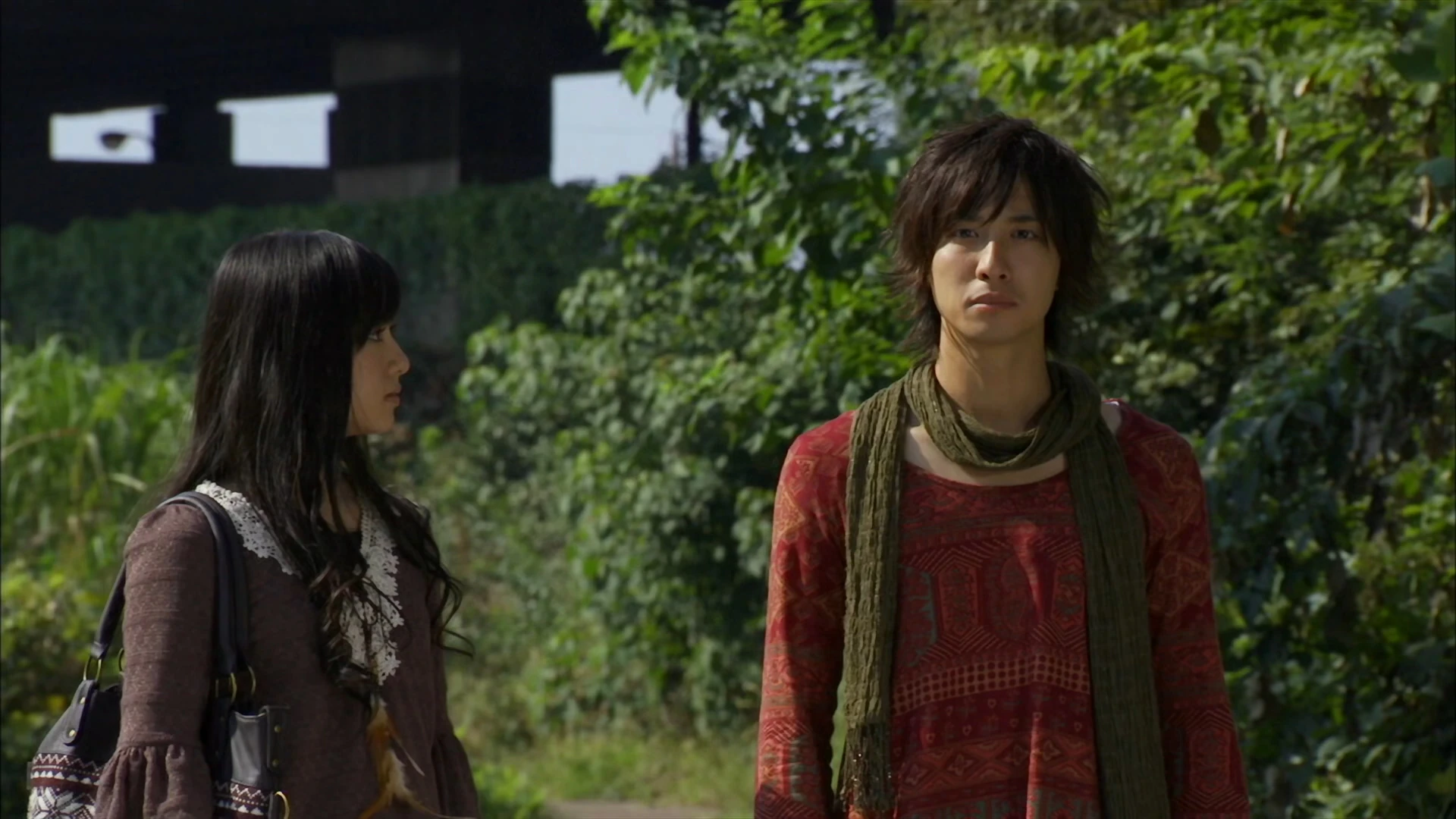
Series Review: Kamen Rider Amazons, Season 1

Kamen Rider Amazons, Season 1 [2016]


So in 2016, Toei/Bandai decided to cater to their older audience and release a bloody, adult remake of one of their older Showa-era properties, Kamen Rider Amazon. So was born the darker-and-edgier show released as a streaming exclusive (on Amazon Prime, of course) with a clearly darker budget. If the currently-airing series are the equivalent of the fun-happy-times MCU movies, then Amazons was the equivalent of their Netflix stuff.

And as much as I do love the hammy, noisy TV shows, I definitely love my gritty, serious shows, so Amazons was one of the first seasons I checked out. It was relatively short, too, running around a dozen episodes -- albeit longer episodes than your typical children-aimed Kamen Rider shows -- so watching through it in a couple of days was definitely a blast. And while I tend to not like grittifying and grimmifying a show aimed for children... I'd argue that Amazons does it very well, especially in the first season. 

Overall, Mostly Spoiler-Free Series Review:

So Amazons is a very interesting show, harkening back to the "biological science experiment went wrong" themes of the older Showa series that I really want to see explored more in modern-day Kamen Rider. Even the newer Heisei shows that skew more towards sci-fi as opposed to magic tended to never be quite as sci-fi as this show. It's also something relatively akin to manga like Tokyo Ghoul, where around 4000 test subjects from a secret organization's testing facility escaped and are now living among the populace of Japan, but they are all merely mimicking humans, and are actually able to transform into grotesque, man-eating monsters called Amazons.

Again, if this sounds relatively similar to Tokyo Ghoul, except with the monsters being actual monsters instead of sentient humans... yeah, it kinda is. Our initial story follows the Nozoma (haha, it's Amazon backwards) Peston Service, a group of mercenaries with some specialized equipment that go around hunting down these Amazons and help to cover up the existence of these monsters from the media. Soon, though, two wild cards get thrown into the fray. Takayama Jin ("Alpha"), an enigmatic and quasi-sociopathic man with a mysterious past tied into the Nozoma company, is a brutal hunter of Amazons while possessing the ability to become one himself. Mizusawa Haruka is a meek, sheltered little boy who is kept by her mother (one of the head honcho of the Nozoma company) in her house and told to take drugs. The one time he disobeys and runs out, he runs into the Peston Service and Jin, and ends up transforming into an Amazon.

It's a genuinely well-written show with our nominal main character Haruka struggling with the human and Amazon sides, as he tries to not kill humans while also protecting them, and also struggles with his inner beast's desire to kill and kill and kill. The plot running in the background about a wide-reaching conspiracy is also explored relatively well, even if there are some parts of it that are clearly just setup for the next season, and many of the main and secondary characters are handled very well. The dark, excessive carnage is perhaps a trope I'm never a big fan of when rebooting these series for an adult audience (see: The First, The Next, Shin), but for once, the blood, gore and excessive violence all feel like they work pretty well in the theme of a main character who is struggling with the compulsions of a savage beast within himself.

The fact that it's less of a superhero or a team of superheroes fighting against an evil organization is also definitely muddied. Sure, most of the Amazons are evil monsters masquerading as humans, but then the assignment of guilt, the hard questions on whether Jin and Haruka still count as humans or are monsters, and themes of evolution and survival of the fittest are all brought up very well. It's a shame that they do leave a lot of the story hanging for a second season (which we'll talk about separately) but the story definitely features a heavy character arc for the main characters, particularly to how they relate to their partners and loved ones becoming monsters.

The direction of Amazons is pretty well-done, too. Sure, the mockery of the constant filter placed over the entire series to make the world feel drab is an... an interesting choice for sure, but it wasn't quite as overdone in the first season. The series manages to keep its themed and mythology relatively grounded in this sci-fi fantasy, even if there are some rather odd bits like the Driver voices still being played straight (the voice is all right and pretty snarly, but "Violent Punish" is never going to be not funny). There are also some really, really great "AAAAH MAAAH ZOOOOON" shouting in this show, which could've sounded stupid if the actors didn't really put their all into screaming. The action scenes are well done and honestly, as campy as rubber men beating each other might be, the action is clearly a lot more brutal than your traditional Kamen Rider fare.

The series follows a pretty interesting monster-of-the-episode/two-parter format, at least until its last four episodes or so, but still manages to feel serialized. Something I didn't quite realize during my first viewing is also the fact that the episodes are of variable length, so some episodes end at the 20-minute mark, while some are extended to the 40-minute mark, allowing the editors and writers to basically pace each episode out pretty freely. Throw in some genuinely memorable themes and standalone episodes (the apartment of Amazons, the restaurant and the evil human in the junkyard played by that one guy from Gaim are all standouts), and fantastic writing to balance the various characters that feel less of a designated 'kay, this is a good guy, kay, this is the bad guy, and this is the one in-between' but more of a bunch of characters trying to find their place in the world. Haruka, Jin, Mamoru and the Peston Service people are all trapped in a really confusing situation where the Amazons are clearly man-eating monsters, but the more they discover about the company they work for, the more complex their situation becomes. Everyone wanting to survive is a recurring theme in this show, and I am definitely a big fan of how it's portrayed.

I tend to always almost be disappointed with any show that advertises itself as gritty, adult writing only to basically overcompensate and end up just being boring, or simply just losing everything that made the franchise unique in the first place. But Amazons? At least for this season, you really get some adult themes, some fantastic monster suits and some really great writing while also carrying and playing straight a lot of Kamen Rider themes. Definitely recommended... especially since you can actually get this show legally in the Western world!


Thursday, 16 May 2019

Series Review: Kamen Rider Ghost

Kamen Rider Ghost [2015-2016]

"I will let my life burn bright!"

Ah, and here is the black sheep of the phase 2 Heisei shows... Kamen Rider Ghost. Phase 2 Heisei is always noted to put a significant amount of focus on collectible gimmicks and tended to have a fun, more comedic tune even in the direst of episodes, in an attempt to emulate the styles of shows like Double and Den-O, two of the most well-received shows throughout the franchise's history. 

And for the most part, even if there are relatively weak entries in Phase 2, like Wizard or Zi-O, they have mostly been relatively shrugged off as "it's problematic, but ultimately still kind of fun". Ghost, though, is... it's honestly bizarre. It is easily one of the more controversial shows. You either really like it, or you either really dislike it. It's not quite a lukewarm show like Wizard or Kiva. And part of it is due to Ghost's problematic writing. Halfway across the series (which is where the show tended to be noted to go utterly downhill and burn any potential it may have had) the studio producing the show ended up have to split their budget with the side-series Kamen Rider Amazons with very little announcement, and apparently this got so bad that the reason Ghost's final form had such a bizarre and anti-climactic introduction was because they literally ran out of budget because the suit-making company were making Amazons suits. Apparently there are also significant rewrites and arguments among the writers on the direction of the show, too. But what about the final product, though?

Overall, Mostly Spoiler-Free Series Review:

Ghost DriverOverall... Ghost honestly starts off in a genuinely lukewarm manner. I was introduced to the Ghost cast through crossovers while I was watching through Zi-O and Ex-Aid, and thought that even though the Ghost Driver is one of the most annoying noises in the franchise's history, the characters are charming enough. Even if it's not going to be my favourite character, the concept is... it's intriguing, right? Our main character dies, becomes a ghost, and lives with a group of paranormal investigators in a temple, sort of forming a distinctly Japanese-flavoured Ghostbusters. Sure, the hoodie is kind of silly, but the black-and-orange colouration ends up for a pretty nifty-looking suit, and while I did not expect much, the idea of befriending and channeling the powers of the iconic heroes of history is an interesting one. Perhaps in a very short list of shows where the power-up gimmicks are explicitly shown to be sentient (alongside Den-O and Drive), the many collectible gimmicks are potentially fun characters-of-the-week at worst, and a genuinely likable cast at best.

And, honestly, the show starts off in... in a pretty bland, lukewarm way. Our hero Tenkuji Takeru is a good boy, one that's all happy and hopeful and stuff. He's likable without having too much uniqueness to him other than the fact that he straight-up dies and becomes like, oh, Danny Phantom or something in the first episode. He's told by an enigmatic old man ghost that he has to gather the Ten Dragon Balls Fifteen Heroic Eyecons to bring himself back to life. He's joined first by his two good friends, the "the mystic is real!" hammy monk Onari and "SCIENCE" sassy best friend Akari.

Okay, it's a bit derivative, perhaps, but I've seen other series that felt generic in the beginning end up becoming some of my favourite works of fiction. Not quite so for Ghost. Slightly spoiling the structure of the series a little, the pacing of the series is perhaps my biggest problem with everything that's going on. The first 11 episodes move at a breakneck pace to introduce the main 15 Eyecons, which honestly felt like it's to the show's betterment. I've always felt that shows that quickly do away with the "we need to introduce all the toys on sale at the moment" sequence and quickly go and focus on the actual story they want to tell tend to be the best way to incorporate these dang toys into the show. We're also introduced to the 'rival' character, Kamen Rider Specter, as early as the fifth episode, and while the early episodes do feel very episodic, the fact that these are episodes-of-the-week instead of stretching most of them into two-parters felt like the show moved pretty quickly, slowly building up the bunch of mysterious, ominous villains in the background and hints of a greater conspiracy.

And then, in episode 10-11, the fifteen Eyecons are gathered, with some literally just being in the bad guys' possession all along, and a wish is made to Shenron The Great Eye, but then it just zaps and kills one of the built-up villains (for the remainder of the series, too, until the spinoffs do something with him) and our hero, Takeru, ends up wishing for Specter's sister to be brought back to life instead, resetting the 99-day time limit... just because?

And then from episodes 12 to somewhere in the late 20's, we basically get a repeat of the same thing of Takeru and company re-collecting all the 15 Eyecons, only this time he has to 'reconnect' with the souls of the heroes inside, which tends to fluctuate very wildly in quality. As we get more and more hints of the enigmatic extra-dimensional plane called the Ganma World, the Prince of All Saiyans Prince of Ganma, Alain, shows up, and acts as the antagonist. All the while some bizarre mystery in the background continues to play about the royal family drama going on among the Ganma race. It's... it's another one of those things where it really feels like it could potentially be great. I'm not expecting Game of Thrones level of intricacy or bloodshed or anything, but it's honestly just ultimately muddled foreshadowing with very little payoff.

Throw in the fact that it's around the 20's that the budget clearly got sucked away by other projects, because while the show initially had pretty neat fights showing Kamen Rider Ghost floating around like a ghost, or passing through walls or whatever, by the time the show reaches this point it's clear that the budget's sort of cut. Sure, the special effects of the parka ghosts zipping around are still there, and you get the bare minimum of people in suits punching and shooting each other, but everything just ends up being so utterly generic, lacking all of the things that the series had initially promised to be unique. Sure, we get a bunch of mid-season power-ups, but... they're just ultimately forgettable, just forms that our heroes will pull out in the third act of any given episode. The show itself forgets that its main characters are supposed to be ghosts most of the time, too, and other than lip service to "oh yeah, we need to revive Takeru as our end-goal", the show lacks any sort of urgency to anything it does.

Episode 31 towards... basically up until the series' end at episode 50, the series just languishes in its own special blend of trying to tell its story and repeating the same old plot over and over again. The series tries to get through the fact that Takeru needs to connect with the heroic icons he hasn't done so with in the previous episodes, which leads me to wonder why the show wasn't better structured in the first place since it's utterly messy when a hero we've ignored for literally since the show was in single digits (like Beethoven) ended up randomly being the focus of a single episode, but quickly discarded again.

There is also the main villain, Adel, who... who's just not that interesting. Sure, the concept is neat, an egomaniacal prince who thinks he's a god, banishes the likable siblings and ends up trying to create an utopia where no one will die, is... it's an interesting villain if done well, but it's not. Adel has less personality than any given villain-of-the-week in this show, and he drags on and on for upwards of twenty whole episodes as our main villain, sending in the weird Gammaizers -- robotic clones of Adel that are supposed to embody the opposite powers of the 15 Eyecons... ends up being easily the most boring segment of the show. The Gammaizers literally have no personality, and the budgetary reasons actually meant that more than half of them never got showcase episodes (they just turn into balls of light that power up the ones the show has budget to make suits for) while ones we've already seen kept making repeat appearances. Also extremely tiresome is the "Copy Makoto" subplot, which was dragged on for ten episodes despite it just amounting to "Copy Makoto will find the real one, fight and then bugger off while spouting the same ominous crap". The entire secondary cast honestly just stopped being relevant halfway across the show, and the humans are just there to add comedy (which gets tiresome fast) and the two other Kamen Riders feel far more redundant compared to secondary riders in other shows. Alain does get a whole lot of character work, but also fades into the background after they finished telling that story. Again, all sorts of pacing problems.

All of this ends with an utterly mundane resolution and, just like Wizard, a more interesting main villain is taken out near the climax and replaced with a far less interesting one, except in both cases, Wizard's two final villains are so, so much more interesting than Ghost's. The show's also infamous for basically killing and bringing back Takeru so many times that it's honestly a running gag -- Takeru's probably been through the revolving door of life and death more times than Krillin has. It's something that ends up honestly being quite laughable after a while. Also problematic is the handling of the Ganma World. Initially just implied to be a child-friendly afterlife (it's an alternate dimension, after all), the whole backstory and exploration of the Ganma World society ends up being simultaneously convoluted and overtly simple. Throw in the genuinely awkward storytelling, and I just honestly end up being particularly indifferent to this.

Throw in some side characters that are utterly wasted, a pretty piss-poor resolution to the whole "backstory mystery" about Takeru's enigmatic sponsor, and some major plot points that would make no sense if you don't watch the supplementary material... yeah. The 30's and 40's episodes also end up being very formulaic and bland, and a lot of the plotlines being built up for the entire series end up whizzing out in very disappointing ways.

There are some nice themes being explored in the show, of course. Revolving around an eternally-optimistic kid who's struggling between "should I fight for myself and my friends who care for me?" and "should I sacrifice myself for the world?" is an interesting topic brought up multiple times, and I do like that at least that the show doesn't cheapen the death of Takeru's father, and that remains as the huge "death is a part of life" theme. Learning from the past, the power of emotions and friendship, and that you should appreciate people who care for you and not hurt them by sacrificing yourself... there are lots of good things going on, and the show's cast tends to be charismatic when they are allowed to be, but the show is so problematic and mired by terrible pacing and repeating the whole "INFINITE POWER OF HUMANITY!!!" catchphrase in the second half of the episode that it honestly feels like a huge, huge waste of what could definitely have been great.

Saturday, 4 May 2019

Series Review: Kamen Rider Fourze

Kamen Rider Fourze [2011-2012]


"UCHUUUUUUUU KITAAAAAAA!!!!"

Fourze (pronounced four-zeh, with two syllables) is an... interesting character. I go into most of these series relatively blind, and my first exposure to Kamen Rider Fourze was in one of the crossover movies featuring multiple legend riders showing up... probably either Gaim or Build. And at that time, I sort of scoffed at the design (anyone would, really), with the weird rocket-head and the astronaut suit. It's goofy as shit, and while probably not as weird as the fruit one or the video game one, Fourze does end up looking pretty unconventional when stacked up next to most of the other Kamen Riders. 

But little by little, as I begin to see more and more of Fourze while watching other shows like Zi-O and Wizard (these crossover movies can be pretty effective advertisement) the more.... infectious Fourze became. He's so fucking HAPPY with everything that's going on, gesticulating wildly to perform his UCHUUU KITAAA (space is here!) catchphrase. He's got an utterly bizarre looking pointy pompadour, making him look like JoJo's Bizarre Adventure's Higashikata Josuke He's loud, slightly obnoxious, but ultimately... pretty likable. That cheerfulness is genuinely infectious, and despite my reservations for watching what's essentially an exaggerated high school anime in live action, I am... I am so glad I watched this show.

It's not until around halfway through watching the show that I actually read through the actual backstory behind the creation of Fourze in particular, which is the fact that this show was done in response to the terrible tragedy of the 2011 Japan earthquake, killing nearly 16 thousand people in Japan. The show was created specifically to "bring the smiles back to the children", and every single facet of this show is permeated with this mentality. I had originally thought the overly optimistic mentality of the show was because of the "high school, anime mentality, hooray!" but learning that this entire show -- the premise of a lovable dork with a dumbass pompadour who wants to befriend everyone in the school -- is made to bring the smiles to people? Yeah. I love the show even before knowing about this, and now I really, really love it a lot more. 

Overall, Mostly Spoiler-Free Series Review:

Tumblr m91d83rkQP1qd7ty0o4 500-1-Some shows, like Ex-Aid, W and Gaim, start their show off pretty light-hearted before delving into more serious plotlines. Most other Kamen Rider shows also tend to hold their cards close to the chest, usually with the unspoken promise that some huge mid-season twist will shake you to the core. Not so for Fourze. Even moreso than any other series in the Heisei era, Fourze is pretty fucking honest and earnest in its first couple of episodes. Yes, the cast rotates a bit, and the plot definitely develops, but the entire premise of Fourze is pretty much the same with Kisaragi Gentarou's declaration to the audience and the characters in the show. He is a man who will be friends with everyone. He's a boisterous, noisy little punk who wears his heart on the sleeve, and... and admittedly, part of me immediately identified with him because he's basically a more loudmouthed version of JJBA's Higashikata Josuke. 

But that's the whole spirit of the show. It delights in doing gag-a-minute jokes, sometimes visual and sometimes punny. It's not afraid to make use of its pretty hefty ensemble cast, the Kamen Rider Club, and bring any one or two of the seven-man group (later nine-man group) for some spotlight. All the characters are exaggerated like any high school anime, and while there is some drama and a storyline that is slowly being built up towards the end, the show never, ever loses its seemingly boundless energy and cheerfulness, and it's this energy that's utterly infectious. Other more light-hearted shows like Wizard and Ghost tend to drag themselves down because they aren't quite sure of the tone, and flip-flops between being comedic or just a bland action series with a serious protagonist. Fourze is loud, boisterous and wants you to know that it's a show that loves friendship, god damn it, it's a show starring a bunch of idiots at school who know they're idiots, but they will do their best to protect the school regardless. 

CasualSome shows tend to drop the more comedic aspects of their show near final arc, but I've never seen a show commit to its ridiculousness as hard as Fourze. And while sometimes being too energetic and comedic might be to a show's detriment, Fourze isn't just trying to make you laugh because they are telling a joke. When these characters are sad, they make sure you damn well feel the tears with them. When Gentarou realizes he fucks up with one of his many best buddies and screams into the sky, you really feel bad like you just saw two of your best friends fight each other. When these characters are cheering and following Gentaro in the THREE- TWO- ONE- countdown before the henshin, unless you've a heart of steel, you'll be counting down inside as well. Whenever Gentaro does his goddamn goofy pose of raising his hands to the sky with his announcement of UCHUUUU KITAAAAA, what was initially a bizarre gimmick ends up being infectiously charming. It's not embarrassed to be its own thing, everyone lampshades what a goober Gentarou is, and everyone loves him anyway. Fourze isn't just content on being just another goofy, more comedic series. It wants to be the pinnacle of goofiness and comedy, and it certainly has the energy and a flat-out phenomenal cast to match. And, yeah, "friendship power" is a hideous trope in manga and anime, but Fourze is probably the only one that tries its goddamn best to embody this, and it's the only one were the hero literally can't access his most powerful form if the bonds he has with his best friends are broken. That sounds like something stupid, but... but the show just makes it work. 

The show's enemies are the Zodiarts, which are kids with high emotion who are given a switch by mysterious beings, the Horoscopes, who tell them to 'wish upon a star'. It's the equivalent of having a bad influence corrupt your friends, and as the series go on, we begin to fight the twelve Horoscopes, some of which are basically stronger villains-of-the-week and some are fully-fledged recurring antagonists. 

And while I do stand by my ground that Fourze never deviates from its "there's a threat, we'll face it, but we'll still be energetic and happy while doing so" mentality, it's not averse to the odd dramatic twist for two-parters or the like, and it actually builds up a genuinely fun ensemble cast, the enigmatic Horoscopes. Sure, having the teachers of the school be the main villains is sort of the silly mentality that an angry, edgy high school kid might have, but the most prominent Horoscope villains -- Sagittarius, Cancer and Libra -- end up finishing the series as some of my all-time favourite villains in the franchise. The show also runs on the two-parter mentality like most of the Kamen Rider series pre-Gaim, but I honestly never had the feeling of "oh, another throwaway episode". Everything is done with such energy, and there's enough variations and permutations of plotlines that I honestly felt like I've enjoyed Fourze all the way through. 

And honestly? A huge part of why Fourze is so great is the sheer energy of the cast. The ensemble cast is powerful and while some are more prominent than others, the show never really excludes any of the main seven members of this little club. You really get the feeling that all the cast members really enjoy being around each other and being on the show. The plot itself isn't the most complex, and I didn't particularly like the whole "Presenter" stuff that they sort of drop at the last moment, but it's also mostly just ignored by the characters and it's still focused mainly on developing our characters, so that's fine. Also immensely enjoyed the Virgo storyline, which was definitely pretty satisfying. 

Kamen Rider Fourze Uchuu KitaHonestly, this is easily one of the top series that I will recommend to people. Not because it's the best series or the best story out there -- not by a long shot -- but because it's just such a joy to watch. A lot of people are turned off the inherent goofiness and that's okay. Sometimes you do want to enjoy serious, dark superhero dramas with death and plot twists and a dark, melancholic theme. That's fine. Sometimes you just want to enjoy your Amazons and Garo. But at some point in everyone's lives, you need to goddamn smile, and watching Gentarou, his catchphrases, his pompadour and his little gaggle of energetic buddies rush into action shouting about space and just being adorable as they save their school will never ever fail to bring a smile to your face. It definitely did to mine.