So, this time around, we're going to go into something a fair bit more ambitious -- the lore of every Basic and Classic card in
Hearthstone. Obviously that's way, way too big to put into a single article, so I'm going to split it up over three articles. This first two, possibly the biggest one, is going to talk about the minions that are aligned to the Alliance and the Horde, the two largest political factions in
World of Warcraft comprised of multiple playable races in that game. The second article, coming soon, is going to talk about all the monsters and neutral races that populate the world of Azeroth. And the third article is going to talk about the actual characters -- the nine base heroes and the legendary minions of the basic and classic set.
Click
here for the index.
So, without further ado...
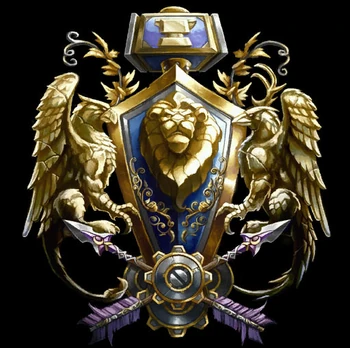 ALLIANCE
The Grand Alliance is a coalition of forces that was founded by the various human kingdoms after the events of the First War (Warcraft I), where they would be ready to do battle if the orcs invaded a second time. And they did, but this time the Grand Alliance was ready. The Alliance at the time of the Second War was not merely comprised of the seven human kingdoms, the high elves of Quel'thalas, the dwarves of Ironforge and the gnomes of Gnomeregan.
The combined forces of the four Alliance racces ultimately proved victorious at the end of the Second War, leading to the destruction of the Dark Portal that led to the orcs' homeworld of Outland, the disbandment of the Horde and the subjugation and surrender of all the orcish forces on Azeroth.
However, approximately a generation after the Second War ended, the Third War began when a plague of undeath ravaged the kingdom of Lordaeon. Events unraveled and would end to the fall of the human kingdom of Lordaeon, the near-extinction of the high elves of Quel'thalas and the arrival of the demonic forces of the Burning Legion -- masters and architects of both the undead Scourge and the savage old Horde of the first two wars. While a desperate alliance between the ragtag forces of the Alliance under Jaina Proudmoore with the Night Elves of Kalimdor and the new Horde created under the orc farseer Thrall managed to repel the invasion of the Burning Legion, it was at high cost.
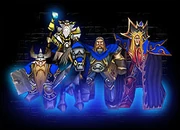 |
| Alliance heroes (WC3) |
While the Night Elves pledged themselves as permanent allies -- and later part of the Alliance, tensions and old hatreds between Alliance and Horde caused even more conflict and death that severed their brief alliance. Over the events of the various World of Warcraft expansions, various other major races would join the Grand Alliance. During the Burning Crusade expansion, the draenei of the Exodar would crash-land on Azeroth and join the Grant Alliance. During the Cataclysm, the once-secluded human kingdom of Gilneas which broke apart from the Alliance after the Second War, fell to the twofold attacks of the feral worgen and the armies of the Forsaken, and after being rescued by the Alliancce (and in the process mostly succumbing to the curse of the worgen) pledged themselves once more to the Alliance. When the Mists of Pandaria was lifted, the Tushui sect of the Pandaren joined the Alliance. During the events of Battle for Azeroth, five 'allied races' were formally induceted into the Alliance, namely the Void Elves, the Lightforged Draenei, the Kul Tiran Humans, the Dark Iron Dwarves and the Mechagnomes.
HUMANS

Thanks to the prominence of the human-vs-orc conflict in all four games, the humans and orcs find themselves to be the races most represented among the classic and basic set in
Hearthstone. Since
Hearthstone's first set largely adapts the setting of classic
World of Warcraft, with the obvious addition of several key lore characters and races from
Warcraft III and the WoW expansions.
For the most part, the history of humanity is more or less told via the brief (very brief) recap of the Alliance's history told above. There were seven major human kingdoms prior to the Second War -- Lordaeon, Stormwind, Dalaran, Kul Tiras, Stormgarde, Gilneas and Alterac, but due to the various wars that ravaged the land, the multiple kingdoms have found themselves mostly crippled, or, in the case of Lordaeon, Dalaran and Alterac, completely destroyed, while Gilneas would withdraw and seclude itself until the events of
Cataclysm. While Dalaran has recently been rebuilt, the major human settlements during the events of
World of Warcraft was that of mighty Stormwind (which itself was rebuilt after being razed at the end of the First War) and its king, Varian Wrynn, and the new city of Theramore, led by Lady Jaina Proudmoore.
The humans, despite being the youngest race in Azeroth, are one of the most vocal and prominent, and Stormwind would remain one of the great seats of power for the Alliance, especially upon the return of its missing king, Varian Wrynn. The humans have suffered much, even durnig the events of
World of Warcraft -- Deathwing attacked Stormwind, and during
Mists of Pandaria the increasingly-insane Garrosh dropped a mana bomb and completely obliterated Theramore Isle, but the humans nonetheless persevered and continue being the backbone of the Alliance.
So, let's get to the cards, shall we? Note that I'll be covering
all the human cards in basic and classic, so that we don't get too much in the 'neutral' segment, y'know?


Goldshire Footman: The humble town of Goldshire began life in
Warcraft I as one of the towns nearby Stormwind Keep, completely destroyed by the assault of the first Horde to sever the lifeline between King Llane of Stormwind and his people. It has since been rebuilt in
World of Warcraft, and tends to be the second human town that human characters in WoW would visit, a humble little town with class trainers, a blacksmith and the Lion's Pride Inn. The Footman has been the Human race's base unit throughout
Warcraft, Warcraft II and
Warcraft III, being simple melee units that fight the frontline battles. In
Warcraft III while they are weaker than the early-game units of other races, they have access to the 'Defend' ability, increasing defense at the cost of speed, as well as being really cheap. In WoW, Footmen still appear in various human locations as city and town guards, including, of course, Goldshire. The Goldshire Footman's summoning quote ("Ready for action!") is taken verbatim from the sound effect when a Footman has finished training in
Warcraft III, and its attack quote ("To arms!") is one of the quotes a Footman in
Warcraft III can say when he attacks. No specific mob in Goldshire is actually called 'Goldshire Footman', though -- a running theme for many Hearthstone cards.


Stormwind Knight: Stormwind, as mentioned many times throughout the lore sections for the Alliance and the Human race, is the capital city of the human kingdom of Stormwind and the Alliance in general. Knights in the
Warcraft games are almost always units mounted on warhorses, despite what the
Hearthstone art represents. In
Warcraft I, they wielded maces, and were the knights of the kingdom of Stormwind. In
Warcraft II and
III, they were Knights of Lordaeon, and wielded large swords. In all three games the Knights tended to be faster, hard-hitting units, if somewhat more expensive to train. Both the summon ("For the king!") and attack ("For honor!") quotes are taken from the Knight unit in
Warcraft III. No specific mob called "Stormwind Knight" exists in WoW, but there are certainly a lot of knights that go around as part of the Alliance forces.
 Silver Hand Knight:
 We talked a fair bit about Knights above so we'll talk about the Order of the Silver Hand
itself. The Order of the Silver Hand was founded by the paladin Uther
Lightbringer and Archbishop Alonsus Faol at the end of the First War
after seeing how unprepared humanity was during the war against the
Horde. The Knights and Paladins who fought in the Second War was
instrumental in its victory. The Silver Hand persisted throughout the
Third War, with its most famous member being the Prince of Lordaeon,
Arthas Menethil... who would later succumb to corruption (more on
Arthas's story later) and kill Uther and the rest of the Silver Hand
Paladins. The survivors of the Silver Hand would be divivded into two
organizations -- the Scarlet Crusade and the Argent Dawn -- until the
events of
Wrath of the Lich King where Tirion Fordring, wielder
of the holy blade Ashbringer, would reinstate the Order of the Silver
Hand, which would be instrumental in ending the threat of the Scourge.
During the events of
Legion, a paladin adventurer would unite the
various paladin organizations throughout the Alliance and Horde into a
far larger, expanded Order of the Silver Hand. Various minor NPC's have shown up with the title 'Silver Hand Knight' throughout World of Warcraft.
 Archmage:
 The title Archmage are, well, very powerful mages that tend to be associated with the magic-kingdom of Dalaran, one of the seven great human kingdoms that is run exclusively by mages and the Council of Six. In
Warcraft III, the Archmage is one of the three heroes available to the human race, mostly represented as bearded men on horses (most prominent among them being Antonidas, leader of Dalaran) with the exception of the young Jaina Proudmoore, who had a unique model. All archmages in
Warcraft III had access to four skills -- Blizzard, Summon Water Elemental, Brilliance Aura and Mass Teleport. The Archmage is probably one of the more fragile human heroes, but his versatility in being able to lock down large amounts of enemies, summon powerful elementals to bolster his minions, or even teleport large groups as reinforcements or to escape from harm, Archmagi are one of the most powerful resources in the human alliance.

Northshire Cleric: The term 'Cleric' refers to the healing-oriented units in
Warcraft I. By the time of the Second and Third wars, Clerics are mostly known as Priests by then. The Clerics in
Warcraft I had the backstory of coming from the Holy Order of Northshire, based off the Northshire Abbey in the town of Northshire. While Northshire was razed during the First War, their sacrifice inspired the founding of the paladins of the Silver Hand. By the time of
World of Warcraft the town and the abbey has been rebuilt. No specific mob in World of Warcaraft corresponds to 'Northshire Cleric', though.


Argent Commander: The Argent Crusade is an order of holy warriors, mostly paladins, which is formed from the ashes of the fallen Order of the Silver Hand, the order of paladins once led by Uther Lightbringer and decimated by the renegade Prince Arthas and the Scourge during the Third War. When the Silver Hand first fell, thanks to disagreement between the survivors, the Silver Hand splintered into two factions -- the highly xenophobic Scarlet Crusade, and the more open-minded Argent Dawn. The formerly-exiled paladin Tirion Fordring reformed the old Silver Hand, and during the events of
Wrath of the Lich King, combined it with the Argent Dawn to form the Argent Crusade. Regardless, the Argent Crusade organization is filled with multiple races dedicated to fighting the undead Scourge. The Argent Commanders are units in WoW that guards the Frozen Halls of Icecrown Citadel.
Argent Protector: The Argent Protector is a member of the Argent Crusade. Units specifically called the Argent Protector were briefly around during the
Burning Crusade era during a world event where the Dark Portal opens.
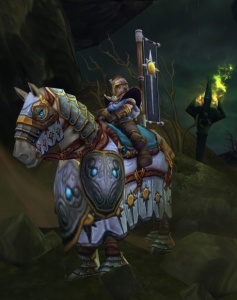
Argent Squire: The Argent Squire, while represented with a paladin in
Hearthstone, shares her name with a young boy-squire in World of Warcraft's Argent Tournament event, the tournament which was held to determine the best warriors to send and assault the Lich King's Icecrown Citadel during the conflict at Northrend. The Argent Squire is a young companion that champions in the tournament can summon, carry a banner for you and go to the shop or bank for you.
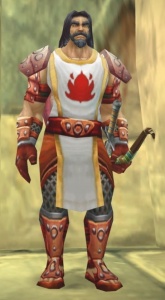 Scarlet Crusader:
 The Scarlet Crusade is an organization formed after the end of the Third War that vows to eradicate the undead. Unlike its sister organization the Argent Dawn, however, the Scarlet Crusade is insanely xenophobic, striking down both undead and forsaken without compromise, and is highly xenophobic against non-human races. The Scarlet Crusade is one of the major enemies of the Forsaken starting zone in Tirisfal Glades, as well as the subject of several dungeons like the Scarlet Monastery, as well as the Death Knight starting quests in WoW. By the time of
Wrath of the Lich King, the Scarlet Crusade's zeal has became so extreme that they became known as the Scarlet Onslaught, and many of its members perished during the events of
Wrath of the Lich King due to battles against the Scourge, as well as its leaders being revealed to actually be the dreadlords Balnazzar and Mal'Ganis in disguise. Various raids by adventurers towards the corrupted Scarlet Onslaught and its final leader, Sally Whitemane, eventually left the organization extremely crippled and leaderless. The specific mob called 'Scarlet Crusader' is a level 17 enemy found in Plaguelands.
Southsea Deckhand: The Southsea Freebooters is a fleet of pirates that terrorize the regions of the Barrens and Tanaris, the southeastern locations of Kalimdor. The Southsea pirates are introduced in
World of Warcraft, and are the adversaries of the goblin town of Ratchet where the town leader Gazlowe would dispatch adventurers to get rid of them. The goblin starting quest also had adventurers battle the Southsea pirates, who menaced them. No specific mob called Southsea Deckhand exist, however.
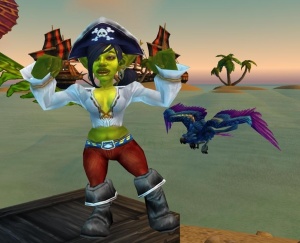 Dread Corsair:
 In WoW, Dread Corsairs are mobs that are part of the Dread Crew, a group of pirates led by Dread Captain DeMeza that raid the Booty Bay as a seasonal event every year during Pirates' Day. Interacting with her will cause players to get the Dread Corsair buff, essentially turning their appearance into a pirate for a day.

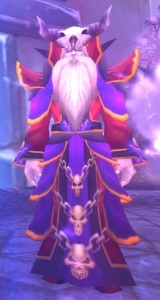

Acolyte of Pain: Acolytes are the basic resource-collecting/building-creating unit for the Undead race in
Warcraft III. The Acolytes are part of the Cult of the Damned, robed priests or warlocks who have given themselves completely to the power of the Scourge. They are the bread-and-butter minions who spend their lives casting incantations to summon the Scourge's buildings into existence, and view their eventual deaths and being turned into undead as their ultimate rewards. And, indeed, in
Warcraft III, Acolytes can be sacrificed in the Sacrificial Pit building to transform them into the undead Shades. In
World of Warcraft, Acolytes can be found in the service of both the Lich King's Scourge and Sylvanas's Forsaken faction. The first mob called Acolyte of Pain (using the Necromancer model) shows up in Wrath of the Lich King in the ice troll fortress of Zul'drak. As one final note, in the newest
Legion expansion, mobs called Acolyte of Pain can be found in the new zone of Azsuna.
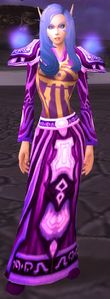
Kirin Tor Mage: The Kirin Tor is an elite group of mages in the mage kingdom of Dalaran, and over the years have had a rotating membership that either allied with the Alliance or maintained neutrality in wars. Most famous among the members of the Kirin Tor is the renowned archmage Khadgar, who was instrumental in defeating the corrupted Guardian Medivh, ending the Second War and shutting down the Dark Portal. A large number of the Kirin Tor were killed when Dalaran was razed by Arthas and later Archimonde during the Third War, and it took significant time -- until
Wrath of the Lich King that the Kirin Tor were able to reconstruct Dalaran and participate in the battle against the blue dragon aspect Malygos, who had been driven insane. Specific units called Kirin Tor Mages set up camp in Ulduar in
Wrath of the Lich King.
Violet Teacher: The Violet Teacher is presumably a member of the Violet Eye, a sub-faction within the Kirin Tor of Dalaran that spies on Medivh, the Last Guardian. Even after Medivh's death at the end of the First War, the Violet Eye remained within Karazhan up until the events of
World of Warcraft, defending against the twisted forces within the tower.
 Ravenholdt Assassin:
 The Ravenholdt Assassins are guards in the Ravenholdt Manor, a sub-area in the Hillsbrad Foothills. The Ravenholdt is a guild of thieves and assassins that are associated only with WoW players of the Rogue class. During the
Cataclysm period, the Ravenholdt assassins worked with the black dragon Wrathion to assassinate the remnants of the black dragonflight, and during the
Legion period, the Ravenholdt is instrumental in helping a rogue hero deal with the last uncorrupted black dragon egg.
 Cabal Shadow Priest:
 While the art depicts a human, the Cabal in
World of Warcraft is a sub-organization of the mainly-orcish Shadow Council in Outland, being caught between the political plays of Gul'dan and Ner'zhul. The Cabal is credited with summoning the mighty primordial elemental Murmur within the Draenei temple of Auchindoun, destroying it and the surrounding area. The Cabal are recurring enemies throughout the
Burning Crusade era, and the Cabal Shadow Priest are specifically are Broken Draenei enemies found in the dungeon Shadow Labyrinth.

Defias Ringleader: The Defias Brotherhood is a group of bandits and thieves that are the primary antagonists during the Human starting quests in
World of Warcraft. The Stonemasons Guild led by Edwin VanCleef was responsible for reconstructing Stormwind City after its destruction at the end of the First War. When VanCleef demanded more money since he felt that they were unfairly paid, the nobles refused to pay, causing the Stonemasons to riot in Stormwind City and accidentally cause the death of Queen Tiffin Wrynn. The death of his wife enraged King Varian so much that the Stonemasons were exiled, causing them to later become the Defias bandits that terrorized much of Elwynn Forest and Westfall. Years later it would be discovered that all the events that led to the Defias being created were the machinations of the black dragon Onyxia, disguised as the noblewoman Katrana Prestor. The Defias are based on the Deadmines, and after Edwin's death at the hands of adventurers, the Defias would be led by his daughter Vanessa, until she, too, was defeated. No mob with the name Defias Ringleader exists in WoW, but Defias Bandits exist in Elwynn Forest with their distinctive red mouth-covers -- although as of
Cataclysm they have dropped the 'Defias' portion of their name.
 SI:7 Agent:
 The SI:7, short for Stormwind Intelligence, is an organization of rogues that specializes in espionage and assassination, led by Matthias Shaw. Introduced in
World of Warcraft, they helped the Alliance gather information and investigate into certain matters all over Azeroth, and while never overtly prominent, were instrumental in various major events throughout WoW, including rescuing a shipwrecked Anduin Wrynn and discovering the continent of Pandaria in
Mists of Pandaria, as well as battling the mighty dreadlord Detheroc during the events of
Legion.
These humans are original to Hearthstone, with no real equivalent in World of Warcraft:
Stormwind Champion, Lord of the Arena, Master Swordsmith, Armorsmith, Imp Master, Ancient Mage, Abusive Sergeant and
Temple Enforcer. Some of them, like the Swordsmith and Armorsmith, could be a reference to the crafting professions in WoW. The
Questing Adventurer in particular is based on how WoW player characters are basically on the hunt for more quests and get stronger with experience points, and features the 'level up' sound from WoW.
_______________________________
DWARVES

The dwarves of Khaz Modan are primarily divided into three sub-tribes -- the mountain clan of Bronzebeard, the hill clan of Wildhammer and the hated Dark Iron dwarves, which were split during the War of the Three Hammers after a coup from the Dark Iron emperor, Thaurissan. Living in the mountains, the dwarves are descended from Earthen -- beings of stone and metal created by the Titans that shaped Azeroth. The dwarves are closely tied to their smaller 'kin', the gnomes, which lived near them, as well as the humans, who introduced the dwarves to the religion of the Holy Light. The dwarves would join the first Grand Alliance during the Second War, and again during the Third War. The technology of gunpowder and the gryphon-riding Wildhammer dwarves, as well as the mighty Mountain Kings that went to war against the Horde and the Scourge, would prove instrumental in the Alliance's triumph in the Second War and its survival in the Third.

During
World of Warcraft, the role of the dwarves would be greatly expanded, with the founding of the Explorer's League and their search for Titan artifacts being instrumental in helping to unearth the origins of not just the dwarven race, but all of Azeroth. The Dark Iron clan, who were enslaved by the evil elemental lord of fire, Ragnaros, would be taken down by adventurers during this period. The mighty king Magni Bronzebeard would be transformed into stone prior to the events of the
Cataclysm thanks to a botched ritual (which frankly was kinda dumb on the dwarves' part), causing a power vacuum which would see Magni's estranged daughter, Moira, who was wed to the Dark Iron Emperor, Thaurissan, make a power play. While Alliance agents initially went in to assassinate Moira, the situation was diffused by the young Anduin Wrynn. The Alliance eventually made a compromise and the creation of the Council of Three Hammers, with Moira sharing power with representatives from the Bronzebeard and Wildhammer clans, Muradin Bronzebeard and Falstad Wildhammer, with all three dwarven clans having a seat at the table and allowing a relatively large amount of the previously-hostile Dark Irons to finally be accepted back among their dwarven brethren.

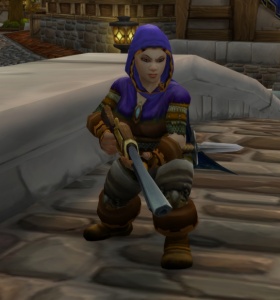
Ironforge Rifleman: Riflemen were introduced in
Warcraft III as the cheapest ranged unit for the Human/Alliance faction. The ability and ingenuity of dwarves is shown by their ability to construct blunderbuss rifles in an age of swords and bows. Ironforge is the name of the capital city of the dwarven kingdom of Khaz Modan. The Ironforge Rifleman's summon quote, "locked and loaded", is identical to the
Warcraft III Rifleman unit's quote after it has finished training, and its attack quote, "fire", is one of the possible things a Rifleman can say while attacking. Units named Ironforge Rifleman can be found as guards... not in Ironforge, but in Stormwind City.
 Stormpike Commando:
 The Stormpike Commandos are members of the dwarven Stormpike Clan that leads the expedition in the Alterac Valley, a PvP battleground where the Stormpike dwarves come into conflict with the Frostwolf orcs.
 Bloodsail Raider:
 (Yes, she's a dwarf). Bloodsail Raiders are (human) mobs in Stranglethorn Cape that are member of the Bloodsail Buccaneer pirate crew. The Bloodsail pirates attack and plunder the goblin town of Booty Bay, which itself is under the protection of the Blackwater pirates. Both Bloodsail and Blackwater pirates recruit adventurers to their cause.

 Dark Iron Dwarf:
 The Dark Iron Dwarf is, obviously, a member of the Dark Iron clan, one of the three main dwarven clans. The dark-skinned Dark Irons were led by the Sorcerer-Thane Thaurissan which were exiled after a failed coup against the Wildhammer and Bronzebeard clan during the War of the Three Hammers. Thaurissan would attempt to summon an ancient power beneath what is now known as Blackrock Mountain, but got far more than what he bargained for -- Ragnaros the Firelord himself. Ragnaros enslaved the Dark Iron clan, and the Dark Iron would be enemies to both Alliance and Horde throughout the early days of
World of Warcraft, culminating in the seeming kidnapping of the Bronzebeard princess Moira Bronzebeard... who was actually in love and eloped with Dagran Thaurissan, current emperor of the Dark Irons. Thaurissan was slain by adventurers, and Moira would assume leadership of the Dark Irons. During the events of
Cataclysm, the Dark Irons were fractured -- half of it, under Moira, would rejoin the Alliance, while the other half would serve Deathwing. Despite the tenuous friction between the Dark Irons and the other dwarves, Moira would prove to be loyal to the Alliance in most subsequent battles, and as of
Battle for Azeroth, the Dark Irons would actually become a playable allied race for the Alliance.
Big Game Hunter: Big Game Hunter is a reference to a memorable quest chain in
World of Warcraft where the famous dwarf hunter Hemet Nesingwary would task adventurers to hunt rare beasts, with the actual 'Big Game Hunter' quest sending adventurers to hunt down King Bangalash, a great white tiger residing in Stranglethorn Valley. In
Legion, "Big Game Hunter" was added as a Beast Mastery Hunter talent.
________________________________
GNOMES


The Gnomes are a race of tiny humanoids that were far smaller and far more impetuous than the dwarves. They were instrumental in the Alliance's victory in the Second War, supplying them with explosives, submarines and flying machines that allowed the Alliance to fight on equal footing with the monstrosities controlled by the Horde. The eccentric gnomes hail from the city of Gnomeregan, neighbouring the dwarves' Ironforge. The gnomes were absent from the forces of the Alliance during the Third War, although their technology were piloted by the dwarves during this period of time. The gnomes' absence during this period of war was revealed to be because the gnomes are dealing with a crisis of their own. The gnomes were assaulted by the arrival of the barbaric troggs which rose from deep within the earth adn invaded Gnomeregan, and the gnomes, knowing that their dwarven and human allies have their attention full with the Burning Legion and the Scourge, made their stand against the troggs alone. The resulting aftermath due to the setting off of a chemical weapon wiped out around 80% of the gnomish population or turned them into insane leper gnomes. Prior to
World of Warcraft, the remnants of the gnomish race sought refuge in Ironforge, and joined the Alliance once more.
The gnomes are a race that bravely face tragedy, and quickly settled in their old role as the Alliance's resident tinkerers and innovators, led by High Tinker Gelbin Mekkatorque. Prior to
Cataclysm, Mekkatorque finally rallied all his gnomish forces against the leper gnomes and troggs that invaded Gnomeregan, successfully taking over parts of the city and establishing New Tinkertown.

Gnomish Inventor: Gnomish Inventor just represents a generic gnome doing what gnomes are best known to do -- inventing! The term 'Gnomish Inventor' is actually used for one of the buildings in
Warcraft II, where the Alliance's gnome allies would construct Flying Machines and Submarines to face off against the Horde.
 Dragonling Mechanic:
 The Dragonling Mechanic represents a gnome engineer creating a mechanical dragonling, which is a pet that can be created by engineers with sufficient skill. The Mechanical Dragonling is a pet that, when activated, will fight alongside the user temporarily.
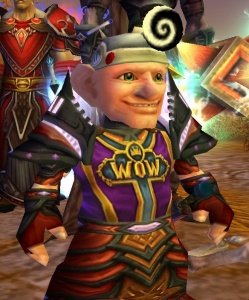 Mind Control Tech:
 The M.C.T. is inspired by an item that engineers are able to create, the Gnomish Mind Control Cap, which is an item that allows its wielder to control a specific humanoid as a combat pet for 20 seconds, essentially acting as a Mind Control spell for engineers.

Dalaran Mage: The kingdom of Dalaran, mentioned many times in the human section of lore, is, as you probably gathered, a city full of mages, ruled by mages, and trains mages. Dalaran was a kingdom built by magic-users, self-governing the usage of arcane magic. While Dalaran was destroyed during the Third War single-handedly by the leader of the Burnign Legion, Archimonde, it has since been rebuilt. While in the past Dalaran has been a city almost exclusively populated by humans, it has since grown to include other races as well. Specific NPCs named Dalaran Mage can be found in the Silverpine Forest area in
World of Warcraft, but they are all human.

Leper Gnome: The Leper Gnome is a sub-race of twisted, afflicted gnomes who has had their minds rotted due to the huge doses of radiation that plagued Gnomeregan as the aftermath of the war against the Troggs prior to the events of
World of Warcraft. The source of this radiation was a bomb set off by the leader of the gnomes, the treacherous and jealous second-in-command of the gnomes, Sicco Thermaplugg, tricked the gnome leader Gelbin Mekkatorque to open pressure valves and unleash the toxic radiation in a failed attempt to kill the troggs. Instead it killed a large number of the gnomish population or turne them into leper gnomes. They are reduced to nothing but crazed maniacs who attack their gnomish and dwarven brethren, seeing them as nothing but trogg invaders, and are led by the similarly-insane Thermaplugg.
These cards don't have any specific lore and just depict general gnomes doing gnome things:
Novice Engineer, Patient Assassin, Pint-Sized Summoner, Knife Juggler, Sorcerer's Apprentice and
Loot Hoader. The Loot Hoarder is one of the few cards that refer to the metagame of
World of Warcraft,
with the summoning quote, "mind if I roll need?" a reference to the
loot system in WoW where players in a raid would 'roll' for items. Now
not all items are compatible to all classes, so a 'Loot Hoarder' refers
to a scumbag player who would roll for items they don't need.
_____________________________________
NIGHT ELVES

The elves are one of the oldest races in Azeroth, and I could make an entire article discussing the history of the night elves during the War of the Ancients or the recently-revealed information in the
Legion expansion. But this article's going to be super-duper long even without those, so let's just go to the necessities. The Night Elves, or the Kaldorei, are one of the most ancient races on Azeroth, being effectively immortal prior to the events of the Third War. Many of the night elves that run around in the present day are upwards to fifteen thousand years old, and lead a culture that worship the moon goddess Elune, and the wild gods of Kalimdor (greatest among them is the demigod Cenarius) and has a culture that is very deeply seeped in druidism, and was taught by Cenarius to be guardians of nature itself. Indeed, the night elven archdruid Malfurion Stormrage is often credited for being the first mortal to learn druidic skills. The Night Elves once lived near the mystical Well of Eternity, the source of their immortality. With this power, the Night Elves were able to obtain a stronghold over the world of Azeroth, even dismantling the great troll empires of Amani and Gurubashi.

Of course, as empires rise, so do they fall. Around 10,000 years prior to the present day, the highly-revered kaldorei queen, Azshara, ruled over a night elven cult that was obsessed with unlocking the magical secrets of the Well of Eternity, known as the Highborne. While the Highborne grew even more obsessed and arrogant, the rest of the kaldorei continued their communion with nature and their older gods. This would lead to the War of the Ancients. Much happened during that period of time, which will be covered in a later article, but Azshara and the Highborne ended up being seduced by the whispers of creatures of untold power -- the demonic overlords of the Burning Legion, for their experimentation with the powers of the well has attracted the demons of the Burning Legion to Azeroth. Thus began the War of the Ancients, where the archdruid Malfurion Stormrage and the priestess Tyrande Whisperwind marshalled every powerful force in the world -- Cenarius, the wild gods, the Ancients of the forest, the dragon aspects, as well as tauren and furbolg races clashed with the demons of the Burning Legion and the power-mad Highborne. During the climax of this war, the Well of Eternity imploded in a magical explosion known as the Sundering, ripping the two contintents apart and creating the permanent storm known as the Maelstrom in the sea that separated the two continents. Azshara's faithful cultists were dragged down into the bottom of the sea and would be mutated into the race later known as the naga. The surviving kaldorei would gather around Mount Hyjal and embracce their druidic roots even more. Malfurion and three of the great Dragon Aspects would plant the World Tree, Nordrassil, which would mask the remnants of the Well of Eternity from the Burning Legion, and in the process cause the Night Elves to be immortal -- unable to die of old age. The druids of the kaldorei, as part of this pact, voluntarily entered a deep slumber to meditate in Ysera's emerald dream. The druids would be awakened by the leader of kaldorei, Tyrande Whisperwind, whenever they were needed, such as the war against the satyrs, and the War of the Shifting Sands against the silithid of Ahn'Qiraj.
During the Third War, the kaldorei, prior to this unknown to the rest of the world, was discovered when refugees from the Eastern Kingdoms, escaping the Burning Legion and the Scourge's invasion, clashed against the night elf Sentinels in Ashenvale. The orcish Warsong clan, led by Grom Hellscream, clashed against the Night Elves as they cut down swathes of the forest for lumber, earning the wrath of Cenarius. On the verge of being destroyed by the wrathful demigod, Grom Hellscream was seduced by the great demon Mannoroth, drinking demon blood and slaying Cenarius. This would throw the night elves headlong into the Third War, engaging against both Alliance and Horde until the final battle of Mt. Hyjal, where the night elf Sentinels, the Horde and the Alliance banded together to defend the World Tree against the enroaching Burning Legion and its overlord, the mighty Archimonde. The combined forces was enough for Malfurion to summon a multitude of wisps to cause an explosion that consumed both Archimonde and the World Tree.
After the destruction of the World Tree, the night elves found themselves mortal for the first time in over ten thosuand years. Prior to
World of Warcraft, the night elves signed on as one of the four major races in the Alliance, and participated in practically every large conflict between the Alliance and all its enemies. However, some druids remained neutral in the Alliance/Horde conflict. During this period, Malfurion fell into a deep slumber, causing some friction between Tyrande Whisperwind and a group of druids led by Fandral Staghelm, who planted a new World Tree, Teldrassil -- a world tree that was not wholly blessed due to Staghelm's self-interest. Nevertheless, Teldrassil served as the site of the night elves' new capital of Darnassus. The night elves, while weakened by the Third War, took part in many, many Alliance conflict, and was instrumental in the renewed War of the Shifting Sands. The night elves are also instrumental in taking in the cursed worgen race, helping them come to terms with their curse and their eventual joining the Alliance. The night elves are also intrinsically bound to the crisis surrounding the corruption of the druidic realm known as the Emerald Dream, but we'll cover
that whole story later.

 Elven Archer:
 The Elven Archer is based on the Archer unit from
Warcraft III, which was the basic, cheapest minion for the night elven race, equivalent to the footmen of the humans, grunts of the orcs and ghouls of the undead. The Archers are indeed more fragile than their other counterparts, but are able to attack with ranged attacks as a trade-off. Both of her quotes ("one shot, one kill" and "I'll give it a shot") are taken verbatim from the Archer unit's attack quotes in
Warcraft III.


Wisp: Wisps are glowing balls of light that, in
Warcraft III, act as the Night Elven race's resource gatherers. They are the only resource gatherers that cannot fight, but are able to gather resources without moving or damaging the forests surrounding it. Wisps also have the ability to detonate -- destroying themselves and draining the mana of all enemies around it, and dealing damage to summoned enemy units. They use this property most iconically at the end of the Third War, when Malfurion summoned all the wisps of Mount Hyjal to detonate and destroy one of the mightiest demons of the Burning Legion, Archimonde. While it's merely hinted to be so in
Warcraft III, in
World of Warcraft it's confirmed that wisps are the disembodied, undead spirits of night elves who have become one with the forest. In WoW when a night elf player dies, instead of becoming a ghost they'll be turned into a wisp, and wisp NPCs can be found on Night elven areas.


 Priestess of Elune:
 The Priestess of Elune is based on the night elven hero unit Priestess of the Moon from
Warcraft III. The Priestesses of the Moon worship the moon goddess Elune, and are a sisterhood of the mightiest priestesses of the night elven race, riding powerful white frostsabers into battle, able to summon down the power of Elune herself to create owl scouts, launch searing arrows guided by the grace of Elune, and summon down waves of falling stars to damage the enemy. Specific units called 'Priestess of Elune' appear in a vision in the pre-
Cataclysm version of the night elven starting quest, and again in Dalaran during
Legion.

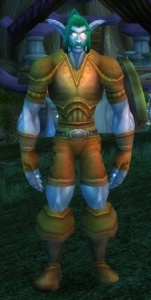
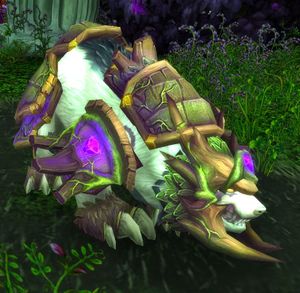 Druid of the Claw:
 The Druids of the Claw are based on the
Warcraft III unit with the same name, male druids that are awakened from their ritual sleep by Tyrande Whisperwind. The Druids of the Claw are strongly associated with the form of the bear, and are one of the most powerful units in the night elven forces. In their night elven form they are able to heal their allies, while in their bear forms they are far more powerful, and are able to roar and buff the attack of the allies around the unit. Various night elven NPCs also have the title 'druid of the claw'. While in
Warcraft III druids of the claw only have access to the bear form, all druids are able to shapeshift into cat and bear forms. Various NPCs and mobs in WoW have been called Druid of the Claw, first a group of NPC's in Burning Crusade's Battle for Mount Hyjal; and later multiple members of the organization that appear in various different locations in
Legion.
The following don't really have much lore:
Young Priestess and
Nightblade; although Nightblade does share its name with a Night Elven faction in one of the Warcraft III campaigns, specifically one of the Night Elf factions that fought the Warsong Clan.
____________________________
DRAENEI


The Draenei were introduced as a playable race in
World of Warcraft's
Burning Crusade expansion, but its story, like the night elves, started from an ancient age -- even further back from the night elves, I believe. The Draenei began life as the Eredar race living on the planet of Argus, a world far, far removed from Azeroth. The Draenei were a race of supremely intelligent and powerful magicians which had a magic-powered society that are far, far more advanced than anything Azeroth had seen before. The Draenei were led by three great leaders -- Velen, Kil'jaeden and Archimonde. The three great leaders of the Draenei were approached by the fallen titan Sargeras, and two of the three great leaders would succumb to Sargeras's promise of power and knowledge. Velen was the only one who did not trust Sargeras, but was too late to warn his two brothers. Kil'jaeden and Archimonde swore loyalty to Sargeras, and transformed a large portion of the eredar race into powerful demons. It was the birth of the eredar race as Azeroth knew it -- the mightiest among the mighty demons, the greatest leaders of the vast, universe-spanning armies of the demonic Burning Legion, and easily one of the greatest threats Azeroth has had to face.
Velen led a portion of the eredar race and fled Argus in a crystal-powered spaceship, aided by the deity-like nnaaru, powerful beings of light. Their escape was brutal, costing the death of the naaru L'ura, and Velen's group was lost into space. Now calling themselves 'Draenei', the 'Exiled Ones', Velen's people hid among many worlds, evading the ever-expanding reach of the Burning Legion. These Draenei were blessed by the naaru with spiritual power from the Light, tasking the Draenei to be the ones to stand against the Legion.
Around 200 years before the First War, Velen's Draenei settled upon a remote and peaceful world inhabited by brown-skinned shamanistic orcs, and named the world Draenor. The Draenei and the Orcs lived in peace, although they mostly kept to themselves. They lived in peace for a time, but agents of the Burning Legion found Draenor anyway. Kil'jaeden and his minions would proceed to corrupt the orcs (more on that on the orcs' lore) and manipulate them into drinking the blood of the mighty pit lord Mannoroth. The orcs were driven into mad, bloodlusting berserkers, and slew a large portion of the Draenei in the ensuing war. Even those who battled the orcs found themselves mutated by the fel energy that orc warlocks wielded, cutting their connection to the light and mutating them into Broken -- a subspecies of Draenei that were deformed. Velen and a handful of draenei were untransformed, and went into hiding.
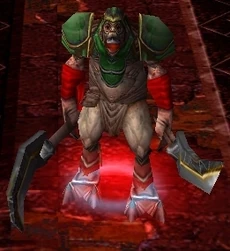
The Broken, meanwhile, continued their losing war against the orcs of Draenor (or Outland, as it was later termed after a cataclysmic eruption that sundered the planet during the Second War) and the Ashtongue tribe under Akama would be forced to throw their lot in with the demon hunter Illidan Stormrage. Velen's draenei came into conflict with a group of blood elves, and in the resulting struggle their ship, the Exodar, was damaged, tumbling through the twisting nether until it crashed onto Azeroth, on the Azuremyst Isles near the coast of Kalimdor. The Draenei were quickly found by the night elves, and stories of the Alliance's fights against the Burning Legion quickly caused the Draenei to commit to this courageous faction. With the Draenei at the forefront of the Alliance vanguard, they would be instrumental in the Alliance's entry into Outland during the events of
Burning Crusade. The draenei and the naaru with them were also instrumental in helping the blood elves break away from Illidan Stormrage's influence, and throw their lot instead with the Horde. Even after the events of
Burning Crusade, the draenei continue to be powerful and staunch allies of the Alliance, being particularly prominent in the offensives of
Warlords of Draenor and especially
Legion, where the Burning Legion invaded Azeroth once more.

Windspeaker: The Windspeaker is presumably based on the draenei NPC called Windspeaker Lorvarius, a member of the Earthen Ring sect of the shamans, who assisted during the Cataclysm when the shamans attempted to seek the aid of the earth elementals. Many draenei, after the war on Draenor against the orcs, turned to shamanism after their connection with the Light was cut. While this is not the case for Velen's draenei, many of them were shamans anyway, having strong communion with the ancestral spirits of Draenor. Draenei were the first Alliance race able to have the shaman class.

Lightwarden: Like the Windspeaker, the Lightwarden drew her name from the title of a draenei NPC, Adyen the Lightwarden. Adyen was a dude, though, as opposed to the female priest depicted in the Hearthstone card. Adyen the Lightwarden is a quest giver in the Burning Crusade expansion in Shattrath City, tasking adventurers to bring marks of demon lords to him, and would send adventurers to take down the renegade draenei Socrethar.
Aldor Peacekeeper: The Aldor is an ancient order of draenei priests once led by Velen, and are servants of the naaru in Shattrath City. They are one of the two rival factions in Shattrath City alongside with the blood elven Scryers that player characters can ally with -- regardless of their allegiance with the Alliance or the Horde. The Aldor serve the naaru first and foremost, and their allegiances are not to Velen or the Alliance, but the naaru. The title 'peacekeeper' is presumably drawn from Shattrath City Peacekeeper, guard NPCs allied with the Aldor.
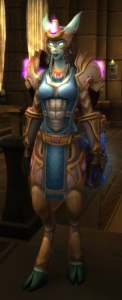

Defender of Argus: The Defender of Argus is a member of the draenei organization the Hand of Argus, a group of draenei paladins that serve as the primary police and military force of the Exodar. Led by the Vindicators Boros, Kuros and Aesom, the Hand of Argus, while their numbers have been trimmed by the war against the orcs, remain one of the strongest elite forces among the Exodari draenei. The title 'Defender' is held by multiple members of the Hand of Argus, and specific mobs called 'Defender of Argus' appear in the Broken Shore and the Eastern Plaguelands in Legion.

Auchenai Soulpriest: The Auchenai is a group who once guarded the draenei necropolis Auchindoun, priests who earned the nickname 'death priests' due to their job. The necropolis Auchindoun was built around the corpse of the dead naaru D'ore, who was attracting the souls of dead draenei. During the war against the orcs, the Auchenai priests and many other draenei were trapped in Auchindoun as agents of the orcs caused a gigantic explosion. A combination of seclusion and the void energies emenating from D'ore's corpse caused the Auchenai to go mad, twisting their original purpose to venerate the dead into necromancy. The Auchenai Soulpriests are the names of specific enemies in the Auchindoun dungeon.
The following don't really have much lore and are otherwise original to Hearthstone: Shieldbearer and Defender.
_____________________________________
WORGEN

Long ago, a sect of night elven druids used an atrifact to channel the power of the ancient wolf god, Goldrinn. However, the transformation caused them to transform into beings termed worgen -- half-wolf humanoids who are enslaved by their primal instincts. Worse, other elves bitten by these worgen were transformed into worgens themselves. The Archdruid Malfurion Stormrage used a spell to banish the worgen into eternal slumber within the Emerald Dream.

Fast-forward a couple thousand years to the Third War. One of the seven great human kingdoms, Gilneas, have seceded from the Grand Alliance, building a wall to sequester itself from any further conflict with the outside world. However, this backfired during the Third War, when Gilneas was besieged by the invading undead Scourge, which had already caused the downfalls of the far larger and more powerful kingdoms of Lordaeon and Dalaran, an archmage released the ancient worgen from their prison. The worgen, immune to the curse of undeath, were effective against the undead Scourge, but their rage was indiscriminate and turned against the wizards themselves. Wild worgen and members of the wolf cult menaced various parts of Azeroth prior to the
Cataclysm, but during the
Cataclysm the worgen finally breached the secluded kingdom of Gilneas and transformed many of its inhabitants into worgen. These worgen of Gilneas (the playable worgen race in WoW) had to deal with the multiple burden of the curse, the Scourge and the arrival of the Forsaken, seeking to claim Gilneas for the Horde when the Gilneas wall was destroyed during the Cataclysm. The Gilneans fought against the forces of the Scourge and the Horde, and were assisted by the night elves. The night elves, well-versed in druidism and responsible for the creation of the original worgen, assisted the Gilnean worgens and devised a cure that allowed these denizens of Gilneas to retain their sanity even when transformed. Gilnea would be reintroduced into the Alliance at this point, and would remain a steadfast ally of it from that point onwards.

Worgen Infiltrator: The Worgen Infiltrator are enemies that are found in Tirisfal Glades, the Forsaken starting zone, added in
Cataclysm when the worgen and forsaken are built up as rival races between the Alliance and the Horde. Forsaken adventurers would be tasked to find Worgen Infiltrators, who are invisible, as part of a quest.
The cards
Raging Worgen and
Houndmaster don't have any specific lore, although Raging Worgen is based on the whole 'stronger when enraged' thing. The Houndmaster is commanding a bunch of mastiffs, which is the beast that the Worgen are the most associated with.
(We really don't have a lot of Worgen cards in the Basic and Classic set).
_________________________________________
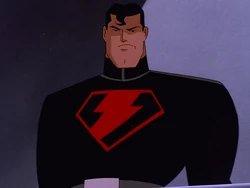 One of my favourite things about this episode isn't actually the evil black-suited Superman, or the alternate-universe plot, it's that this is the first episode to not use the same two or three variations of the opening theme as a music. That soundtrack music that builds up during the big panning shot of evil-world Metropolis? It's pretty awesome, incorporating some ominous choir chanting. Compared to the other entries of the DCAU, Superman: TAS rightfully gets some rap for having a very repetitive soundtrack... but 'Brave New Metropolis manages to buckle that trend.
