Monday, 31 July 2017

Superman TAS S01E06 Review: Enter the Parasite

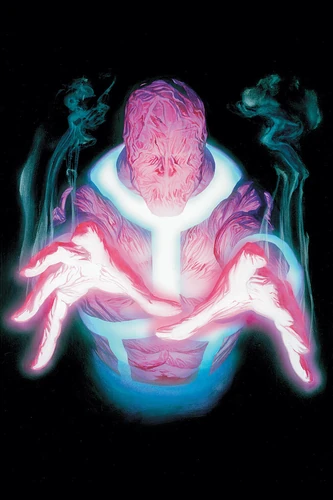
Superman, Season 1, Episode 6: Feeding Time


Honesty time, Parasite is probably my favourite major recurring Superman villains. Discounting the amazingness of Luthor and Brainiac, I've always had a fondness for Parasite. I'm not sure why. Maybe it was his design -- purple skin with silver straps all over, and an extra lamprey-leech mouth in the modern comics. Maybe it was his tragic backstory. Maybe it was his cool powers. Maybe it was that one Hero-Clix figure I own as a kid and I liked very much because it's the only character I recognize from my meager collection.

But whatever the case, this episode brings us Parasite, and short of his brief moments of Kryptonite weakness, this is when Superman is actually put through the wringer. In the pilot Superman was able to more or less hold his own, and against the Toyman he was never truly in danger. Here? The Parasite is a bona fide powered human himself, and the Parasite's powers allows him to not only drain someone's powers, it also leaves Superman powerless temporarily... but more scarily, it also allows the Parasite to 'download' people's minds. Nothing is scarier than Clark hanging out in the safety of his apartment only for the Parasite to break the sanctity of a superhero's civilian identity and jump him, tying him up in a basement and feeding off of him periodically. Add that to various scenes of a powerless Clark just looking sick and miserable while other people talk about putting their faith in Superman is also well-done, making the scene when the heroic music swells as he tells Perry how Superman is 'probably going to come back' only for the Parasite to jump Clark and beat the shit out of him. 

The Parasite's just so awesome, and unlike the Toyman (whose origin story is told briefly through a book), we actually see the Parasite's origin story unfold on-screen. He's a pathetic janitor who ends up getting doused with some science-y chemicals, and transforms into a hideous purple creature that drains other living things, like mice and that unfortunate patrolwoman and Superman himself, to survive. The conflict with his partner in crime, Martin, isn't necessary but adds extra depth to Parasite being bullied pre-transformation and becoming the bully post-transformation. 

We also get some nice continuity bits with the previous episode, with Hamilton helping Superman to develop a lead anti-Kryptonite suit, which ends up helping Superman defeat the Parasite. That final conflict was pretty cool, too, and seeing Parasite drain too much Kryptonite and overload himself, being locked as a vegetable, before gaining a brief bit of sentience when he drains a passing cockroach, is well done. 

Oh, and I guess I have to mention that this is the first of the many Jimmy Olsen centric episodes here. He's... all right. I remembered him being very annoying back when I was a kid, but here he's just... well, he's Jimmy. A little irritating, a little over-eager, but honestly just a sidekick who wants to help. I can't really hate him for that -- he's mostly just bland. 

Overall, the Jimmy stuff is a little weak, and I thought the pacing of the episode could be framed better, but I really liked Parasite's origin story. Well, mostly I just like Parasite, but the episode's also relatively decent.


DC Easter Eggs Corner:
  • Parasite, real name Rudy Jones, is based on the Superman villain of the same name, and his transformation into the Parasite is more or less identical to his post-crisis origin story, though some versions of his backstory had Darkseid or Luthor be behind his transformation into the Parasite. There were other versions of the Parasite in DC comics' history (Raymond Jensen, the pre-Crisis Parasite who was retconned out of existence during the Crisis; dr. Torval Freeman, a scientist absorbed by Rudy Jones but was able to retain his ego; Alex and Alexandra Allston, a pair of twins who were transformed by the villain Ruin as new Parasites after Rudy Jones's presumed death; Joshua Allen, the New 52 Parasite, who was transformed due to an alien creature) but Rudy Jones is by far the most iconic. 

Superman TAS S01E05 Review: To Kill The Man of Tomorrow

Superman: The Animated Series, Season 1, Episode 5: A Little Piece of Home


It's another villain-of-the-week episode, and this time around Lex Luthor takes central stage. Luthor in Superman: TAS is unique in that we don't actually see the man brought down and arrested until Justice League, at least not to my knowledge, so he spends a good chunk of these episodes orchestrating events and getting away relatively without getting put into jail himself, which is interesting -- it sets up some kind of a status quo for the show, keeping Luthor's threat as this untouchable public figure while also letting him tangle with Superman.

The episode also features, more importantly, the debut of Superman's greatest nemesis -- Kryptonite, the titluar pieces of home. An attempt to foil a robbery by the honestly pathetic Caroli brothers turns into Superman struggling to walk as he gets near Kryptonite -- something Luthor catches on to and quickly weaponises. In a memorable scene from when I watched this episode from my childhood, Luthor contracts the hired gun named Joey (and Mercy totally emasculates him by kicking that beanbag -- I love Mercy) who then menaces Superman with a jetpack and leads him to Kryptonite.

Then begins a nice game of cat-and-mouse as the forces of Superman, Lois Lane and Professor Hamilton of STAR Labs (also low-key sneaking in Hamilton and the Labs, quickly establishing them as trustworthy allies), as well as Luthor's forces. There's also some nice bits of showing Clark Kent's attempts to hide his weakness to the sliver of Kryptonite that Lois has.

Again, Luthor tries to make a deal with Superman, who naturally refuses to cooperate, and this really shows a great deal about Luthor. Yes, Superman is doing the hero things we expect him to do and admire him for doing, but Luthor's a more complex beast. It's not enough to kill Superman, though that's not unwelcome -- he wants Superman to bend down to him, more than anything, and that's what makes Luthor's motivations so interesting.

Also, in a moment that went over my head when I watched this episode as a kid (which I remember mostly for the Mercy scene), Luthor catches on to Peterson colluding with Lois Lane and STAR labs, and the last we see of Peterson is Luthor closing the door and telling Peterson that Mercy will totally give him a ride home and 'deal' with him, while the man looks absolutely scared. The scary thing about this isn't the death threat, it's the implicit undertones that it's actually done. We never see Peterson again after this, there's no real way out for him from the situation and even if Superman could arrive fast enough, he's not even aware of what's happening. For a show that spent its previous episode dealing with Toyman and his giant duck, I'm genuinely surprised at how dark it gets in this episode.

And then we have Superman fighting a giant robot dinosaur that Lex controls via an old-timey SNES controller, while Lois Lane plays basketball with Kryptonite and a lead cup, and all is well with the world. Unless you're poor Peterson.

But while, once more, Luthor's actions cannot be tied back to him (though, I dunno, a giant dinosaur robot of death in his museum that moonlights as a display must be hard to explain) we get to see the final shot of the episode -- Luthor's men combing the Earth for more Kryptonite. He's found out how to hurt Superman, and while he has prevailed this day, it's not long before Luthor pulls off something scary. Maybe he'll make the Kryptonite not removable from his next robot. Eh? Eh?


DC Easter Eggs Corner:

  • First appearances of Emil Hamilton and Mercy Graves. Mercy, Luthor's bodyguard-chauffeur, is a character created from the show and later imported into mainstream comics similar to Harley Quinn and Rene Montoya. Professor Hamilton first appeared in the 80's, initially as a villain before becoming one of Superman's allies and a major character in STAR Labs. 
  • Also the first acknowledged appearance of Superman's weakness of Kryptonite, though hardly will be the last. 

Saturday, 29 July 2017

Superman TAS S01E04 Review: Dolls, Ducks and Gangsters

Superman: the Animated Series,  Season 1, Episode 4: Fun and Games


So this episode is your typical bad guy guest star episode, which was the norm for cartoons of the period. We get the first colourful villain of the series, the iconic villain Toyman. Or rather, the DCAU's absolutely sinister portrayal of the dude. The DCAU has never been a stranger of reinventing characters when it needs to (see: Mr. Freeze, Brainiac, the Question and many others) and its interpretation of the Toyman as a sociopathic manchild dressed up in an always-grinning porcelain doll is horrifyingly eerie. Because, jeez, look at that unblinking, creepy-ass grin. 

The plotline is really rather simple. Toyman's rampage is fueled by a hatred of vengeance towards the dirty politician Bruno Mannheim, who dabbles in gangster robberies on the sidelines. Lois's article on the psychiatric analysis of Toyman causes the man to kidnap Lois, and after dressing her up like a doll, Toyman basically wants Lois to write a flattering article about his assassination of Bruno Mannheim. There's the strange suspension of disbelief on how the son of a washed-out toymaker is able to get enough resources to create an unbreakable asphyxiation gel, a super-powerful bouncy ball, automated robot planes and a gigantic robot duck, but it's not something that distracts too much from the admittedly rather simple plot of Superman's fight against the Toyman.

It's a relatively simple yet enjoyable episode, painting Toyman as a sick psychopath that still deserves a sliver of sympathy due to his backstory. Like Batman: TAS, Superman doesn't waste any time in trying to build up a Rogues' Gallery of villains that it can work with, and Toyman is a nice, low-note adventure to start off with. Toyman himself is interesting enough of a gimmick villain to make me entertained. Also loved that final shot of Mannheim being shown the shattered Toyman mask and you can just see the man pissing himself with the thought of Toyman out there hunting for him.


DC Easter Eggs Corner:
  • Toyman is an adaptation of the comic-book villain Toyman, specifically the first, Winslow Schott. However, due to the liberties it takes with Toyman's appearance (the comic-book version of Toyman is just a dude in a suit and glasses) and making him a dude in a porcelain doll suit, this Toyman is identified as Winslow Schott Junior, whereas his father, who died in his backstory, bears a resemblance to the comic book version of the Toyman.
  • Bruno Mannheim, a.k.a. "Ugly" Mannheim, is a leader of the Intergang in the comics. Not gonna say much about it here -- he's going to return with more plot significance, is all you need to know. 

Superman TAS S01E01-03: You'll Believe A Man Can Fly

Superman: the Animated Series, Season 1, Episodes 1-3: The Last Son of Krypton


Supes
Truth & Justice.
Hello and welcome! I've never actually watched Superman: the Animated Series properly. I watched most of the first season, I watched a couple of other episodes here and there, and I read up plot summaries to prepare me for reviewing Justice League, but I've never actually watched the series properly. Now that Justice League Unlimited has been done with, I've decided to review Superman: TAS. It's hopefully not going to take as long as JLU and the upcoming Young Justice reviews in no small part because Superman: TAS is a lot less serialized and thus it's a lot easier to review.

That said, though, this first review is probably going to be a bit longer thanks to it being three episodes forming a mini-movie. Plotline wise, it's basically any Superman origin story, just done in the DCAU format, but thanks to the relatively long running time we get adequate pit-stops on every important point in Superman's origin story. There's Jor-El and Lara in Krypton, there's him discovering his powers in the town of Smallville, there's the brief conversation with the hologram of Jor-El, there's him as an adult arriving at the Daily Planet as we're quickly introduced to the Daily Planet supporting cast, there's the Superman-saves-a-plane, there's the interview with Lois Lane, there's the fight with the first villain. I'm pretty sure that anyone that's going to read these reviews know in full detail what Superman's origin story is, so I don't really have to say much about that beyond the fact that it's amazingly done, it's paced fast enough so that I don't get bored (unlike certain live-action adaptations) yet slow enough to let you absorb the journey from Clark Kent to Superman. 

However, even this early on there are a fair amount of signs that Superman: TAS is going to take a different stance compared to its predecessor, Batman: TAS. Working off the same model that Batman Beyond worked on, there's some seeds of buildup for main villains being done in the pilot -- two, in fact. Brainiac and Luthor both get a relatively large amount of buildup in the episode, hinting at their larger role later down the series and then through to Justice League and JLU, and despite being behind the Kaznian attack and being John Corben's employer, Luthor doesn't really get caught, merely inconvenienced. Brainiac, likewise, gets away scot-free and gets a brand-new backstory for being the very supercomputer that deluded the rest of Krypton, one of the most awesome backstories I've ever seen being done for the classic Superman villain.

Speaking of which, I'm a big fan of how the first part (the first episode of the three-parter, if you treat this as a three-parter episode instead of a TV movie) actually gave Jor-El a relatively large role. Jor-El has been elevated from just a figure in Superman's backstory since the iconic live-action portrayal of Jor-El by Marlon Brando in 1978, being portrayed post-humously as this super-advanced AI that gives Kal some advice that his human parents cannot. This version of Jor-El also gets a pretty cool plot point where he tries to prove his theories that Krypton is, in fact, doomed, and in one fall swoop quickly gives us a backstory about the Phantom Zone and Argo, the Kryptonian society and also has a nice little sub-plot where even Jor-El's wife and father-in-law start doubting him.

It turns out, though, that in the world of Superman: TAS things went a little more conspiratorial than normal. See, in this continuity, Krypton has its own Skynet, a supercomputer network that overviews everything and basically acts to confirm opinions. Like Google, but sentient, has a creepy monotone voice, and pretty much intent on covering up any mention of Krypton blowing up so that he can focus his efforts on uploading himself into a satellite and escape its destruction.

The first part is probably the part of the pilot that dragged on a little, and both the encounter with the Shoggoth (actually identified as such!) and the Brainiac security guards are obvious padding, but at the same time it actually builds Jor-El up into a character we relatively care about, and gives us enough information about Krypton so that it's not an abstract place that we're told where Superman comes from.

The other scenes after baby Kal-El lands on that farm in Smallville and the fateful encounter with a young Jonathan and Martha, and later him being confused as he discovers his powers in school (also a brief role by Lana Lang) and the amazing moments when he discovers his alien heritage and that he can fly... it's amazing stuff, going through the origin story of the Man of Steel once more. Being a longtime DC fan it has been one of the most unchanged constants of the lore, yet the way it's presented here is still exciting enough to hold my attention throughout it all.

And then comes the adult stuff, where Clark Kent end up showing up at the Daily Planet, meeting with the loud boss Perry White, the nebbish cameraman Jimmy Olsen (who actually doesn't do jack-all in this pilot) and the second lead of this show, Lois Lane. And while Tim Daly is an amazing pick for Superman, Dana Delany is even better for Lois Lane. While Lois still has to do double duty as a damsel in distress -- this is still a Superman show, after all -- she's also portrayed not as the dumb bimbo of the Golden Age comics but a far more shrewd and cunning reporter, but also a pleasant human being to be around. She and Clark quickly puts together some things about the reason Luthor would want his LexoSkel-5000 (really, Luthor? Lexo-Skel?) suit to be stolen, she's smart enough to have a contingency plan and the only reason it goes south is because Bibbo is too thirsty at that time, and while she does need rescuing, she has her share of fighting, including swinging a crane to whack one of Corben's mooks in the head. Lois also gets a warmer scene of bonding with both Clark and Superman, which is nice.

The big action sequences here are Superman fighting the Kaznian terrorists stealing Luthor's LexoSkel suit and the subsequent rescue of the airplane, and later the longer action sequence against John Corben riding said LexoSkel suit. Which are fine, I guess -- the huge explosions really sell that it's going to involve higher stakes compared to its brother show, Batman: TAS, and it displays the scale of what they're trying to accomplish, though the fact that it's still the first episodes of the show is relatively evident in the rather iffy action scenes.

Nothing is quite as awesome as Luthor, who we saw as nothing but unflappable from when we first saw him (Clancy Brown fits into that role like a fucking glove even this early on) and then he starts talking down to Superman, this man flying outside his window, being derisive, then putting out his businessman bargain charm, then trying intimidation tactics... and Superman is just this unflappable, arm-crossed mass of alien muscle that refuses to budge. To an egomaniac and control freak like Luthor, it's quite literally the biggest insult you could do to the man, and seeing Luthor completely lose it and lob things at Superman, who calmly crushes it, says a couple of simple lines: "I'll be watching", before flying off and ignoring Luthor's angry rants... yeah, badass.

So yeah, definitely an enjoyable opening set of episodes. Superman: The Animated Series hasn't been as fondly remembered as the goodness of Batman: The Animated Series or the epic scale of the Justice League cartoons, and the subject material might be to blame (Superman is just isn't as terribly interesting as Batman, and recent live-action attempts being relative flops don't help much either) but at the same time I find myself more interested than ever to really see a series revolving around the Man of Steel. The animation is great and crisp, the soundtrack is uplifting and dramatic (if a little repetitive around action scenes) and the scripting is great. Points for the best line in the episodes go to Pa Kent as he tries to explain that his son is an adopted alien. "You know some babies arrive in storks..."


DC Easter Eggs Corner:

  • I'm not going to go through the origin stories of our heroes and villains one by one, that'd take too much work, but most of the characters introduced here all hail from the Golden Age of Superman's comics, except for Bibbo Bibbowski who came in the 80's and 90's comics. As mentioned in my review, Brainiac's origins differs the most from the rest of the characters.
    • Note that the El family on Krypton has a little white puppy. I'm not sure if Krypto the Superdog ever makes it into Superman: TAS, but this is definitely him. 
  • The Phantom Zone and a planet called Argo are mentioned by the Kryptonians, which will both be important later on in the series. Also note the green rocks formed when Krypton explodes, which obviously is Kryptonite.
  • Martha briefly mentions a caped freak in Gotham City, which, of course, is a reference to Batman, putting the adventures of Batman's earlier seasons earlier in the timeline compared to Superman: TAS. No worries, though, since they'll eventually meet and the rest would be history.
  • Having watched Justice League relatively recently, I'm surprised that the fictional nation of Kaznia actually originates from Superman: The Animated Series.
  • Jor-El identifies the green blob-tentacle monster that attacked him as a shoggoth, a reference to the works of H.P. Lovecraft -- the Cthulhu mythos. Fittingly, the shoggoth was first introduced in the story "At the Mountains of Madness", a story starring a group of explorers digging in the icy tundra and stumbling upon an unearthly civilization. 
  • The 'Nice S' pun is actually cut out of some broadcasts. Considering the things they snuck into later seasons of Justice League and Batman: TAS, I'm actually surprised that this, of all things, got cut.

Wednesday, 26 July 2017

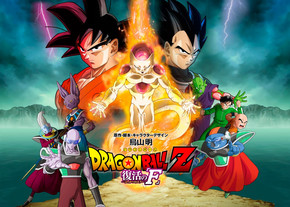
Movie Review: Dragon Ball Z - Resurrection F

Dragon Ball Z: Resurrection 'F'Dragon Ball Z - Resurrection F


A while back I reviewed Battle of Gods, the first of the two canonical, Akira-Toriyama-penned sequels to Dragon Ball Z. I watched Resurrection F directly after that, but ended up not writing up a review to it. Time will tell if I ever start with Dragon Ball Super, because of how I've ended up letting my JJBA reviews kind of fall on the wayside, but hey, we'll see. 

The general consensus of Resurrection F is that it's... okay. Which is more or less what my sentiments about it is, really. That's why anime-movies as a medium to tell an ongoing story doesn't really work that well, something that the Naruto pre-Boruto movies showed -- it's all invariably just generic 'oh, another in a line of Otsusuki clan members wreak havoc, the good guys beat them!' Thankfully they caught this problem after F, and decided to make it an anime series instead. 

So F takes place after Battle of Gods, and features the return of Dragon Ball Z's uncontested most iconic villain, Frieza, when the remnants of his troops run around to Earth to use the Dragon Balls and bring Frieza back to life. Frieza then decides to boast that since his big Achilles' Heel was that he had been so sure that he's numero uno in the universe, he's going to train now to try and surpass the likes of Goku. Small problem? Goku and Vegeta are also training with Whis at Beerus's plane. Also, y'know, motherfucking Beerus exists. The climax loses a lot of its tension when Beerus and Whis literally show up halfway through to make food jokes and makes it clear that Frieza, in his golden form, is pants-shittingly scared of Beerus and only plot contrivance makes Beerus more concerned with strawberry cakes and not pimp-slapping Frieza. And even then, the likes of Gotenks and Majin Buu don't show up either despite them being a candidate to match Frieza's power levels. It would be something if Frieza turns out to be able to Worf Effect and one-shot them no problem or whatever (like what Beerus did to Buu in the last movie) but their absence here in an alien invasion just felt strange. Krillin even tells Android 18 to stay back at one point -- why, exactly?

This leads to a relatively weak and repetitive fight between the Super Saiyan Blue forms of Vegeta and Goku -- and while I'm a big Vegeta fan and seeing him get equal billing to Goku in this movie, poor Frieza himself never felt like the threat that he used to be. Frieza's afraid of Beerus, Whis is even stronger than Beerus, and both Goku and Vegeta actually have time to take turns to beat Frieza up. Sure, the Earth gets blown up, but Whis literally reverses time immediately. It's a bit odd, really, when the main part of the movie has me going 'okay, can Frieza even put up a decent fight against Goku, let alone Goku and Vegeta?' instead of 'oh my god how do they win against this new foe?' Like, honestly, I'm not sure why the characters are worried when in theory Gohan should be able to take on non-golden Frieza no problem, lack of training notwithstanding.

There's a lot of cool things in the movie, though. The creepiness of Frieza being brought back to life, with an amazing rock star theme song, and him immediately reverting to form and blasting his minions? That's awesomely done. The big early battle royale action sequence of Piccolo, Krillin, Master Roshi, Gohan and Tenshinhan against Frieza's army is amazingly done and a wonder to behold. Master fuckin' Roshi gets in on the action! However, it quickly ends, and we're just left with a sequence that's just 'wait for Goku and Vegeta to show up' and that's easily the weakest part of the movie -- the Goku/Vegeta/Frieza fight may be generic but it's at least a cool action sequence... albeit not one that's particularly innovative.

Oh, and there's this random space cop that's from Akira's other work. He's... okay. A bit in the movie too much for my tastes, but I didn't mind him that much.

I enjoyed it enough as a brief action anime movie, and the animation is gorgeous (though it ended up being a bit spotty around the time Frieza went Golden, but the first half is pretty enough I'm not complaining) but it certainly leaves a fair bit to be desired, especially compared to its predecessor.

Tuesday, 25 July 2017

Game of Thrones S07E02 Review: Recaps and Choices

Game of Thrones, Season 7, Episode 2: Stormborn


A running theme I see throughout this episode is choices. Theon has to make the choice of charging in to fight his big scary Viking warrior uncle and save his sister, or succumb to past mental traumas and jump overboard. Jon has to make the choice to submit to the popular opinion that he should stay in the North, or to abdicate leadership to Sansa while he goes off to meet Daenerys. Sam has to make a choice on whether to help Jorah Mormont or not. Daenerys has to likewise make various choices -- submit to popular opinion of her court to one-shot King's Landing, or go through a more intricate plan to win the hearts of the people; as well as the choices on what to do with Varys the Spider. Randyll Tarly has to make a choice of taking the dishonourable deal Jaime offers him, or to follow what's honourable and pledge his loyalty to the Tyrells. Hell, even Nymeria the direwolf has to make a choice whether it will follow Arya back to Winterfell, or ignore her and continue being the pack mother to the wolves of the forest.


A fair amount of this episode's still a holdover from the previous one, where the three main rulers in place -- Daenerys, Jon/Sansa and Cersei -- consolidate their armies and strategies. Cersei's insanely outmatched, but Daenerys wants to rule instead of conquer, whereas Jon's far more concerned with the White Walker threat and he knows that the motley crew of wildlings, northerners and night brothers, as powerful as they are, won't stand a chance against the army of the dead. So both Daenerys and Jon really try their best to go and do what they think is best.

We spend only a brief moment with Cersei in this episode, seeing her basically do what Tyrion predicted she would do -- talk about how Daenerys, daughter of the Mad King, crucifier of noblemen (it's some really nice selective propaganda) is coming with a horde of savage Dothraki barbarians and mindless, soulless Unsullied -- which, of course, Tyrion and Daenerys direct away from King's Landing to deny Cersei this advantage. Cersei's forces are still relatively nobodies other than Jaime, Qyburn and Zombie Mountain, but Jaime gets to talk with Randyll Tarly, Sam's father. Randyll gives a pretty cool speech about how the Tarlys' name means something and he doesn't stab people  in the back, but Jaime pulls out the silver tongue and promises the Warden of the South position to Randyll, potentially putting Randyll at odds with Sam. Really, really want to see Sam shishkebab this fucker with Heartsbane, that's for sure. Highly unlikely, though.

Cersei also discusses with Qyburn about how to deal with dragons, and apparently Qyburn watched the Hobbit. He stages a demonstration with a gigantic crossbow with one of the dragon skulls they have in their basement, working on the actually-solid logic of 'they can be hurt, they can be killed' considering how Drogon being hurt with spears apparently spread enough to Qyburn's ears.

That's about it for Team Cersei in this episode, though, unless you count Euron at the end. So let's talk Team Jon.

A good chunk of the Team Jon episodes is just Jon waffling on whether he needs to go to Dragonstone. Sansa and Davos and various other house heads remind Jon that this is exactly how his grandfather Rickard died, as well as Robb and Ned. Jon actually listens to this until he gets Sam's raven from last episode, which shows that the huge pile of Dragonglass? It's actually under Dragonstone, making Jon and Daenerys's team-up all the more important. Except every single person in the room (even cute miss badass Lyanna Mormont!) thinks it's a fucking bad idea to trust Daenerys -- not to mention that distrust against Lannister and Targaryen houses are still insanely high. I did love the callbacks to Tyrion's interactions with Jon and Sansa in older seasons, but Sansa's guarded suspicion, considering what she's been through, is certainly understandable. Sansa and the others are painted as short-sighted fools, but can you blame them? As Jon Snow reminds us all, none of them have seen the Army of the Dead or what it'll take to defeat them. Apparently, the man knows far, far more than nothing this time around.

This leaves Sansa as the de facto Lady of Winterfell as Jon and Davos head down to Dragonstone to negotiate with Daenerys. Daenerys expects Jon to bow, though I'm pretty sure the conversation will go slightly differently than that. Littlefinger's role in all this is expounded upon. He's been woefully underused for the past season and I believe completely absent in the one before, so seeing him back in full slimy form is amazing. He doesn't get to do much but deliver ominous smirks and smiles from the background, but finally gets to have a conversation with Jon in the Stark crypts, where he, in his own words, tries to have a full conversation with Jon. Jon just straight-up doesn't trust Littlefinger (although I would argue that he hasn't properly met the man before, I could believe someone else like Sansa or Robb telling him all about it), although he was at least civil when Littlefinger brilliantly spins around events to make it look like he's a steadfast ally to not just Sansa but the Stark family all along. Of course, ending the conversation with "I love Sansa, just as I loved her mother" is going to get Littlefinger punched in the face by Sansa's brother (well cousin but whatever), what did you expect was going to happen there, Littlefinger?

Anyway, Sansa's Lady of Winterfell and that's going to give her a lot more agency to be proactive instead of just arguing with Jon all the time. Jon's going to Dragonstone... but so is Davos even if he doesn't get a lot to do this episode -- and, lest we forget, Melisandre is also at Dragonstone. So that's going to be an interesting conversation.

Let's talk Arya, actually. Despite the gigantic uproar about the Ed Sheeran cameo last episode (which I don't get, all you silly people overreacting, the man had like two, three lines and then just sat in the background, I didn't even notice him until after the episode and someone told me) she didn't follow that particular plot line, and she went back to retracing her steps towards King's Landing. We get the welcome return of Hot Pie, her old travelling companion, and we get to see how much of an antisocial, soulless Faceless Girl she's became, as she ends up being almost entirely alien to Hot Pie despite still being technically friendly (her remark about making pies is hilarious and I shouldn't have found it so funny but I laughed my ass off). She also gets the in-universe revelation that Jon Snow has became the King in the North and killed the Boltons. Then she has to choose between two paths, on whether to continue on to King's Landing and turn Cersei into a pie, or to return to her family. She ends up returning to her family, and that was more emotional than I expected it to be.

She meets Nymeria's pack of wolves in the way, which is yet another callback to the rich history that the TV series has developed over the past six seasons, and Nymeria's grown to titanic proportions and is the alpha female of her own pack of wolves. It's a logical explanation, and a payoff everyone's expecting... yet, just like Arya herself having changed from a spunky little tomboy girl into a morose, sometimes-emotionless psychotic assassin, so has Nymeria. We haven't seen Nymeria at all since Arya drove her away to run into the woods back when Joffrey was doing his prat-prince deal, yet she's gone through her own trials and tribulations. "It's not her", Arya says at the end of the beautifully-choreographed scene, and while I am sad that Nymeria and Arya won't be this awesome hunter-and-pet team murdering queens and mountains together, it... makes sense? "It's not her" could apply to the fact that Nymeria had grown into a different wolf herself, and as such won't accept being reduced to a simple pet to a human anymore, but it could also be Arya trying to rationalize Nymeria's thinking -- the Arya that stood before Nymeria is so alien, so changed, from the Arya that Nymeria knew waaaaaay back in season one, that she's not going anywhere with her. So yeah, that's a scene that I liked more after reviewing.

Oh, we have another member of Team Jon that's separated from the main North cast, and that's Samwell Tarly. We get a brief conversation about Archmaester Horace Slughorn Ebrose (he gets a name!) chronicling the current history and Sam deciding that it needed a catchier name (it's totally going to be 'A Game of Thrones' isn't it). But mostly it's just Sam going against his masters to try an experimental treatment to treat Jorah Mormont, telling Jorah that he served under Jeor Mormont and thus Jorah owes Sam's loyalty thanks to that. Coincidentally, Sam helping Jorah is certainly going to come into play for the inevitable Jon-Daenerys alliance. Now the problem is how the two of them are going to leave Oldtown and get to Dragonstone.

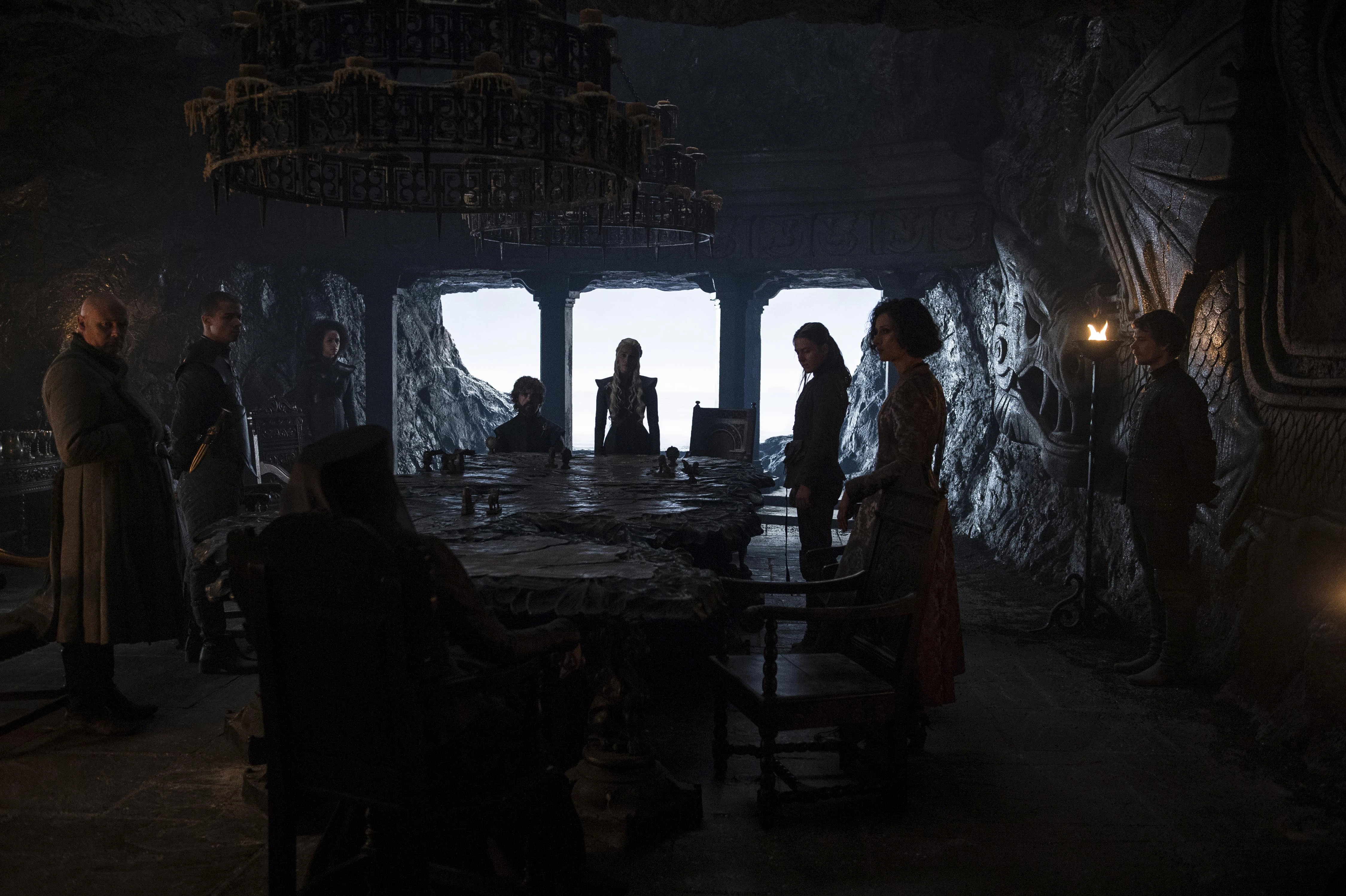
So, back to Team Daenerys, then,  of whom we get the most screentime in no small part due to it having the most big name characters. Daenerys spends a fair bit of time around the big map table, and in the opening scene, dissects Varys's contributions to her cause. Keep in mind how Daenerys has been (similar to the problem Jon faced last episode) been unrelenting in her 'justice', uncompromisingly exiling Jorah Mormont only to find him still loyal in exile. Now he had a choice. He laid out Varys's sins to bear -- how he betrayed any member of the royalty he didn't like and supported the next. The Mad King, Robert Baratheon, even his brother Viserys. Varys's role in planting the idea for Viserys to obtain a Dothraki Horde via marriage, and his subsequent ordering Daenerys's assassination back in season... three? is also brought up. But Varys's impassioned speech to Daenerys, about how he's always done for the people, is something we know of him during Varys's past conversations with Tyrion, and it's a very, very awesome unflinching speech from him as he tells Daenerys -- behead him, feed him to the dragons, but he is doing what he feels is right for the people. Daenerys opts to keep those valuable to her, those known quantities she can control, and decides to keep Varys around as her conscience. If ever she becomes the type of ruler that Aerys, Robert or Joffrey became, Varys should tell her how to change instead of plotting behind her back.

Her big strategy discussion with her far-more-developed lieutenants is a lot more interesting than Cersei or Jon's strategy session where only two or three people mattered. Yes, Varys is silent throughout the actual discussion, and Tyrion is more of a spokesperson for Daenerys, but Daenerys's deft handling of the situation as she tries to juggle Yara Greyjoy, Ellaria Sand and, most importantly, the most badass old lady in the entirety of Westeros, Queen of Thorns Olenna Tyrell, is amazing. Olenna and Ellaria are very, very ready to just tear down King's Landing out of vengeance, and Daenerys's initial plans to just have the two of their forces (and the Ironborn) besiege King's Landing so they don't feel like an army of invading foreigners, is a solid rebuttal against Cersei's character assassination attempts and very logical, and she quickly puts to rest any doubt that she won't be participating by ordering the Unsullied and Dothraki to depose Casterly Rock. She also finds it beneficial to work together with the King in the North, provided he bend the knee.

We also see her have an amazing conversation with Olenna Tyrell after the meeting, where she gives a few sage words of advice -- Margeary was a queen beloved by the people, and she also ended up quickly dead. Olenna tells Daenerys to be ruthless and ignore the advice of smart men to survive. Again, Olenna, Varys and Tyrion are all wise and have all succeeded where others have failed but they have different views as to the type of ruler Dany should be. It's interesting.

Also, Daenerys's group finally meets Melisandre. It's... it's an okay scene, I guess? It didn't last very long, and felt more like an acknowledgement of another part of the Westeros setting that Daenerys's presence has bled over into.

We get a relatively long payoff scene between Grey Worm (who's about to invade Casterly Rock) and Missandei, where Grey Worm gives a speech about how the Unsullied are trained to conquer their fears at a young age -- some horrid swim or drown type of shit. But Grey Worm never had any fear... yet now he has fear thanks to finding love. It's standard stuff but both Grey Worm and Missandei have been characters we know and followed through for a long time and to see their relationship pay off is definitely nice. Grey Worm's raw embarrassment and hurt as Missandei takes off his clothes and sees his disfigured genitals is well-portrayed, as is the quick discussion of the logistics of a castrated man having sex -- oral!

And then, Yara and Theon are supposed to bring Ellaria and the rest of the Sand Snakes back to Dorne. We get a brief scene of the Sand Snakes teasing each other, and Yara and Ellaria flirting and trying to fuck. It's about time for the episode to end at that point, and I was honestly caught off-guard when the ship suddenly shook, and apparently Euron's gigantic Ironborn fleet shows up and the two go to war with each other. We get some cool scenes especially on the part of the Ironborns, with Euron, Yara and even Theon hacking apart goons on all sides. It's a suddenly tense last five minutes of the episode as chaos breaks out and Euron completely smashes a huge wing of Daenerys's army, kidnapping the heads of Dorne and essentially sinking the Ironborn portion of Daenerys's forces.

But let's talk about the characters themselves. The Sand Snakes were much-maligned by the Game of Thrones fandom for being, well, kind of shit and bland and personality-less, but they were at least somewhat memorable if for all the wrong reasons. One of them (the Jessica Henwick one) uses a whip, but that's all I can tell them apart from. Euron, in his murderous rampage of Yara-allied Greyjoys, is assaulted by the two that aren't Ellaria's daughters, Obara (the spear one) and Nymeria (the whip one, I had to look up these names). And say what you want about them being badly written characters, at least their fighting scenes looked cool. Euron dominated all of them, of course, but the spearfighting between Obara and Euron's pretty badass, and Nymeria's horridly impractical whip in closed quarters is demonstrated well and the two get the ax.

Ellaria and Tyene get to kill a bunch of Ironborn, but they end up being hostages to Euron. Yara gets to fight Euron a bit but is quickly overpowered, upon which we get the final scene of the episode. Theon's pussying out might be easily derided to someone who doesn't put too much thought into watching an episode, but at the same time, the composition of the shot, as well as Theon's own history with dealing with diseased, torture-happy lunatics, means that his PTSD won over and he defaults to jumping off of high buildings to escape his fate. Though honestly, even without the PTSD, it's not like Theon can really save Yara at that point.

Still, it's a pretty shocking ending to the episode, and I certainly didn't expect that. Great stuff. I don't super-care about the Sand Snakes dying, but the larger picture of what Euron single-handedly accomplishes for Team Cersei is amazingly portrayed here. As is, y'know, the rest of the episode. 
Monday, 24 July 2017

Movie Review: Indiana Jones and the Temple of Doom

Indiana Jones & the Temple of Doom [1984]


A couple of days ago I watched Raiders of the Lost Ark,  the first movie in the Indiana Jones franchise which would become a cult classic. Today we're going to be talking about Temple of Doom, and I don't think I have much to talk about this movie, to be honest. It's a sequel, one that puts INDIANA JONES squarely in the title because it's gone beyond the one-shot-and-done mentality of Raiders. Yet, at the same time, as the internet tells me, Temple of Doom is meant to be a prequel. Not that there's much to really tie Temple of Doom to Raiders of the Lost Ark, mind you, beyond Indiana Jones' presence as a protagonist in both movies.

Temple of Doom is a flawed movie, albeit still managing to retain an aura of fun about it. It's really hard to justify some of the flaws of the movie some thirty years later, though, simply because of how utterly racist it gets at times, so let's tackle that part of my criticism first. Firstly, the opening act's racist Chinese businessmen, who are not only greedy bastards that cackle like morons when Indy drinks the cup of poison, and instead of smartly waiting for Indy to die from the poison instead elects to taunt him. There's also the sheer incompetence of the hired pilots, who, for no particular reason other than to facilitate Indy's crash-landing in India (which is a lot further from China than the map implies, mind you) decides to jump ship with a parachute instead of shooting them or pushing them out of the plane. 

It's not entirely racist, mind you, with several positive supporting Chinese characters like Indy's plucky sidekick Shortround, and that other Chinese dude that got his ass shot in the opening scene. A lot of people find Shortround annoying, and while I can see that, I actually find him a refreshing breath of air because while he does shout every single line he is given with a less-than flattering thick accent, he's also a very competent sidekick and one whose friendship with Indy is at least portrayed very well.

The portrayal of India is a bit less... well done, with the good guys' village being shown to be run down and ramshackle and backwards, with weird nasty-looking food that our protagonists tolerate at best, and cultures that some of the white characters make fun of. And it's not even shot in India, but in Sri Lanka, so it's not even the right group of Asians. It gets worse when we get to the palace, where the only flimsy justification for the racist portrayals is that they're all under the control of the psychotic Kali-worshiping cult. Despite Kali being an actual goddess in the Hindu pantheon, and while these particular cultists are insane, the movie's portrayal of Kali as this demonic figure demanding human sacrifice is pretty sacrilegious. And that's not to mention the whole 'look at all these yucky food! Indians eat eyeball soup and monkey brains, how horrifyingly grotesque!' scene, which can, I suppose, be justified by the Kali cult trying to gross-out Indy and the others, but still, the racist implications are still there.

I dunno. Older Hollywood movies tend to have some measure of racist undertones, but I felt that Temple of Doom kind of took it too far. That doesn't stop me from actually enjoying the movie and laughing at some parts of the racism, mind you, but the movie has a fair amount more problems than racism.

And the biggest problem is easily Willie. Coming off Raiders of the Lost Ark, where main girl Marion has her moments of trying to outfox Belloq, or her action scenes in the bar, giving her equal amounts of 'damsel in distress' moments and 'independent character' moments. It's not perfect, and Marion has her share of annoying screeching moments, but that pales compared to Willie, who spends 100% of her screentime either being a spoiled princess ("I cracked my nail!" "I don't wanna eat weird exotic food!") or being a screeching harpy. And I know she's a dancer that gets dragged against her will, but shit, that doesn't mean she has to stick for the entire movie!

Let's talk about what the movie does right, which is, as ever, atmosphere and set pieces. I'm not a big fan of the weird fight at Club Obi-Wan, which felt more like slapstick comedy than anything, but Indy and Short Round going off to free the enslaved children and recover the mystical plot device from the Thuggees. It might go a little bit too mystical mumbo-jumbo for my tastes compared to the previous entry (where the only supernatural bit was only the Ark vaporizing the Nazis at the end) but otherwise it's fun stuff as we jump from one cool set piece to the next. From the surprisingly graphic heart-ripping magical ritual with the unfortunate sap being sacrificed to hellfire, to the fight against the slave driver, to evil Indy, and most importantly, to the amazingly choreographed roller coaster ride in the mine, it's breakneck action afterwards.

Now if only Willie was written out of this movie!

It's fun stuff, with lots of action scenes and fun swashbuckling moments, and while nowhere near as good as the first movie (sequels rarely are, Empire Strikes Back and Winter Soldier notwithstanding) it's still one that, while having a relatively large amount of weak parts, still gave me a decent time while watching it once I get past the racist undertones. 

Sunday, 23 July 2017

Pokemon of the Week #19: Rhyhorn

#111: Rhyhorn, the Spikes Pokemon


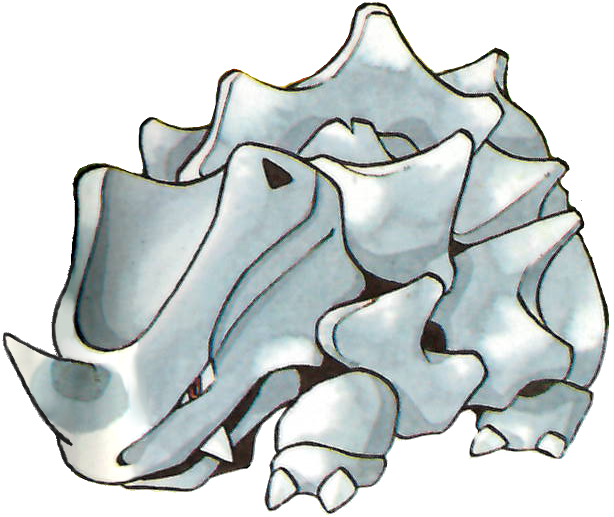
RhyhornSo this week we're going to look at one of the original 151, Rhyhorn. Well, the randomizer actually picked Marshadow this week, but that thing doesn't actually have much lore yet. Rerolling the dice gave me another one of those damn elemental monkeys, and I'm not going to talk about them. So, Rhyhorn.

What's Rhyhorn, really? It's this awesome-looking rhinoceros-protoceratops beast made out of rocks. Rocks arranged in the shape of armour plating. Among the denizens of the first generation, I've always found the likes of Rhyhorn and Nidoking to be strangely far more complex than the 'animal with a particular element' that a good chunk of the generation had. And honestly, at the risk of sounding like a Genwunner, it's the right balance of complexity that makes Rhyhorn's design busy enough to look like what they wanted him to look -- an armoured rock dinosaur rhinoceros -- without adding superfluous details that distract from the spirit of the thing.

It's a pretty cool looking beast, that's for sure. It evolves into Rhydon, a bipedal fat theropodal dinosaur thing with a fucking drill for a horn.  The less said about Rhyperior, the better -- what an ugly-ass creature. Though I did love the arm-cannons as a concept, and he's undoubtedly a powerful beast in the metagame, Rhyperior isn't a design I'm terribly fond of.

Spr 1b 111.png
hurrrrrrr
Rhyhorn, though, is one of those rare cases where I think that the basic stage of an evolution line is actually the coolest-looking out of the three. And I'm not saying that because I'm obligated to talk about Rhyhorn. It's just cool, okay? At a glance it's simply a rock rhinoceros, but the shape of the head resembles that of ceratopsian dinosaurs so much, and a combination of the shifting armour plates and the angry look it has on its face just makes him look so dang badass.

RhyhornJungle61.jpgI have to confess that I never really paid much attention to Rhyhorn in the original generation one games -- it had an ugly-ass sprite, it's one of the many Rock/Ground types that feel really weak because Grass-types and Water-types sneeze on them and they die, and my biggest memory of Rhyhorn is when this whole epic battle with Giovanni in his gym gets set up only for him to throw out this weak-ass tail-whipping Rhyhorn. It's nowhere as cool-looking as it looked in the anime or the TCG.

I did have the TCG as a kid, with a pretty cool art, though. That's something. But my main exposure was still the games, which I still treat as the 'main' canon, so the lack of Rhyhorn representation -- it's an uncommon find in the frustrating Safari Zone that I only catch to turn itno a Rhydon and put into my box -- means that Rhyhorn completely flew under my radar until well into Generation III. I'm not sure Rhyhorns ever played a super-important part in the anime or the manga, either. Rhydons were, I remember, but Rhyhorn? There was one in the first Mewtwo movie, I think?

Rhyhorn in Generation III was still a Safari Zone encounter, but I remembered it being far more common there, given with a far more impressive-looking sprite that looked truer to the Ken Sugimori art. Generation IV made him an uncommon cave encounter, and Generation VI made him an integral part of the plot, with Rhyhorn being one of the very first Pokemon you meet in the game as an overworld 3D model -- the Generation VI protagonist's mother was a fucking Rhyhorn racer, and you can ride around in a Rhyhorn! I'm pretty sure that's the biggest relevance Rhyhorn has ever gotten in the games beyond his role as Giovanni's first fodder Pokemon.

File:111Rhyhorn RG.pngFor all my griping about Rhyhorn being under-represented, despite showing up relatively late in the games, Rhyhorn's actually a pretty shit Pokemon battle-wise. It's an insanely physical Pokemon, with more than half of its stats lumped into physical attack and defense. Which is probably great before the physical/special split, but is absolutely atrocious now. Rhydon isn't super-special either (though he looks cool) and Rhyperior's a pretty cool metagame bruiser, but Rhyhorn himself is burdened with the same weaknesses that all Rock/Ground dual types had -- four times weakness to two of the three available starters. You don't need Solarbeams or Hydro Pumps to kill a Rhyhorn, a simple Bubble will do. Again, a high physical defense statline is probably a great compensation for its 4x weakness to Grass and Water back in Generation I, but now? Yuck.

TeamMagmaRhyhornEXTeamMagmavsTeamAqua68.jpg
Disclaimer: Team Magma never
used a Rhyhorn in the games
Offensively Rhyhorn's actually insanely diverse, not helped by Generation I's hilariously unbalanced TM distribution. Naturally Rhyhorn learns almost exclusively physical attack moves, mostly just Rock and Ground with Megahorn added to Rhyhorn's repertoire in the third generation. He gets absolutely insane shit like Fire Blast, Thunderbolt and Blizzard from TMs... which probably hits less than Tackle on Rhyhorn's statline.

Lore-wise, all the Pokedex entries talk about how Rhyhorn's a dumb, charging battering ram. It has a one-track mind! It can't turn when it starts running! It won't stop charging until it falls asleep! It has bones 1000 times harder than human bones! It's brain is small! It can topple buildings!

Rhyhorn's honestly a really cool design that's near-unusable in the games thanks to its horrid stats and weak types. I mean, yeah, sure, Rhyperior's awesome and all, but this is about Rhyhorn. But that's honestly the weakness of many of the first two generations. It's just a shame that this cool design is never really going to see much use in the games. Like, I'm kind of tired of the Gen I love they've been showering us throughout the sixth and seventh generation, but if they really wanted to show Generation I love, update the statlines of the first two generations to match with the physical/special split!

TL;DR, cool rock rhino.

Saturday, 22 July 2017

One Piece 873 Review: Big Mom's Pursuit

One Piece, Chapter 873: Trapped Like Sweets in a Cage


Bit sick, so you'll forgive me if I'm a bit less verbose and/or late in reviews this week.

The cover page's kinda whatever. Bartolomeo's advertising Luffy-senpai stickers when they meet a village with Shanks' flag waving atop it. Could be a cool foreshadowing to Shanks being reintroduced into the plot again? Certainly overdue. But does Bartolomeo even know about Shanks at all? I'm certainly curious. 

We get the members of the Big Mom family picking themselves up and Katakuri directs everyone in an attempt to go and hunt down the Straw Hats down. Pekoms also shows up and fills them on just what Jinbe's crew did to him. I do like how the likes of Brulee or Pekoms aren't suddenly buddies with the Straw Hats simply because of their alliances of convenience, I always feel that inferior manga who randomly decides that 'hey, these two fight alongside each other for a fight, so the life-long allegiances that these villainous characters are totally thrown away, right?' Yeah, no. Also, apparently Big Mom's crew is invading the Germa ships. Whatever happened to the actual Vinsmokes, though? That wasn't made entirely clear.

Of course, Big Mom is rampaging. Smoothie manages to get away from the smashy-smash, but apparently Opera got his lifespan sucked away by Big Mom. Is he dead? Doesn't really matter, honestly (and it's not like it's a particularly big loss, we just had another big goop-man not too long ago in Trebol). Streussen is unable to make the cake because he's injured during the fall. A lot of people, including myself, speculated that Sanji might just be the cook to cook up the cake and placate and/or make a brief alliance with Big Mom, but on the other hand, it's nice to see that particular 'obvious route' get thrown out of the window.

Perospero manages to trick Big Mom and tell her that the Straw Hats totally store the spare wedding cake that they totally made, and after a horrifying threatening panel, Big Mom hops on Zeus and flies off to hunt down the Straw Hats personally. 

Perospero is freaking out, but then Pudding shows up and says that, yeah, they can actually make the cake with the time that Perospero bought them. She wants to 'reward' Big Mom for getting rid of Sanji for her -- what Pudding's thinking right now is still kind of ambiguous and slightly all-over-the-place, but it's not particularly bad and ambiguity's always been the name of her game anyway. She's like doubling-down on the 'I hate Sanji' thing, I think. It's entirely possible that it's just going to be Pudding that makes the cake to placate Big Mom, and shows up to rescue Sanji? 

The Straw Hats, meanwhile, have a brief sequence where they hijack poor King Baum (who's like having some smoochie-smooch time with a lady tree of all things) but then Big Mom shows up on her cloud carpet, screaming "CAAAAAKE!" and intent on murdering them. So yeah -- disregard all my talk last week about this being an anticlimactic conclusion because clearly we're just starting to ramp up to the climax. Good stuff.

Friday, 21 July 2017

TV Review: House of Cards, Season 1

House of Cards, Season 1


I thought about making this an episodic thing, but I can only sustain one old TV series at a time, and I'm already halfway through with Walking Dead, might as well as see it to its bitter, shambling end. I'm far more at home reviewing fantasy/sci-fi material than politics, anyway. But I recently watched the entire first season of House of Cards, and it's... an experience. It's around 4 years old now, and one of the pioneers of Netflix's "here, have an entire season online in a single day" model.

And it's... well, the experimental portions of the show are definitely evident here. That's not to say that it's bad, of course. It felt like reading a novel translated onto live-action, only without the constraints of having to end every episode with a conclusion. Obviously each episode kind of comes into its own, but the whole thing blurs together because that, I think, is the intention of releasing 13 episodes at once.

One of the biggest weakness of House of Cards is its... dryness. Kevin Spacey, as this master manipulator Frank Underwood, is absolutely entertaining, of course, and the main plot of politics and Frank's big plan to get back at the administration and elevate himself to a position of higher power is... well, I'm hardly an expert in American politics (read: I don't know jack shit about it) but I managed to follow the series relatively well without it resorting to huge introdumps. It's well-acted, all the actors involved are definitely talented, but there's this mechanical efficiency with the method of storytelling that honestly robs the cast of any personality. It's good, don't get me wrong, but it's not... that great, if you get what I mean? The show doesn't feel like it's about actual characters, but pieces on the board moving and following a script. The actors do their best, but a lot of the more emotionally-charged decisions fell flat and felt like it happened just because it's needed for the story.

Which seems like harsh criticism, but thankfully, once more, the actors do their best to make the weak scripting work. Way too much time is spent on the setup and the education bill and the watershed act, and while Frank is absolutely entertaining as all hell to watch, there's a sense that if the series continues with just 'oh look at how devious Frank is' it's going to be an interesting procedural but not a particularly engaging larger story. Frank did get a couple of humbling moments, most interestingly the eight episode which had him romp around his old campus and display that he's more than a vengeful political machine, and the moments where he shows that he actually does miss his wife, but other than that he's honestly a bit one-note and only Kevin Spacey's amazing performance saves the character. The other big star in the show is Peter Russo (Corey Stoll), who, in my opinion, displayed way more humanity and character than the rest of the cast did, between his struggles to balance his moral ethics with his part in Frank's machinations, his struggles to be a good boyfriend and father and leader of the small people, and all that stuff.

His journey through trying to get through a sea full of drug abuse, free sex and alcoholism, being played on a string by Frank as he forces Russo to basically fuck over a lot of the people he cared for in order for one of Frank's chessboard moves to work, and then groomed up into the next governor only for Frank to reveal in the third-to-last episode that Russo's actually a fall man and ends up getting killed off after hitting rock bottom... Russo's easily the most entertaining character in the show, and the revelation that Frank built him up to literally discard him is a well executed twist.

There were some points in the show, looking back, where things felt a little off (if Frank wanted Russo as a fall guy, why freak out so badly about the watershed act?) but overall the plot kinda made sense. The introduction of Raymond Tusk as the bigger chessmaster that has been manipulating events to get Frank to strike a deal with him in the last two episodes is a twist I don't mind at all -- though the last two episodes felt more like setup for the next season more than a conclusion to season one's story.

The other big players here are Frank's wife Claire (Robin Wright) and plucky reporter Zoe (Kate Mara), and whether you like them or not is really subjective on whether you buy their act. Both Wright and Mara are amazing actresses that played with their material really well, but Zoe's role from a younger version of Frank's "I'll do anything to advance" mindset to rather abruptly going from being happy to trade sex for services to suddenly refusing to do so despite insisting multiple times earlier in the season that the age gap doesn't bother her felt like it wasn't a well-developed change of dynamics, and, again, seemed to exist solely to give Zoe a reason to be an antagonist in the next season because at the end of this she's gone from Frank's lover into someone actively trying to unravel the conspiracy. It's not the worst writing I've ever seen, of course, but the reporter stuff that she did earlier in the season is absolutely boring, and the Frank/Zoe scenes don't really work that well despite both the actors' efforts and looking back at it as a whole, the Zoe plotline really borderlines on ridiculousness if not for Kate Mara's amazing efforts at making the character slightly sensible.

Claire is a little bit better, because her role as Frank's partner and emotional confidant in a bond different from the traditional romantic husband/wife bond is well-displayed, as is her growing annoyance at Frank passing over her work for his own agendas and sleeping with Zoe (something she's okay with initially, but come on). But any time we go back to the sub-plot with the drilling platform and the pregnant idealist partner and it's just so freaking boring.

There are other sub-plots and characters, of course. Frank's right-hand man Doug Stamper is a personal favourite minor character, having great scenes with Frank, Russo and plot device prostitute Rachel. Also, the... chief of something-or-other Linda Vasquez is also a character I'm very fond of. Raymond Tusk, the 'final' antagonist that's built up for the next season is delightfully hammy. But by and by the rest of the supporting cast are either strawmen that only exists to be antagonistic for the duration of the arc, or are unmemorable.

It's clear from the get-go that this season is simply a set-up for what's to come next, and it suffers somewhat from that. Perhaps a more trimmed-down season, with maybe 9 or 10 episodes instead of 14, would have worked and be paced a lot better. Despite my complaints it's still a show that I like a fair bit, proving that a standout cast can really save a half-baked script. I'm sure that if I watched the latter seasons this one would probably be a bit better looking back, but at the same time there are a fair bit of things that go against it that annoyed me while watching it.

Thursday, 20 July 2017

The Flash S01E03 Review: The Streak and the Hood

The Flash, Season 1, Episode 3: Things You Can't Outrun


It's another episode whose biggest weakness is being too similar to the second episode. It's pretty much setting a standard for the first season of Flash, which is general metahuman villain-of-the-week fights. We get him fighting a villain, this time the Mist -- another obscure villain -- as well as the B-plots being 'Barry struggles with being a superhero', 'Iris does... a thing' and 'Harrison Wells being vaguely evil'. It's not bad because it's still the third episode (and the first season does do more things as it goes on, thankfully, but looking back it certainly feels relatively weak.

Of course, Anthony Carrigan (also known as a different DC villain -- the more prolific Mr. Zsasz in Gotham) plays the Mist amazingly well as a creepy villain, and the special effects work relatively well. Kyle Nimbus is able to transform into a mist of poisonous gas due to being fused with the cyanide gas that's supposed to kill him during his execution at the night of the particle accelerator explosion, and goes around committing crimes after discovering his superpowers. Barry defeating the Mist is weirdly a simple matter of exhausting him, and Harrison Wells locks the Mist up in a brand-new superhuman prison.

Also the side characters do get a fair bit more chance to shine as Caitlin gets to be the member of the B-cast to get some form of a subplot all to herself as the reminisces about her fiance's heroic sacrifice, and we finally get to see Ronnie Raymond for the first time in a flashback where he's presumed to be killed. Although, as anyone who has half a brain probably figured out -- nope. It's a cool enough subplot, though.

The Iris/Eddie stuff continue to grate, as is Joe's discovery of Iris's romance with his police partner. It's innocent enough in short amounts, but it is undoubtedly the weakest part of the series. Joe gets an amazing scene with Henry Allen at Iron Heights, though, which is amazing. We also got some more superhuman-ability exploration bits, with this episode discussing Barry's faster recovery rate and metabolism -- though he still feels pain so he's not exactly Wolverine-level "instantaneously heal from any injury".

I also remembered this episode for making me absolutely pissed off that Cisco dubs Barry "The Streak" instead of the Flash. We do get the name relatively early in the series, but it gives me shades of Green Arrow's "The Hood" and "The Vigilante" monikers which sounded way, way too hard for them trying to avoid using what the character they're adapting is called.

DC Easter Eggs Corner:

  • The Mist (a.k.a. Kyle Nimbus) is a Golden-Age villain who fought Sandman and later became the arch-enemy of Starman. He's actually relatively prolific in the Starman comics, and in the comics he turns into generic gas instead of the specific hydrogen cyanide he does here. 
  • The cinema is playing "Blue Devil II -- Hell to Pay" and "The Rita Farr Story". Blue Devil is a minor superhero in the DC comics, who is actually an actor that acted as a character called Blue Devil in the comics before some deal with the actual devil fused him with his suit and turned him into an actual devil, whereas Rita "Elasti-Girl" Farr is a member of the superhero team Doom Patrol who's also in the show-business.
  • Ronnie's "like fire and ice" comment is, of course, a reference to his and Caitlin's future/comic-book alter egos, Firestorm and Killer Frost. 
  • Barry notes about how he doesn't want a museum built in his name. The Flash Museum is one of the more iconic parts of Flash's Silver Age mythology. 
  • Big Belly Burger, a recurring joke/franchise in Arrow, makes its first appearance in Flash in this episode.

Tuesday, 18 July 2017

Game of Thrones S07E01 Review: Tablesetting

Game of Thrones, Season 7, Episode 1: Dragonstone


The North Remembers.
So a huge warning to anyone not caught up to Game of Thrones, I'll be reviewing things in relatively intricate detail, both in respect to the novels and the show itself. Mind you, I'm not going to do a dissertation about the differences and the themes explored between page and screen, but, again, expect some references to the books every now and then.

Without further ado, how glorious was that opening theme? It's an episode that's more about table-setting, sadly, so there's not really that much that lives up to the one-year wait between the previous season and this one. Of course the actors are talented enough to hold an episode that's mostly exposition on their own, and I have enough confidence in the writers that it's not going to be a buildup without a satisfying payoff, so it's enjoyable enough to watch the episode and be happy about it. 

The episode's most exciting scene, for me personally, was the first scene it showed us. Walder Frey is inexplicably alive and talking to his huge family of sons and nephews and whatnot that is fucking hard to keep track of (seriously, I have the genealogy section of the addendum in my copy of Clash of Kings and I still can't remember how half of these idiots are interconnected to each other). I'm left to wonder if this is a scene that took place in the past, or something... before realizing that Arya is using her Faceless Men skills to impersonate Walder Frey, giving the mother of all amazing speeches before poisoning every single member of the Frey's family other than the underage wives to death. David Bradley is an amazing actor, and always has been enjoyable as the cantankerous Walder Frey, but here he gets to show off another part of his acting chops as he plays a disguised Arya, talking and gesticulating wildly like the egomaniac that Walder Frey is, before damning the Freys for killing her family, and in one swift stroke murders a whole ton of people. If Cersei didn't blow up the sept at the end of the last season, Arya would've probably held the record of most people killed by a single person. 

But after that, the seventh season premiere is content to slow down a little and explore the ramifications of the events that ended the sixth season. In addition to the Frey massacre, the sixth season also served in ending several long-running storylines -- the Boltons' takeover of Winterfell, as well as the whole complex situtation in King's Landing, leaving only Cersei in power. Oh, and Bran becomes the new Raven (whatever that means, as far as show watchers are concerned) and Daenerys leads the Horde her army to Westeros. 

So yeah, we get to see several scenes that's just getting characters from one place to the next. We get to see an amazing scene of the White Walkers and his moving army of undead death knights, decaying horses, a moving wall of snowy storms and even undead giants. That's all we get from our undying buddies for this episode, though honestly no one expected the White Walkers to suddenly murder everyone in the very first episode of the show. Hopefully the buildup for the Walkers doesn't take as long as, well, getting 'winter is here' into the show, and we have the Walker and Cersei plotlines running concurrently instead of 'let's deal with Cersei while the Walker stuff slowly, slowly builds up'.

We then cut to Bran and Meera arriving at the Wall, meeting with Edd (who I totally forgot got totally promoted into Lord Commander of the Night's Watch) and giving cryptic warnings about the White Walkers and shit and Edd's just got this hilarious "come the fuck on" expression on his face. We're then quickly cut towards King's Landing, where Cersei and Jaime, now the sole rulers of King's Landing with their very few allies basically outlining their situation. Enemies to the north, south, east and west. It's all a bit expository, but it's necessary to the more casual viewers comming in after a year's break. They also note their lack of allies (as far as named characters go, who's left? Zombie Mountain and the crazy alchemist Qyburn?) with the deaths of the Frey family. And honestly, for all the talk about Cersei being the final obstacle for Daenerys's rise into queendom of the seven kingdoms, it's hard to really feel that Cersei is a big threat right now. 

Of course... Cersei has already asked for help from Euron Greyjoy's Ironborn, who show up in a pretty impressive array of kraken-bannered warships. I'm not quite sure how they actually managed to build up such an impressive fleet after Theon and Yara stole all their best ones, and what little we saw of Pyke was a barren, tree-less bunch of rocks, but okay, I'll buy it. The deal between the two isn't super-lucrative, though. Euron's happy enough to put his chips as long as he can win Cersei's hand in marriage for... some weird childhood dream reasons, and his mockery of Jaime in front of everyone ("two hands" "you should try it") and his sheer nuttiness is entertaining enough, but Euron then proceeds to leave and bugger off to get Cersei a 'gift'. I'm not sure why Jaime ends up being such a dick to the only ally they might have, but his anger at Cersei is justified with his rants about how they never really talked about Tommen's suicide-death and how Cersei's growing even more distant. Again, the show's weakness here is probably being too transparent in telegraphing how Jaime's probably going to be forced to pick between Tyrion and Cersei in the near future.

Meanwhile, in the North, Jon and Sansa are butting heads similar to their counterparts in King's Landing. There are some exposition and moving pieces here and there -- Littlefinger's still around and being creepy, Tormund gets to man one of the castles to hold off the Walkers, little lady Lyanna Mormont is the most awesome little girl and could probably whup my ass in a fight, and Brienne is training Pod. Oh, and Jon and Sansa argue in public about how to deal with the traitorous Umber and Karstark houses that joined Ramsay Bolton. Jon's argument that the Umber and Karstark families should not be denied their houses and the treacherous heads of the family were killed anyway is... believable, but while Sansa's probably more spiteful than she should be, handing two castles that're going to be key points to stopping the Walker invasion to two inexperienced children isn't going to end well. 

Sansa notes about how she 'learnt a lot' from Cersei, and how they should not make the same mistakes that Ned and Robb Stark made -- putting honour above political strategy. Sansa wants to reward those who are loyal, while Jon wants to respect tradition. It's a neat observation of the two sides of the coin that is Ned Stark. One side the naive fool who got beheaded due to his simple black-and-white morality, and the other the beacon of honour and justice everyone should strive to be. Though the argument would be more poignant if Jon isn't such a dick to Sansa. "So what do you suggest me do, listen to you?" Trying to assert your superiority as a king so you don't get challenged in front of everyone is one thing, actively mocking your sister is another. Dick move, Jon. Especially when just a scene ago Jon's championing for gender equality as far as drafting civilians and children into combat. 

Mind you, taking previous events into account, Ned Stark was very, very fair in punishing traitors -- he did bring the Iron Islands to heel and basically took Theon hostage, as well-treated as he was, and never shied away from that. And Robb Stark's own brutal punishment of the older Karstark patriarch was what led the Karstarks to betray the Stark family in the first place. So there's a lot of awesome comparisons to be drawn as both Sansa and Jon struggle to find their place, with the serpent that is Littlefinger still trying to get Sansa to believe that she's the better candidate for the King, or, well, Queen in the North than Jon is. The fact that the North is facing two different threats -- Jon's very well-equipped to fight wildlings, psychotic bastards and wights, but woefully shit at dealing with the type of Cersei Lannister flavoured politics which Sansa can deal so well. Obviously the solution is to have our two main Starks actually work together, and other than the healthy infusion of Jon-dickery there's not much in the way of that. Still, I very much love the scenes between Jon and Sansa even if they're butting heads, so kudos on that.

There are probably two big filler scenes in this episode. The first is the Arya and the random Lannister soldiers. It's not just an excuse for an Ed Sheeran cameo, though, and it serves nicely to highlight how not all Lannister soldiers are evil. It's a bit ham-fisted with them talking about how they miss their failies and shit, and Arya's attempts to not to be treated as guests so she would be obliged not to slit their throats and steal their swords is darkly hilarious, but it dragged on for a bit too long. It is neat to see Arya laugh like a normal human being again after being in soulless vengeful assassin mode for so long.

The second filler scene (or scenes) are the Samwell Tarly ones. Sam isn'tn the most interesting character in Westeros. Hell, out of the highly-billed characters that get the most screentime, he's easily the least interesting. John Bradley-West does an amazing job of making the big lummox likable, but I honestly find it hard to justify really caring for long ponderous scenes like this. The montage is painful but I acknowledge its neccessity in highlighting how doldrum Sam's life in Oldtown is, and how he's justified in trying to steal books and stuff. The repetitive boredom of the Sam montage also makes the random jumpsacre of Jorah's scaled-skin leper hand shooting out of that door. The speech from the Arch-Maester about how nothing changes is delivered amazingly well by the actor but is hardly really necessary, and Sam finding out about the deposit of Dragonglass under Dragonstone isn't a super-big revelation. Even discounting the books, as Sam mentions here himself, Stannis Baratheon had said so several times in the past. I guess it's needed for the sequel hook of 'how to make Team Jon and Team Dany meet'. Overall, though, the Sam scenes dragged a little. Not so much to make me dislike the episode, but it did. 

The Hound's scenes arguably could also be called filler, but I really liked it, in no small part due to the great ham-to-ham combat between the Hound and Beric Dondarrion, the knight that never dies. They stumble across the house that the Hound hid out in and shared a meal (and later robbed blind) in season... four? Five? One of them, anyway. It's one of the weaker parts of the Hound's journey, and this season gave it a pretty sad payoff as the Hound's forced himself to bury them, trying to say a prayer for them and failing to even memorize the prayer. Dondarrion analyzes that the death is probably a suicide to stop them from dying and suffering out of starvation, something they wouldn't have had to suffer if the Hound hadn't stolen all their silverware.

I personally would've liked Dondarrion and Thoros to have more presence so their random re-appearance in season six after being a brief side-quest in season three (four? I'm bad at this), but I'm okay with how they're handled. The Hound gets to see into the flames and gets a vision of the Walkers marching to Eastwatch-by-the-Sea, meaning that the Hound and the Brotherhood Without Banners are probably going to join up with Team Jon Snow sooner or later. Again, it's more table-setting and plot hooking, but at least the Hound gets a cool, somber moment.

And finally, the scene ends with Daenerys's return to Dragonstone, where she was born and where the Targaryen dynasty used to rule in. It's a scene that's been build up for a long, long time and it felt... hollow, just like Dragonstone itself, until Daenerys speaks. I did like it enough, and I felt that the lack of a background music after the CGI dragons have flown by is relatively appropriate to showing Danerys's mindset without her going into a tirade about her current motivations. I could go into a long, long talk about how Daenerys has transformed over the past six seasons from an entitled confused girl into Freedom Fighter Dragon Queen of Eunuchs and Badass Women, but I'll just say that the lack of music (a stark contrast to every single exposition-heavy scene before this) makes Daenerys look introspective and that's good enough. 

So yeah. Daenerys has her army. Her dragons, her ships, Tyrion, Theon and Yara, Varys, Gray Worm, Missandei, and both Ollena and Ellaria are allied with her. She has Cersei overwhelmingly at an advantage even without the dragons, but on the other hand Jaime did know that Cersei's going to land in Dragonstone, so is there some surprise or meaning left behind leaving the castle empty for her? Hopefully it's not another batch of green explosives. 

Overall, though, a slow but still relatively strong entry in Game of Thrones, a fitting reflective beginning to the final season-split-into-two-seasons-deal. Could be worse, could be better.

Monday, 17 July 2017

The Flash S01E02 Review: The Episodic Part of the Show

The Flash, Season 1, Episode 2: Fastest Man Alive


So while the first episode was clunky but functional, as all great pilots are, the second episode delves a bit more into what we can expect from the day-to-day procedural episode of the Flash when it's not dealing with big scary time-changing speedsters. We jump straight into the character connections, mostly between Barry's two daddies -- Joe West and Harrison Wells (Henry Allen isn't super-relevant, really, bar being that wise voice Barry visits every now and then).

The villains of the episode are pretty down-to-earth, although they're sure to give DC fans a grin for using really obscure villains. Multiplex (an enemy associated with Firestorm, who will later show up in this first season) is the main metahuman enemy, showing that, yeah, they're going all-out with superpowers and not just vague approximations like the Mirakuru super steroids in the first two seasons of Arrow. Multiplex's special effects aren't super impressive but serviceable enough. Rounding up the villains for this episode is corporate executive Simon Stagg and his bodyguard Mr. Java, both villains of Metamorpho who, before this, enjoyed a brief cameo in episodes of Justice League and Batman: Brave and the Bold. It's cool. Of course, both Multiplex and Stagg get offed at the end of the episode, but the way they died -- Flash unable to save Multiplex and Stagg murdered by Harrison Wells who can stand up -- are well-executed, and Stagg's death shows that not all is well with Wells. He's a fatherly mentor to our hero Barry Allen but to  what ends?

And using the likes of Multiplex and Stagg instead of 'wasting' one of Flash's many classic rogues is certainly the way to go -- even if, looking back three seasons later, I really kinda wished more classic rogues were represented, and those that did really deserved more than their one-episode or two-episode cameos. Mirror Master, Abra Kadabra? I expect more from you guys in the fourth season.

There are some neat moments here that'll be the benchmark of future plot points. Barry's brief spat with adoptive dad Joe and his reconciliation; Harrison Wells being the mentor; Cisco and Caitlin being a little bit more fleshed out... and only Grant Gustin can make a corny line like "the lightning struck all of us" work. The strongest part of Flash has always been its cast. Jesse L Martin and Tom Cavanagh are easily two of the best actors I've seen from television, while Grant Gustin, Carlos Valdez and Danielle Panabaker are this holy trinity of shameless geeking-out and charmy cheesiness while still making their lines work.

Iris, sadly, gets the short end of the stick, and watching this I feel like I care more for disposable villains Stagg and Multiplex more than I do her. That's the biggest black mark for the series's earlier ages, and they won't quite get Iris and make her into a good character until at least a season from now. I still find the Barry/Iris/Eddie love triangle stuff boring as all hell, though at least the actors try their best it's hard to be invested when the episode alone spends three moments of "Barry can't say he likes Iris!" Not to mention, y'know, the whole raised together since children thing always being creepy.

DC Easter Eggs Corner:

  • Multiplex is a Firestorm villain, while both Stagg and Java are villains of Metamorpho. Stagg, in particular, was instrumental in causing Rex Mason's transformation into Metamorpho.
  • Caitlin's fiancee, Ronnie, is mentioned for the first time here. Ronnie, of course, is one half of the nuclear superhero Firestorm, set to appear later in the show. In the comics, Firestorm is indeed engaged in a romantic relationship with Crystal Frost, the first Killer Frost. (Caitlin Snow takes her name from the fourth.)
  • Cisco's first nickname for Multiplex, 'Captain Clone', is definitely a reference to the amount of supervillains named Captain X in Flash's rogues gallery, yeah?
  • Barry running on a treadmill is a reference,  of course, to Flash's classic plot device, the time-travelling Cosmic Treadmill.
  • Stagg calls the Flash "Mercury on Earth". One of Jay Garrick's older origin stories apparently has him get his powers from the god Mercury landing on Earth. 
  • Barry's hand-centrifuge thing is a homage to a similar scene 1990's live action series
  • The gun shop that was robbed was called 'Hex's Gun Shop'. I wouldn't mention it here, but Hex is written in a Wild West font, a clear reference to DC's infamous cowboy gunslinger Jonah Hex -- who will make his CW live-action debut in Legends of Tomorrow.

Sunday, 16 July 2017

Pokemon of the Week #18: Regirock

Regirock#377 Regirock, the Rock Peak Pokemon


So this week's entry isn't completely randomized. I knew I wanted to do a feature on the Regis at one point, and I kinda wanted to do it this week. So the randomization is merely between the four Regis, meaning I cheated a little. In any case, though, today we'll be talking about Regirock.

The third generation is when the games started to include more than a handful of legendaries. While Hoenn didn't have as many legendaries as the ridiculous amount in Sinnoh and Unova, it did have a fair amount -- it had the titanic weather gods, Groudon, Kyogre and Rayquaza, who were the focus of the main storyline. It had Latios and Latias, a duo that copied the roaming mechanic of the Johto legendary beasts. It had Jirachi, the little 'pixie' equivalent to Mew and Celebi. It had the alien-like Deoxys, the strange sci-fi psychic monster with insane stats similar to Mewtwo. And then we had the Regi trio (or the golem trio, or the titan trio), a trio of weaker legendaries with different elements, similar to the legendary birds and beasts of the first two generations.

Regirock, Registeel and Regice were a huge pain in the ass to get to, though. Getting to them involved an insanely convoluted way, easily one of the most complicated way to get to any legendary in any game. I remembered that it was the first time I had to look up a game guide onto the internet, and thankfully Serebii.net was already founded by then. To make a long story short, basically you have to go through the insane current maze in Route 134 of Hoenn, enter the right diving path, navigate a cave and read the Braille language there -- Braille! -- and you must have a Pokemon with Dig, and then a Wailord and Relicanth (respectively a Pokemon that evolved at a reasonably high level and a rare junk) on specific positions in your party, to trigger the earthquakes to activate the golem encounters. Thankfully, the location of the tombs of the three Regis are relatively easier to find, with three spots having a characteristic "larger rock surrounded by six smaller rocks" shape -- Regice is buried in a random island between Petalburg and Dewford, Registeel's tomb is very obviously in your path in that long rainy route before Fortree, and Regirock is at the southern end of the desert. And when you enter the burial chambers you have to do another Braille puzzle -- in Regirock's case, you have to go right twice, down twice, and use Strength at thin air.

It's both amazingly complex, which fits the whole "mythical titans sealed by ancient humans" thing, but at the same time also painstakingly difficult. Sure, a Braille guide is included with the instruction manual, but god damn if the thing isn't insanely convoluted.
RegirockexEXHiddenLegends98.jpg
Now it would be awesome if the three golems were insane titans of unsurmountable power -- as the manga in particular implies them to be -- but they are actually kinda shit. Regirock has a respectable stat total of 580, but 200 of it is in pure physical defense, and 100 is in special defense. Regirock is tanky, but doesn't quite have the type or HP to back it up. The fact that Regirock is pure Rock -- one of  the least defensive types -- doesn't help it either, but his moveset isn't very conducive either. Sure, Regirock has access to a fair amount of Rock moves (Stone Edge, Ancient Power), can unleash weird Electric and Fighting attacks (though the Electric moves are useless since Regirock's a physical attacker) and can learn the all-important Earthquake via TM. Also, the Frontier Brain of Pokemon Emerald's Battle Pyramid, Brandon, had all three Regis as his team. Despite that, though, I had more trouble fighting Lucy's Shuckle, which should really tell you what you need to know about their fighting capabilities. 

So we've established that Regirock is hard to obtain, and slightly shitty to boot. But it's a cool design, isn't it? For a being of rock, anyway. It's just so geometrical and alien, with gigantic spikes on its back and two club-like arms, with some parts of his body looking mismatched because it's made of different types or rock or something. He has a H-shaped pattern on his face to referrence the Braille puzzle that's needed to unlock him, too. I think stumpy legs aside, Regirock easily looks the most imposing compared to Registeel and Regice.

EX5 Booster Regirock.jpgSo what's the deal with them? Well, the three Regis are based on the mythical golem. No, not Golem the Pokemon, but actual golems from legend. See, despite modern fantasy games just reducing golems into any kind of creature made of stone or steel animated by a magician, in Hebrew legend the golem refers to a specific creature, an anthropomorphic being created wholly from inanimate matter, usually clay or mud. Golems are mindless and have a holy word or a name inscribed onto its head and awakened with a ritual, allowing it to do its master's bidding, although some stories have golems that attacked their masters, too, either falling in love with humans. You can see the similarities with the Regis pretty clearly. Beings made out of a non-living material (rock, ice, steel), with carvings on their head, and a ritual is needed to bring them to life (or awaken them). 

And from a story-telling standpoint, the Regis' story is one of my favourite. The words in the Sealed Chamber that isn't blatant hints tell a strange story: "In this cave, we have lived. We owe all to the Pokemon. But we sealed the Pokemon away. We feared it. Those with courage, those with hope, open a door. An eternal Pokemon awaits." The Pokedex entries collaborate with this, noting how Regirock, Regice and Registeel were sealed away by the ancient people. Regirock, in particular, is stated to have no brain or heart, and is able to reconstruct itself with any other rocks around it if damaged.

The stories aren't conclusive, but what they're trying to tell is clear -- the power of the three golems caused people to fear them so much that they somehow sealed them away until our protagonist awakened them and captured them (and deposited them into a box). However, the story of the Regis do not end there. Four years after Ruby and Sapphire, the fourth generation, Diamond and Pearl, was released, and with it a fourth member of the Regi trio -- their master, Regigigas. And suddenly the words of the Sealed Chamber, the specific "an eternal Pokemon", seemed to not be a typo or a reference to the fact that each tomb had a single Regi, but talking about Regigigas himself. 

See, to awaken Regigigas in Diamond, Pearl and Platinum, you needed to import Regice, Regirock and Registeel and bring them to the slumbering, inactive titan in Snowpoint Temple. Regigigas is credited as the master and creator of the Regis, a titan that pulled the continents into place and apparently was the one that created Regirock, Regice and Registeel -- and Regigigas clearly doesn't look as inanimate as his three thralls. So some speculation arose, and it's the best kind of speculation. Is Regigigas the one they feared, and were Regirock, Regice and Registeel used in the ritual to cause Regigias to slumber? Did Regirock, Regice and Registeel "pieces" of Regigigas that the greater titan was unable to function without? So much mystery surrounding these creatures, and the Legendary Golems have a special place in my heart for telling one of the weirder and more intricate stories in Pokemon lore, and I think other than the Regis, only Zygarde's story was told in the generation after it. (Though, of course, Zygarde's story is kind of convoluted if you don't watch the anime).