Tuesday, 26 January 2021

Series Review: Kamen Rider Den-O

Kamen Rider Den-O [2007-2008]

"I... have arrived!"

Ah, Den-O, Den-O, Den-O. How do I even begin to talk about this series? It's the Kamen Rider series that feels the most... the most like a gag anime, and I am saying that with all the love and respect for all the gag anime in the world. I watched Den-O pretty early on, and it's probably the... sixth or seventh show that I completed. And... and it sure is something!

Den-O is easily the biggest success that the Kamen Rider franchise has had in any singular series, considering by the titanic amount of spin-off movies and OVA's that the colourful cast of Den-O has had (to wit, it's got eight movies that stars or co-stars Den-O, a handful of OVA's, and a whole ton of cameos in other crossover movies). Even when the older riders show up in an Ex-Aid or OOO or Gaim or Zi-O special or something, it's always the Den-O cast that gets more dialogue compared to the other riders. Part of it is, admittedly, due to how easy it is to get the Den-O cast going since you technically just need the suit actors and voice actors. It really cannot be stated just how much you can't watch any huge crossover specials without bumping into the pointy-headed loud-mouthed oni that is Momotaros and the rest of the Den-O cast. 

And Den-O is a show that is a lot more light-hearted, but also one with its own unique vibe. It's one that some (like Fourze) argue doesn't "fit" the Kamen Rider aesthetic, but the Kamen Rider franchise is a children's show and a toy advertisement first and foremost... and I certainly had a huge time and a blast watching Den-O. 

The first dozen episodes are a bit more introductory as we're introduced to the cast. Nogami Ryotaro is a very kind-hearted but extremely unlikely man, with his very first appearance involving him getting his bike stuck on top of a tree. Oh yeah, this is that kind of gag anime show. However, a mysterious humanoid oni monster seemingly made out of sand possesses him after talking about granting him a wish, and the appearance of a mysterious girl Hana ends up dragging Ryotaro in a world with time-traveling dream-sand monsters called Imagin, and an enigmatic train with equally enigmatic staff. Ryotaro finds himself to be a 'Singularity Point', a person whose memories exist independently of time and is unaffected to changes in the timeline. Momotaros, meanwhile, is a rogue Imagin, wish-granting monsters that can time-travel. By possessing Ryotaro, Momotaros is able to transform into Den-O (lit. train king/electric king), a Kamen Rider that beats up enemies with loud, energetic boasts and catchphrases and a hovering sword blade. One of the Den-O's, anyway. 

Because, as you can quickly realize by the 'possession' dynamic, Momotaros isn't the only Imagin that gets recruited to the party. Quickly, one after the other, three more Imagin get roped into sharing Ryotaro's body as a Singularity Point and making contracts with him. Three other Imagin get roped into the main cast -- the silver-tongued womanizer Urataros; the traditional scrappy samurai-esque Kintaros; and the sociopathic trigger-happy loon Ryutaros. With his mentor Hana (later recasted and transformed into a younger form, Kohana, due to real-life problems), the enigmatic fried-rice eating Owner, and the chipper coffee-making Naomi (played by the main girl from Agito!), that's the primary crew of the Denliner, the train of time. 

There's also the civilian cast in 2007, which initially seems like they're just there for typical civilian hostage situations or gags, but turns out that Ryotaro's amnesiac sister Airi has something to do with the events that caused all of the Singularity Points and time traveling shenanigans to happen. Around one-third of the way through the series, the prickly time-traveler Sakurai Yuuto and his delightful companion Deneb shows up, and basically fills up the missing part of the main cast. Yuuto, in addition to being a delightful character whose development and defrosting is one of the better parts of the series, also helps to bring in the show's mysteries and plot to a bit of a head. 

(Oh yeah, Ryotaro has a fifth Imagin, the prince-bird Sieg, but he really only shows up for like, four or five episodes.)

And when you talk about how much the Heisei Kamen Riders love their catchphrases... Den-O loves it to a fault. "I have arrived!" "This is the climax!" "This is my secret killer technique!" "Mind if I reel you in?" "My strength has made you cry!" "Mind if I beat you? Can't hear your answer!" "Let me warn you for a start, I am really strong!" It gets annoying initially, then it gets charming, then the show gets some amazing moments where some of these goofy-ass catchphrases become great moments of writing. 

And that's the whole show, really. There is a plot and a mystery behind Yuuto, Airi, the strange double-hatted man, and there's supposed to be a main villain called Kai or some shit, but let's just say that no one really talks about the mystery when they talk about Den-O. It's more of an excuse plot to put the primary six or seven characters through some emotional stories.

The main selling point of the series, more than any other show? Its characters. The sheer strength of the characters and their interactions with each other. And sure, bringing very talented suit actors and voice actors to voice half the cast does mean that a lot of the performances for the five primary Imagin as utterly genuine, particularly in the second half of the series where they've nailed the chemistry of the four bickering Denliner Imagin and the happy Deneb. They feel like a family, they feel like a bunch of friends, and the show's themes of memories sticking with you fits well with the show itself favouring the antics and character interactions of its cast. 

And not to knock the performances of any of the actors -- Nakamura Yuichi's portrayal as Sakurai Yuuto was amazing, and both Shiratori Yuriko and Matsumoto Tamaki's different Hanas make you truly believe that they're the same person. But the lynchpin of a show like this has to be its leading man, Takeru Sato, who not only regularly plays the nebbish, skittish Ryotaro Nogami, but also him as he is possessed by the four Imagin. Sure, it mostly just involves hair gel, hair dye and contact lenses, but all four primary 'possessions' of Ryotaro are utterly distinct, and it sells the fact that the oni man or the turtle man is taking possession of the body. And it might seem gimmicky to you, and it kind of is... but it's also done exceedingly well that I was actually surprise to see how utterly seamless it is. 

The format of Den-O itself as a show also lends itself to its success, I feel. I watched these shows out of order from their broadcast date, but someone pointed it out to me online, and I ended up realizing that Den-O was the first show to properly popularize the "two-parter" system. Monsters being stretched for two episodes is already done in Hibiki and Kabuto, but this is probably the one that ensures that each two-parter has it's own story separate from the 'bigger picture'. Each major story is told with a single monster type across two episodes, each of them being a self-contained story. It allows solid character arcs for all of our characters, making it have a more episodic-anime feel. To wit, nearly every single Heisei show after Den-O other than the explosively popular Gaim copied the format. The two-parter format acts as a detriment to some of Den-O's successors (its most immediate one, Kiva, suffered terribly for trying to shoehorn Den-O's formula in a show where it doesn't really work) but it works amazingly for Den-O in making sure that the focus of the show, and the audience, is its characters. 

And while the episodes might be standalone and doofy, just like Fourze, the characters themselves grow closer to each other. Momotaros, Urataros and Yuuto all defrost and drop a lot of their jackass facade over the series; Ryutaros matures; and most importantly Ryotaro Nogami himself grows from a little spineless chew-toy of the universe into someone that is ready to stand up as something more than just a vessel for the four badasses in the train, leading to a great focus on the super form they call the 'Liner Form'. I absolutely love it when a 'power-up' doesn't just turn into a toy advert on how this is so much more powerful than the previous form, but actually represents a huge turn in the character's own personal growth. 

And... yes, there's a plot. There's a plot that I honestly don't feel guilty for saying that it's kind of shit. The Yuuto/Airi/Mystery Man mystery is dragged out for so long and at one point it just becomes obvious. So is Hana's identity, and the reveal is at least handled decently well. Kai as an antagonist doesn't feel threatening at all, and the master plan doesn't make a whole lot of sense. You just shrug and accept all the monologues about Junction Points and Singularity Points and the train tracks of time and deleted futures and whatnot, because what you really here for is to see if Ryotaro, Hana, Yuuto and the Imagin get out of it okay. And... and it's a very kiddy show, and of course they do, but the earnest acting, the great scripting and the great music all do an amazing job at making this a great time.

Speaking of which... the music! I seldom mention the music in Kamen Rider beyond 'hey it's good' or 'hey this one is a banger', but Den-O has an amazing way of having different genres of music correspond to the four main Imagin, all of which fit very well with their personalities. It's simple as hell, but at the same time it's also done so well and builds up the mood for these main characters well. And, of course, the fact that you actually start caring for these characters ends up being central to the show's theme of "memories is time" and all that jazz. It's very cheesy, but, again, the show's earnestness makes it work. 

The action scenes are pretty fun. It's over-the-top with loud catchphrases and Momotaros yelling "hissatsu" and "KURAIMAKKUSU" every other moment, but it's lovable, and the Den-O suit and its transforming armour parts that facilitates the four basic forms is actually very fun to look at while being pretty simple. Unfortunately, and especially early on, the show does try to have a bizarre CGI battle to have the Denliner's bizarre carriages pull out weird weapons against a giant monster. This sort of gets dropped but not really, and I've never been a fan of it because of how awkward it looks. Although... it's par the course, and the utter ridiculousness of how they play "the cockpit of the train has a motorbike attached to it as a steering wheel" bit just so that they can call this a Kamen Rider show is delightful.

And... that's Den-O. It's a fun show. It's a silly show. The time travel is more of an excuse plot to pit the good guys against the bad guys, and the anime logic sometimes do get silly (like what bad luck does to Ryotaro; Airi's devil-witch cooking; Deneb's candies; Ryutaros's ability to summon break-dancers out of thin air) but the show is so, so lovable on its entirety that it really isn't hard to see why it's so popular, and why the marketing team and future writers for subsequent Rider series try to capitalize on any excuse to show the fun adventures of the Den-O cast. 

A great show, despite the fact that all of the spinoffs are a bit more questionable. It's not a show that's going to explain everything about its plot (and its attempts to suck) but it's one with a pretty suit, a lot of great developments for the characters, and such a great mood. I recommend Den-O and Fourze to anyone who's just feeling down, or need some sort of a palate cleanser after the more depressing or the more terribly-edited Rider shows. No wonder the franchise itself jumps on every opportunity to give the Denliner cast a bit of a role any time they can. They just bring joy and energy to the screen! It's easy to pinpoint what makes Den-O great -- the journey and the time-tripping ride itself. 

Monday, 25 January 2021

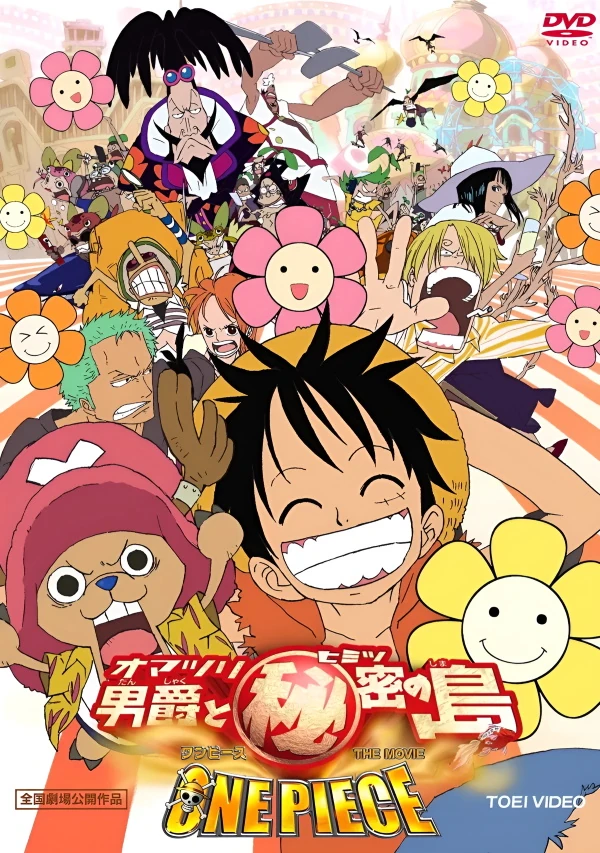
Anime Movie Review: One Piece Movie 6: Baron Omatsuri and the Secret Island

One Piece Movie: Baron Omatsuri and the Secret Island


Ooookay, what the fuck!

This movie is sure going to be one of the most memorable movies from One Piece that I've ever watched, and I'm not sure which part of the fence I actually land on when I say that. 

The sixth One Piece movie ran for slightly less than 90 minutes, which is kind of the norm for these non-serialized movies. We've even got a surprisingly different art style (courtesy of Mamoru Hosoda of Digimon: Our War Game fame). A lot of people don't like change, but I actually do like it a lot when we get to see familiar characters drawn in a different art style. 

And the movie spends... oh, around 45 minutes or so being pretty chill. Like, 'anime filler arc' chill. The animation's all right and the voice acting is all right, but it's just the Straw Hat crew dicking around the island-of-the-movie, where they are roped in under the premise of a resort and ends up being thrown into a game-show island. There is a heavy Foxy/Davy-Back arc feel to the whole thing, and... and it's all right, y'know? I don't mind seeing these characters have some downtime. It's just not the most interesting thing in the world, and it's the sort of thing I let play on while I play a mobile game or something. 

The concept is that the enigmatic Baron Omatsuri is setting up an odd little mind-game thing where every member of his crew is basically engineered to try and drive rifts between the 'nakama' of the Straw Hat Pirates, a concept that is actually pretty great on paper and for the boat-ring-toss segment of the game. Nami gets pissed off at Usopp for seemingly abandoning her during the competition on a hang-glider and gets pissed off at him for the entire movie, while Sanji and Zoro have their usual angry rivalry. It's a very cool concept, but the fact that half the crew is excluded from this inter-personal conflict (Luffy, Robin and Chopper go off on their own personal sub-plots) and that it actually never gets any sort of resolution ends up being points to dock against the movie.

There's your typical cast of movie-exclusive wacko characters, of course, and... none of them are particularly noteworthy, but none really are offensively annoying. Baron Omatsuri is pretty hammy with a pretty fun voice (it's Otsuka Akio, a.k.a. Blackbeard), and his crew are all obnoxiously, and, on purpose, over-the-top with speech gimmicks and whatnot. There's the Chaplin-mustached Brief, an enigmatic captain that's clearly a victim of the island, who Luffy befriends. And there's the family of pirates that Chopper befriends.

And then the movie gets real dark, which is pretty surprising. Not just because this is One Piece (a.k.a. One "no one ever dies" Piece), but it's not just dark because a bunch of people die or anything, no. We go straight into some pretty nasty shit straight out of a horror movie. And I love that! I really, really do like that. I'm just still undecided, even a week after finishing the movie, whether this fits as a One Piece story or not. And, even in the context of the movie itself, it contrasts so much with the cheerful 'ha ha Sanji cooks a giant omelet; the straw hat crew juggles a giant goldfish' tomfoolery that's been going on. And there's also notably such a lack of action throughout the entire movie, which makes the movie feel so much more different than your typical One Piece fare. 

The reveal that the entire Omatsuri crew has been dead since a fatal shipwreck isn't particularly new or over-the-top. It's practically cliched, honestly, as far as horror or ghost stories go. But the way that this is executed? Sure, Robin's personal investigation (and Luffy's accidental one) do kind of tell us that there's something not quite right about the island. But when Muchigoro basically decays into a mummy, not comprehending what's going on, while Nami is getting him drunk and trying to fish for information about the island? Good lord, that was genuinely well done. 

And throughout the movie, as much as a dick that Omatsuri is in methodically taking down our beloved main characters and being a dick about mocking Chopper and later Luffy's beliefs about 'nakama' and stuff, there's a genuine sense of unsettling oddness where he's very tender and tolerant of his crewmates' antics, and how even his crewmates kind of realize that there's something not quite right (like the DJ, who is confused why he doesn't even bleed from Zoro's sword strikes). 

With the entire Straw Hat crew being essentially taken out in quick succession (Chopper's the only one given a somewhat extended scene), Luffy is left abruptly alone against Omatsuri, and there is some real great voice-acting work even if the argument done is quite basic. It's a bit where the voice-acting and the animation of Luffy's desperation as his limbs are stabbed one by one with one of the Baron's arrows while Omatsuri's speech, Luffy's desperate cries and the music builds up while the bodies of the Straw Hats are consumed by the odd giant spiral flower thing. 

And then, of course, near the end, the cute little flower (which is easily the best thing and the creepiest thing in the movie) that has been perching on Omatsuri's shoulder reveals itself to be the true body of the Lily Carnation, the magical (???) flower that's been consuming pirate crews and using them to animate the bodies/ghosts of Omatsuri's crew. And it explodes to some Evangelion-style abomination with some terrifying giggling, scare chords, and the contorted bodies of our main characters. Holy shit. I mean, I find it awesome, but it's also hell of out-of-place in a One Piece movie and I can imagine a lot of children in 2005's Japanese cinemas got traumatized by this. 

And... and, yeah, the conclusion is honestly more or less what you expect it to. Luffy's gained some new friends in the allies he makes on the island. The unnamed Papa grows some balls and helps out. Omatsuri's flower gets destroyed, and all his friends (and even Omatsuri himself) transforms into plants. And then Luffy gets reunited, and credits roll. 

And... and oh my god, what a fucking tense final act that was. It's so different, so genuinely scary and unexpected, and the combination of great voice-acting and background music really helps a lot, too. The fact that it's so different to other One Piece material also helps to sell just how unnatural the whole final confrontation is. No Zoro-and-Sanji-fight-a-miniboss sequence, with the DJ fight lasting less than 10 seconds. No supervillain with a Devil Fruit or special moves; Omatsuri gets ultimately taken down by a cheap arrow shot and a punch to the face. No over-the-top heroic declaration; Luffy genuinely sounds so desperate and upset. And while there isn't a complete lack of Luffy calling out his moves, he feels less like an anime protagonist calling out his moves and more like a desperate man. 

And... and it's, again, just kind of a shame. The mystery and horror are great -- even the unexplained nature of Lily Carnation is something I appreciated -- but the sheer lack of resolution on the inter-crew personnel is kind of a failing, I feel. And while Luffy's desperation is well-acted, arguably other than a single line of dialogue between him and Sanji, he doesn't need to learn the 'be a good nakama' moral in the events of the movie. And then there's the whole tone of the movie as well, and...  yeah, I'm still processing this. If nothing else it really feels different. I did enjoy watching this one for how utterly batshit crazy it is, but I can also completely see why some fans would be utterly put off by it. 

Random Notes:
  • Seriously, Lily Carnation becomes super-creepy once we establish that it's connected to the giant spiral-vine thing, where it's visibly chewing when its larger body is eating Chopper. 
  • I get caught up with Lily, but man, the sight of the otherwise-silly-looking Muchigoro or DJ Gappa shriveling up like mummies is pretty nasty. 
  • The dodgy CGI in this movie is mostly used to actually great effect since it's mostly utilized on Lily Carnation's larger form, whether when it splits into a mass of arrows, or when it uses thin vines to strangle Chopper. 
  • I'm not 100% sure if there's any significance to Baron Omatsuri using arrows, but okay, sure. 
  • While they were utterly annoying the first time I saw them, the side characters' bizarre mannerisms -- from the mustache pirate's mustache salute; to everything Muchigoro does; to the old people bickering -- gets a neat tragic callback later on.
  • DJ Gappa's a bizarre one who is a weirdo kappa that launches plates that home into targets mid-air. Between him and Digimon's Gawappamon, is there something between Kappas and DJ's that I just miss? 

Saturday, 23 January 2021

Batman Beyond S02E25-26 Review: Doggy Business

Batman Beyond, Season 2, Episodes 25-26

Episode 25: Where's Terry
This one, I didn't really like quite as much. It's, on paper, a pretty all right episode, but I just... I just didn't get into this one. The episode starts off with Terry seemingly being gone, missing in action. No one's seen him -- not his mother, not Dana, not Bruce and not Max. All they have to go on is that Terry separated from his friends chasing down a suspicious individual after going to the movies. 

It's kind of interesting to see all these other people in Terry's life worrying about him, but ultimately it's just an excuse for Bruce and Max, the two allies that know about Terry's double-life, to have a bit of a team-up. It's already been building up throughout the season that Max already figured out Bruce Wayne's secret identity, and I also love that the two of them basically already sort of figured out that the other party had figured out. 

It's just that... it's just that what they do, I think, isn't very interesting. Sure, we've got some great moments, like Max coming in to help Old Man Bruce from a bunch of gangsters, and Bruce's offscreen-interrogation (which they had again in the later-released Justice League), as well as Bruce making Max think he's going to distract the people when he's using her as bait... but ultimately it all sort of amounts to a B-plot that doesn't really do much, and despite me liking both Old Man Bruce and Max a lot, their interactions here are way too bland. 

Terry himself finds himself at the mercy of Shriek's second return! And Shriek is... I'm actually not sure what he's doing, he's just fighting Batman or something, I guess. At least Ollie shows up too, I do like the interaction between him and Shriek. Shriek's battle with Batman leaves him trapped in a section of the underground tunnels with a young runaway boy called Dak, and... again, while we do have some neat visuals (mostly Shriek's sound waves moving like a worm through the underground tunnels; and the flooding) and the idea of a runaway who idolizes supervillains is neat, it's not the most interesting thing either. Maybe it's because I just find Dak a bit annoying?

Either way, despite blaming Batman for beating down all these other supervillains who are "only doing it to be free", Batman ends up saving Dak, and trusts him to get out of the hole that he managed to crack open in the ceiling of where they were trapped. Dak ends up repaying the favour by covering for Batman. It's a nice moment, even if the scene didn't quite land for me. Ultimately, Dak tricks Shriek into attacking a wall that leads to the river, following what Batman taught him before, flooding Shriek and Ollie away at the risk to Dak himself. Batman breaks free, saves Dak, while Old Man Bruce whacks Shriek from behind when he tries to menace Batman. 

Overall... it's a neat episode, honestly, but not one that I'm going to be in a rush to rewatch any time soon. 
___________________________________

Episode 26: Ace in the Hole
It's really interesting how the first season is basically kind of a buildup to a confrontation with Blight, while season two is just... really just there? Every single episode in this one was just standalone stories, either featuring returning villains or having a 'Troubled Youth(tm)' storyline. None of which are honestly a problem -- Batman: The Animated Series managed multiple seasons without any huge overarching plot, after all -- but it does make this season feel a lot less... interesting, y'know? There are certainly some great episodes in this season, but there are also a bunch that made me simply shrug at them, like the car-jacking one, or Howard Groote, or the Eggbaby...

At least this one was neat. "Ace in the Hole" is basically one of those "origin story and resolution in the same episode" stories, except it revolves around Ace. When Ace goes a bit berserk and chases down a strange man and gets loose in town, we get to learn from Old Man Bruce about the circumstances behind Ace coming into Bruce Wayne's care. 

Turns out that poor widdle baby Ace was taken and raised by an abusive, terrible dog-fighting manager called Ronny Boxer. The episode really sells just how fucking terrible people who raise dogs for dog-fighting rings are. It doesn't show anything graphic, but, man, the episode really manages to make me loathe Ronny Boxer pretty quickly as he raises Ace to be a 'fighter'. During a GCPD raid on the illegal dog-fighting ring, Ace manages to escape in the chaos, and happens to meet Old Man Bruce, who's putting flowers down on Crime Alley. They save each other in turn from a Jokerz gang member, and that's how Bruce met Ace. 

Interestingly, nothing about this other than the Crime Alley meeting is something that's known to Bruce, so it's all just something that the audience sees while we see Ace wandering around 2029-era Gotham, while Terry has to juggle looking for poor, missing Ace. I do really like the scene of Bruce pushing Terry to go hunt down the bad guy, Ronny Boxer, brushing away concerns about Ace with "he's a resourceful dog, he'll be fine" while giving sad, longing glances at Ace's dish... god damn it, Bruce. 

Batman's investigation finds out that Boxer has been doping up his dogs with some growth-steroid called Cerestone, while poor Ace gets captured by the corrupt dog-pound man who caught him so many years ago. The dogcatcher sells Ace back to Boxer, who recognizes him and plans to use him as a prize dog again. Batman arrives on Boxer's cargo ship, and ends up finding himself sealed in an arena, fighting against one of Boxer's experiments, a mutated, deformed bulldog the size of a dinosaur. Poor Terry straight-up ended in the giant thing's mouth at one point!

It's honestly a fight that dragged on a bit longer, but ultimately Ace breaks free of his own cage, and attacks Boxer, dropping him off the railing of the ship (he survives, unfortunately) before jumping into the arena to help Terry fight the giant mutant bulldog. It's a fun, happy ending for Ace as he runs back to Bruce's arms at the end of the episode, and, man, the smile on Bruce Wayne's face and voice is very, very heart-warming for sure.

An interesting one -- I really didn't expect an Ace backstory for sure. Anyway, that was an odd one but a good one to end season two off on. See you guys some time in the future for Batman Beyond, season three!
___________________________________

DC Easter Eggs Corner:
  • Dak name-drops Blight, Spellbinder and the Royal Flush Gang.
  • The Stacked Deck is a villain bar that was featured several times in Batman: The Animated Series. 
  • Cerestone will be properly introduced in season 3, but due to the shuffling of episode production orders, this one ends up name-dropping Cerestone a bit earlier. 

Friday, 22 January 2021

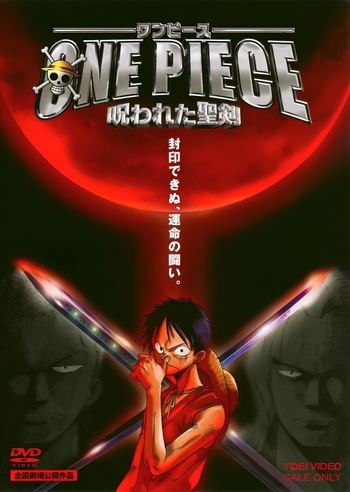
Anime Movie Review: One Piece Movie 5 - The Cursed Holy Sword

One Piece Movie: The Cursed Holy Sword

The Cursed Holy Sword

So this sort of 'filler' content is probably the kind that I wished they did a bit more often, where they focus the storyline almost entirely on one member of the ensemble cast -- in this case, Roronoa Zoro. We're around a thousand-odd chapters and episodes into the series, and yet Zoro, being the first crew member, has had great moments. Some of the greatest highlights in the manga, in fact -- in particular, the fight with Mihawk in the Baratie and the Kuma moment at the end of Thriller Bark are consistently some of the best moments in One Piece. But at the same time, I really do kind of wish that some of the earlier-introduced characters are given time to develop more outside of their debut arcs. Remember how great Usopp's story was during the Water Seven arc? We rarely get that much depth anymore for a good part of our supposed main characters. It's something that filler arcs could, in theory, help to flesh out. And even if it's something simple like a one-off movie, it would be nice to have. The thing, though, is how to make these stories exciting and have stakes without really contradicting some huge revelation that the canon story might have in the storyline. 

And to that end, "The Cursed Holy Sword"... works in some vague aspects. I enjoyed it as a quick watch, despite the fact that it really didn't feel like a One Piece story, and more like a generic side-quest you pick up from a RPG game. We don't really delve too deep into too much magic and mysticism in One Piece -- everything tends to revolve around Haki or Devil Fruits. But okay, sure, a demon-possessed cursed sword that possesses the villain-of-the-movie as the main premise? I can get behind that. What I can get the most behind is that the main villain is Zoro's childhood friend from the dojo, and how he's forced to choose between his friend and the Straw Hat Pirates. 

That sounds like a pretty cool synopsis, right? On paper. One of the biggest problems that people have with this movie is that Zoro ends up seemingly betraying the Straw Hats and acting like a dick, and it doesn't quite work. While watching the movie I assumed Zoro just got mind-controlled, but it's not even that. And as someone who, in the canon of the manga/anime, we know to be the one that puts the biggest stock in loyalty and how a crew works (i.e. his reactions when Usopp left the crew in Water Seven) it feels very out-of-character. But... okay. Sure. Let's handwave that for a moment, though that might very well 'kill' the movie for most viewers. But narratively? Narratively, Zoro's betrayal isn't even that important to the story, it's done mostly because he's bad at communicating and he spends a good chunk of the movie just lurking in the background making cool samurai poses before he realizes that Saga's not in his right mind and defects back to the good guys. 

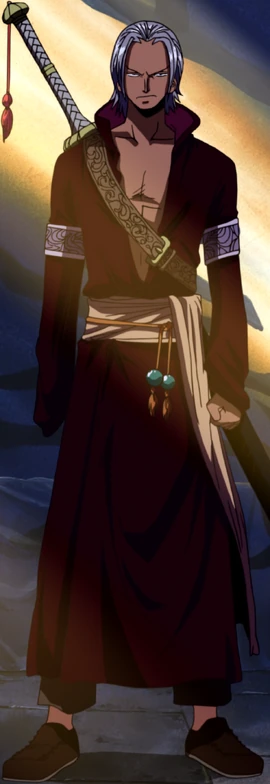
The storyline of the movie is simple, even if it's a pretty standard sequence of our anime heroes meeting a new, secluded place, meeting the enemy and the likable good guys, finding the plot coupons, fighting the henchmen and having the main good guy beat up the main bad guy. In this case, this movie decides to sort of take a spin on the mystical martial arts genre, and have the story of Asuka Island be shrouded and surrounded in a backstory involving the titular cursed sword, the Seven Star Sword, and its wielder, Saga.

Our heroes also more or less just stumble into Asuka Island after Robin and Nami discuss the Seven Star Sword, and Zoro meets Saga... and decides to join forces. Saga is also the head of the "Marine Dojo" for no real reason other than to tie the movie even further into the One Piece setting and make it feel less like the One Piece characters landed in Rurouni Kenshin or something. Turns out that Saga is Zoro's childhood friend and they shared a dream or something, and Saga wants Zoro's help to destroy the pink orbs that can seal the Seven Star Sword, and fakes being ill to manipulate his friend into doing so. 

Saga Anime InfoboxMeanwhile, after being angry at Zoro's betrayal, most of the Straw Hats befriend the local villagers (mostly "Chosen One" Maya and her grandmother) and learn all about the backstory of the island and the Seven Star Sword. It's... it's all right and competently animated, but all the talk of gods and sealing magic and stuff makes this feel like a plot ripped off from Naruto or something, and not even disguised well to work with the setting. 

Plus, at the same time this part of the movie is just a long, long stream of just seeing Luffy and Usopp outrun random dungeon hazards for the umpteenth time; and it's just such a huge time-sink for the movie because it has absolutely nothing to do with the movie until, oh-so-conveniently, turns out that the bullshit trapped dungeons are vital to how the Straw Hats and the villagers can get to the secret magic World of Warcraft altars.

One of the biggest parts why I'm not particularly invested is that it's painfully clear to everyone except Zoro that the Seven Star Sword is evil and mind-controlling Saga, and, in turn, allows Saga to mind-control the Marines and his other goons, and that sort of makes Saga's relationship with Zoro feel artificial since we don't even get to see what the real Saga is like. The movie plays out through the expected beats of our heroes figuring out what to do, Luffy bumbling through things because ha-ha-he's-an-idiot-shonen-hero, Saga beating Luffy around the mid-point of the movie, Zoro figuring out what happened to Saga, and then we get a bit of a drawn-out finale. 

And to the movie's credit? I genuinely thought this was going to be Luffy beating Saga. So many of these shonen anime movies' biggest weakness is that the main good guy will always be the one to land the final blow on the enemy regardless of who the focus of the movie is. And it's admittedly one of the biggest problems of shonen anime in general, but this movie surprisingly doesn't take that route! If nothing else, that scene where Zoro monologues about how to be the greatest swordsman, he must be able to cut through anything -- even his friend -- is pretty badass. But... but, again, with all of the rather truncated set-up, it does feel somewhat hollow. 

And that's about it, really. Saga gets freed from mind-control, the Seven Star Sword shatters and gets banished forever, and our heroes bugger off. It's a competent movie, but ultimately so much of it sort of hinges around a completely brainwashed and generically-evil villain, and it's not until the end that we actually get any sort of huge character moment from Zoro. Adding to the problem is that so much of the middle part of the movie just drags on and on and it doesn't really feel like anyone is accomplishing anything, and everyone is just waiting for exposition to be delivered to them and for Luffy (who, of course, accidentally stumbles into both the plot devices and the fast-travel tunnels that would lead them to the shrines) to regroup with the main cast. It doesn't help that no one in this movie are particularly memorable -- not the villagers, not the Marines, and most certainly not the brainwashed Saga. 

Not a bad effort, but ultimately it's a movie that's kind of just there. It's like one of the filler arcs in an anime where at the end of it you want to say 'oh, okay, it's not that terrible' and it's not, but for the amount of time that it ran, they really could've done better. 

Random Notes:
  • The time-frame of this movie can be inferred to take place post-Skypiea, according to the wiki, because of the outfits and the fact that everyone knew their post-Alabasta bounties. 
  • The Seven Star Sword borrows its name from a treasure from the Chinese legend Journey to the West, where it's one of the treasures of the Gold and Silver Demon Kings ("Kinkaku" and "Ginkaku" in Japanese, often seen in media). 
  • Saga has minions -- we've got cool armoured guy Bismark, big tough guy Boo-Kong and the obligatory good guy Toma. Toma aside, the other two barely have any lines and get literally one-shotted by Sanji and Robin respectively. Hey, Robin in fights! If only she could actually do more with her insane Devil Fruit in canon. 
  • Lt. Commander Drake of the Marines (not to be confused with X-Drake), who apparently first showed up in Dead End Adventure, makes a short role here still chasing the Straw Hats before they arrived on Asuka Island. I kinda wished that he would have cameos in all the subsequent movies, but apparently this is his last movie appearance before showing up in the anime's filler G-8 arc.
  • Yet another example of Going Merry abuse when Luffy, with absolutely zero fucks given, tells the crew to drive the ship right into a bunch of rocks. And it's all slapstick here, of course, but considering the ultimate fate of Going Merry, all of these additional moments of abuse in non-canon material is pretty jarring. 

Thursday, 21 January 2021

Batman Beyond S02E22-24 Review: Deceivers

Batman Beyond, Season 2, Episodes 22-24

Episode 22: April Moon
As we go into the second-to-last batch of episodes in season two of Batman Beyond, "April Moon" is... an interesting one. It's an episode similar to the earlier "Armory", I feel, in that the episode is pretty centered around the antagonist's story, and it ends up being a pretty powerful -- if standalone -- story. 

The opening of this episode is deceptively simple, too. A bunch of gangsters who's gotten cyborg implants? The visuals are neat -- metal arm-whips, retractable suits of armour, retractable knee-chainsaws... fun visuals, if nothing else, even if most of the gang members are interchangeable. They fight Batman while trying to rob a bank or something, and as Batman goes off to investigate, we get to see that Bullwhip's gang is in cahoots with an old doctor specializing in artificial prosthetics called Dr. Corso -- something that Terry and Bruce figure out in record time because, just like "Armory", this episode isn't necessarily about their fight or crusade against crime. They're secondary characters here, almost. 

Corso manages to blindside Batman and escape, but Max later points out that Corso could've done much worse under those circumstances, so it's clearly not black-and-white. It's kind of interesting that between "Zeta" and this episode, Max is basically playing an ally of Terry's that's far, far more willing to see the good in others, whereas Old Man Bruce is a heavy cynic. Max poses as a potential patient who's lost two legs, setting up a meeting between Batman and Corso... but Corso ends up being loyal to Bullwhip, noting angrily that they're going to "kill her now", and gives us some exposition about his pretty wife April, the only good thing in his life. A hostage situation is interesting, and it's even more interesting where Corso really doesn't even entertain the idea of working with the superhero to get her back, and actively aids Bullwhip's gang when they show up to fight Batman. 

Batman did get the fact that Corso has built in a failsafe into Bullwhip's gang's cybernetic limbs, but refuses to give the voice command to Batman because, again, he's far more concerned about April's safety than anything about doing the right thing. Both Terry (and the audience) end up easily clued into the fact that the password is... well, obviously, April Moon. 

Batman ends up tracking Bullwhip's gang and meets Dr. Corso outside of their base, with Corso trying to undermine Batman's attempts to take down the gang. They end up finding out that not only is April with the gang, she's not a hostage but rather a member of the gang, even kissing Bullwhip. So she's probably a honey-trap, sent by Bullwhip to seduce the doctor... or, depending on the timeline, Bullwhip and his gang ended up cooking up the plan with April after she's married the doctor. I'm frankly not sure which is worse, but it sure is a pretty surprising twist. 

The actual fight is pretty simple, with Batman using the 'April Moon' code to cause all of the cyborgs' machines to self-destruct. The gang member who's gotten both arms and legs replaced with robotic limbs... yeah, that poor guy. Bullwhip escapes, but when Terry returns to Bruce and tells the whole story to him, we get a pretty chilling delivery from Bruce about how "he may not be coming back after all". 

And the implication of Bruce's line is probably enough to be creepy, but the episode actually ends up showing Dr. Corso meeting Bullwhip, with Bullwhip wanting one more upgrade, promising to let April go after that upgrade, while Corso ominously says "no holding back..." as the grief-stricken doctor, who has lost everything in his life, prepares to kill (and/or torture) the man who destroyed his life. Ominously dark! I like this one. Perhaps a good part of why I like this one is that I didn't see the twist coming at all... but honestly, it's a pretty solid story with a very solid twist at the end.
___________________________

Episode 23: Sentries of the Last Cosmos
Mmmm, yeah, I'm not feeling this one either. It's not as eye-rolling as "The Eggbaby", but I still felt like this was kind of a boring one. Again, I think it's because I simply can't take the concept of this episode really seriously at all. 

The idea is that a VR game, "Sentries of the Last Cosmos", got pretty popular. And people run around pretending to be copyright-free Jedi Knights with VR, and one of Terry's friends Corey Cavalieri is a huge fan. Except turns out that the Sentries are real, and they're using the VR game to recruit members. Corey gets invited into the game's creator, Simon Harper, and he meets a whole lot of other fans... all of whom are basically recruited into a weird cult where Harper shows up in Fake Jedi robes, tells them that Sentries of the Last Cosmos is a game that is actually a way to screen and recruit for real Sentries, and that they're going to beat the 'Dark Regent'. 

All of this, by the way, is a plan for Simon Harper to brainwash a bunch of youth to kill the original writer of the Sentries franchise, a writer called Eldon Michaels who sued Harper for stealing his script. Let me recap -- Simon Harper has a successful VR game, and somehow is also able to replicate the technology in said sci-fi VR game, equipping a bunch of his kids with hover-discs and fire swords... and he's worried about a copyright suit? Even if he's someone who is willing to resort to murder, like, hire an assassin or something.

I dunno. I guess it's supposed to be a pastiche on MMORPG's or people who get too much into video games and fictional worlds and whatnot, but the whole episode kind of just fell flat on its face for me. And... I dunno, I guess if Simon Harper's motivations are a bit better? Corey as a guest star also really didn't have much to him beyond being a huge fanboy.
__________________________________

Episode 24: Payback
A simpler one, but also one that I kinda like. This is also an episode that relies on a twist, just like "April Moon", but while I saw the twist for this episode a mile away -- it's basically Anarky, but transplanted to 2029 -- it was still kind of enjoyable. I'm not a big fan of yet another "TROUBLED TEENS" plot, which kinda feels shoehorned in... but the fact that it leads into some genuine Terry character development and actually leads into the villain's more personal motivations compared to, say, "Last Resort", I feel like this episode flows a bit better. 

So Payback is introduced to us as this shrouded man with a lightsaber whip, who attacks a boss that's particularly abusive to a teenager, forcing him to work overtime. Payback also introduces himself as essentially a hero and Batman's ally, and we learn that he's a serial attacker who's been targeting parents, teachers and bosses that are abusive to teenagers. 

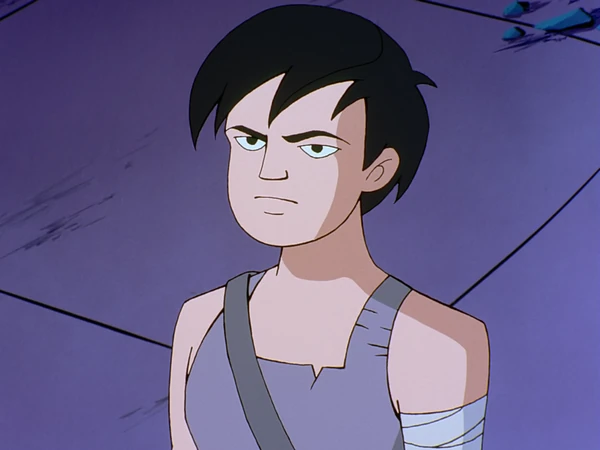
Learning that all the teenagers that Payback 'protected' are enrolled in Gotham Youth Counseling Center, Bruce sends Terry incognito there, and sure enough, Terry gets a couple of leads. A potential next victim (an asshole boyfriend), and what initially seemed to be two suspects -- the head Dr. Stanton (it's not said, but I guess the encounter with Dr. Wheeler had left Terry suspicious of him) and the quiet, towering genius Howard Lewis (who's the initial red herring). We're also introduced to Stanton's son Kenny, who keeps asking his father to talk with him and stuff. While downloading the computer, Terry gets whacked and left unconscious by an unseen assailant, but he manages to seemingly deflect suspicion. 

While they confirm that Payback is related to the Center, Terry is very quick to insist that Payback's identity is Howard, while Old Man Bruce admonishes him and says that there isn't a clear motive. Terry attacks Howard anyway, causing a huge fight in the center, but turns out that Howard isn't Payback, who's out attacking another victim. Terry fucked up, and Bruce is very, very quick to scold Terry for not only wasting time and allowing Payback to get away, but also because he assaulted an innocent man. 

Terry, meanwhile, jumps into the conclusion that Payback is Dr. Stanton, while Bruce is angry and insists that they do things 'his way' from then on... cutting perfectly into Terry complaining about Bruce as a shitty boss in the Center, ranting about how Terry's never going to be ever good enough for Bruce. Again, as the episode itself explains, this is supposedly a trap to lure in Payback to attack Bruce at a certain hotel, but as Terry himself points out at the end of the episode it's not necessarily an act. It's kind of interesting, and I'm not sure whether the third season will follow up on this, but Bruce Wayne fighting against one of his proteges because of an ego thing? That's certainly a fun plot. 

Payback, of course, attacks Bruce Wayne, leading to a pretty cool confrontation on an elevator that shows us how badass Old Man Bruce can be. He doesn't suddenly pull out any Old-Man-Batman-fu, but his simple presence and gravitas does make him pretty damn badass. Terry shows up, fighting Payback in a pretty neat battle, but when it's over turns out that Payback is... Kenny, the young kid, in an armoured suit. And the motive is, well, basically wanting to solve all of the problems of the patients in the Counseling Center, so that his dad will have more time for him. At least Bruce's words to Stanton senior seems to have an effect, but, well, between the real Terry/Bruce conflict and the tragic Kenny story, it's honestly a pretty neat episode overall. 

DC Easter Eggs Corner:
  • In addition to a lot of other Star Wars references (like the 'Wise One' robes, finger lightning-bolts and the talking gate camera), Terry specifically references Jar Jar Binks ("is Jar Jar lame?") and Eldon Michaels lampoons the franchise's opening dialogue ("it all started a long, long time ago in a cosmos far from Earth" instead of "a long time ago, in a galaxy far, far away").
  • In a trick that they used in Batman: Mask of the Phantasm (and later in Batman Beyond: Return of the Joker), Payback is voiced by the same voice actor with the red herring character, Howard Lewis.
    • I'm not sure how intentional it is, but the Batman villain Anarky was also originally introduced with him being a much younger person being overlooked by Batman as a potential suspect as the secret identity of a supervillain. 

Tuesday, 19 January 2021

Kamen Rider Saber E16-17 Review: Mistrust Issues

Kamen Rider Saber, Episode 16-17


Episode 16: Saving the World, a Ray of Light
After the huge arc-ending previous episode, this one is a bit slower... but, again, just like everything else in Saber, still manages to feel really rushed. Kamen Riders fighting each other -- even good guys -- isn't something new. Hell, I'd argue that it is the best part of some of the previous Rider series, particularly Gaim, Ryuki, Ex-Aid, Blades and Build

This episode basically builds up Reika, the mysterious lady from southern base, who is in contact with the Meggido and they hatch a plan to get the missing Blade of Light and manipulate Saber. It's... it's kind of a bit bland to build up "ooooh who's the traitor???" last episode and then immediately tell it to us within two minutes of this episode starting. And of course it's the one minor character that got a huge introduction and proceeded to get shuffled into the background. 

And this episode is a lot more slower-paced. The good guys try to have fun with preparing a soba banquet to celebrate the upcoming year, while the three Meggido talk about how many humans were connected to the Wonder World. We get a very Heisei-esque sub-plot of a character-of-the-week being subjected to the weirdness of the setting, in this case Mei's editor-in-chief, who keeps seeing visions of the Wonder World that she blames on overwork, and gets transformed into a Meggido minion (the Shirayuki Yeti) at the end of the episode.  

Touma tries to hang out with everyone, while Reika tries to scout Touma for the Southern Base of the Sword of Logos. Reika is clearly unhappy, and proceeds to tell the other Riders that there are orders from the Southern Base to capture Touma. And... and I get it. I get that they suffered a huge betrayal at the hands of Hayato and Daichi. And Touma did just return from the infinite book dimension or whatever. I even like the fact that it's the very childish Ren that's the one that lashes out the most throughout the episode. But the others? The episode tries its best by highlighting Rintaro's duty and both Ryo and Tetsuo's past experiences with being betrayed, but it's still very, very jarring to see them go from "we're all BFF's and a family" to "Touma is totally crazy and is a renegade warrior". I don't buy it at all, and I think most of the viewers didn't, either. 

Granted, Touma did talk a lot about finding the real truth, something that both Hayato and Daichi ranted a lot about, but it's mostly to Mei. That Touma/Mei scene is probably some of the strongest character moments for Touma, too, by the way. But then we get the fight and... well, both Touma's unwillingness to trust his friends and de-escalate the situation, as well as the four surviving Riders being so trigger-happy... the fight scene is fun to watch, but the buildup really felt like it's just there to set up the new status quo as soon as possible. 

Then the enigmatic hooded Jedi-man that shows up and didn't do anything around the time of the King of Arthur episodes shows up, and turns out that he is Yuuri, Kamen Rider Saikou -- whose transformation straight-up just turns him into a sentient, floating sword. Oooookay, that's... different. Nowhere as interesting as King of Arthur using Saber as a sword, but okay, sure. He drives off the four other Kamen Riders, and both Touma and Mei are basically renegades with a mysterious ally. Ooookay. 

Again, this is honestly a pretty slow-paced episode, with not a whole ton in terms of content. But at the same time the pacing of the characterization feels so rushed and abrupt. Like... they could've gone with a single two-parter showing Touma's growing obsession with 'finding the truth' and being paranoid with the Sword of Logos, y'know? To make the other Riders' distrust actually justifiable? I dunno. This episode just feels kind of underwhelming. 
__________________________________

Episode 17: The Ancient Messenger, Either Light or Shadow
This one is a lot less cluttered, and a lot more enjoyable even if the scale of the events that took place in this episode is a lot less exciting compared to the previous two. Ultimately it's a "monster of the week" episode with an additional focus on the new rider, Kamen Rider Saikou, but it feels so much better paced than the previous two episodes. We've got actual breathing room for character development, plot decompression, and more organic exposition. 

It also helps that a lot of the side characters don't take up a whole ton of screentime here. Legiel and the Yeti Meggido are the only antagonists to really get much screentime, while the bulk of the Sword of Logos people just get a single scene in the first half of the episode where they argue about what to do with Touma. Ren's the most gung-ho and willing to attack what he views as the next traitor, while Rintarou's the most conflicted. Not a whole ton that we haven't seen in the previous episode, but pacing-wise and emotionally, it's done a lot better than the previous episode. 

The first half of the episode is mostly just Touma and Mei trying to interact with Yuuri's antics, which is genuinely fun and actually puts a fair amount of focus on the character without the audience being distracted by a half-dozen other things. I certainly appreciate this! And while the fish-out-of-water act isn't something particularly revolutionary, it's pretty fun to watch. 

The main conflict ends up being the arrival of the Yeti Meggido, who is different from the previous Meggido because she's, well, a human being transformed into a monster. There's not a whole ton to that and both Yuuri and Legiel give a helpful monologue about what this is all about... but the conflict ends up being that Touma is very much willing to try and stop his editor-in-chief Yuki from being killed for no reason, while Yuuri is an extreme lawful good paladin who will cut down Yuki to stop an Alter-Book from being created. 

The action scenes in this one is all right, mostly because we only have a couple of suits running around. Saikou ends up getting a 'humanoid' form in a sense with his Shadow Form, where a shadowy version of what I assume will be his full suit appears to wield the blade. I do like the concept of this, even if execution-wise it's pretty much just a regular suit. Ultimately Touma blasts away Yuuri's attack to protect the editor, leading to the two to fight as the cliffhanger. Okay, that's pretty neat. 

And... and 17 has a lot less content, but man, it's such a nicer episode to sit through than the previous two! Okay, I'm certainly willing to give this new status quo a chance after the previous two or three episodes were rushed and cluttered. 

Random Notes:
  • I genuinely don't remember when Sophia was abducted. Was it in one of the .5's? And if she had been abducted and not just off-screen... wow, no one really did anything to look for her? 
  • Buster's "a lot of things happened this year" is an absolutely meme-able screenshot, huh. 
  • On the roof that Touma is moping in episode 17 is a kiddie pool and an Earth-balloon. For some reason. 
  • The idea of books transforming people into monsters, I feel, could've been done in something that's a lot more thematic. It's like... comparing it to something like the Dopants (the plot device that transforms them is an analogue to addiction), the Imagin (the plot device that transforms them grants their wishes) or the Phantoms (the plot device that transforms them does so by driving them to despair by highlighting a specific moment) and many other Kamen Rider enemies, this one doesn't really do much beyond 'they become monsters'. Kind of a shame, I felt like books and stories would have so much potential for thematic victims-of-the-week. 
  • Yuuri complaining that the X-Men Sword-X-Man spends way too much time brooding is a very apt description of not only superhero comics, but the superhero genre in general. 
  • Yuuri transforming his clothes to match everyone around him and being baffled with boba tea is actually pretty fun. "Is this a product of human technology? However, I am a sword, and I cannot drink."
  • I guess they didn't want to spend too much budget on the special effects to transport the 'real world' into the Wonder World for every single episode? Fair. 
  • Mei and the civilians yelling in pain when Touma defrosts them with dragon fire is more hilarious than it should be. 

Monday, 18 January 2021

Kamen Rider Saber E15 Review: First Arc Ends

Kamen Rider Saber, Episode 15: Beyond the Resolution, and Beyond


Well, uh, that sure is kind of messy. I had planned to do 15 and 16 together, but this was thematic enough that I decided to let it be a standalone episode. 

At the end of episode 14, Saber and Calibur enter the infinite book world, the Table of Contents (hee hee), while the battle on the ground level sort of peters out as the three Megid blow away all the other Kamen Riders. The Table of Contents contains all the history of the world or some such, and is the gateway to ultimate power. Or something. Calibur and buddies want to take it over. I think? I'm pretty sure the Megid have their own agenda to recreate the world, and Calibur is... uh... something something predestination? It's kind of hard to tell with every one of these villains giving their monologue basically simultaneously. We get a pretty cool no-suit fight, although most of the stunt is on the part of the bad guys. The good guys have the dilemma of whether to destroy the huge giant portal books as well, which would trap Touma in the other world. 

Meanwhile Saber uses King Arthur to do a huge glowy early-2000's video game cutscene battle, before the two of them land in some autumn grove and Saber dual-wields his own blade and Ikazuchi to fight Calibur, while Calibur rants about predestination and the fact that the world was created by someone else. Touma goes through a bit of an existential crisis, wondering if Kento's death was also predetermined, then gets over it when Kento's ghost shows up... and it honestly feels like something that should be extended to at least take up a whole episode. One big problem with these sort of scenes is that we don't really get that good of a pacing to really let Touma's angst and resolution sink in, so it feels like he gets over his huge existential crisis immediately. Granted, that scene where Touma dual-wields the fire and lightning blades in his human form as they explode with energy is pretty cool. 

Meanwhile, the secondary riders get beaten down, but Mei's speech about Touma's promise gets them all to stand up. This is a lot simpler since it basically calls back to just one of Touma's oft-repeated traits, but I feel like it lands a lot better. We get a four-Rider transformation scene and... okay, the following huge rumble is actually a lot more fun and easier to follow than the previous episode's. 

Daichi Kamijo gives this huge speech about how there was a huge battle 15 years ago between his generation of swordsmen, but Hayato Fukamiya (Kento's dad) betrayed them, using Luna to connect the two worlds and obtain the truth. In the ensuing battle, Kamijo-as-Blades kills Hayato-as-Calibur but got so traumatized that he ends up picking up Calibur's Kurayami sword. Daichi gets obsessed with learning the 'truth' about how his friend became evil and corrupted, and blames the Sword of Logos organization. Which... okay, sure, nice to get some answers, but the flashback feels pretty rushed and I genuinely do feel like we could've spaced this out a bit more. Which, I feel, has been a running theme throughout so much of my Saber reviews. 

Like, on paper, a villain like Daichi should be interesting. Someone so obsessed with finding the truth that he sacrifices everything else, even his best friend's son? But we only really learn Daichi's whole motivation in the last five minutes before he gets taken out, so it really does feel kind of hollow.

We get a series of finisher montages as Saber fights Calibur, Blades blows up the book portals while the other three beat up the rest of the Meggido. Saber goes Dragonic Knight, and both him and Calibur ride their respective dragons as we go back to the PS2 video game boss fight cutscene, and... it's not the worst thing in the world, but it's just Touma giving a speech about fighting alongside friends and whatnot. It feels... kind of generic. 

Daichi is defeated and immediately goes "oh shit, maybe I'm wrong, you're so determined!" He gives a speech, telling Touma to find the traitor in the organization... then gets shish-kebab'd by Desast. Desast steals the Jaou Dragon books, while Daichi passes on the blade Kurayami to Touma... and the blade disappears. Oops! The Megid escapes, Rintarou blows up the portal and Avengers 2012-style, Touma returns to the last world at the last possible second as the portal collapses. 

And... and the first huge arc ends. Zero-One also ended similarly, and I remembered last year I had a lot of the same complaints about how quickly Horobi and Jin were seemingly dispatched of. But unlike Saber, at this point in Zero-One only the conclusion of their stories felt rushed, whereas the buildup and what the characters are all about have already been told to us. I know they're filming with a pandemic going on and all, but I really do feel like they could've spared an extra episode or two specifically exploring the Touma/Daichi dichotomy. Sure, it's a "friends-vs-single-power" trope that anime really likes to use in general, but... I dunno. This arc really does feel like it's so rushed and tries to build up on the mystery too much before rushing through all the explanation in an exposition dump that's not the most interesting thing out there. Oh well, maybe the next arc's going to be better? 

Random Notes:
  • The Table of Contents is one of those things that sounds so dumb on paper, but actually is kind of very cool because it fits a lot into the whole book theme. 
  • Legeiel gets to do some fun flip-kicks in this episode, that was neat. 
  • I really do like Blades's all-blue King Lion form, that's such a clean-looking suit.
  • The "special" sound effect that Saber's Dragonic Finish thing does really does sound like it came from Kamen Rider Wizard's belt, huh? Or is it just my ears? 
  • So it appears Desast isn't Hayato, like my wild guess was last episode. He sure turned out to be pretty relevant, though! 
  • "Episode 15.5" is the Kamen Rider Blades episode. While the past point-five episodes have been either standalone character backstory focus, or an actual 13-minute special that felt like it should've been part of the episode (the Espada one in particular), this one feels like more of an epilogue to episode 14. It's set after 15, of course, but it's mostly just Rintarou being in a funk after the whole chaos and seeing Kento die, and then Mei cheering him up by reminding them of their family and what they fight for.
  • ...there's a Decade and Zi-O crossover teaser at the end of episode 15.5, what in the absolute buh-whaaaa, that's actually pretty awesome.