Friday, 7 July 2017

One Piece 871 Review: Darkest Hour

One Piece, Chapter 871: Go Caesar


Well, that was quick. I mean, I don't expect Luffy and Sanji to be able to take down Big Mom at this point in time -- Big Mom is a Yonkou, and Gear Fourth Luffy was barely able to take down Doflamingo. This isn't a manga where power levels are randomly disregarded in favour of "I think of my friends really hard and suddenly I can punch time"

Anyway, the chapter starts with a cover story, where Bartolomeo basically forces the village to buy Luffy-senpai merchandise. All well and good.

A good chunk of the chapter is just showing Caesar Clown trying to escape from the massed forces of the Big Mom Pirates. Even with Luffy, Sanji and the Germa holding Big Mom back, they still have the rest of the crew to deal with. There's a neat montage of powers being thrown around, too -- Perospero raises a candy wall, the jerk Vinsmoke trio blast it apart. Luffy goes Gear Fourth and slams down on Big Mom's own Haki arm. There's some nice back-and-forth where Big Mom mocks Luffy for overestimating his capabilities, and how he's spineless for running away, while Luffy tells Big Mom that the Pirate King will never be her... and Big Mom just doesn't care -- forget taking down Kaidou, they'll not even be able to get out of Big Mom's island! And she truly makes good on her promise.

Judge takes on Big Mom single-handedly, ranting about his fallen dreams and shit, but Big Mom just one-shots Judge with a single blast of lightning that shatters his helmet, though jury's out if he's straight-up dead. Can't say I mind very much if Judge died here, though. And this is when everything goes to hell. Katakuri blocks Ceasar's escape, then Brulee-in-Caesar-form blocks Ceasar's escape. Capone and Luffy are out, Katakuri one-shots Ichiji off-screen, while Smoothie, the genie and Galette have taken out Sanji and Reiju.

There's also a subplot of the random mafia dude, Dufeld, trying to open the Tamatebako, only to be confronted with another member of the guests, the Queen of the Pleasure Quarter, Stussy... who shoots Dufeld dead with a flying Shigan. She flat-out says that Dufeld's dead, and plans to have Dufeld play the pasty because, well, she's apparently CP-0 Stussy. She also manages to get Big News Morgans on her side, though not without calmly threatening the big bird dude first. However, the Tamatebako ends up falling off the side of the gigantic wedding cake, and at the end of the chapter it erupts, shaking the giant tree and possibly providing the Straw Hat alliance with the distraction they need to escape?

I dunno. It's pretty much their darkest hour at this point, and well, they've been super-lucky so far and it's about time to reinforce just how powerful the Yonkou are -- jeez, that montage of effortless one-shotting is amazingly effective at showing how not only how badass Big Mom is, but also the likes of Katakuri and even Brulee. 

Thursday, 6 July 2017

Justice League Unlimited S03E07 Review: Pawn Takes Rook

Justice League Unlimited, Season 3, Episode 7: Patriot Act


So, yeah, this episode... is a bit political, that's for sure. I'm not an expert in American politics, not being an American myself, but Justice League Unlimited was produced during the Bush presidency and this episode in particular is meant to be a little criticism of America's foreign policies at that time. It also served as a pretty awesome episode that both served as not only a great follow-up to the loose ends of JLU's amazing second season, but also tell an amazingly optimistic superhero story in the process.


Two of the main stars for this episode are the two most vocal (and non-Luthor) members of Project: Cadmus, Amanda Waller and Wade Eiling. Waller has always been depicted as harsh and sometimes takes things a little too far, but always willing to compromise as long as it meant the protection of the general public. Eiling, on the other hand, is your stereotypical super-racist bastard who puts the destruction of a potential enemy as the main priority as opposed to safeguarding the main public. They butted heads before in 'the Doomsday Sanction', but here, after the war is over, Waller is willing to work alongside the superheroes (and control them if necessary) whereas Eiling is more determined than ever to settle his grudges. It's partly misguided motivations, but also partly ego, which causes Eiling to transform into the very thing he hates.

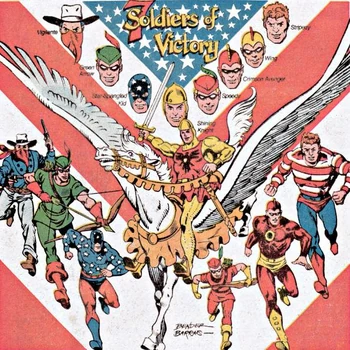
And it's very, very poignant that the seven superheroes used in this episode (as much as the Seven Soldiers of Victory homage excites me) are all, well, just normal humans. None of them are gods like Wonder Woman, none of them are aliens like Superman or Martian Manhunter, and none of them even have superpowers like Flash. Shining Knight and Stargirl have a magic sword and an energy-shooting spear respectively, but that's the extent of the superpowers in their team. Oh, and STRIPE walking around in a mecha works too, I guess... but they're all human. Green Arrow and Speedy are just athletic men with bows and arrows. Crimson Avenger and the Vigilante are people with guns. Yet they are fighting to defend the people, not because of some misguided hatred, but because they know what is right. Protect the weak, protect the innocent, all that jazz.

Whereas Wade Eiling is a man whose intentions might seem noble to himself, but not in practice. He wants to defend himself from superhuman threats, transforming himself into a hulking, indestructible brute with outlawed Nazi science, but he attacks a group of superheroes on a parade, (humans to boot, not aliens or gods or metahumans) and doesn't give a shit about the collateral damage he's causing to the civilians, all in the name of his misguided 'greater good',  despite the League not posing any sort of threat other than, y'know, 'potential threat', the same criticism the showmakers are making towards America during the War on Terror. Yes, it's not subtle, showing the ugly transformation of warmongering general Eiling into a hulking ogre, swatting around patriotic men and women, two of which are actually garbed in America's flag... but it's superheroes.

When questioned about harming the innocents around them by Stargirl -- a teenage girl that Eiling has no problem whacking to the ground -- Eiling talks about acceptable losses.

The selection of heroes chosen here is also interesting, because it tells a different story. The Seven Soldiers are superheroes that are, well, obscure, for the most part. Out of them, only Green Arrow is anywhere recognizable to non-diehard DC fans, and even someone steeped in DC lore like me had some trouble remembering who Crimson Avenger is. And, as I like to point out, Shining Knight and Vigilante are both remnants of genres that have kind of... lost its luster, one being the hero of Arthurian stories and the other being a cowboy. Both are out of their time here in a modern superhero setting (and really, really like hanging out next to each other) and it's confusing to see them when the people who pop up into your head when you say 'Justice League' are colourful superheroes and vigilantes like Superman and Wonder Woman and Batman and the Flash.

And the episode is aware of it. The people of Metropolis are disappointed when Superman's appearance in the parade is replaced with random nobodies, but shit, man, these random nobodies are still heroes, and whatever the public thinks of them, when the General attacks, they fight back to defend the weak. And it's honestly a match that they cannot hope to win -- in the comics, the General is so powerful that the traditional Justice League -- a lineup with Superman on speed dial -- barely defeated him. Here, half of the heroes are just regular dudes that are great with guns or a bow and arrow. Yet they fight anyway, because that's what heroes do. You can't help but cheer on as Vigilante -- a motherfucking cowboy in the twentieth century -- tries his darndest to put a dent in the General's hide, riding a motorbike to slam it on General's face.

And the action scene is amazing and brutal. From the Arrow team's quantum arrows (side-note: how cool was the stealth tie-in with Teen Titans was with Speedy's arrival?), STRIPE's awesome aerial battle against General, Stargirl's attempt to battle Eiling with both cosmic rod and appealing to reason... And Shining Knight's absolutely epic last stand, as he stands entirely outmatched against this hulking brute, intent to fighting to his last, might be folly, but dammit, he's a hero and he's going to fight to his last breath if it means taking down this monster. It's inspiring stuff, and I just absolutely love this episode to bits for giving the lesser-known characters the time of the day. Shining Knight's the indisputable MVP of this particular fight. Go, Sir Justin!

Also, I would like to point out that Shining Knight and Vigilante have the best bickering. It's not just the voices and funny cowboy/knight accents either, it's the scripting. "Sir Justin, if y'want to be watching stuff on my big Tee-Vee with the five-point-one surround sound, you had best watch what you say about mister Clint Eastwood."

In the end, it's the rejection from the same people that Eiling claims to be fighting for that ends up halting the mad soldier's rampage. Ironically voiced by C.C. Pounder (a.k.a. Amanda Waller), the old woman that stops Eiling asks him this question: "How many of us do you have to kill to keep us safe?" It's amazing stuff, showing that even when the heroes lose the battle, they still manage to inspire the good people of Metropolis, inspiring them to pick up the same torch that they did and to do the right thing. No, the Seven Soldiers of Victory barely manage to drive the General away from the city, but they inspired the people to stand up and the sight of the Newsboy Legion kids playing Shining Knight and Vigilante when fifteen minutes ago they were dissing them off for not being Superman is just so heartwarming.

What else? There's so much goodness about this episode, and I'm not even a patriot! It's the values that the heroes represent that matter, but there's just so much goodness contained in this one episode. I haven't even spoken about the hilarious dialogue that Green Arrow spouts, or the amazingly crafted Spy Smasher/Captain Nazi black and white flashbacks... yeah, I think this is my favourite episode in season three, if nothing else because of Sir Justin's epic last stand against the General.


Justice League Roll Call:
  • Speaking Superheroes: Spy Smasher, Mr. Terrific, Green Lantern, Vigilante, Shining Knight, STRIPE, Green Arrow, Stargirl, Speedy, Crimson Avenger
  • Non-Speaking Superheroes: Hawkgirl
  • Speaking Supervillains: The General, Amanda Waller
  • Non-Speaking Supervillains: Captain Nazi

DC Easter Eggs Corner:

  • The General: In the comics, General Wade Eiling, himself a long-running antagonist of Captain Atom, was transformed into the villain known as the General in the pages of Grant Morrison's JLA comic, transferring his brain from his dying body into the body of a supervillain named Shaggy Man, a gigantic humanoid brute with an indestructible, instantly-regenerating body. 
    • The Captain Nazi Project, which stands in for the Shaggy Man here to explain Eiling's transformation, is a reference to the Captain Marvel enemy, Captain Nazi (a.k.a. Albrecht Krieger) who was modified with serums to become powerful enough to fight Captain Marvel. 
    • Spy Smasher, the superhero who foiled the Captain Nazi Project, is a vigilante superhero from Fawcett comics, the publishing company responsible for publishing Captain Marvel comics before it was bought by DC. He's not appeared much in mainstream DC comics. 
  • The seven JLU members seen here are a homage to the Golden Age superhero team, the Seven Soldiers of Victory, whose lineup included Shining Knight, Vigilante, Crimson Avenger, Star-Spangled Kid and his sidekick Stripesy (who became S.T.R.I.P.E. in his adulthood), and Green Arrow and his sidekick Speedy. Here, Star-Spangled Kid is represented by his successor, Stargirl, who started off her comic-book career as the second Star-Spangled Kid.
  • Speedy! Hoh, boy, where to begin? Speedy, a.k.a. Roy Harper (later known as Arsenal and Red Arrow), is Green Arrow's sidekick. Now, Justice League Unlimited is a show produced concurrently with Teen Titans, which also starred Speedy. This episode tends to be what fans point to when they want to argue that Teen Titans is part of the DCAU, because nothing else contradicts that fact, and the fact that Speedy uses the exact same design and voice actor as his appearances in Teen Titans counterpart (albeit changed to fit the DCAU aesthetic) has led many to speculate that Teen Titans takes place in the DCAU, fitting in the timeskip period in Batman: the Animated Series before Robin adopted the Nightwing persona. Which I guess you can do. 
  • The group of kids who help out the reserve Justice Leaguers are not named, but are visually based on the Newsboy Legion, a group of (yep, you guessed it) newsboys who are supporting characters in Superman comics.
  • The Shining Knight makes reference to fighting Blunderbore, who was Morgaine le Fay in disguise. Morgaine has appeared previously in Etrigan-centric episodes of Justice League, whereas Blunderbore was a powerful ogre that Sir Justin fought, and ultimately caused the avalanche that buried the knight and preserved him until modern day.
  • Eiling and Waller both refer to various events of the Cadmus arc that ran throughout the second season, although we did get some details that Cadmus is otherwise disbanded with its members all reassigned. Eiling refers to the events of 'Question Authority' when he talks about how Superman broke into Cadmus's HQ to rescue the Question.
  • The Nazi scientist's line about how 'nothing less than an artillery shell can break his skin' is a reference about how Superman's invulnerability is traditionally described with in the Golden Age comics.

Wednesday, 5 July 2017

Justice League Unlimited S03E05 Review: Rogues' Revenge

Justice League Unlimited, Season 3, Episode 5: Flash and Substance


This is probably one of my favourite episodes of Justice League Unlimited, and would probably rank pretty highly among the favourite episodes of superhero fiction ever. It's the episode that really shows why I love this incarnation of the Flash, and why I threw a little hissy fit that it's boring old Silver Age Barry Allen that would be the star of the TV show. I grew to love Barry Allen all the same, of course, but still, rewatching this episode rekindles my love for my definitive Flash, Wally West.

See, Wally's just... a young kid. Sure, he's grown up somewhat over the years, but both in the original source comics (where he's a sidekick that succeeded the dead Barry Allen) he's a fair bit younger than the rest of the league. And where the rest of the league are larger-than-life figures, with Diana being a literal goddess among men, Flash is just... such a regular guy. Even someone like Superman with a boring reporter day job is still the last survivor of his planet. The only other person that feels like an everyday dude is John Stewart, and he's part of an intergalactic space cop army and has a military background. We didn't really know much about Flash as a person, with the character even sitting out almost an entire season. He had several great episodes over the years, of course, and his status as the heart of the team is unquestionable, but we never really got to see Wally West, the person.

And he's... so delightfully just identical to Flash the person. He's just a kid with superspeed! He's absolutely beloved in Central City, because having superspeed means he has the time in-between saving people from telepathic gorillas to make nice with the hot dog sellers, fishermen, taxi drivers and the old ladies in his town. He's just so nice! And he's just so absolutely proud of his very humble home, being genuinely excited that his apartment is on the same floor with a laundry. Is it not appropriate that Central City hnours him with a museum dedicated to him?

Yet at the same time, Flash does, pretty innocently, act like a complete buffoon. Batman, who's worked with Flash for so long (and also is BFFs with another red-suited beacon of hope and justice) understands why Flash is so effective as a hero, and despite being, y'know, fucking Batman, agrees to Flash's invitation to show up at the unveiling of the Flash Museum despite Wally himself not thinking that Batman would even consider doing it. Orion, on the other hand, is the God of War of Apokolis. He doesn't understand why the hell someone would act like a complete moron. And it's these two different viewpoints that we see the life of Wally West.

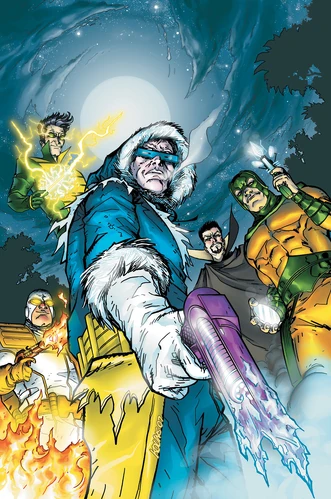
Another lens we see the Flash from is that of his villains. Apparently they have a bar! Flash's villains are easily the most colourful Rogues' Gallery ever out there, and I'm sad that not many of them are represented in the JLU, or even the actual Flash TV show. This episode focuses on the Rogues, whose roster has Captain Cold, the Trickster, Mirror Master and Captain Boomerang (who apparently left the Suicide Squad). It's basically the traditional roster, minus Weather Wizard (associated more with Superman in the DCAU), Heat Wave (busy as one of the members of the Legion of Doom) and Abra Kadabra.

And seeing these four villains in a bar being grouches and talking about how the Flash ruins their lives is just a highlight. Yes, it's very light-hearted, but seeing Captain Cold talk about mortgage payments and how his wife will force him to bag groceries for a living, or Mirror Master being sad because he's reduced to 'merely' stealing sports car shipments, or the hilarious montage of the Rogues ordering non-alcholic drinks (cherry cola! Decaf soy lattte!) to end with Captain Cold asking for milk, and when everyone looks at him he just gives the very lame excuse of his ulcer acting up.

It's all light-hearted stuff without being too cheesy, and fits in perfectly with the rest of the DCAU. The Flash (regardless of whether it's Jay, Barry, Wally or Bart) is a breed of superhero that's fast vanishing from current comics. Just an optimistic nice guy. Every single story seems intent on turning their superheroes into the next brooding Batman clone, or into an angry psychotic extreme Wolverine/Punisher clone. Characters like Captain America get turned into a Hydra agent for no reason, Superman spends more time brooding about his place in the world than actually saving people, and even live-action adaptations of Green Arrow turn him into a grim, dour vigilante instead of an ultra-liberal Robin Hood figure. Hell, even Flash's own live-action series has gone through a fair amount of grimness as well. The thing is, anti-heroes is such the norm of the current superhero genre, being viewed as the cool, modern ones, that these more traditional heroes are being waved off as being too kiddy and immature and not at all engaging.

Which isn't true, of course. 'Fun' stories is honestly intrinsic to the superhero genre in general. And while some movies do go overboard to the point of stupidity (Batman and Robin, I'm looking at you) I really, really appreciate superhero material like Legends of Tomorrow, Flash or Guardians of the Galaxy that isn't afraid to be fun while still telling engaging stories.

And by god, this episode is fun. It helps that Flash's enemies are very colourful, too. There's a disco ball laser fight sequence against Mirror Master. Captain Boomerang unleashes a literal giant jet-powered boomerang upon Central City. We get the requisite mirror-world fight. Batman and Orion join the madness halfway through, too, which is just entertaining not in the action scenes they bring into the table, but also the unspoken respect Batman has towards Flash (while still acting like an exasperated daddy sometimes) while Orion himself begins to see that Flash's well, flashiness is backed up with substance. He genuinely is a nice, bubbly guy, and means all of what he says. Yes, people erect monuments in his honour, but when half of the museum is wrecked in the fight, Flash's response is a happy shrug because no one got hurt. And hey, he got on TV!

One of the best scenes in the episode is when Flash, Batman and Orion break into the villain bar, to find the Trickster drowning his sorrows in non-alcoholic drinks. See, the Trickster is the friend no one likes. He's clearly a bit off his rocker, and is a bit too loony even for the other Rogues' tastes. And he's just moping around due to the lack of respect he gets. See, good guys break into a bar to get information, and if it was 24 or James Bond, Trickster would be beaten up at the end of the scene. Hell, Batman himself would've broken a finger or two, slammed Trickster's face on the table, or hung him from the roof with a zipline. Orion certainly seems quite eager to break some bad guy bone.

But Flash? Flash's different. He doesn't threaten force, but he just sits down next to James (not Trickster, mind you), and talks in the nice, friendly tone that he uses for the taxi driver or the fishermen in Central City. He just speaks to his enemy like a friend, telling James that, yeah, he needs to take his meds, he needs to return to the mental hospital, because they can help him. Flash knows that the Trickster is honestly just a dude that's really sick, and mostly harmless, and Batman, being someone who deals with maniacs regularly, understands this intimately.

It harkens back to episodes in Batman: TAS where Batman tries to take a lighter tone with more harmless villains like Harley Quinn or Ventriloquist, earning their respect and their brief retirement from crime. Not all our villains are complete monsters like the Joker or Darkseid, after all. Flash won't hesitate to throw down with the likes of Mirror Master or Captain Boomerang, though at the same time he also makes it clear that he wants to avoid actually hurting them too much.

Orion, meanwhile, is confused. Why the hell is Flash wasting so much time on a pathetic loser like Trickster? Batman notes that, yes, Orion doesn't quite get it, at least not until the final part of the episode. Orion only really understands at the end of the episode, apologizing to Flash for being demeaning about him and his jokey attitude. He posits the theory that while Flash is a very capable and powerful hero adored by the masses, he 'plays the part of the fool to hide a warrior's pain'. And, well, that may be partially true, but Flash just shrugs it off, because that truly is the essence of what he is -- he just wants to take the bad guys down without anyone else getting hurt, and he's happy enough.

We also get some cool scenes courtesy of Orion and Batman, and I am so glad that despite the setup being done with the two Captains being scared of Batman as he stalks towards them with the theme music it's takes Batman summoning Flash from the mirror dimension that allows the takedown of the Rogues.

Special mention goes to the Rogues. Captain Boomerang aside, this is the first time we've actually seen them outside of a brief cameo in 'Eclipsed', yet the episode showing them hanging out in a bar quickly establishes their status as long-running enemies of the Flash, and the voicework and dialogue given to them is amazingly well-done and establishes their personalities well. Trickster's crazy and unpredictable, and later ends up just being kind of pathetic. Mirror Master is just full of anger and kind of the 'brute' of the team. Captain Boomerang is cocky and confident. Captain Cold is kind of pathetic as well, but in a way that's more like 'man, I'm a failure' instead of Trickster's 'god, shut the fuck up, James'.

Sadly, they don't appear again in JLU, and I'm sad that the TV version of the Flash fails to explore this side of Flash as a character, instead spending way too much time being tied up in mysteries about Zoom and Savitar no one cares about.

As a final bonus? A crap-ton of love is just spread for the Flash mythos with an inordinate amount of Easter Eggs. That still work.

"Dude, soon as you finish your drink, turn yourself in!"

Man, Flash is just such a bro.


Justice League Roll Call:
  • Speaking Superheroes: Flash, Batman, Orion
  • Non-Speaking Superheroes: Rocket Red, Hawkgirl, Superman, Green Lantern, Vixen, Ice, Red Tornado, Wonder Woman
  • Speaking Supervillains: Mirror Master, Trickster, Captain Cold, Captain Boomerang
  • Non-Speaking Supervillains: The Top, Weather Wizard, Thinker, Dr. Alchemy, Mr. Element, Turtle Man, Abra Kadabra, Fiddler

DC Easter Eggs Corner:

  • Captain Boomerang mentions his tenure for Task Force X has ended, though he was apparently let out after five years due to good behaviour. 
  • The Rogues:
    • Captain Cold: Leonard "Lenny" Snart is one of the few villains that could call himself Flash's arch-enemy, and considering he's just a man with a cold gun and his competition is a psychotic vengeful speedster from the future and a super-intelligent telepathic gorilla, that's saying something. Snart was raised by an abusive father, and while experimenting with methods to stop the Flash, Snart developed the cold gun, and later was one of the most important and founding member of the Rogues, as he grew obsessed in his desire to defeat the Flash. Captain Cold maintains a code of conduct for the Rogues, mainly revolving around inheriting the mantle of another Rogue upon the death of one of them, as well as swearing off drug usage. They also have a code about not killing unless if it's absolutely necessary.
    • Mirror Master: There have been two Mirror Masters over the years, the first, Sam Scudder, used a simple mirror gun to get into mirrors and fought Barry Allen, but died during the Crisis on Infinite Earths. He was replaced with the Scottish Evan McCulloch, who had more powerful powers than Scudder, with the ability to enter mirror dimensions and even transform into mirrors himself. McCulloch was associated strongly with Wally West's Flash and the Rogues. The DCAU version of Mirror Master seems to be a combination of Scudder (he doesn't have a Scottish accent) and McCulloch (Wally's enemy, as well as having mirror dimension abilities).
    • Trickster: James Jesse was a circus acrobat who invented shoes that allowed him to walk on air, and engaged the Flash when he committed a series of crimes across Central City. He wasn't as unhinged in the comics, and was instrumental in the Underworld Unleashed storylines, where he conned his way through the most powerful beings of the world such as the demon Neron, and later converted into good and worked for the FBI, before being caught up in an absolutely complex storyline where everyone is hunting for him and Pied Piper (chained together with explosive cuffs for good measure) and Trickster ultimately dies protecting his friend. 
    • Other than those, other prominent Rogues like the Top, Weather Wizard, Abra Kadabra, Fiddler, Dr. Alchemy, Mr. Element, Thinker and poor, poor Turtle Man show up at the bar and as statues on the Flash museum. Dr. Alchemy and Mr. Element are actually different personas that Albert Desmond has adopted, though there has been other impostors and successors for both supervillain names. So.
  • Linda Park, the reporter, is also a reporter in the comics and would rather be Wally West's love interest and eventual wife. 
  • Easter Eggs in the Flash Museum:
    • Gorilla Grodd holding the mind-control helmet from his first appearance in Justice League. 
    • A globe that depicts the race Superman and Flash had in the Superman: TAS episode 'Speed Demons', itself harkening back to multiple times that Superman raced various Flashes. 
    • Jay Garrick's helmet on a baby,
    • Reverse-Flash's symbol.
    • The Kid Flash costume, which is another point that people like to make that Teen Titans is canon to the DCAU. 
  • Flash's apartment has a treadmill, which is almost assuredly a reference to the Cosmic Treadmill, a time travel device in the comics powered by Flash's super-speed.
  • Flash keeping his suit compressed into a golden lightning-bolt ring is identical to how Barry Allen keeps his costume.
  • Flash's day job as a forensics scientist is actually that of Barry Allen's. In the comics, Wally is a mechanic. 
  • Early in the episode Flash mentions that his uncle is coming for the coronation, which is, of course, a reference to his famous uncle, Barry Allen. The Flash Museum in the comics was actually built in Barry Allen's honour as well. 
  • Trickster is voiced by Mark Hamill (famous for his DCAU role as the Joker), who has played Trickster in live-action form in both the 1990 and 2014 Flash TV series. Trickster's appearance here harkens back to the live-action version played by Hamill more than the traditional version of the character. 
  • The Flash standee that Orion punches for 'startling' him is from the Lightspeed Energy Bars advertisement Flash does in 'Eclipsed'.

Tuesday, 4 July 2017

Justice League Unlimited S03E04 Review: Introverts

Justice League Unlimited, Season 3, Episode 4: To Another Shore


This is a slightly strange episode, to be honest. That's not to say that it's bad, it's perhaps... poorly handled. I am a big fan of how King Faraday's role as the Justice League's ambassador (who sometimes moonlights as the leader of a submarine squad of justice) is shown here, and I'm a very big fan of the big beat-up between the team of Wonder Woman, Martian Manhunter and Green Arrow facing off against Giganta, Killer Frost, Black Manta Devil Ray and Heatwave. It's always a treat to see older recurring characters like Giganta and Killer Frost show up alongside newer ones like Ray and Heatwave, and it's nice to see the variety of colourful super-powers being thrown around in he fight.

The villains' motivations are relatively cool, with the villains attacking an international peace summit, and it does still play as another in a series of attacks that the Legion of Doom is unleashing. J'onn's attempt to read Giganta mind is met with a psychic backlash, showing the lengths of organization and general power that Grodd is throwing around against the League... though at the same time, the 'main' mission, which is to recover the immortal body of the Viking Prince, Jon, felt rather... out there. I dunno. Perhaps the buildup could have been better, because this is a show that has dealt with Egyptian reincarnation, the mystical world of Shamballa, and we've journeyed into the Grecian realm of Hades multiple times, but for some reason this random immortal Viking felt strangely shoehorned in. The fact that he's nothing more than a plot device, unlike, say, the Shamballans or Hippolyta or Circe, who get adequate screentime, Prince Jon is just a plot device. And as a DC character I know nothing about, I'm sad that the episode doesn't actually make me want to care about him.

The main focus of the episode is supposedly J'onn, and it shows just how well-done J'onn's character arc has been throughout the three seasons of Justice League Unlimited. He's grown more and more distant, and despite playing a rock-em-sock-em game with Flash in season two, he has grown from being the heart of the team into someone who suggests to Green Lantern that they mind-wipe the inside man that helped the Suicide Squad gain access to the Watchtower. J'onn has always been an introvert dealing with both the loss of his family, an unfamiliar culture and a dysfunctional new family, and thus having him take up the role of being hen mother, giving stern orders to people he's not overtly attached to, suits him fine. However, he starts losing pieces of himself as he grows into the chessmaster role, and we've seen hints of his growing coldness and apathy towards mankind over the past episodes.

The sad thing is, while it could've been a master stroke for J'onn's character development, this episode... goes too fast with it, abruptly jumping from one scene to another and not really giving the J'onn J'onzz drama time to shine. Not that I mind seeing Wonder Woman and Green Arrow beat up villains, but the fact that the focus of this episode should be J'onn -- he disappears until the literal final episode of the series -- and he doesn't get as much screentime as he should is downright criminal. And the fact that the previous few episodes also had very central character arcs (Luthor, Hawkgirl and Stargirl in order) while still delivering introductions of secondary characters and settings as well as showing the Legion of Doom do their evil plans, means that J'onn's relatively weak showing in this episode is rather inexcusable.

Honestly, if anything else it's actually Wonder Woman that felt like the central character of the episode, because she gets so many good character moments. At the same time, she is a warrior that tangles with gigantic cavewomen and fights with manta-ray-themed scuba divers. But she's also a caring individual who cares for J'onn's mental health enough to drag him out of the Watchtower. She's also a delegate, a rare occasion where this 'day job' is actually shown, and while she's all for peace, she's a warrior at heart and a combination of her warlike culture and her own exasperation at people who talk and don't do (which is a reason why she gets along so well with literally the rest of the original JLA cast) means that she doesn't really want to deal with the bullshittery of idiots who don't want to accept that global warming is a real thing despite the facts.

Which, a good decade after this episode is broadcasted, morons are still shutting off their ears and going 'la la la I don't believe you'.

King Faraday and Green Arrow don't really do much beyond action stuff, although Faraday's pretty cool especially when he shows up with a submarine squad, and Green Arrow humming his own musical tune (that actually plays in a more orchestrated version in the background) is amazing.

But sadly, J'onn's transformation from being a detached workaholic into deciding that he has to leave the team to learn how to integrate into human society felt inorganic. Also, of course it's Flash that gives J'onn a hug. I totally buy that J'onn is the introspective type that would realize how far gone he has become, but the events of this episode doesn't really do enough to justify his big character change. All he did was force Killer Frost to stop the avalanche, which... which isn't that detached or whatever. It is still a sad scene as all hell to see J'onn say goodbye to the original team, before transforming into his human guise and blending into society, mostly because J'onn is easily my favourite member of the cast... but the episode sadly jumps around too much and doesn't give us enough to go on for J'onn's character.


Justice League Roll Call:
  • Speaking Superheroes: Wonder Woman, Martian Manhunter, Green Arrow, Mr. Terrific, King Faraday
  • Non-Speaking Superheroes: Wildcat, Dr. Fate, Black Canary, Red Tornado, Superman, Shining Knight, Vigilante, Steel, Stargirl, Green Lantern, Hawkgirl, Flash, Atom
  • Major Supervillains: Gorilla Grodd, Lex Luthor, Black Manta Devil Ray, Killer Frost, Heat Wave, Giganta
  • Non-Speaking Supervillains: Volcana, Star Sapphire, Bizarro, Key, Atomic Skull


DC Easter Egg Corner:

  • Devil Ray, who is a character nearly-identical to Black Manta, is, well, for all intents and purposes Black Manta, only slightly redesigned and renamed. During the time of Justice League Unlimited's airing, in addition to Batman villains and Teen Titans characters, DC put an embargo on Justice League Unlimited using Aquaman characters, explaining Aquaman's absence in the third season of JLU beyond background cameos. In the comics, Black Manta is one of Aquaman's most recurring enemies, made particularly popular by his inclusion as the main enemies in Challenge of the Super-Friends. His origin wasn't really elaborated on, but he is a constant enemy of Aquaman, a human with a super-advanced diving suit and a submarine. His motivations alternate from trying to rule Atlantis, to gain wealth by exploiting oceanic treasures, and he was actually responsible for one of the biggest blows against Aquaman by killing his son. 
  • Heat Wave, a.k.a. Mick Rory, is a villain of the Flash, primarily the second and third Flashes, and grew up as a child with pyromania that was so fascinated with fire that when his childhood home burned down, he simply watched instead of getting help. Heat Wave would later menace Central City and after fighting against Captain Cold, befriended the other villain, and became one of the central members of the Rogues. Heat Wave actually quit villainy for a while (Legends of Tomorrow didn't make it up!) and became a firefighting consultant, before reverting back to his old ways. 
  • Mr. Terrific, a.k.a. Michael Holt, is based on the second and more prominent version of the character. He's shown up many times in the background, but this is the first episode that gives him proper screentime, and for the rest of the series he takes over J'onn's role as Watchtower's controller. Michael Holt is one of the smartest men in the world, able to quickly learn skills that others would take years to master. By the time he became a superhero, Michael Holt has fourteen Ph.D's, a gold medal Olympic athlete and runs a multi-million company. However, his wife and unborn child were killed by an accident when she went to church, and Holt blames himself for arguing with his wife about the values of religion and thus making her late to church. When he was about to kill himself, he was visited by Spectre, who shows Holt images of the first Mister Terrific, Terry Sloane. Thus inspired, Michael Holt takes on the mantle of Mister Terrific, arms himself with his intelligence and his floating T-Spheres (robotic drones that can literally do anything) and joined the new incarnation of the Justice Society, quickly ascending through its ranks to become the chairman. 
  • The Viking Prince, Prince Jon was a Viking warrior who fell in love with a valkyrie, but is banished from Valhalla by Odin, only allowing him to return if he died a heroic death. But he was also cursed with invulnerability from all known weaponry. He eventually died when he was defrosted by Sergeant Rock and fought in WWII, whereupon he was killed by plastique explosive, a substance unknown at the time of the ancient Norse. The artwork seen in the flashback are reproductions of the Viking Prince's stories in The Brave and the Bold and Our Army At War, all near-identical reproductions of the panels there. In addition, Odin's appearance in the flashbacks resemble Thorvald, the Viking Prince's principal enemy.
  • Wonder Woman's transformation from Diana into Wonder Woman harkens to the Lynda Carter TV show, spinning around before transforming.
  • King Faraday calls his men "gold-bricking yahoos", which is a line that's associated with another leader of a secret military organization, Nick Fury from the Marvel universe.

Monday, 3 July 2017

Justice League Unlimited S03E03 Review: Kara and Courtney Beat Up Dinosaur People

Justice League Unlimited, Season 3, Episode 3: Chaos at the Earth's Core


Image result for supergirl stargirlOkay, this episode did what I didn't think possible -- it explored a corner of the DC universe that I have never heard of before. Like, some of the things that JLU references are pretty obscure, but I have tangentially heard of them, or knew of them. Like the cowboys, who aren't characters I'm super familiar with, but at least I kind of knew that characters like Jonah Hex and Bat Lash existed in DC history from huge character guidebooks and whatnot. Here, we have out heroes transported into the very strange realm of Skartaris, the setting of DC's 'Warlord' comics, which was a story set in the DC universe but with minimal interaction to the greater superhero lore. I have no fucking clue that DC even had anything like this going on, but the episode quickly took the concept, introduced it, and ran with it. And, well, it's a decent story!
Of course, the heart of the episode was still the Justice League characters, as well as Grodd's new Legion of Doom who were both starring pretty heavily in this episode. And this episode holds a special place in my heart, because it stars one of my all-time favourite superheroes -- Stargirl, and her step-dad STRIPE. Stars and Stripes was one of the first comics from DC that I read, and Stargirl was a member of the exceptional 90's/00's JSA run. Supergirl herself has been a great and wonderful character in the DCAU, who went through a huge series of great character development in JLU's second season, but it's amazing to see how other characters react to Supergirl. Rounding up the cast of superheroes is Green Lantern, who is always a delight to have around, if only to be the straight man of the bunch.

Honestly, the insanity of the Warlord setting should probably be enough. Dinosaur riders! Half-naked barbarians! Giant quasi-medieval warfare! Weird funky dimension in the center of the Earth! Hell you've even got the hints of the Legion's big plans brewing with Metallo and Silver Banshee acting as Grodd's goons in Skartaris. But it wouldn't be a JLU episode without some emotional center, and Stargirl and Supergirl serve as this.

It's your basic case of teenage rivalry between Stargirl and Supergirl. Supergirl's grown far more confident and popular over recently, and her sheer overpoweredness in being, well, Superman's cousin, easily one-shotting the gigantic Blastoise kaiju in Japan, is pissing Stargirl off. It doesn't help that both Stargirl and Supergirl are relatively similar. They're both teenage girls with blonde hair, a blue-and-red costume that bares their midriff, and Supergirl's new costume even follows Stargirl's lead in having long sleeves. Hell, even their name is S___girl, highlighting their similarities even more.

Stargirl's more than a little petty throughout the episode, perhaps justifiably so due to her relatively young age. Her stepfather, STRIPE (the dude in the giant mecha suit) is a lot more calming, similar to Green Lantern, and acts more for Stargirl to bounce dialogue off of more than anything. Of course, compared to some of the great character work that JLU is shown to be capable of, it's a little... underwhelming, I guess, not helped by some rather abysmal 'teen girl' dialogue that doesn't sound like anything an actual teen girl would say. Sure, Stargirl and Supergirl learn to respect each other, and Stargirl realises what a huge bitch she was being and helps Supergirl out when she's incapacitated by Kryptonite, and while it's not at any point actually bad, coming off the pretty awesome character works for Shayera and Luthor, it's a little underwhelming for sure. Yeah, I get that Stargirl is basically what Supergirl was, pre-character development, before she matured over the course of JLU, but I felt like there was a fair bit lacking that made this episode not especially engaging character development wise.

Metallo and Silver Banshee team up with local villain Deimos, while Team S-Girl teams up with the local hero, Warlord, and his allies. The Skartaris characters are honestly pretty flat and generic, but the colourful setting and great action scenes they give us kind of makes up for the lack of any depth. Metallo's kryptonite heart helps out in destabilizing Supergirl, easily the biggest powerhouse of the League team, and Metallo himself is a pretty huge asshole recurring villain throughout Superman: TAS and both JLA and JLU. And the hints of a bigger organization is shown when Metallo's brain sparks and shuts down during interrogation.

Overall, it's perhaps one of the weaker outings for Justice League Unlimited, which is a shame because it features a lot of personal favourites, but it's still a very watchable episode.

Justice League Roll Call:
  • Speaking Superheroes: STRIPE, Stargirl, Green Lantern, Supergirl, Warlord, Jennifer Morgan, Shakira
  • Major Supervillains: Deimos, Metallo, Silver Banshee

DC Easter Eggs Corner:

  • Stargirl and STRIPE have shown up many times in the background for the past two seasons, but this is the first time they've actually done anything, and in Stargirl's case, I think it's the first time she even speaks. STRIPE is Patrick Dugan, previously went by Stripesy, and is the retired and now-adult former sidekick to the Golden Age hero, the Star-Spangled Kid. Pat married Courtney's mother, and Courtney discovers her stepfather's legacy and began posing as Blue Valley's new superheroine, the second Star-Spangled Kid. Over time, she quickly gains a power converter belt, as well as being gifted the Cosmic Staff by the retired superhero Starman. To honour the two superheroes whose legacy she's carrying, Courtney changes her superhero name to Stargirl. Pat, for his part, built a suit of armour he calls STRIPE, to fight crime alongside his stepdaughter. Stargirl and STRIPE would later join the Justice Society of America, and would be major players in it. 
  • Silver Banshee, a.k.a. Siobhan McDougal, is a member of an ancient Gaelic clan who underwent a magical ritual that was interrupted, causing her to have magical powers of the banshee, and thus she began menacing Metropolis as an enemy of Superman, especially iconic for her screaming banshee shriek that can damage Superman due to her magical nature. 
  • Supergirl's changed her costume in this episode, and for the rest of JLU season three, into a blue top with long sleeves and a red skirt, which is a combination of the original Golden Age Supergirl (colour-scheme wise) and the modern post-Crisis version of Kara Zor-El (long sleeves, mainly blue and red), which was the current Supergirl in the comics when the show aired. Previously, Supergirl's white-top, blue-tube-skirt costume was based on the Matrix/Linda Danvers version. Quite ironically, Stargirl was actually one of the first young superheroes to bond with the mysterious Kara Zor-El when she arrived. 
  • The whole Skartaris setting, as well as the involved characters, is based on Warlord's comic-book series, who is an Air Force pilot that finds himself in the strange fantasy realm of Skartaris and fights to liberate them. I wish I could tell you more about this, but I can't. 

Sunday, 2 July 2017

Justice League Unlimited S03E02 Review: Reincarnated Egyptian Alien Stalker

Justice League Unlimited, Season 3, Episode 2: Shadow of the Hawk


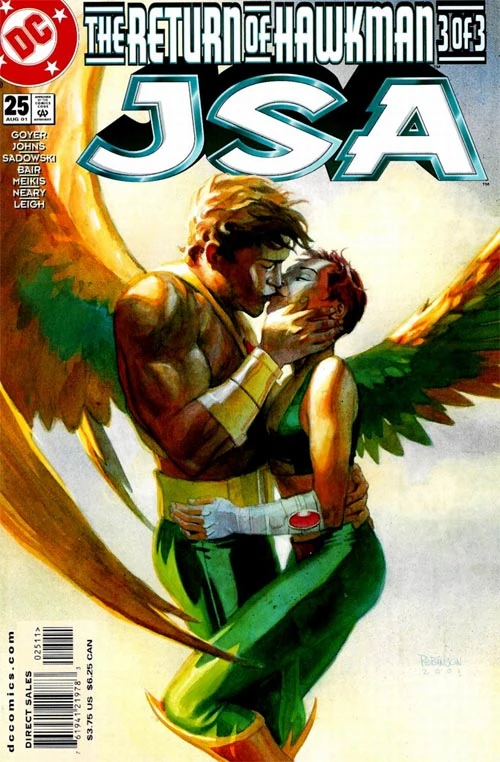
Image result for hawkgirl JSA coverSo one of the more contentious decisions that people argued was the usage of the relatively minor character Hawkgirl, who in the source material was a bland sidekick at best and a cliched love interest at worst. Hawkman was the source character. Well, four seasons later, and DCAU's Shayera Hol and her journey through betrayal, soul-searching and redemption has definitely made her mark as one of the most rounded-out characters in all of DC lore from what's essentially a gender-flipped Hawkman.


Of course, by using the 'alien cop' backstory, we did cut off a lot of the rather convoluted lore about reincarnation, Egyptian pharaohs and star-crossed lovers that was intrinsic to Hawkman's backstory. Those of you more familiar with the relatively recent live-action Legends of Tomorrow would be more familiar to the more classic 'reincarnation Egyptian lovers' backstory, but to me, Hawkgirl will always be a badass alien cop first and this convoluted reincarnation soup second. Still, was there a way to believably introduce a more traditional Hawkman into the setting, especially with Hro Talak kind of standing in as an evil version of the space-cop-Hawkman?

Well, this episode manages to do that, in a very, very believable way, which honestly makes me dislike Legends of Tomorrow's handling of their version of Hawkgirl a lot more now after watching this episode. But that's a discussion for another day.

See, one of my favourite parts of this episode is that how women tends to be stereotypically cast as the one who's so love-blind about destiny and soulmates. It's as much an ingrained trope in the Western culture as tropes of a brave knight in shining armour saving the princess from her evil oppressors. This episode introduces Hawkman, who brings with him a huge baggage of being Shayera's reincarnated lover, but instead of being a woman who is pursuing true love and destiny, Shayera, as the central emotional lead in all this, is rebelling against these romantic ideals. She refuses to let herself be defined by her relationship to a man, especially one who literally pops up and claims to be her true love reincarnated, when literally two or three days ago she doesn't even know this 'Carter Hall' bloke even existed.

The fact that Carter Hall is portrayed both sympathetically -- he's clearly a nice, if slightly over-enthusiastic dude -- but at the same time showing creepy stalker tendencies that should cause any but the most romantically-desperate of women to think twice is a great move, as well. Hawkman is brought in without really impacting or defining the already well-defined version of Shayera in the DCAU, and while Shayera doesn't deny the slight bit of attraction she feels towards Carter (hell, she apparently even sleeps with him based on context clues!) -- especially before learning of the weird-ass reincarnation thing -- she's also not willing to accept the whole 'we are destined to be together!' shtick. Carter, on the other hand, wants something more than sex -- emotional commitment. And in a very well-written buckling of traditional romantic dynamics, that is exactly what Shayera doesn't need or want right now, especially not with, what to her is a glorified one-night stand.

Quite hilariously, a nice detail that Batman discovered is that Carter Hall was banned from JLA internet forums for flaming Shayera haters.

Throw John Stewart, Shayera's past lover, into all this -- and John's own conflict about having moved on from Shayera and being in a relationship with Vixen, yet at the same time troubled with his own visions of 'destiny' that he saw his and Shayera's son, Warhawk, in the future... and John can't deny lingering affections for Shayera, if his reaction to seeing Shayera in a pretty dress is anything to go by. But John isn't a douche, and he's not just going to drop the good thing he has going on with Vixen just because of going into a possible future one time... and besides, what if Shayera doesn't want to hook back up? John is feeling all sorts of protectiveness and jealousy towards his old girlfriend and it's all confusing to the poor man.

The episode doesn't really give any definite conclusion, and it's fine -- emotional relationship shakeups take time, and I for one am glad that even if Shayera ends up being paired with Carter in the end (she doesn't) it's not done in one episode randomly.

The rest of the episode has Carter, Shayera and Batman go into an Egyptian tomb. Batman plays the cynical brother to Shayera throughout the entire episode, being the devil on her shoulder that reminds her to keep her head on straight and not to be confused with all this nonsense about reincarnation and all that jazz. Batman's been shadowing Shayera throughout her journey in investigating this Carter Hall fellow, out of sight and trusting Shayera to handle herself, but ready to show up and punch Carter should he turn out to be, well, a supervillain.

There are a lot of great explanations as to why Carter's doing what he's doing. One is that, well, the reincarnation story is true. The other, that Shayera and Batman leans towards, is that the Thanagarian Absorbacon that the ancient Thanagarian pharaohs Chay-Ara and Katar, malfunctioned and imprinted Katar Hal's memories into Carter Hall's mind. The idea that the original pharaohs that were reincarnated were Thanagarians in the first place was actually a very inspired move on the DCAU team's part -- I always thought it was absolutely weird for a pair of Egyptian rulers to randomly reincarnate as winged aliens half a galaxy away.

One thing that didn't really work out that well for me is Shadow Thief, who's... just kind of there. Yes, he gets a fair bit more to him later on in a follow-up episode, but the Thief's still a bit bland as far as villains go. The action scenes -- in the gorgeous interior of the pyramid, as well as the JLA fighting the Extremists earlier in the episode, is just amazing.

Still, it was a very masterful episode, dealing very well with the messiness of human emotion and the convoluted Hawkgirl/Hawkman backstory without feeling like a stupid 'because destiny says so' the way Legends of Tomorrow did. It opens the way for John/Shayera or Carter/Shayera to happen organically, and it's easily one of the better-written episodes of the season. It's an episode that I actually missed as a kid, so it was a huge, huge treat to watch this for the first time.


Justice League Roll Call:
  • Speaking Superheroes: Batman, Hawkgirl, Hawkman, Green Lantern
  • Non-Speaking Superheroes: Vixen, Elongated Man, Superman
  • Speaking Superillains: Shadow Thief, Dreamslayer
  • Non-Speaking Supervillains: Lord Havok, Gorgon, Tracer, Khunds, The Adversary, Giganta

DC Easter Egg Corner:

  • Hawkman, a.k.a. Carter Hall, a.k.a. Katar Hol... has had... a very... convoluted backstory, to put it kindly. He (and his lover, Shayera Hol/Shiera Hall) is a reincarnated Egyptian pharaoh that stumbled upon Thanagarian metal that allowed him to fly, or he's a space cop that came to Earth. The post-Crisis stories tried to merge both origin stories, adding more and more layers that convoluted Hawkman and Hawkwoman's story even more. The DCAU version of Hawkgirl tends to lean towards the Silver Age origin story, being a simple space cop, but the Hawkman here leans towards the Golden Age origin story, albeit with the twist that the original Khufu and Chay-Ara were Thanagarians that were deitified by the ancient Egyptians.
    • Shayera being unaware of all this, and being suddenly approached by a Hawkman that insists that they were reincarnated lovers and that Shayera's memories just haven't returned, is very similar to the post-Crisis version of Hawkgirl, Kendra Saunders, from the 90's JSA comics.
    • Hawkman's original name, Joseph Gardner, is possibly a reference to Gardner Fox and Joseph "Joe" Kubert, who were the writers that co-created Hawkman. 
  • The Shadow Thief is a classic Hawkman enemy. While here his origin story is yet to be revealed, in the comics, Shadow Thief is Carl Sands, a thief who was granted the power to turn into a shadow by an interdimensional alien.
  • The Extremists, here consisting of Tracer, Dreamslayer, Lord Havok and Gorgon, are a team of supervillains that, in the comics, battled Justice League Europe. They hail from the interdimensional world of Angor, which was destroyed due to a nuclear holocaust. The four that appeared here are based on the original team of Extremists. In a bit of a meta-joke, the Extremists are thinly-veiled expies of Marvel comics villains, and in their original debut, the Justice League was assisted by the Champions of Angor, themselves thinly-veiled homages to Marvel superheroes. 
    • Lord Havok, the robot dude, is a homage to Doctor Doom.
    • Dreamslayer, the caped wizard with a head of fire, is based on Dormammu.
    • Gorgon, the fat blob with tentacles, is based on Doctor Octopus.
    • Tracer, the feral-looking man, is based on Sabertooth.
  • The villains seen in the montage of photographs that show that Carter Hall has been stalking Shayera are, of course, all featuring actual DC villains. In addition to Giganta, we have:
    • Adversary, the dude with the black-orange costume, is a minor Superman enemy.
    • Khunds, which is a race of warlike aliens that tend to battle the Legion of Super-Heroes.
  • In a nice bit of continuity, Korschian Oysters are mentioned as Shayera's favourite food, which was what Hro Talak brought for Shayera in 'Starcrossed'. 

Saturday, 1 July 2017

Justice League Unlimited S03E01 Review: The Blackhawks' Crazy Weapons Collection

Justice League Unlimited, Season 3, Episode 1: I Am Legion


Ah, here we are as we start off the final stretch of Justice League Unlimited. This came out a far bit later -- it's supposed to actually go up in the April-May era, as I've gotten all the reviews done, but a freak laptop accident kinda caused things to get delayed, and one thing and the other and, well, here we are in August. Whoops! Better late than never. I'm hopefully going to finish proof-reading all my reviews in a timely manner, and the goal is to get all of season three done within the first two weeks of July. Planning to review the first season of Superman: TAS in the next month, and then Young Justice in the month afterwards.

In any case, while JLU's second season was an intense run of serialization -- something that's far, far more ambitious than anything that any superhero cartoon has tried to do before -- its third season was a mix of the second season's serialization and the first season's 'hero/villain of the week' plot. The third season was by no means bad, but coming off the very successful and well-done second season it just felt... weaker.

The whole concept of the Justice League Unlimited was that we have gathered all the heroes in one place so we can be organized and stuff. The first season didn't really have a huge enemy for them to face off against, though the seeds for Cadmus's formation has been seeded there. Sure, there were big battles against Amazo and Mordru, but it's not until the second season that Cadmus (and Luthor/Brainiac) took over as the main villains of the piece, becoming a recurring threat. And the fact that Cadmus was presented as the anti-Justice-League was pretty awesome too. Tala aside, Cadmus was filled with a group of normal people. And, yes, they had Task Force X, the Ultimen army and Galatea working for them... but their threat was in the fact that they are the government, and that they actually do have a point their villainy.

But they're not a group of bad guys, not like how the two incarnations of the Injustice League or the Secret Society were in the original Justice League run. And while they were cool, they also didn't last outside the episode that starred them.

So what if we created a truly recurring group of supervillains? In a glorious callback to the Legion of Doom from one of DC's earliest foray into animation in Challenge of the Super Friends (which I've watched a couple of episodes of as a child before watching JLU), an escaping Lex Luthor finds himself recruited -- okay, kidnapped and gang-pressed -- into the Legion of Doom, led by one of the few surviving recurring villains that are still alive and available for the writing staff -- Gorilla Grodd.


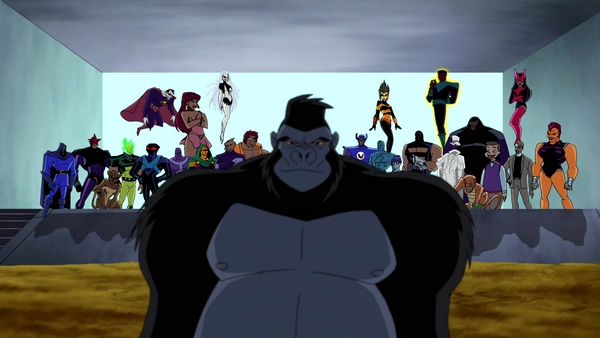
Let me say that I squeed when Grodd stands in front of his giant totally-not-based-on-Darth-Vader's-helmet base with a huge, huge lineup of supevillains. No, this isn't just a group of evil scientists and powerful government people that Cadmus was. It isn't a half-dozen mercenaries like the Injustice League was. It's an army to match the Justice League's own expanded roster. It's a bit of a shame that the Bat-Embargo and Justice League's own penchant of killing their villains stopped more recognizable faces from being in this lineup and making it truly impressive, but a lot of recognizable faces are among them. We know heavy-hitters like Bizarro, Parasite, Giganta, Sinestro and Star Sapphire. The likes of Copperhead, Killer Frost, Toyman and Cheetah are recurring characters, and iconic villains like Black Manta Devil Ray make their debut. And yes, the amount of new characters there -- who the hell knows who Rampage or Doctor Cyber are? -- promises to introduce us to these new, colourful characters the way people like Question went from nobodies to somebodies in the last two seasons.

Grodd runs his organization like a mafia, allowing the assembled villains shelter, the chance for them to recruit teammates for jobs, in exchange for 25% of the cut. And as Grodd takes Luthor and the audience for a tour, we see villains manning stations and doing base stuff in a way that's very much similar to how the League operates. However, Luthor's not very interested in joining. His last mind-meld with Brainiac has left him with a far different goal in mind. Apparently while conjoined with Brainiac, he achieved absolute knowledge, a state that Luthor equals to godhood. Luthor himself isn't very sane, because he sees specters of Brainiac (which, by the way, is ambiguous whether it's really Brainiac connected to Luthor due to their past bond or just hallucination) and is obsessed with it. Grodd values Luthor's skill and wants to recruit him into the fold, using the last remaining piece of Brainiac on Earth as a bargaining chip.

Meanwhile, on the good guys' side, we see that the League now has an embassy on Earth, a nice nod to Superman's propositions from the last season. King Faraday is promoted to liaison for the Leagues, which means that Faraday himself shows up a couple more times this season. Flash and Shayera are the main leaguers in this episode, but in a nice callback to JLU's season 1 formula, we get a mix of the old and the new. Flash and Shayera hang out with Fire -- a recurring and very memorable character that's been in the background episodes a lot of times -- as well as Chuck Sirianni, the last surviving member of World War II's Blackhawk Squadron. We also get a hilarious subplot of Flash totally crushing on Fire, but since he's still relatively young he's very, very intimidated by the hot Brazilian. Shayera plays the part of a wing-woman (no pun intended), though we did get the Brazilian joke out of her which is absolutely hilarious! The group of four are summoned to Blackhawk Island, which is the Blackhawks' decommissioned base and museum, being raided by Luthor, the Key and Dr. Polaris.

Apparently the Blackhawks' Island isn't just an old air force base, but the Blackhawks are insane collectors of trophies and weapons which include giant robot vultures, the Warwheels from the Vandal Savage episode, fucking flying robot machinegun sharks, a crapload of cannons, the Spear of Longinus and a lot of other stuff.


ChuckSirianni
HAWK-AAAAAA
Seriously, what the shit are the Blackhawks doing between World War II and the present day? And why are they stockpiling them all in a base not guarded by anyone? It's amazingly hilarious yet makes for a very awesome setpiece. Even Chuck gets some work done, dusting off his old warplane and assisting the League in navigating the island with a glorious "HAWK-AAA!". There's a great moment where Fire just trust Flash's orders and lets him go to help fight Shayera -- showing that Fire actually trusts and respects Flash a ton because he's a senior member of the team. The sheer anger that Shayera has at Fire for dropping Flash (not knowing Wally can tornado his way to safety) is also neatly done -- Shayera and Flash's sibling relationship is well demonstrated in various parts of the show.

Poor Chuck gets held hostage, but the Leaguers elect to save the island from blowing up, preserving their predecessors' legacy, instead of hunting down Luthor's team.

Luthor, meanwhile, returns to Grodd with the prize. The Spear of Longinus, otherwise known to those watching modern live-action DC series as the Spear of Destiny, the mythical spear able to rewrite history and cause its bearer to be victorious. Grodd's plan with it? Office ornament. That bit was so jarring and hilarious, and apparently it's all just an audition for Luthor. Grodd just wants to see how good Luthor really is, especially after his brief failure, and more importantly, Grodd wants Luthor who's top ape... and he withholds Brainiac's fragment from Luthor until he continues doing his dirty work. It's a great, great way to introduce our new big bad, Grodd, and honestly it's this season that make me able to take a fucking talking gorilla seriously.

And even then, as solid as the character work for Luthor and Grodd are, the heroes and secondary villains themselves are pretty fun too. I'm sad that neither Doctor Polaris nor the Key really get to do anything significant after this episode, though they did get a couple of pretty cool action sequences in this episode. But extra credit has to go to Chuck, who's just an old retired soldier with a plane, yet manages to kick ass alongside Flash, Fire and Shayera.

"War wheels. Robot condors. You've got a pretty goofy security system here." "Yeah... good times." Flash and Chuck's exchange is just something that really shows what they're trying to do.

And honestly, everything about this episode just has a retro feel. The presence of the Blackhawks. The lineup of supervillains with absolutely colourful costumes. The skull-shaped swamp base. The weird-ass threats like the flying robot vultures. If the message isn't clear, where season two pays more homage to more modern and mature comics, season three is JLU's take on the old-style Golden Age comics, something that a lot of people making adaptations of comic books (see: Arrow's first season, the first X-Men movie, BvS, etc) are ashamed of. "Let's make these superheroes as gritty as ever so they'll appeal to adults!" While it's not the worst thing to do to take a more mature tone (Logan, Watchmen, Legion, Netflix's Daredevil and Jessica Jones are very great examples of a more mature superhero show that's still good) the shame that a lot of adaptations seem to get at realizing that they're making a superhero show or movie is tangible.

And Team Flash choosing not to let Blackhawk Island erupt and instead save it is perhaps far more symbolic than sentimental, that these forgotten relics of the Golden Age, these parts of the comic-book history that is, well, history, can still bring a smile and a kickass action scene or two when adapted properly. And Chuck and the Blackhawks may have been retired, but that doesn't mean they can't still be part of a very solid and well-done story. I don't know jack shit about the Blackhawks, but I cheered inside when Chuck showed up with his jet and his corny-yet-awesome HAWK-AAAA battlecry. Hell, even Polaris and Key use their old-style Golden Age costumes instead of their inarguably cooler-looking post-Crisis costumes. This episode really shows that past is something to be respected, and, yes, maybe altered slightly to fit a modern audience, not disposed off like your old shame -- it's something, sadly, that DC absolutely failed to do when they did the New 52 reboot, choosing to let their history self-destruct and be thrown aside.

Justice League/Legion of Doom Roll Call:
  • Major Superheroes: Superman, Hawkgirl, Aztek, King Faraday, Chuck Sirianni, Fire, Flash
  • Non-Speaking Superheroes: Ice
  • Major Supervillains: Lex Luthor, The Key, Gorilla Grodd, Brainiac, Doctor Polaris
  • Non-Speaking Supervillains: Dr. Destiny, Evil Star, Cheetah, Atomic Skull, Bizarro, Black Manta Devil Ray, Parasite, Giganta, Silver Banshee, Dr. Cyber, Shark, Blockbuster, Puzzler, Killer Frost, Queen Bee, KGBeast, Sinestro, Gentleman Ghost, Black Mass, Copperhead, Toyman, Star Sapphire, Metallo, Rampage, Volcana, Thinker, Sonar, Heat Wave, Weather Wizard, Major Disaster

DC Easter Eggs Corner:

  • The Blackhawks last appeared in "The Savage Time", the first season finale for Justice League, which involved the Justice League returning back in time to fight in World War II alongside the Blackhawks. Shayera and Chuck both mention this by name. The War Wheels from that episode, as well as a portrait of Vandal Savage, can be seen in the Blackhawks' trophy room.
  • Grodd's Legion of Doom, of course, is a reference to the group of a similar name from Challenge of the Super Friends, the old Hanna-Barbera cartoon. It even has the swamp base shaped like Darth Vader's helmet. The showmakers tried their best to get as many members of the original Legion of Doom's roster on board, but not all of them are available -- Batman villains Scarecrow and Riddler are off the books because of the Bat-Embargo; while Brainiac and Solomon Grundy were dead... but a good chunk of the original Legion of Doom do show up in this episode (Luthor, Grodd, Bizarro, Sinestro, Black Manta, Cheetah, Giganta and a Toyman -- even if this is a different Toyman) leaving only Captain Cold as the only absent one.
  • The costumes on display on the Blackhawk base are all references to Blackhawk villains in the comics. After a bit of research, these are costumes corresponding to Killer Shark, Queen Killer Shark, King Condor and the Hoopster. There are also costumes showing various uniforms that the Blackhawk squadron has worn, among others the old blue original costume, Chop Chop's coolie uniform, the post-WWII red-and-green costume, the red-and-blue New Blackhawk costume and Lady Blackhawk's Birds of Prey-era costume.