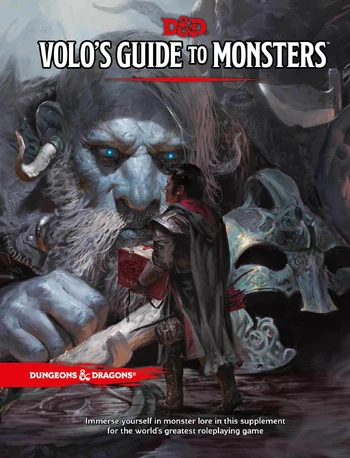

Back in the earlier days of 5th Edition, one of the first bestiaries released is probably my favourite book to come out of the entire catalogue — Volo's Guide to Monsters. 5th Edition doesn't have a traditional 'Bestiary 2', 'Bestiary 3' and so on like the previous editions of D&D, but rather splits it up into books like these, 'splatbooks' that contain playable races, a bunch of monster statblocks, and a load of lore for several spotlighted creatures.
For Volo's, we get the Forgotten Realms lore to nine of the monster types that the basic Monster Manual really wanted to spotlight. Beholders, Mind Flayers, Giants and Hags are rather obvious as being creatures that the designers wanted to highlight, and we've also got some of the 'monster humanoids' -- Orcs, Goblinoids, Kobolds, Gnolls and Yuan-ti. A fair amount of lore and religion are given to all of these monsters, and I think I've spoken very highly about how much this book is a very nice compact introduction to so many of these species. That was the first half, and I just reread all of that. It was a real nice read.
The bestiary that makes up the second half of the book also ties a lot to many of the major themes covered by the first half. A lot of new orcs, gnolls and giants, sure, but there are also a fair amount of monsters that do help you to pad out campaigns featuring these guys (and also Drow, who missed their lore drop for the next bestiary: Mordenkainen's Tome of Foes). Being a bit more free to add in some delightful weirdoes from D&D's previous bestiaries make Volo's and Mordenkainen's both a lot more fun as bestiaries to run through!
Which segues in nicely to how the D&D 5E brand is refreshing two bestiaries. Volo's Guide to Monsters and Mordenkainen's Tome of Foes has all the statblocks (and playable races) updated to the 5.5E system, and re-released without the huge chunks of lore in Mordenkainen Presents: Monsters of the Multiverse.
Unlike the brand-new Monster Manual, however, there really isn't a whole lot of new content. It's mostly just a refresh of the stat blocks, cutting out a lot of the lore in the first halves of the original books (which I will talk about in subsequent parts of this review). A lot of the flavour text are just rephrased, although MotM does help give some new artwork to some entries (particularly from Tome of Foes, which in retrospect feels kind of rushed) which never got entries before. Since the changes aren't that drastic, I do expect these writeups to be a lot less drastic than my Monster Manual coverage.
- Click here for the previous part
- Click here for the second part.
- Click here for the index
[Originally published in April 2020, revised in February 2026]
_____________________________________________________
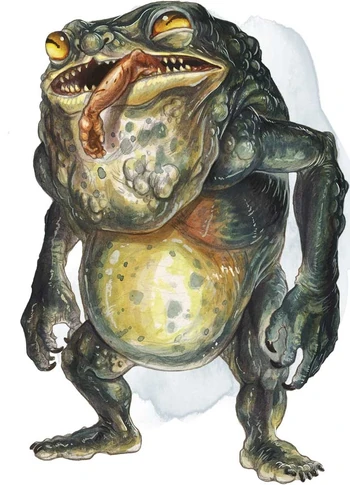
Banderhobb
- 5.5E/5E: Large Monstrosity; Neutral Evil; CR 5
The Banderhobb is another one of D&D's many frog/toad-people, although there is a nicely more monstrous twist to this one. That thing sticking out of the Banderhobb's mouth? That's not a tongue, that's some dude's arm. So yeah, one thing that makes the Banderhobb a bit more distinct visually is its size. The Banderhobb is a newer addition to the greater D&D lore, debuting only in 4th Edition, and vaguely inspired by a child's 'Boogeyman' monster, particularly in its original 4E artwork.
One of the creatures that Volo's Guide to Monsters highlights are hags, and Banderhobbs in the Forgotten Realms setting were originally created by Night Hags. Borne out of shadow and flesh, a Banderhobb is conjured into being as a minion for these hags, primarily working as either a thug or a thief/kidnapper. With a somewhat whimsical name, the Banderhobb is nonetheless quite a horrifying creature. It's got the 'resonant connection' ability, and as long as the Banderhobb is in contact with a tiny piece of its target, it can know the most direct route to it. In addition to being a powerful brute, the Banderhobb is deceptively stealthy, able to meld and teleport through shadows. It can swallow unwitting creatures whole, carrying them in its big froggy stomach to bring them back to their Hag masters. This has a whole 'child-abducting' vibe to it, with the flexibility of also allowing the Banderhobbs to kidnap adults or treasures. After a certain amount of time, the Banderhobb just fades away, leaving only tar and shadow.

The end result is an interesting frog-like creature that feels more like a highly advanced familiar, created and birthed out of a dark ritual for a specific purpose. I tend to not be the biggest fan of these super-specific monsters, but I feel like the Banderhobb is a nice accessory to a Hag villain.
____________________________________________________

Barghest
- 5.5E/5E: Large Fiend; Neutral Evil; CR 40
A personal favourite of mine is the Barghest, which is a bit of a bias because I play a lot of goblins. I first encountered these creatures in 3.5E, and I dismissed them entirely as yet another big ugly weird monster wolf. They're absolutely not! Volo's Guide to Monsters highlighted the three goblinkind races and gave them a fair amount of lore (and made all three main goblinoid races playable), and while we didn't get any brand-new Goblin variants, we get a couple of Goblin-related monsters. One of them is the Barghest, which is a shapeshifting goblin fiend.
The Barghest comes with a whole backstory, which involves something a bit more deity-level. At some point in the past, Maglubiyet the Goblin God betrayed the General of Gehenna, leader of the Yugoloths. As an act of vengeance, the General of Gehenna created Barghests, a fiend that is specifically created with abilities to absorb goblin souls. Maglubiyet as a god doesn't really care about his children per se, but he does care that the goblin souls that should by right go to him is being siphoned elsewhere.
The Barghest itself is born to goblin parents, as a normal child... but soon realizes what its mission is. A Barghest grows up as a goblin but soon realizes that its true form is a hellish canine beast with the face of a stretched-out goblin. Each Barghest is given the mission to consume 17 goblin souls, corresponding to the oaths that Maglubiyet had broken in the past. Barghests wants to return to Gehenna as quickly as possible to join its Yugoloth brethren, but waits to devour the soul of more powerful goblins (leaders and heroes) to gain an elevated status in Gehenna.

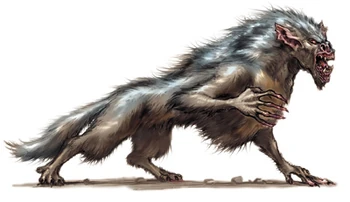
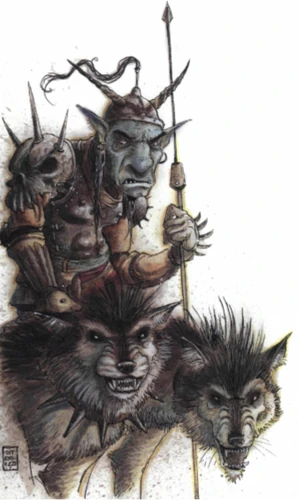
Barghests are thus kind of secret, shifty beings that infiltrate the goblinoid society, biding its time until it has the opportunity to assassinate its prey and devour their souls secretly. Volo's notes a rather odd little detail where if goblins find that a Barghest is among them, they grovel and pretend to be weak to show that it isn't worthy to be devoured. Monsters of the Multiverse streamlines a fair amount of this lore, although not to the degree of Monster Manual 2024, simply removing the 'a child is born evil' origin while keeping the mission and the vibe of the infiltrator fiend intact. It's up to the DM to decide how the Barghest infiltrates the goblin society.
Older editions, by the way, didn't really have such a strong tie to goblinoids other than their ability to shapeshift into a goblin (and in their true form, being a 'goblin-faced monster wolf'). Older Barghests are just fiends who leave their young in the Material Plane, but also tasks them to gather a certain number of souls as a strange, quasi-biological (as biological as fiends can get) rite of passage before they are allowed to go back to the Lower Planes. It's an interesting twist, then, for 5E to really merge the goblin aspects of the lore.
In addition to being able to shapeshift into its wolf-like form, Barghests are innate spellcasters with charming and illusion magic, and it can feed on a soul (it doesn't have to be goblins) and utterly destroy it, preventing resurrection. However, the Barghest has a full weakness... fire. Any fire greater than its body turns into a portal of Gehenna, and a Barghest will be banished to Gehenna. (Where the Barghest will inevitably be punished) That seems like a massive design flaw; but also feels like a very 'old wives' tale' way to deal with the infiltrator daemon. I'm not sure, by the way, why the Barghest isn't considered a Yugoloth considering its 5E lore. But I do really like the 'changeling infiltrator' trope in old-school fairy tales, and having one tied to goblinoids does present a nice little wrinkle as even if a DM characterizes the goblins as being classically dumb and evil, the Barghest adds in an evil-vs-evil scenario that would be quite interesting to see what the players do.
____________________________________________________
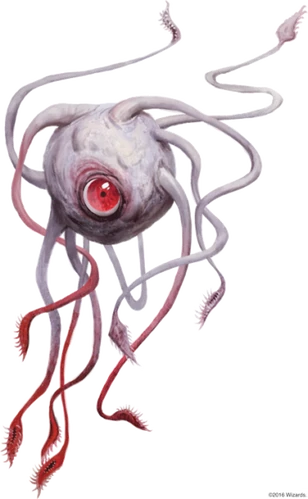

Beholderkin - Death Kiss
- 5.5E/5E: Large Aberration; Neutral Evil; CR 10
The Beholders, of course, get part of the spotlight of this first expanded bestiary, and as D&D's mascot monster, we get a bunch of brand-new Beholder variants. We've already gotten the Spectator and Death Tyrant as weaker and undead variations in the base Monster Manual, but anyone who's familiar with previous editions of D&D — particularly A&D — will know the sheer amount of Beholder variants, or "Beholderkin", that exists in the D&D multiverse. Volo's Guide to Monsters adds around three more, four if you count undead variants. Beholderkin, essentially, are beings that are created whenever a Beholder's reality-warping dreams manifest in creatures that resemble Beholders but aren't quite true Beholders.
The Death Kiss (also known as 'Bleeders') stands at a respectable CR 10, and is designed as a 'miniboss' of sorts, a weaker enemy that a party could fight before or alongside a Beholder boss. It's also got probably one of the most interesting designs in 5th Edition, being interesting on its own beyond just altering the general look of a Beholder. The Death Kiss is still in the 'Large' size category (though the art does make it look a bit too cute) with a singular red eyeball within a mass of white. It has multiple tentacles that end in bristles that each surround a yonic mouth. Rather humorously, these mouths are described to give the Death Kiss a 'nasal and high-pitched' voice.


Death Kisses are created whenever a Beholder has a vivid nightmare about losing blood... and instead of tentacles that terminate in magical beam-shooting eyeballs, the Death Kiss's tentacles end in teeth that give it is moniker... because the Death Kiss feeds on blood. Death Kisses are paranoid about dying from starvation, and try to feed on as much blood from random creatures like rats and bats as much as possible. Shown in some additional sketches, Death Kisses keep their tentacles retracted until needed, floating around like a sphere. Volo's describes the Death Kiss as a 'false tyrant', and they are not above making use of an adventuring party's misunderstanding... if it can focus enough. Although honestly, with the aforementioned nasal high-pitched voice, they probably can't get the adventurers to take them seriously anyway. Most times, a Death Kiss is too focused on hunting prey to bother masquerading.
Lacking eye beams, the Death Kiss is mostly a melee attacker, lashing out and draining blood to heal itself, while also possessing "lightning blood". Because the Death Kiss's alien blood causes lightning damage. Okay! While the Death Kiss might be threatening enough to adventurers, a Beholder's array of ranged attacks would allow them to subdue the Death Kiss long before they get to melee range, so Death Kisses usually submit to the rule of its Beholder 'parent'... at least until it has a chance to flee. A pretty fun design, and I appreciate the 5E Death Kiss the most out of the other Beholderkin due to it feeling the most 'different while also having the distinctive body layout of a Beholder.
____________________________________________________
Beholderkin - Gauth
- 5.5E/5E: Medium Aberration; Lawful Evil; CR 6
The Gauth falls between the Spectator and the Beholder in terms of strength and eye-tentacle number, having six (compared to the Spectator's four and the Beholder's eight). The Gauth's most interesting feature, however, isn't the most immediately apparent in its 5th Edition artwork: the ring of eyeballs around its central eye. I love the visual of the eyeballs encrusting the layer between the eye and the 'skin' of the socket, but it's not immediately obvious, is it? In addition to eye-tentacles, the Gauth also has regular octopus-like tentacles that allows the Gauth to actually manipulate and grasp things.
The Gauth is most notable for its ability to devour magic, with its 'Devour Magic Ray', one of its six possible effects. The other five are the weaker versions of the Beholder's less oppressive eye beam attacks, but the Gauth's unique magic absorption ability makes it a fun and unexpected ability. Magical items affected by the Gauth lose their magical abilities for a turn, but most importantly lose charges of it, a nice mechanical way for an encounter to be difficult beyond just adding more damage or more health. Oh, its central eye stuns anyone who sees it, instead of being a cone that disables magic like Beholders.


The Gauth metabolizes magic as food, and if it's starved of magic for several weeks, it will be shunted back to its home plane. I'm not quite sure why the Gauth would want to be here, though, presumably magical items are a lot less common in the Material Plane compared to the Gauths' home plane? Gauths are tied to the Spectators from the Monster Manual, arriving whenever the wizardly ritual to summon the otherwise obedient Spectator goes wrong. Gauths are noted to either masquerade as a mighty Beholder to intimidate the summoner, or as an obedient Spectator... and then the Gauth would proceed to chomp down on the magical item it's supposed to guard.
I found the Gauth very uninspired during my first review, but the little quirk of it just wanting to eat magical items and being happy to deceive or barter for it makes it a nicely different creature compared to the other existing 5E Beholderkin. Volo's also notes that Gauths, being less xenophobic, are happy to work together with each other, and are also just as likely be enslaved and turned into minions by a Beholder. Those are some nice encounter variations, which I do appreciate.
____________________________________________________
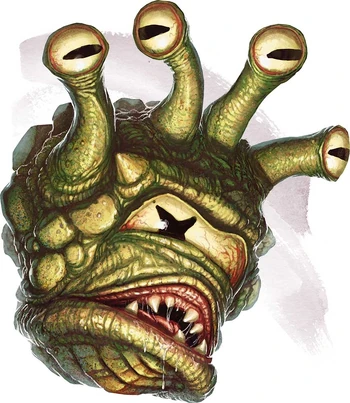
Beholderkin - Gazer
- 5.5E/5E: Tiny Aberration; Neutral Evil; CR 1/2
This little bugger is my favourite of all the Beholderkin. The artwork isn't quite clear about it, but Gazers are tiny. Which is the size category that cats and hawks fall into. The Gazers are adorably friend-sized, and at a CR 1/2 with a sidebar describing 'Gazers as Familiars', they are definitely intended to be just that. Whereas the other five other existing Beholderkin are adversaries and dungeon encounters to differing degrees, the Gazer is just a little baby Beholder.
Look at that artwork, too. That scowling, pouting mouth, and the X-shaped central pupil and the frog-like stumpy eyestalks? This thing isn't even trying to be threatening like the Gauth or Spectator. Gazers can't even speak, they just approximate and mimic words that it hears, babbling along like a strange combination of a toddler and a parrot. Even Beholders find them amusing, and are noted to 'treat them like spoiled pets'. The Gazers, on their end, follow their creator Beholders (or their wizard) like 'devoted, aggressive puppies'. How can you not love that? 3.5E called them 'Eyeballs', and did an adorable 'this image is scaled up' disclaimer, portraying it next to larger Beholderkin.

Not all monsters need to be bosses to be fought at the end of the dungeon, after all, and the Gazers are just adorable little buddies! They have very simple, 'baby' versions of the other Beholderkins' eye rays, being a dazing ray, a fear ray, a telekinesis ray, and the one that directly deals damage, a frost ray. It's not completely harmless, but still, more adorable than threatening. Even as a wizard's familiar, Gazers will behave aggressively towards other tiny creatures unless the wizard is strict. So exactly like a chihuahua, then.
Gazers are tiny manifestations of a Beholder's dreams, and always resemble the Beholder that dreamed it into existence. Maybe that's why the Beholders like them so much, since they aren't intelligent enough to be mistaken as it, but also shears a lot of its features? In addition to being treated as spoiled pets by Beholders, flocks of Gazers will wander around their master's lair, patrolling their master's lair like angry little puppies. Like cute little aberration chihuahuas that think they are so tough, but are just CR 1/2.
____________________________________________________
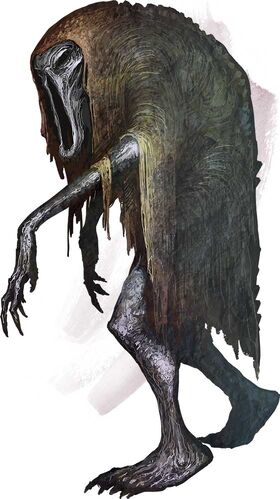
Bodak
- 5.5E/5E: Medium Undead; Chaotic Evil; CR 6
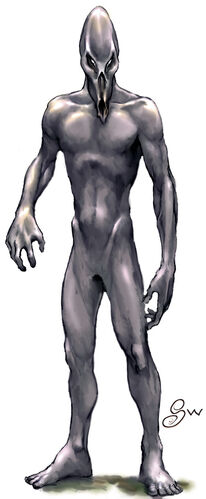
Where some of the creatures in Volo's are newer creatures (the Banderhobb, for example, debuted in 4th Edition), some, like the Bodak, appeared all the way from the 1st Edition. I must confess that they are visually quite boring in the past. I don't agree with all of the design choices that the 'darker and grittier' 3E and 4E did, but the Bodak looked so... mundane. Admittedly, 3E-4E turning the Bodak into a weird naked gray guy with a stretched skull isn't any less silly, but it was distinctive, at least. But 5th Edition's revision of the Bodak is easily my favourite. The Bodak is still a shambling corpse, but its mouth has been stretched to an uncomfortable degree, yawning open unnaturally. The ragged cloak gives the Bodak a bit more dignity as well, looking far more menacing than the naked gray guy look. Not seen in the art, but the Bodak would also have a hole where its heart would be.
Their lore has changed throughout each edition it appears in, but in 5E Bodaks are a type of undead created by a worshipper of the Demon Prince of Undeath, Orcus. It does make sense that someone who worships what's essentially the god of death would, in death, turn into a slightly different undead than a typical wight or zombie or spectre. A would-be Bodak needs to do a ritual while carving Orcus's symbol over their heart, typical death cult stuff. This ritual turns them into sentient husks that suck in all energy around it. The souls are also warped so much that they can't be resurrected anymore.

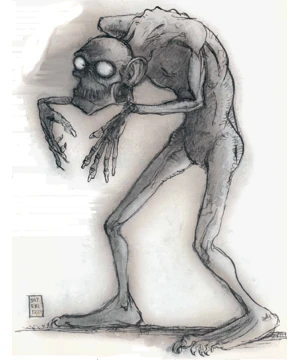

In stat block terms, this is translated as the Bodak's signature "Death Gaze" ability, where a creature that makes direct eye contact with a Bodak and, if the ability hits, will straight up be reduced to zero hit points. Unless they are immune to being frightened, in which they merely take some psychic damage. This is most certainly something that will catch newer players unawares! As a bonus, those slain by a Bodak have their face warped into that same rictus scream. That's cool! Orcus can see through his Bodak minions, and while it's not reflected as an ability in the statblock, the prose notes that Orcus can take over a Bodak and use it as a mouthpiece.
Bodaks are 'despised even by nature', and this leads to it having an 'Aura of Annihilation' that deals necrotic damage as an aura around it (and drives animals away), but also makes it hypersensitive to sunlight, being burned by the sun. It's a nice thematic way to tie in the 'weak to the sunlight' weakness that many folklore monsters have. Oh, despite being minions of Orcus, they only retain vague impressions of its past life, but only to destroy them. Former enemies, former friends, only other minions of Orcus are counted as 'not to be destroyed' in a Bodak's warped mind.
As a last bit of interesting lore, the first Bodaks were created from seven Orcus devotees called Hierophants of Annihilation... who were apparently as powerful as Balors, with the ability to turn any slain mortal into more Bodaks. These aren't really reflected in the stat block (where we are only provided the CR 6 regular Bodak), and this description which seemed to pre-empt a stronger variant was dropped from the Monsters of the Multiverse re-release of the statblock. I have a nice, soft spot for the Bodak... there's a fair bit going on for it, but a lot of thematic cohesion as well.
____________________________________________________
Boggle
- 5.5E/5E: Small Fey; Chaotic Neutral; CR 1/8
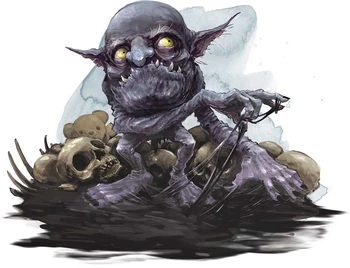
'Tis the Boggle! I love the Boggle. Boggles, also known as 'Bogeys' in-universe, play on the role of mischievous house spirits, and with 5th Edition initially not adapting a lot of the 'small fairies' that show up in earlier editions, it is quite noticeable that Volo's and Mordenkainen's made an attempt to bring in newer, wackier fey folk. Boggles used to just be honestly quite boring little naked blue imps in older editions, but 4th Edition began to visually emphasize its 'oil' gimmick, and 5th Edition made it much more memorable by giving it weird proportions. Oversized head and hands, and a grumpy face with a mischievous streak in his eyes? Love the artwork for this ugly bugger.
In 5E, tying to its Feywild connections, Boggles are born out of strong feelings of loneliness, materializing in proximity to someone who feels isolated or abandoned. This means that Boggles lurk not just in the Feywild, but can very quickly move to the Material Plane where people are. They hide under beds and closets, and are often dismissed as a lonely child's imaginary friend or a hermit's hallucinations. Very close to tropes of something like the Boogeyman, which I adore that they're doing it without just copy-pasting the basic facets of that creature. No 5E material ever mentions this, but I do wonder that if the Boggle 'tormenting' a person is subconsciously or otherwise influenced by it trying to be a friend to them?


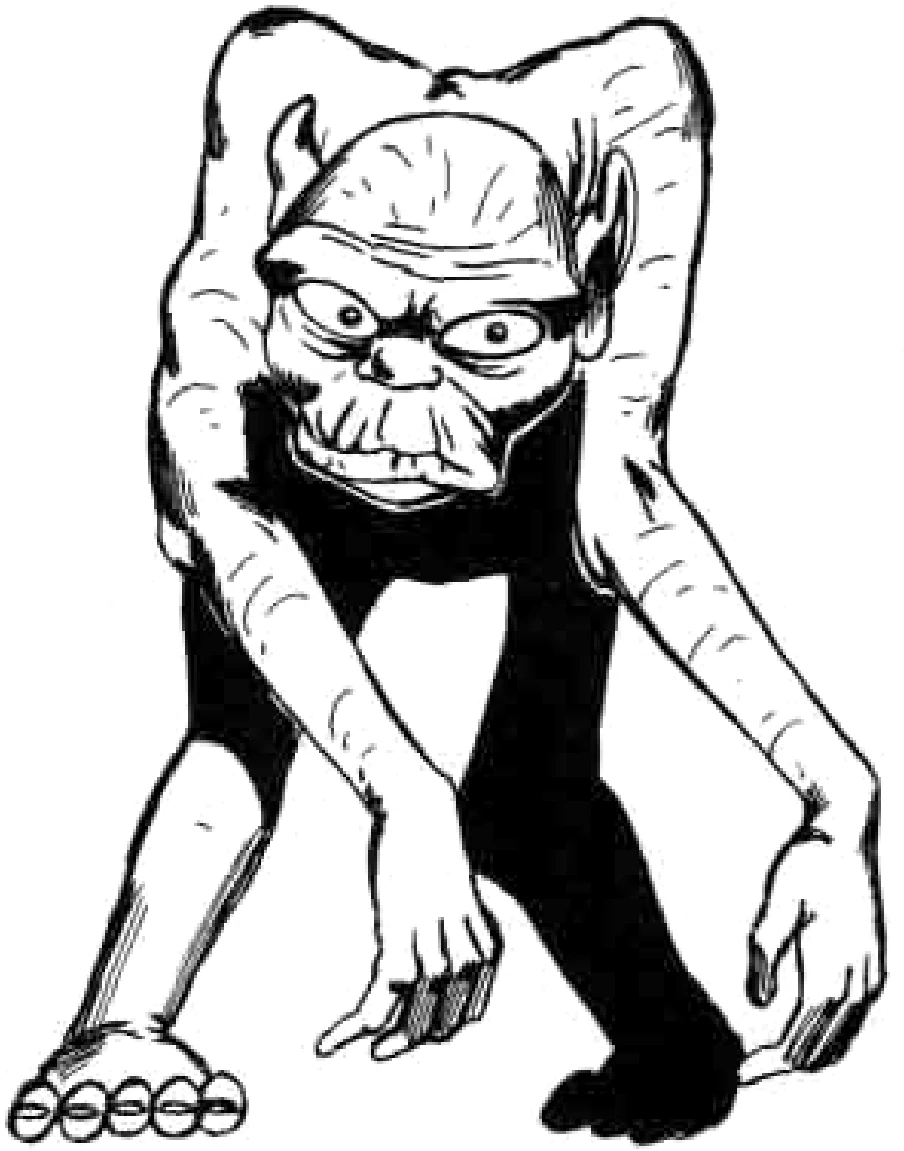
Boggles themselves are just chaos personified. They aren't evil, but they aren't nice either, going around playing pranks on their owners. Making creepy sounds, moving furniture around, smashing plates... but Boggles never seek to really harm, they just want to cause mischief. Of course, 'just a prank' sometimes involves hiding a baby in an attic, or causing undue mental torment to someone, which is where adventurers are brought in. Boggles, as you might imagine from all this personality given to it, are little cowards who would very happily escape.
As mentioned before, Boggles always have a bit of an 'oil' gimmick. Boggles can create either slippery or sticky oil – both useful in pranks – out of its skin pores, and these oil will disappear within an hour. This oil is what most of the Boggle's abilities revolve around. The other ability that it can use is 'Dimensional Rift', allowing it to make portals that allow it to teleport... but very specifically, because it needs to be adjacent to a space 'defined by a frame', like an open window, or bars of a cage, or the frame made by the space under your bed. I love this. I've always described Fey as the 'chaos with its own order', or 'the most ordered chaos', and the Boggle's wacky hijinks ability having rules that makes sense to them is wonderful.
Almost all the monsters in Volo's can be tied to one of the 'star' species in one way or another, and the book suggests Boggles as servants to Hags, Fomorians, and Archfey-patron Warlocks. It's a nice tie-in, but everything else that is written about the Boggle in the book really makes this feel like a more 'personal' little threat for whichever NPC the Boggle manifested out of and is tormenting.
____________________________________________________

Catoblepas
- 5.5E/5E: Large Monstrosity; Unaligned; CR 5
Another classic creature from Greco-Roman myths is the Catoblepas, debuting in the original Monster Manual. While the original myths described a monstrous buffalo of decay with the ability to kill anyone that it looks up at, D&D's Catoblepas has consistently portrayed it as being quite monstrous. Jumping on one of the variants of the myths that described the Catoblepas as having the head of a boar, the original 1st Edition artwork gave the Catoblepas the head of a hideous boar with too many tusks... as well as an elongated neck and tail. 4th Edition went for a rather excellent variation as well, giving its Catoblepas probably one of the most unsettling 'it has a human-like face' artwork ever. I am also a huge fan of how wretched and diseased the creature from 3.5E looked, especially how raggedly that head is.
In 5th Edition, the Catoblepas still lives in swamps, and is hilariously described as a "conglomeration of bloated buffalo, dinosaur, warthog and hippopotamus". Catoblepas behave most of the time like a lazy bovine, ambling through its marshy territories, eating vegetables and sometimes carrion. It is also extremely very smelly, which is accurate to the myths it is homaging. The stench combines with the unpleasant swamp smells which makes the Catoblepas feel extra ghastly. 5E also associates the Catoblepas with one of their spotlight monsters, Hags, who are described to herd them and milk them like farmers. That's surprisingly wholesome.


The Catoblepas's most terrifying ability, however, is its death-like gaze. The Catoblepas has trouble lifting its head due to the length of its neck, but a glare from its bloodshot eyes can rot flesh... and there is a chance of instantly dying if they fail particularly badly against this save. The Catoblepas's tail ends in an Ankylosaur-like club, able to shatter shield and bone. Catoblepas are happy enough to feast on the remnants of its slain prey.
A Catoblepas isn't exactly powerful enough to have 'lair actions', but its presence is enough to warp the wetlands that it lives in, causing it to be more fetid and decayed with its presence. There's a naturalness of the balance of life and death in a swamp, but the Catoblepas befouls clean water and healing herbs, and drives animals around into aggression and disease. In-universe there are so much rumours about Catoblepas that the mere mention of these beings an cause panic, because in addition to the death and decay, these beings also bring misfortune. Considering how utterly powerful the statblock is for a 'CR 5' creature, this may apply to your players as well. Always love the description and the artwork (particularly the wretched 3E-4E ones) for this creature, making it so much more memorable than 'smelly cow'.
____________________________________________________
Cave Fisher
- 5.5E/5E: Medium Monstrosity; Unaligned; CR 3
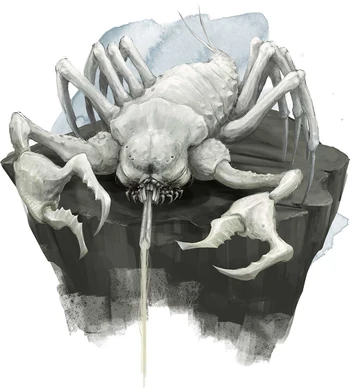
The Cave Fisher has gone back and forth between different editions, and as much as I like the cool, more 'realistic' giant albino crustacean/arachnid hybrid that 5E (and both 2E and 3E) made, I found that there's something charming about the goofy googly-eyes and muppet-like snout of the 1E and 4E iterations. Very surprising to see those two editions converging when the others didn't! That's not to say that I don't appreciate the more realistic design, of course not. The 5E Cave Fisher is a gorgeous design that makes absolute sense as a giant Underdark/cave-dwelling giant arthropod. Combining features of crustaceans and arachnids, you get a creature that's a bit of a mix of a spider, scorpion, crab and silverfish... but the end result is a bit too mundane. Now I am a huge arthropod geek so I can tell you that this doesn't quite look like a giant version of a real bug.
Cave Fishers scuttle on the stalactites and ceilings of caves, using their snout (the 2E, 3E and 5E versions have a weevil-like snout instead, which is less charming) to produce sticky web, and then hang it down to trap prey. They use this to hunt bats and other smaller animals, and sometimes they fight over the same area. This isn't even something particularly unique, many real-world spiders like the Bolas Spider and the Ogre-Faced Spiders use webs like fishing lines and nets respectively.


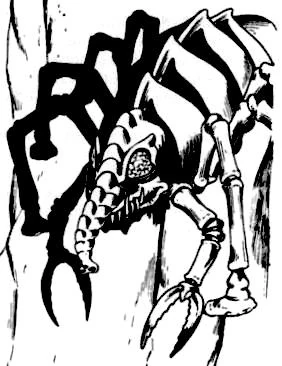
That said, I really do appreciate the existence of the Cave Fisher. Not everything in the Underdark can be a 'dangerous, vicious, man-killing monster' like the Roper, Hook Horror, Grick, Umber Hulk, and easily a dozen more from the Monster Manual. Some, like the Cave Fisher, are more passive creatures that fill a bit of an ecosystem niche as the part of the food chain that presumably beings like Hook Horrors and Ropers would prey upon when adventurers aren't exploring the Underdark.
The Cave Fisher, however, is noted to be particularly valuable, with every part of their body being useful. The webbing and the carapace, fair enough. Easy to see how they could be scavenged in a fantasy world. But the most memorable part of the Cave Fisher for me is that it has alcoholic blood. Say again, its blood is somehow alcoholic, and it's a delicacy used in the creation of some of the best dwarven spirits. This, by the way, is translated into its stat block. The Cave Fisher's blood is flammable, and it actually has an aversion to fire because of that! I find that pretty adorable, and elevates this bug from merely being just an inaccurate giant spider.
____________________________________________________

Chitine
- 5.5E/5E: Small Monstrosity; Chaotic Evil; CR 1/2
The Drow, being the single most popular and enduring fantasy race that Dungeons & Dragons created, of course has spawned a lot of different variants and minions over the years that they headlined an antagonist role. Volo's Guide to Monsters doesn't actually spotlight the Drow (that would be Mordenkainen's Tome of Foes, a fact that the books themselves lampshade in their forewords) but it does have a bunch of Drow-related entries in their bestiaries.
Chitines in 5E are monstrous 'Man-Spider' (to borrow a Marvel comics term) hybrid, combining both Drow and Spider features without a clear demarcation like a Drider. It's got four arms, claws on all its fingers, spider fur all over its body, and a head with six blank spider eyes and fangs growing out of its elf mouth. The artwork makes the Chitine look quite monstrous, but it's actually classified as a 'small' creature. 5E eschews the earliest artworks of the Chitine from 2E, but 3E-4E made them look a bit more humanlike.
Chitines are associated with the Drow and their dread god-queen Lolth. There's a bit of an interesting origin story, where the Drow experimented on their prisoners to create a race of obedient slaves. Now Lolth is all about cruelty, but the Drow doing this without properly attributing their creation to Lolth first? Now that was something that their control freak of a demon-queen did not approve of. As the Drow continued to do their experiments, Lolth cursed the rituals to sometimes create a 'Choldrith', which we'll talk about below.

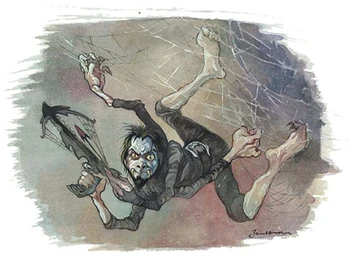

At first, the Drow thought this was a sign of Lolth's pleasure instead of displeasure, since the Choldrith served as a 'reproductive' type of Chitine, laying eggs that created more Chitines. However, the Choldrith being an extension of Lolth eventually whispered words of revolution amongst the Chitines, causing the would-be slave race to revolt and attack the Drow, killing their original breeders and escaping to becoming a different Lolth-worshipping race in the Underdark. Chitines serve the Choldriths happily, either as guards, warriors or worker, using their webbing to expand their nests and create traps.
Interestingly, despite this, the Drow still try to test their clearly psychotic goddess by making Chitines now and then when they need good workers, but the rituals can still birth Choldriths, which would be disastrous for them.
The Chitines themselves aren't anything to write home about, statblock wise (they're just a weak spider people, weaker than the Drider or Ettercap) but the backstory it quite fun. I find this story to be a great example of just how much the Drow are victims of Lolth herself, and these sorts of conflict in-between the Drow people and their goddess would be a good direction to keep the Drow how they were.
____________________________________________________

Choldrith
- 5.5E/5E: Medium Monstrosity; Chaotic Evil; CR 3
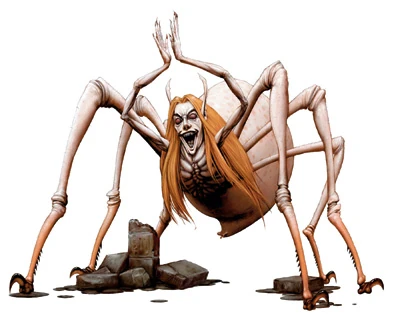
The Choldrith is a lot more spiery, being almost entirely a spider except that she has a bald version of the Chitine's head (drow ears, spider eyes, and a mixture of a drow's mouth and spier fangs) and its two front legs are humanoid. It's a lot more monstrous than the Drider, and the Choldrith has a mass of spider abilities and a whole load of spells. More interestingly, due to their fanaticism to Lolth, their spells are all paladin/cleric-themed, with spells like Spiritual Weapon, Sanctuary, Shield of Faith, and the like. Considering that in their backstory the Choldrith essentially caused a religious revolution among the Chitines, it makes some sense?
Choldriths need no mate to lay eggs to create more Chitines, and they preach that the Chitines and Choldriths are the true favoured children of Lolth due to resembling her spidery form more than the foolish Drow. Due to this, they gather other spiders and spidery creatures as well, covering their lairs with webs. The prose notes that despite their spidery origins, they behave similarly to eusocial insects like ants. Chitines behave and are split into worker and warrior castes; while Choldriths serve the higher ranks like commanders, priests and supervisors.
A pretty fun set of spidery monsters, and again, using them in an adventure isn't that hard. Choldriths and Chitines are noted to just as likely be sent aboveground by Lolth's visions and menace a town as an independent threat, or perhaps a Drow-Chitine conflict, two factions that aren't exactly good, are fighting in the Underdark. Or perhaps as a DM you decide that Lolth wants the Drow and Chitines to play nice for a whie, to allow you to set a dungeon or longer encounter with all these creatures together.
Again, an interesting backstory and a nice little expansion on the Drow's lore. I would also really like to point out the more human-looking 3E Choldrith, who just looks so fanatical as she claps about the glory of Lolth. I do like that 5E made them way more spidery, to distance them from Drows and Driders.
____________________________________________________

Cranium Rat
- 5.5E/5E: Tiny Beast; Lawful Evil; CR 0
- 5.5E/5E: Medium Swarm of Tiny Beasts; Lawful Evil; CR 5
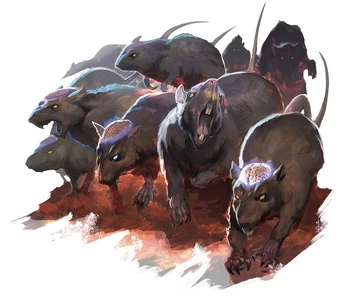
God bless the Cranium Rats. As I said almost a decade ago when I wrote this review for the first time, "they are rats, but you can see their brains. Therefore, they have psychic powers." Sometimes, you just need rather silly monster concepts, don't you? And the Cranium Rats are exactly that. They're rats. You see their brains. They have psychic powers. A more recent monster variation from Planescape show off a swarm of these rats puppeteering a cloak and a hat. That's glorious.
The Cranium Rats are one of the tie-ins to the spotlight monsters of Volo's, which are the Mind Flayers. In-between their world-conquering plans, Mind Flayers also take the time to bombard rats with psionic energy to turn them into Cranium Rats. As you do. The interesting thing about the Cranium Rats is that a single one isn't actually smart. They have 'telepathic shroud', preventing someone from mind-reading or divining it, and they can illuminate their surroundings with their glowing brains, but are noted to be no smarter than an ordinary rat.

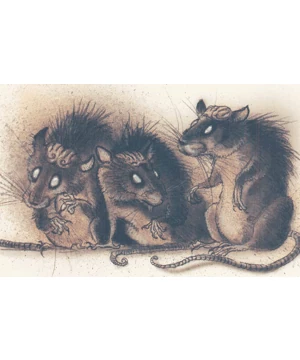
However, gather enough Cranium Rats together... and when they form a swarm, their minds have merged together and suddenly, they are legion! The Cranium Rats retain their intelligence as long as the swarm persists, which is such a fun and clever way to play with the 'swarm' monster mechanic. More importantly, Cranium Rats, when gathered together, have psionic spells. These rats can cast Command or Dominate Monster if they so choose!
Cranium Rats separated from their swarm actually still retain their intelligence, but get progressively 'rattier' the longer they are separated from their Swarm. This probably feels terrifying for what's previously a 15-intelligence being, which is smarter than the average human! This is such a fun and ridiculous way to show off a hivemind, while also being goofily whimsical. I just can't hate these guys!
Of course, as part of the 'spotlight monster tie-in', the Cranium Rats are noted to be utilized by Mind Flayers as spies, to invade surface communities and collect information without being too suspicious. Considering the other options would be like, Quaggoths and Intellect Devourers, rats, even with brains, are a far more subtle type of spy, I suppose. The prose also mentions that the Illithids just plain don't care if the Cranium Rats just spread beyond the Elder Brain's range of influence, since they can just make more... but it just makes the rats a bit more interesting, doesn't it? As a DM, you could make them the creepy foreshadowing to the Mind Flayer invasion, or just an individual encounter.
____________________________________________________

Darkling (Dark Ones)
- 5.5E/5E: Small Fey; Chaotic Neutral; CR 1/2 (Darkling)
- 5.5E/5E: Medium Fey; Chaotic Neutral; CR 2 (Darkling Elder)
The Darklings have had a lot of different origins since their first appearance in the 1st Edition Fiend Folio. In their first couple of appearances, they were simply known as Dark Creepers and Dark Stalkers, and 3E would combine the two monsters into variants of a race called Dark Ones. This is a bit of an interesting thing where the art direction has been similar, but the origins are completely different. 1E and 2E didn't really have an origin for them; and 3E made them just mysterious subterranean humanoids (of which we have way too many of them) with a light-sensitive gimmick. 4E, meanwhile, associates them with the Shadowfell and Halflings.
5th Edition takes a different route, as you can probably see from the creature type. Darklings are now descendants of a Seelie Fey who has betrayed a more powerful Fey called the Summer Queen, who cursed the entire house. The Fey's name is stricken and forevermore be remembered as Dubh Catha ('dark crow'), and his descendants are the Dubh Sith ('darklings').
The curse of a Fey is ironic, and the once light-loving Fey now has a body themed around darkness. A Darkling's body absorbs light, wizening the creature and causes it to rapidly age. Upon death, they explode as the accumulated light in their bodies burn their possessions away. This leads the Darklings to wear clothing that cover almost their entire body, and they hide in enclaves under towns and cities as thieves and assassins. Despite this, the Darklings still yearn for the beauty of light, sneaking a dangerous peek at sunlight, or collecting jewels that remind them of what they lost. How cool is that? I find the little exaggeration of the 'sunlight sensitivity' trait slapped onto so many monsters having an origin, and even translated to their origin, powers and weaknesses, to be a very nice twist!


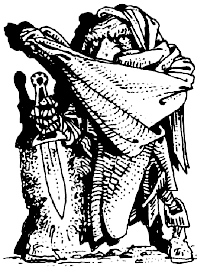
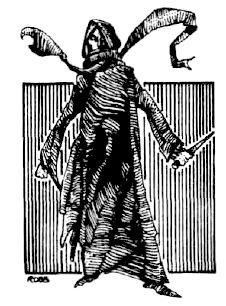
Darklings are normally shorter, being gnome-sized, but wise and respected ones undergo a ritual to become an Elder. This ritual marks them with tattoos, channeling some of the light within them. This leads them to grow into a taller, medium-sized elf-like form if it succeeds, but the would-be Elder dies if it fails. Darkling Elders are able to cast the Darkness spell, which I think is meant to be a representation of it having a bit more control over their 'light-absorbing' powers. (The 'Darkling' and 'Darkling Elder' are equivalent to the 'Dark Creepers' and 'Dark Stalkers' of older editions).
I like this a fair bit, by the way. I don't think that the change needed to be this drastic, but what we got was really cool. The Darklings always had a bit of a 'oh, let's just rewrite what we already hat' thing going on, but tying in the light-absorbing nature with a Fey curse is quite interesting. I've always said that D&D has a dearth of combative Fey, but the Darklings are at least the result of a Fey curse. I've grown to really appreciate the Darklings and their light gimmick over time.
As one last note, Volo's Guide to Monsters actually just reuses artwork from the 3rd Edition material for their Darkling artwork. Monsters of the Multiverse gave us new art for these two Darklings, which I do appreciate.

Deep Scion's mouth probably based off a Fringehead Fish
ReplyDeleteDang, I never knew a fish like that existed, but that sure is unmistakably the inspiration for the Deep Scion's mouth. It's amazing just how many weirdo fishies there are in the ocean, huh?
DeleteFor real.
DeleteI assume Deep Scions will be in the next update?
ReplyDeleteYep, yep! Which should be up now. Volo's and Mordenkainen's rewrites aren't as extensive as the Monster Manual, but there are some entries that I talked about a bit longer, and some monsters get shuffled around a bit.
Delete