

Welcome to part five of my Coverage of Dungeons & Dragons’ 5th Edition Monster Manual! I do sound like a bit of a broken record at this point, but these reviews were originally written in 2019 and I am updating it with the new updates to the 5E rules. And with this update, I took the opportunity to talk a lot more about monsters I kind of glossed over during my initial review run!
And back then, I lumped all the Demons and Devils into one long article, which I felt now looking back did the designs and history a fair amount of disservice. Which is why now the two articles are separate! I did my little introduction about the fiends and the differences between the Tanar’ri Demons and Baatezu Devils in that article, though the lore of the setting isn’t exactly the focus of our review segment.
____________________________________________________


Whereas Demons represent the Chaotic Evil side of the lower realms, Devils are Lawful Evil. Distilled into its easiest-to-understand form, Devils rely on ensnaring mortals with carefully-written contracts that are perfectly legal… but with enough loopholes that the mortal’s soul is forfeit due to being forced to make choices that drop them into evil. Where Demons form massive unorganized and destructive hordes in the ever-shifting Abyss, Devils are organized in the multi-layered Nine Hells, with each layer (being very much based on Dante’s Inferno) ruled by a specific Archdevil and having its own function and hierarchy. In 5E, the specifics of the politics and characters in the Nine Hells would be fully detailed in Mordenkainen’s Tome of Foes.
The vibe of the Devils’ setup is extremely like a particularly toxic and tyrannical mega-corporation, and that involves promotions and demotions! I did briefly allude to how Demons could change forms into weaker and stronger forms, but that hierarchy is strictly reinforced in the Nine Hells, going from specifically Lemure to Imp to Spingaon to Hamatula to Barbazu to Kyton to Osyluth to Malebranche to Erinyes to Gelugon to Pit Fiend to the Archdevils. Other subsequent devils introduced can be comfortably sorted in-between this hierarchy.
Again, the whole idea of the Devils is that they are lawful and they are stronger because of that. Treachery happens, but less revolutions happen due to the fact that the Devils can agree that the disposing of a certain Archdevil was done within the letter of the law. As far as 5E lore goes, the powerful being known as Asmodeus was once one of the most powerful Archangels who led the forces of the Celestial Realms to fight the endless horde of demons. Getting more and more estranged with his leaders, Asmodeus would turn to making deals with mortals, gaining their souls as both magical fuel and also a source for troopers. Devils are all about obtaining souls, which they treat as currency. The most important part is that everything Asmodeus did was by the letter of the law, that some company diligence was done in making sure that the mortal understood what awaited them at the end of the contract, and all that jazz. Thus was born the Devils, which started from a noble purpose, but a purpose where the ends justifies extremely evil means.
Being actually entities with motivations and personalities make the Devils a lot more fun to roleplay and encounter in the games as characters, whereas the Demons tend to be just brutish forces of nature. Both make a nice contrast to each other, which I think is much needed if you’re going to have multiple factions of fiends!
[The article was originally written in October 2019, and was revised in August 2025]
____________________________________________________

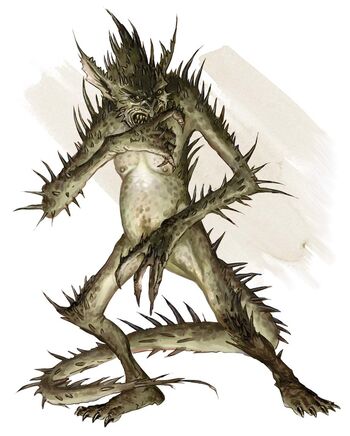
Barbed Devil (Hamatula)
- 5.5E/5E: Medium Fiend (Devil); Lawful Evil; CR 5
Interestingly, in perhaps a conscious way for the designers to give us another demarcation between the demons and devils, almost all the devils have been consistently listed by names that are ‘X Devil’, despite also having a made-up fantasy name. I suppose it’s a way to make them feel a bit more organized, even if in practice it doesn’t hold up the best to the fact that not all devils outside of the ‘core’ batch follow this ordering.
Landing more or less in the middle of the hierarchy of the devils are the Hamatula, or the Barbed Devils. Described as ‘creatures of greed and desire’, the Hamatula serve as guards due to their superior alertness. When they’re not guarding their bosses’ treasures, they go around building up their own hoards. 5.5E expands on this a bit, noting that the Hamatula also serve as accountants – very appropriate for the bureaucratic hells – and use networks of imps to scour the world for either hoards of treasures or greedy mortals they can tempt. In perhaps a nice showcase of the flavour of ‘lawful evil’ that the devils go for, Hamatulas refuse to steal something that they desire, but they want to acquire it via bargains and contracts.

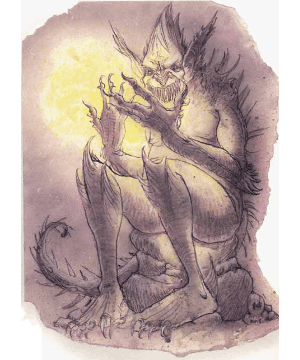
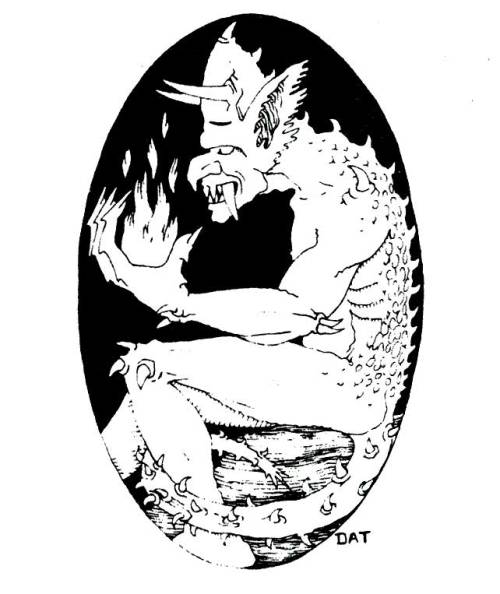
As their name implies, they are medium-sized humanoids covered from head to toe in barbs. Where Demons tend to have a wider variety of larger, monstrous (and often bestial) designs, a majority of the Devils tend to eschew closer to slightly twisted humans. 5E’s Hamatula (which actually reuses 3E artwork) is a green-skinned guy with pointy ears and a tail, with spikes running down his body. 5.5E goes for a frankly a lot more impressive and imposing figure, with a far more menacing skull-face, and a mass of barbs that give the impression of a noble’s collar.
As you’d expect from a Barbed Devil, they are able to launch their barbs at enemies, but also conjure fireballs as shown impressively by the 5.5E artwork. I like the little detail given by 5.5E that they like to decorate their fancy barbs with treasures from adversaries who failed to steal from them.
____________________________________________________

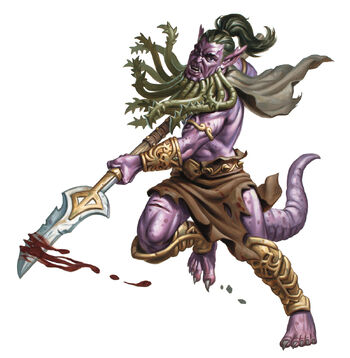
Bearded Devil (Barbazu)
- 5.5E/5E: Medium Fiend (Devil); Lawful Evil; CR 3
One rank lower than the Hamatula are the Bearded Devils, or the Barbazu. Yes, Barbazu isn’t the name of the Barb’ed Devil. The Barbazu are the shock troops of the archdevils, fighting in legions and quick to react to almost anything with violence. Most Barbazus engage in combat, but any who deal with mortals tend to have their temptations revolve around force and power, encouraging wannabe tyrants.
They look, again, like humanoids with some extra parts. Purple skin, clawed fingers and toes, a tail… and the eponymous beards, which are snake-like tendrils that end in spikes that inject a special toxin that prevent magical healing. They also wield hellish glaives that suffer infernal wounds that continue to grow worse until healed… which you can’t do if you’re suffering from their beard-poisons!

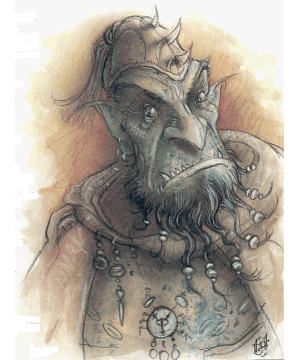
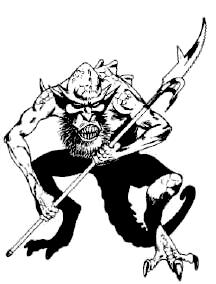
5E’s Barbazu has the tentacles be green, but the 5.5E refreshed design makes the tentacles also purple like the skin, while also adding some spiky armour-like growths on the Barbazu’s shoulders. I do think this does a nice job at making the design not feel too busy.
I don’t think I’ve ever been particularly impressed with the Barbazu, as much as the newer artwork have been trying to make those beards into progressively meaner-looking tentacles. I do understand that they are meant to be weaker devils, but I do think that this guy is memorable to me for all of the wrong reasons. Admittedly some of the other fiends are also just a weird-looking humanoid, but at least some of the more boring offerings like the Hamatula or try to do something with their flavour.
____________________________________________________

Bone Devil (Osyluth)
- 5.5E/5E: Large Fiend (Devil); Lawful Evil; CR 9
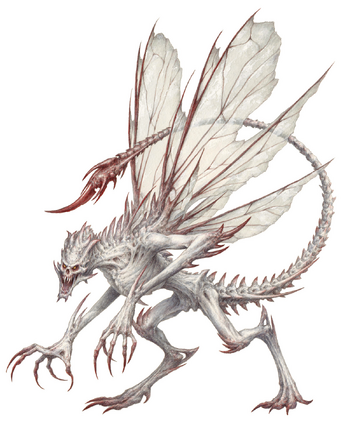
Bone Devils, or Osyluths, are probably my favourite of the basic batch of devils. Which is kind of a shame because they’re actually quite boring mechanically, only having a claw and a poison sting attack, in addition to the typical cluster of elemental resistances that all fiends have. But the design makes it so much more cooler than a good chunk of the lower-ranked devils! They started off being funny skeleton men with a scorpion tail, but over the different editions they went full-on H.R. Giger with the design of this thing. I particularly like the original 5E art, which is probably the most threatening the Bone Devil has ever looked – a gaunt body that’s basically skin-over-bone, super-long claws, spines all over its body, a tail made up of a vertebra and ending in a scorpion tail, and multiple pairs of bug wings. 5.5E keeps the general design, albeit slightly less gaunt and with red (or maybe bloodsoaked?) wings, but it’s a great look all around.

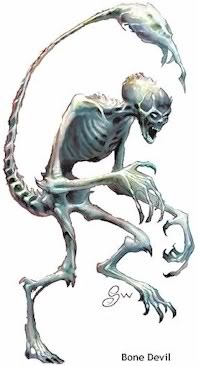

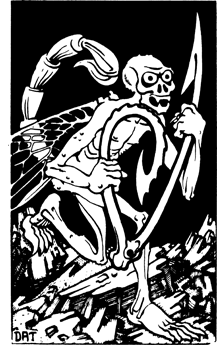
The Osyluths land around smack-dab in the middle of diabolic hierarchy as far as the basic devils reprinted in all Monster Manuals are concerned, and are described as cruel taskmasters. It is pretty much what every devil seems to go through, because they are petty and cruel and love to see their minions get demoted, while they vie and envy those ranked higher than them. 5.5E also adds in some extra roles of making them kind of ‘debt collectors’ of sorts, slaying non-devils that renege on infernal deals.
I do like that 5.5E gives some hooks for some of the middle-tier devils on what deals they should be making, because theoretically all devils would be making deals, not just the names ones. Osyluths, in a reflection of their role in the Nine Hells, will tempt mortals with promises of power that would grant them obedience, which is a nice reflection of the Osyluth’s own role as a taskmaster. Always a huge fan of this one visually, I thought the Osyluth is a nice poster-boy of being a cool ‘non-standard’ fiend design that still manages to look threatening and not ‘just a weird human/beast’.
____________________________________________________

Chain Devil (Kyton)
- 5.5E/5E: Medium Fiend (Devil); Lawful Evil; CR 8
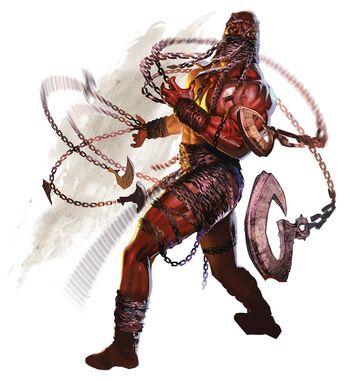
Oh, pretty memorable one. An obvious nod to the Hellraiser franchise are the Chain Devils, or the Kytons. They are just some dudes… but they are covered in chains that wrap around their bodies like armour, and they can telekinetically manipulate these chains that end in meathooks. See, Barbarzu? This is how you look threatening when you manipulate tendrils! The 5E Kyton ‘only’ has a shroud, pants and some gauntlets that end in chains. 5.5E goes full-on metal with the art direction, showing a Kyton not only covered from head to toe in chains, but also has chains sprouting up from its back and dangling from the ceiling of the room around it.
Unlike the Bone Devil above, the Chain Devil actually has a bit more going for it in the actual gameplay of 5E. It is able to create chains to bind people and immobilize them (and the chains it summons will sprout hooks and spikes, because of course it does), and its unnerving gaze can cause enemies to be utterly frightened by it. 5.5E adds a bit more flair in that the Kyton actually appears as something properly traumatizing – the corpse of a loved one, a disapproving image of their god, or the viewer himself at the lowest point in his life. Weaponizing depression and deep-seated trauma, that’s a true devilish act right there!

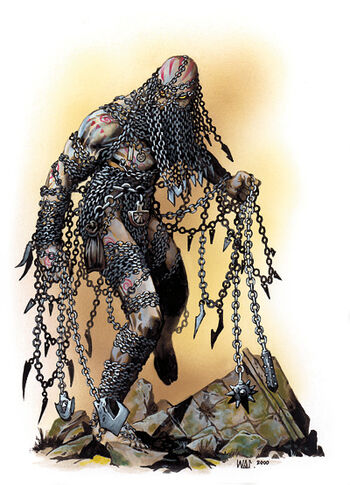
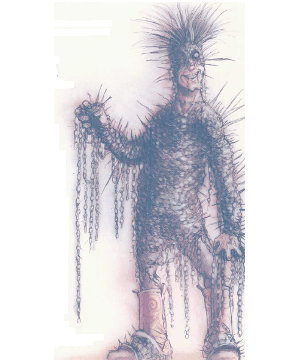
Where the roles of other Devils tend to be a bit more mutable depending on the edition, the Chain Devils are always the sadistic jailers, interrogators and torturers of the Nine Hells, tormenting anything that they can get. Of course these very BDSM-coded monsters would be torturers. 5.5E restores some nice lore from older edition who note that the Chain Devils consider themselves morbid artisans, and the application of pain is their art. More interestingly, the way they deal with mortals is to tempt them to ‘pursue forbidden magic’, which is a nice PG-13 way to deal what the Kytons imply they deal with.
____________________________________________________

Erinyes
- 5.5E/5E: Medium Fiend (Devil); Lawful Evil; CR 12
They don’t actually have a ‘X Devil’ name, which I thought was a huge flavour loss. The Erinyes (or the Furies) are based on a group of Greco-Roman deities that, while associated with the Underworld, aren’t exactly evil. But of course some names get a bit twisted and altered in adaptation from real-world mythology into D&D.
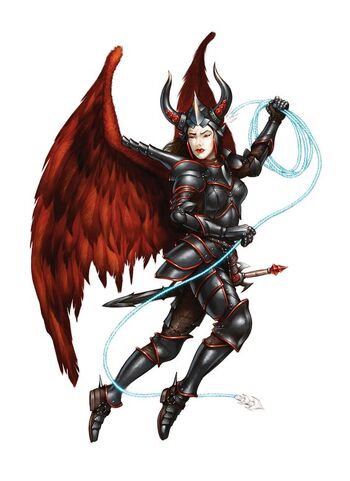
Just like the Marilith, the Erinyes started off as just being the ‘token lady’ of the Devils, tending to almost always appear as a sexy lady with dark angel wings and skimpy armour. 5E gave the Erinyes full plate armour, but otherwise kept the general look. The editions have really gone back and forth on what the Erinyes are and what they do. 5E just has them set up as super-powerful warriors (they’re only below Gelugons and Pit Fiends in the hierarchy) that utilize powerful magical weapons to hunt down their prey. Depending on the edition and how much this ties into that edition's origins for the Nine Hells, the Erinyes can be explicitly fallen angels. 5E kinda-sorta hints this, and 5.5E fully embraces this.

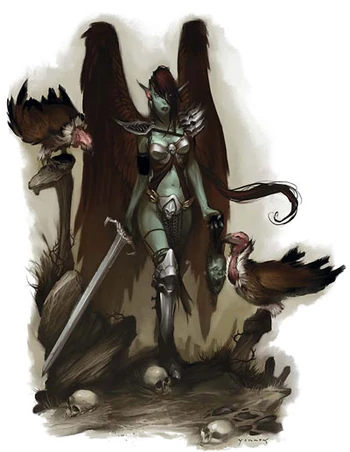

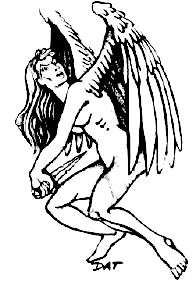
My original review of 5E Erinyes noted that there were a lot more lore to them in older editions that was scrubbed for more family-friendly reasons. I can kind of understand them removing references of Erinyes being the consorts of the greater devils, or that some editions also lump them in with a 'seductress' role similar to the succubi, or the odd note that the Erinyes are some of the only devils able to reproduce. Removing or downplaying these, I didn't mind... but 5E also removed a lot of the more interesting aspects of the Erinyes, like their role as essentially law-enforcers and lawyers of the Nine Hells. They were 'merely' competent commanders, and that's boring.
5.5E replaces this little void in flavour by basically trying to adapt the Greco-Roman Erinyes/Furies flavour, characterizing the Erinyes as explicitly fallen angels doing ‘divine justice’, hunting down oath-breakers and dragging them to hell. They forego the deal-making thing to fly around through the Material Plane to hunt down wicked souls to drag back, being obsessed single-minded hunters for souls that should be in hell. They’ve also gotten a fair bit of redesign in 5.5E, being ‘clad in fiendish armour’ instead, and is covered head to toe in what looks like a rocky armour that’s crackling with pink fire bursting out of her body. Some energy-formed wings and devil horns are there. While I’m still not the biggest fan of this visual design, I do really like the change in lore which expands them from merely a boring fierce warrior.
____________________________________________________

Horned Devil (Cornugon / Malebranche)
- 5.5E/5E: Large Fiend (Devil); Lawful Evil; CR 11
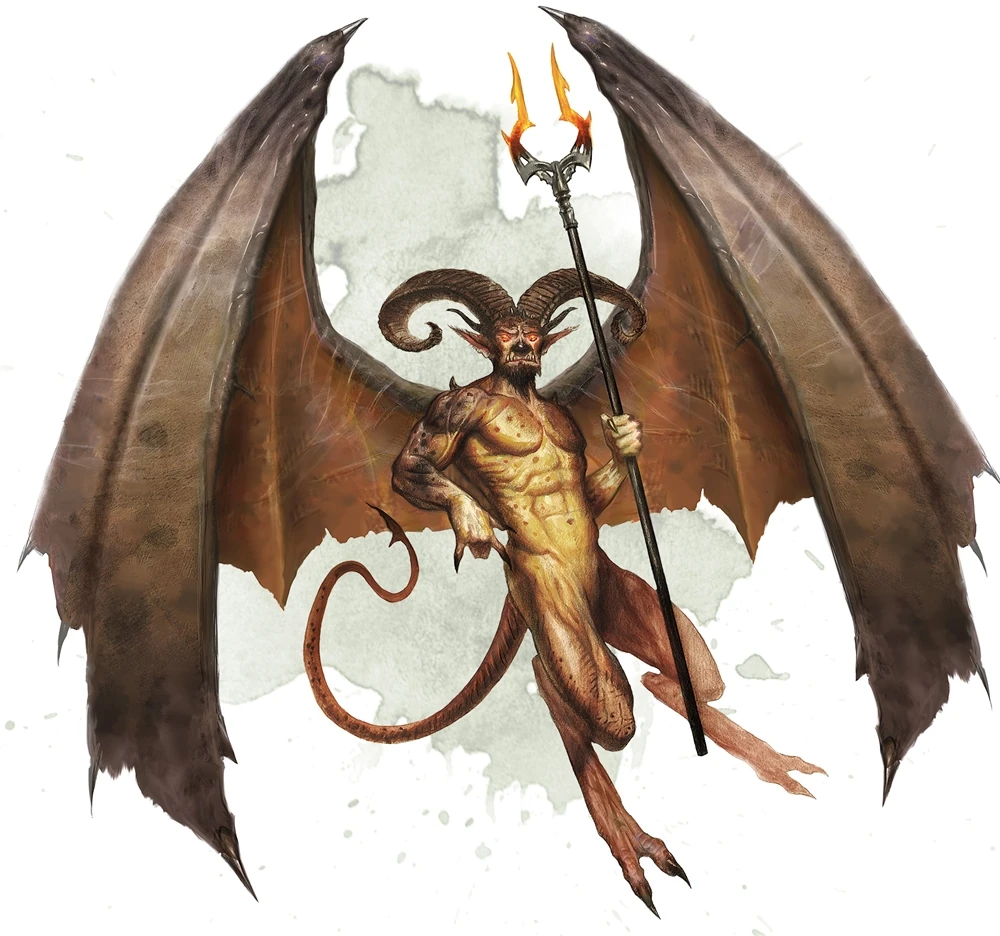
The Horned Devil is probably the most stereotypical ‘cartoon devil’ you could think of, being a thin humanoid with a pair of big goat horns, two big bat wings, a spiky tail, a beard, and wielding a trident-looking weapon. The original 5E writeup calls these guys as being lazy, but also mentions that they will follow orders to the letter. I take it as them being lazy and reluctant to put themselves into effort, but are still lawful and dutiful enough to follow orders… but only up to what was ordered of them. 5.5E doesn’t add much more to it, lore-wise. Both sources do note that they are at least competent, being powerful enough to be the backbone of the Devils’ air force.
Their alternate names have wafted over numerous editions between ‘Malebranche’ and ‘Cornugon’, which gets even more confusing when 3E used Malebranche for a different creature, the titanic War Devil. It didn't help that size aside, the visuals of both the 3E Cornugon and 3E Malebranche were quite similar. This back and forth was honestly quite confusing, and 5E quietly split the difference, making their Horned Devil fall somewhere between the previous editions' War and Horned Devil, and using Cornugon as the alternate name. 5.5E just shrugged and used both Cornugon and Malebranche. Again, viewing them all as the same thing is probably the neatest way to get around it. I assume the confusion was because 2E was trying to avoid the name 'Malebranche', which itself was drawn and tied heavily to Dante's Inferno, whereas the 3E-5E designers just... flip-flopped on it.
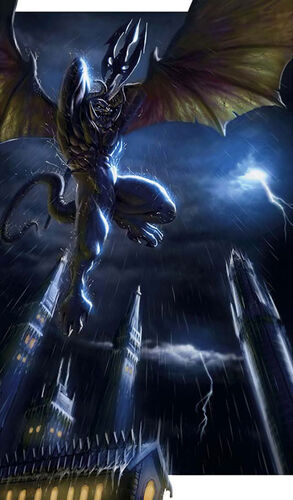


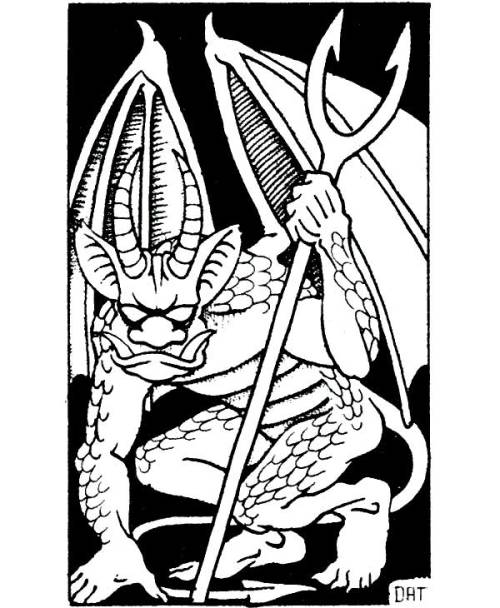
The 5E Malebranche doesn’t actually really look super-threatening, although I also think that’s because he’s fully naked. 5.5E looks a bit more generic of a devil-man, but having that loincloth and a far more intelligent look on his face does make him look a bit more imposing, even if a bit more generic as a devil-man. It’s also worth noting that the Malebranche is a large creature, so it’s an ogre-sized demon. It does a lot of fire spells mechanically, and damage wounded from its tail heals much slower. Not my favourite devil, but one that I recognize is necessary and obligatory.
____________________________________________________

Ice Devil (Gelugon)
- 5.5E/5E: Large Fiend (Devil); Lawful Evil; CR 14
Also drawing from Dante’s Inferno is the fact that several layers of Hell are ice-themed, so obviously we have ice devils. And interestingly, the Ice Devils are the ones that are bug-themed! Also rather surprisingly, despite bugs tending to be treated as the weak starter enemies, Ice Devils are extremely high in the rankings, only second to the Pit Fiends.
Ice Devils are noted to be commanders and strategists, longing for promotion. 5.5E pushes a lot more on this professionality and the ‘ice’ theme, I suppose, noting that they have forsaken emotion to indulge in intelligence and logic… or at least their malicious interpretation thereof. This manifests in a way of them to disguise their whims and desire as ‘reason’ and ‘strategy’, which seems to be some devil-tier gaslighting to convince themselves and the world around them that their way is the best way to proceed. And this is exactly what their brand of temptation is, convincing powerful mortals to forsake social connections to embrace a destructive, solitary intellectualism… and eventually self-destruct from isolation.
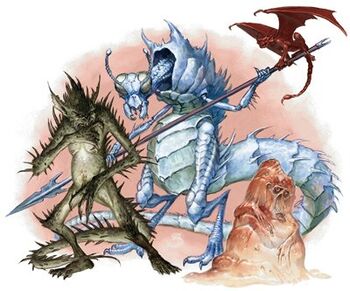

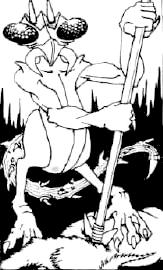
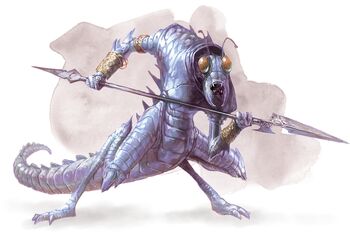
The Gelugons are giant bipedal bug-men. 5E goes for an almost dinosaurian look, with a long tail leading to basically a theropodal body plan, only it ends in a bug head, with lanky humanoid arms and bug legs. 5.5E gives the Gelugon a bit of a more threatening upright look, keeping all the parts identical but the pose and the larger shoulder-pads make it look a lot more intelligent-looking despite sharing the same bug-eyed face.
It is quite interesting, though, that for the most part, a lot of the upper-tier devils look a lot more humanoid (the Erinyes, Pit Fiends and Malebranche) and the Gelugon themselves are the one anomaly among them. The fact that none of the editions, even the infamous 4E, has ever gone back on this, is quite interesting to me!
Obviously, they cast ice spells, and fight with a magical ice spear. In my original writeup for the 5E review, I did mention that I’ve always found the Ice Devils as being a weird mish-mash of concepts (bugs, ice, strategy) which never fit together well, but the cold heartlessness of logic as both a theme of sin and a riff on an insect’s lack of empathy is a nice way to elevate the Ice Devil in my head.
____________________________________________________

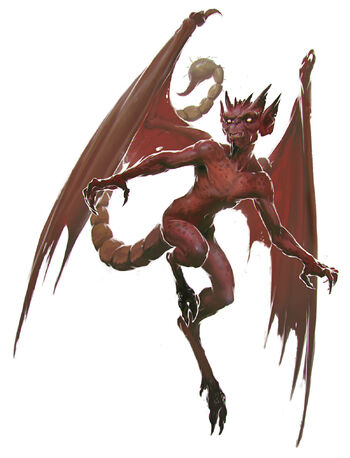
Imp
- 5.5E/5E: Tiny Fiend (Devil); Lawful Evil; CR 1
We’re now hitting the obvious ‘parallels’ between the Demons and the Devils. Where the Demons have Quasits, the Devils have Imps – little tiny gremlin-minions that are the lowest intelligent minions of their respective fiendish races, not strong enough to be a footsoldier but not a loser enough to be lumped with the Manes and Lemures. Again, it’s a common trope – the tiny devil on your shoulder. And that’s basically what the Imp is, a little tiny devil-man with wings. D&D’s Imp adds a scorpion tail to make it a bit more distinctive. All right!
Much of what I say about the Quasit applies to the Imp as well. They’re a bit less manic, and their personality revolves more around cowardice and sycophancy, but otherwise they are merely just minions. Minions with a lot of useful ability, namely invisibility and shapeshifting (specifically, a rat, raven or spider – three other evil animals that are different from the Quasit’s).
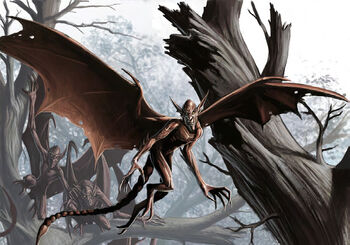

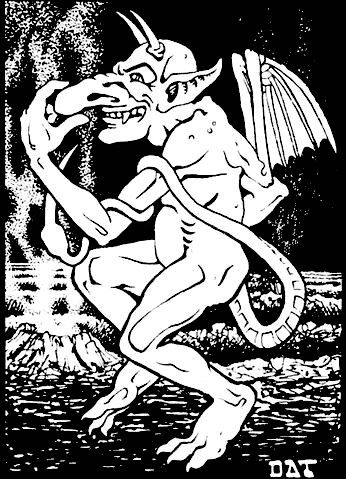
Just like the Quasit, the Imp also seeks to sabotage the work of any mortal master. In a nice, devilish way, this comes with the fact that they often omit important details or deliver them in a subjectively misleading way to waylay their masters. Again, the Imp (or the Quasit) aren’t meant to be actual physical threats, but one of a roleplay standpoint. Either serving as a familiar to your characters, or a plot hook when the players encounter an Imp and realize either a devil cult or warlock or straight-up stronger devils are nearby. Pretty all right.
____________________________________________________

Lemure
- 5.5E/5E: Medium Fiend (Devil); Lawful Evil; CR 0 (regular)
- 5.5E: Large Swarm of Medium Fiend (Devil); Lawful Evil; CR 3 (Swarm)
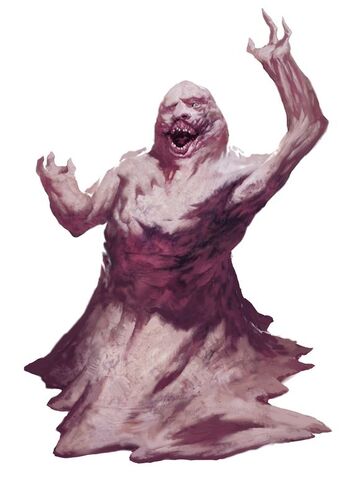
The equivalent to the Manes and the Dretch among Devilkind are the Lemures, who are the absolute lowest of the low among the Devils. 5E doesn’t go into it as much, but the older editions establish that the Devils have less of a capability to replenish their forces, hence the whole ‘faustian deal’ thing to trap mortal souls. And when mortal souls are banished to the Nine Hells, the regimented laws of the hells turns them into Lemures – which represent their souls being turned into a shapeless blob doomed to suffer and lose all their memories until only evil remains. They remain there to in torment some devil decides they needed some more manpower, and promoting the Lemure into the next-highest form of devil (a Spinagon in older editions, an Imp in 5E).
All editions take great pleasure at making the Lemure look positively wretched. They started off as monstrous humanoids with a slimy lower body, but they progressively get more and more wretched across the editions. 5E gave them a bit of a scarier-looking face, but otherwise they’re just a lumpy flesh-glob with a stumpy humanoid upper body. 5.5E’s redesign is spectacularly wretched, also showing the ‘masses of Lemures’ that are implied in text but rarely shown in art. I love how the flesh of the lead Lemure is drooping off and covering half of the Lemure’s face, almost like it’s an ooze.


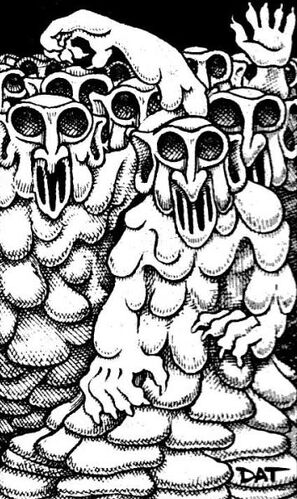
5.5E tries to give the Lemures an ‘upgraded’ form, but it’s just essentially a ‘Swarm’ variant. It is noted that the whole memory and personality-scouring thing that the Lemures go through the swarm ‘adopts a unified mind’. Again, like what I mentioned in the Demon reviews, these weaker beings aren’t the most important as adversaries per se, but to help in the world-building and to prop up the whole “ranked” hierarchy of the Lower Planes.
____________________________________________________

Pit Fiend
- 5.5E/5E: Large Fiend (Devil); Lawful Evil; CR 20
We go from the absolute weakest to the absolute strongest. The diabolic counterpart of the Balor, Pit Fiends are the most powerful that Devilkind can aspire to become, with only the named, unique Dukes and Archdukes standing above the Pit Fiends. They are the generals of the army, and ultimate supervisors over the ranks of the Nine Hells. They form a ‘grotesque aristocracy’, which means that there’s likely to be a fair amount of legalese-bound drama and conspiracy deal going on with them. Again, these are lawful evil creatures, and standing at the most apex of it means that while the Pit Fiends desire to gain more influence and power, and to see their rivals suffer… they will do it the correct way. Intricate plots, sabotage, proxies, corrupting mortals to go against their rivals…
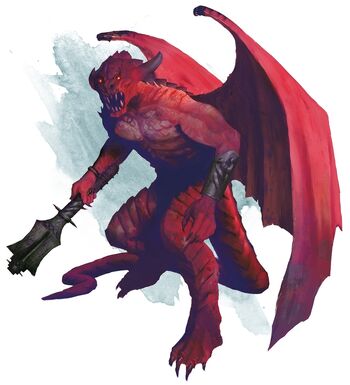
Design wise, though? They are basically a more monstrous version of what you’d expect from a ‘big epic devil’. 5E gave us a big, hulking monstrous red man with devil horns, fangs, tail and huge wings. 5E’s prose describes it as also doubling as a cape, which is cute. It’s a neat devil-man design, but I do admit that this doesn’t really scream ‘intelligent scheming devil noble’ to me, and I could mistake it as art of a savage Balor, for example.
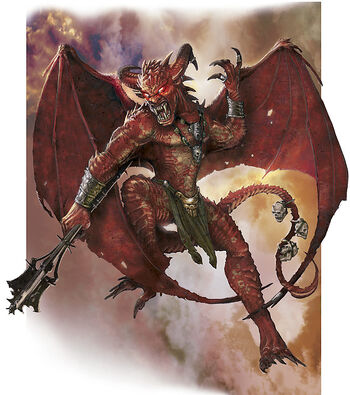


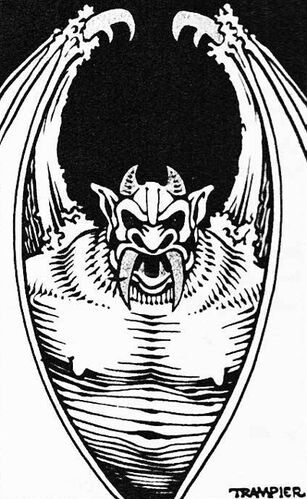
5.5E’s redesign does something similar to what they did to the Nalfeshnee and Malebranche and gave the Pit Fiend pants, which… which does make him look like he’s more likely to talk and tempt you instead of just going straight into a big boss fight. The fully-red design is broken up with some black details, and he’s got far more prominent devil-horns on his head. I still feel that he could have been bulkier, since Pit Fiends are supposed to be physically mighty, but it’s an improvement in matching the visuals to the flavour. It was a point of contention to me when I first did my review, where I felt like while they shouldn’t just be like, noble humans with extra features (that’d be tieflings!) they also shouldn’t look like purely rampaging beasts.
Combat-wise, Pit Fiends are around the same ballpark as a Balor, but with different toys to play with. Venomous fangs, a fiery mace, a fear aura, and a fair bit more spellcasting tricks to contend with. Those venomous fangs are a bit of an interesting thing, because the oldest versions of the Pit Fiends actually had massive tarantula fangs as their little ‘gimmick’ which they dropped as the concept of the apex devil became crystalized in subsequent editions.
____________________________________________________

Spined Devil (Spinagon)
- 5.5E/5E: Small Fiend (Devil); Lawful Evil; CR 2
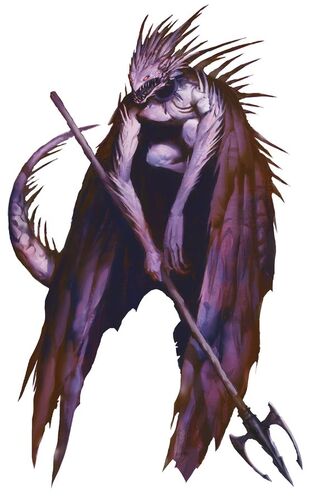
Our final devil is the weakest ‘warrior’, the next step up from an Imp. The Spinagon, or the Spined Devil, are actually a fair bit smaller, the size category putting it at the size of a dog or something. Spinagons act as the air force of the Devils to contrast the Barbazu’s infantry. However, their main purpose is as messengers and spies, and this has led it to be able to collect a huge amount of information and intel in spite of its inferior strength.
It is, again, quite fitting that the flavour of the Nine Hells is tied so much to bureaucracy and treachery that these elements exist as a bit of a little story hook to play into, say, a Spinagon’s attempt to use the information it’s uncovered to facilitate its own rise among the infernal hierarchy. 5.5E even gives us some nice little plot hooks where a Spinagon might have certain kernels of information that is perhaps useless to the Spinagon itself, but might be far more useful for the adventuring party to act on... or as a bargaining tool with stronger devils you meet down the line in the campaign.
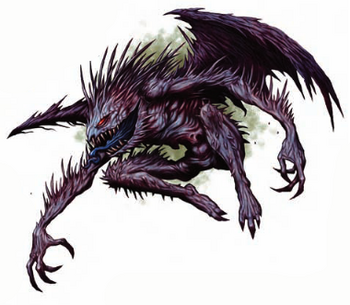

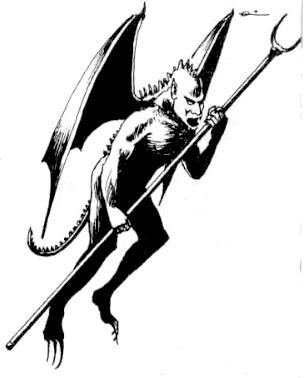
In combat? As expected, they use the spines and launch them at the enemy. The spines also burst onto flame on impact. 5E and 5.5E gave the Spinagon actually quite impressive-looking artwork, and I particularly like the Batman-esque pose that the 5E Spinagon is in. They have a somewhat gargoyle-like look to them, with a reptilian head and massive wings. It is definitely a nice, improvement to the original 1E and 2E designs, which are just... naked men with wings, and subsequent redesigns made it really distinct that these are spine-themed monsters. They serve for a pretty neat design as a lower devil. I don’t really think I have much to say about them, but they’re a nice combination of visuals, simple mechanics and lore within the Nine Hells.
____________________________________________________
Again, reaching the end of this and doing the Demons and Devils back to back, I do appreciate what the 5.5E redesigns did to some of them. I don’t agree with all of them, but they did make a fair attempt in making them visually distinct from other non-fiendish creatures with the same concept. On the devils’ side, I very much appreciate that the higher devils (particularly the Nalfeshnee, Malebranche and Pit Fiends) look a lot more intelligent and cunning schemers and manipulators instead of footsoldiers in a Diablo game.
Not all of them had prose about them, but I also like the idea of 5.5E attempting to distill a thematic essence to all the Demon and Devil variants. The Ice Devil is the ‘Devil of Antipathy and Intellectual Arrogance’ and the Barbed Devil is the ‘Devil of Greed and Obsession’, which fits with both their gimmicks as cold-hearted strategists and treasure guards respectively, and also ties in with how they tempt mortals.
And that is it for the Demons and Devils! Next time, we’ll jump a bit down the alphabetical order to talk about one of the co-stars of the game, one half of the name of this franchise… Dragons!

Surprised the devils don't have and opposite for the Dretch.
ReplyDeleteThe Lemures are a parallel to Manes and Imps are the same for Quasit. Kinda feels off the Dretch have no counterpart.
As far as the demon/devil comparison goes for the ones that appear in most editions, there are a couple of clear parallels... but there are just more demons than devils in the base 5E Manual. Which makes sense lore-wise because the Devils have a more rigid hierarchy while the Demons are, by nature, a lot more variable.
DeleteThere *is* the Larva (which I considered adding here, but it isn't really a full devil...), I suppose, which might kinda-sorta function as a counterpart to the Lemure, making the Manes a counterpart to the Dretch instead... but that doesn't really work because the Lemure and Manes feel a lot more meant to be counterparts. I suppose the Nupperibo, introduced in Volo's, is the devil counterpart to the Dretch? But that doesn't properly work either.
There are some clear counterparts on the lowest and highest ends:
- Lemure = Manes (weakest 'evolutionary level', can't do anything but be cannon fodder
- Imp = Quasit (the tiny 'familiars' working as advisors for warlocks)
- Erinyes = Marilith (third-highest ranking, 'token female' members of the hierarchy)
- Gelugon = Goristro (second-highest ranking beings 'themed' after a layer of their respective hells, with Gelugons matching ice hell and Goristro matching the minotaur demon lord Baphomet)
- Balor = Pit Fiend (strongest common demon/devil with a traditional appearance)
But beyond that? We've got six devils (Spinagon, Barbazu, Hamatula, Kyton, Osyluth, Cornugon) to nine demons (Dretch, Shadow Demon, Chasme, Vrock, Hezrou, Glabrezu, Yochlol, Nalfeshnee). Even if we took out Yochlol and Shadow Demon for being 'unique', there's still not a really good one-to-one comparison since the Spinagon is quite a bit more formidable than the Dretch.
There's also the argument on whether the Rakshasa, Cambion, Succubus/Incubus or Larva should enter either side of the Demon/Devil divide, but I don't think they've really been considered as part of those hierarchies since 2E.
But I do think that it works that the Demons just have a larger number of variation, since Demons *are* meant to be more numerous in the Abyss than the Devils of the Nine Hells, who rely on organization and intelligence to the more unfocused aggression.
Fair enough!
Delete