Sunday, 10 June 2018

Lore of Hearthstone, Episode #20 - Kobolds and Catacombs [Non-Legendaries]

Hearthstone's final expansion for the Year of the Mammoth, Kobolds and Catacombs, is one that isn't actually based on any proper part of World of Warcraft, and simply meant to be a generic throwback to dungeons in general, as well as a homage to the classic grand-daddy of all RPGs, Dungeons and Dragons. While I'm not quite as well-versed in D&D lore as I am with Warcraft, I'll try to point out any cards that are more outright homages to D&D.

Minions - Kobolds:

Bestiary Thumb Kobold.gif
Kobold (WoW)
We've talked about Kobolds before in Classic, and there's really not much to add about kobolds, really. To quickly recap, they first appeared in Warcraft III as weak rat-people neutral creeps, and in World of Warcraft remained low-level enemies in both major continents of Azeroth. They're distinguished by their love for mining, and the candles they have on top of their heads, as well as their catchphrase: "You no take candle!"  While more powerful variants of Kobolds were seen in Wrath of the Lich King and Legion (the Snobolds of Northrend and the Bluewax tribe of Highmountain, respectively), there's, well, not really much in terms of lore. Which perhaps makes them particularly ideal as the 'face' of the dungeon-themed expansion, as they represent the masses of weaker minions found in a classic, old-school-RPG underground dungeon.

Kobold Apprentice: Kobolds in WoW tend to mostly use geomancy (earth magic), although some are known to be able to wield crude fireballs. No specific mob in WoW corresponds to the title Kobold Apprentice, though.

Kobold Illusionist: Kobold Illusionist is original to Hearthstone, and no kobolds in WoW is known to be able to wield illusion magic.

Gravelsnout Knight: While the Gravelsnout Knight (and the giant moles themselves, which doesn't exist in WoW) is original to Hearthstone, it does borrow its name from the Gravelsnout tribe of Kobolds, which once lived on the area known as the Thousand Needles. During the Cataclysm, the Thousand Needles was completely flooded, and the Gravelsnout kobolds were removed, presumably killed in the process.
Rat
Rat

Rummaging Kobold: While scavenging is part of the kobold life, the title of 'Rummaging Kobold' is original to Hearthstone.

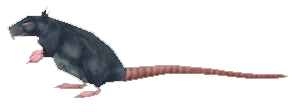
Sewer Crawler: The title of Sewer Crawler is original to Hearthstone, and no Kobold in WoW is actually found in sewers. There is a crocodile known as the Sewer Beast in the sewers of Stormwind City, so the Sewer Crawler, judging by its attire, may have slain such a crocodile and worn it as a hat. While I don't think giant rats actually show up in WoW, rats as critters are commonly found.

Cursed Disciple: Cursed Disciple is original to Hearthstone, although he's a warlock or necromancer of some sort, which is actually not a type of magic that kobolds in WoW are known to wield.
Image of Snazzle Shinyfinder
Snazzle

Kobold Monk: 
Kobold Monk is original to Hearthstone, as no kobolds in WoW are known to be a member of the monk class. (We've talked a bit about monks, one of the classes of WoW not yet represented in Hearthstone, during Mean Streets of Gadgetzan.)

Cavern Shinyfinder: Cavern Shinyfinder shares its name with the kobold NPC Snazzle Shinyfinder, which is one of the named Bluewax Kobolds that the adventurer going through Highmountain would recruit and give quests to when disguised as their leader. True to her name, Shinyfinder would return with 'shinies'.

Kobold Hermit: Kobold Hermit is original to Hearthstone. Look at all those fancy candle wax totems! She looks so proud. Some members of the Kobold race is known to practice shamanism, particularly the Geomancers, although none are known to use totems.

Shroom Brewer: Shroom Brewer is original to Hearthstone. Various Dungeon Run bosses and cards focus on the large amount of mysterious mushrooms in the dungeon, and Shroom Brewer is simply one of those.

Fungalmancer: Fungalmancer is also original to Hearthstone, and he's essentially another kobold dealing with mushrooms. The only other character with the title 'Fungalmancer' in World of Warcraft is Fungalmancer Glop, a Stone Trogg in Deepholm.

Grand Archivist: Grand Archivist is original to Hearthstone, apparently a Kobold that learned how to utilize the magic within spellbooks.

Kobold Librarian: Kobold Librarian is original to Hearthstone, and unlike the Grand Archivist, he clearly doesn't know how to utilize the magic within spellbooks, what with accidentally burning them down with his candle.

Twilight Acolyte: Twilight Acolyte is apparently a member of the Old God worshipping Twilight's Hammer Cult, which was greatly featured back in Whispers of the Old Gods. The Twilight Acolyte is a group of humanoids that are one of the mobs in the original Blackfathom Deeps, being generic spellcasters there. None are kobolds, though. These Twilight Acolytes were removed when Blackfathom Deeps was revamped in Warlords of Draenor.

Windshear Stormcaller: Windshear Stormcaller is original to Hearthstone, but they borrow their name from the Windshear tribe of Kobolds that live in the Windshear Mine, a Horde-controlled tin mine in Stonetalon Mountaints. The Windshear Kobolds are apparently working alongside the Venture Company to harass the mine, but they have all been removed from WoW during the Cataclysm, presumably killed during the disastrous event. None of them use totems or are affiliated with Al'Akir, though.


Drygulch Jailor: Drygulch Jailor is original to Hearthstone, although he shares his name with Drygulch Ravine, which is a sub-zone of Durotar. Drygulch Ravine is populated by harpies and centaurs instead of kobolds, though.

Drywhisker Armorer: Drywhisker is a tribe of kobolds found in the Drywhisker Gorge in Arathi Highlands, although none of its members carry the title of 'Armorer'.

Kobold Barbarian: No Kobold hold the title of barbarian, because they tend to be skittish and cowardly, but Barbarian is one of the base classes that often appear in Dungeons & Dragons, which might be the inspiration for this card. The mighty Whompwhisker, one of the bosses in the Dungeon Run, is apparently a very powerful Kobold Barbarian.


Minions - Denizens of the Dungeons:

There is a lot of minions and creatures that live in dungeons, and Kobolds & Catacombs features a particularly large selection of races to talk about. We'll go through races that make their very first Hearthstone debut first, then talk about the rest, yeah?

Bestiary Thumb Furbolg.gif
Furbolg (WoW)
Furbolg Mossbinder: Yay, we get to talk about furbolgs now! Furbolgs are a race of humanoid bear-men who were introduced in Warcraft III as one of the denizens of Kalimdor, and are staunch allies with the night elves. The furbolgs are descended from the bear Ancients Ursoc and Ursol, and thus worship them. The furbolgs lived in peace alongside the night elves and tauren, although they tended to favour night elven locales, particularly those who lived in Ashenvale. Furbolgs practice a form of shamnistic religion, although due to their close ties with the night elves, some furbolgs also practice druidism. The night elven leader Tyrande Whisperwind assisted in the evacuation of a tribe of furbolgs during the Burning Legion's invasion during the Third War, though many of them fell to corruption anyway and had to be put down. The survivors aided the combined forces of Alliance and Horde in fighting against the Burning Legion. In World of Warcraft, several tribes of furbolgs serve as NPCs and allies to the night elven and draenei people, although many furbolg tribes have grown feral, either due to demonic corruption or to Old God corruption. There are very few uncorrupted Furbolg tribes, and attempts to get them to officially join the Alliance has been thwarted by Horde adventurers. The term 'Mossbinder' is original to Hearthstone. This card set is the furbolgs' huge debut into Hearthstone, with multiple Dungeon Run bosses and other miscellaneous artwork featuring furbolgs.


Image of Drugon the Frostblood
Ettin (WoW)
Hungry Ettin: The Hungry Ettin is a race of two-headed giants (not to be confused with two-headed ogres!) introduced during the Cataclysm expansion, and tend to be found in multiple mountainous areas, particularly in Gilneas. The Forsaken have enslaved some ettins and forced them to haul their wagons through the forest. The ettin are somewhat intelligent, able to form some sort of primitive tribal system. Despite their obvious similarity, Ettins are not actually related with ogres in any way, being native to Azeroth, whereas ogres arrived through the Dark Portal from Draenor. Ettins themselves are prominently featured in D&D material, popularizing the archaic term for giants to refer to two-headed monstrosities living in hills. No WoW mob is called Hungry Ettin, although of course that's a jokey pun on how Ettin sounds like 'eating'.

Fal'dorei (WoW)
Fal'dorei Strider: The Fal'dorei Strider's name is original to Hearthstone, although the Fal'dorei themselves are introduced into WoW in the Legion expansion. When the ancient elven city of Suramar came to light, adventurers who arrived there would discover the existence of the Fal'dorei, a race of former elves. Many years ago, exiles from Suramar apparently came to the town of Falanaar,
and the night elf Farodin took pity on the magic-starved Nightfallen, giving them an arcan'dor tree, a tree that would sustain their arcane magic addiction. However, the arcan'dor tree became unstable and in the tree's death, the elves were transformed into the fal'dorei -- creatures that are half elven, half-spider. They now live in the tunnels beneath Falamaar and have grown numerous, biding their time until they can return to the surface, led by their queen, Orathiss. A group of Fal'dorei serve the Burning Legion under the influence of the Aranasi, a race of spider-like demons. The Fal'dorei's inclusion in the D&D-based expansion is no doubt a reference to one of the most popular monsters in D&D, the half-spider half-drow-elf monster, the drider.

Fungal Enchanter: The Fungal Enchanter appear to be a member of a race of mushroom-people, and these fungus people are also seen in both the Kobolds & Catacombs trailer and the artwork for Dark Pact. While there have been fungal-based creatures in WoW, the Sporelings resemble giant fungus pods as opposed to being humanoid toadstools, and the fungal giants resemble, well, giant lurching beasts. More likely than not, the Fungal Enchanter is a loving homage to the Myconid race from D&D, a race of people who resemble toadstool mushrooms with arms, legs and a face and live in a complex hive-mind underground society.

Shrieking Shroom: Shrieking Shroom is also original to Hearthstone, and might be the juvenile stage of the Myconid-inspired race that the Fungal Enchanter hails from. It is adorable.

Trogg Gloomeater: Trogg Gloomeater is a trogg that's apparently mutated by eating all the fungi in the dungeon. He's otherwise original to Hearthstone.

Sprite (WoW)
Greedy Sprite: Sprites are a race of nature spirits that appear to be made out of wood and leaves that are native to Pandaria and the Wandering Isle, first introduced in Mists of Pandaria. Since then, Sprites have also shown up in Val'sharah in Legion. The Sprites tend to take features of their surroundings to disguise themselves, and they are playful creatures who often like to play pranks onto people that wander into their territory. The Sprites tend to keep to themselves or live harmoniously with the native races of Pandaria, although several fell into Sha or Mogu corruption throughout Mists of Pandaria. The term 'Greedy Sprite' is original to Hearthstone, however.

Image of Birchus
Draenor Ancient
Ironwood Golem: Ironwood Golem is original to Hearthstone, although it is a Draenor Ancient, a cousin of the Ancients of Azeroth native to Draenor introduced in Warlords of Draenor. The term Ironwood was used in the Ironwood Branch, an item in Warcraft III, as well as several items in WoW are identified as being made out of Ironwood. Supplementary material also note that high elven ballistae and Amani trolls lumber mills are made out of Ironwood. All of these, of course, is one big homage to Ironwood, a type of tree with a very powerful bark from D&D.

Hoarding Dragon: Hoarding Dragon is original to Hearthstone, and represents a more classic dragon-guarding-treasure fantasy as is more similar to D&D as opposed to the immortal angel-esque beings charged to guard the forces of nature as Azerothian dragons are. The Hoarding Dragon is, of course, a member of the black dragonflight.

Sleepy Dragon: Sleepy Dragon is original to Hearthstone. She's sleepy.

Duskbreaker: Duskbreaker is original to Hearthstone, and is a member of the twilight dragonflight. There is a WoW weapon called the Duskbreaker Warmaul, but that has nothing to do with dragons.

Ebon Dragonsmith: The Ebon Dragonsmith is a Dragonspawn member of the black dragonflight. We've discussed dragonspawn before in Blackrock Mountain. While no mob with the title Ebon Dragonsmith exists, black dragonspawn called 'Ebon Slavehunters' are around in the Wetlands, defending dragon eggs from slavers.

Unicorn.png
Unicorn (WoW)
Shimmering Courser: The Shimmering Courser is original to Hearthstone, although it is a unicorn. Unicorns are sparsely seen in WoW, and tend to only show up as steeds, and they used to use modified Zhevra models. Some historical records note that Dalaran archmagi and high elves used to ride unicorns, but none have actually been seen in-game other than rare player mounts. Legion would add a proper, more majestic-looking unicorn model with a sickle-shaped horn, native to Azsuna. The Nightborne refer to the unicorns as 'monohorns', and a subspecies called 'dreamrunners' seem to be tied to the Emerald Dream, being able to enter and exit at will.

Dire Mole: Dire Mole is original to Hearthstone, as no moles, dire or otherwise, have appeared in WoW. The prefix 'Dire' is often used in D&D to refer to a larger and more powerful version of a real-life animal, however, and is something that many D&D-based fantasy works tend to use, including Dire Wolves and Dire Mammoths in WoW. Dire Mole is also a pun on 'Dire Maul', a dungeon in WoW.

Plated Beetle: Plated Beetle is a type of Scarab-type beetle (we discussed them in League of Explorers) that is original to Hearthstone.

Feral Gibberer: Feral Gibberer is an original creature type to Hearthstone, a fluffball with a giant pair of jaws, two feet and two ears. Marin the Fox apparently encountered some of them during his journey, as documented in Hearthstone blog posts. The term 'Gibberer' brings to mind the classic, scarier D&D monster Gibbering Mouther.

Image of Stoneskin Basilisk
Stoneskin Basilisk
Stoneskin Basilisk: Stoneskin Basilisk is the name of a basilisk mob found in the Jade Forest, introduced in Mists of Pandaria. Basilisks are a type of six-legged, crocodile-like giant reptiles with the notable ability to be able to temporarily turn anything they gaze upon into stone. Crocolisks appear to be closely related to basilisks (read: they are reskins of each other). Basilisk stomachs are apparently so acidic that they can dissolve anything, and often feed on crystals.

Raven Familiar: Familiars are minions conjured by casters, and one of the items dropped by the Shade of Medivh boss from the revamped Karazhan in Legion is the Raven Eidolon, able to summon Guardian Familiars which, you guessed it, are in the shape of ravens in homage to Medivh. The term Raven Familiar is actually one of the possible talents for Medivh in Blizzard's MOBA game Heroes of the Storm, creating a little raven buddy that helps Medivh in fighting his enemies. In D&D, of course, Familiars are very, very commonly found as a possible creation by magic-using classes.


Image of Bonemaw
Carrion Worm
Violet Wurm: Violet Wurm is, of course, a huge, cheeky homage to the classic D&D monster Purple Worm, a gigantic purple worm monster with a giant fanged maw. Speaking from a WoW-only lore standpoint, the Violet Wurm is a giant worm, specifically a variation of the carrion worm model with differing sizes of fangs. In particular, where the carrion worm shares the jormungar's two prominent fangs on the sides of its mouth, the Violet Wurm has four on each side of its circular maw.

Corridor Creeper: The mighty Corridor Creeper is, well, a particularly large carrion grub, although none have been specifically called 'corridor creeper' in WoW. Not much real lore beyond that.

Crystal Lion: Crystal Lion is original to Hearthstone, and apparently a golem-esque creature made out of crystal.

Spectral Tiger
Astral Tiger: Astral Tiger seems to be a reference to the various spectral tigers that have been available in World of Warcraft as mounts and pets. Spectral beasts are, well, the spirits of beasts similar to the spirit wolves summoned by a shaman's Feral Spirit spell.


Cave Hydra: While no mob specifically called 'Cave Hydra' exist in WoW, many hydras do live in caves. The Cave Hydra, like Bittertide Hydra, uses the four-legged, scaled and more draconian Draenor Hydra model as opposed to the two-legged, more fish-like hydra more commonly found in Azeroth.

Scorp-o-matic: Scorp-o-matic is original to Hearthstone, and no robot scorpions (other than the different-looking Iron Juggernaut) have been seen in World of Warcraft. Not sure if it references a specific monster in D&D either. I suppose a Rust Monster? A bit of a stretch, though.

Toothy Chest: The Toothy Chest is, of course, a homage to another one of D&D's most famous monster, the Mimic -- creatures that disguise themselves as chests, but are in reality monsters that just happen to disguise themselves as chests and will open their chest to reveal an angry maw ready to eat the unfortunate trapped adventurer. Mimics have since been seen in numerous other video games... other than WoW, surprisingly.

Gilded Gargoyle: Gilded Gargoyle is original to Hearthstone. While Gargoyles exist in the WoW universe (we've talked about them with Stoneskin Gargoyle during Naxxramas), Gilded Gargoyle is completely made out of silver, has a different face and no hair on its body and has its hand separate from the wings, making it match the classic D&D description of gargoyles closer than it does the WoW gargoyle.

Gemstudded Golem: While many items in WoW have the Gem-Studded prefix to them, Gemstudded Golem is a variant of the dwarven war golem original to Hearthstone.

Wax Elemental: Wax Elemental is original to Hearthstone, being a dwarven-style war golem made entirely out of wax with a candle on his head. Kobold-approved!

Benevolent Djinn: We've talked about djinns before in League of Explorers, although Benevolent Djinn is unique in that all djinns seen in WoW so far are male, and this is the first recorded instance of a female djinn.

Murmuring Elemental: Murmuring Elemental is an air elemental original to Hearthstone, although its name might be a reference to the mighty Murmur, a Primordial Elemental and the final boss of the Shadow Labyrinth dungeon. Murmur was a mighty being that was formed when the universe was created and accidentally summoned by the Shadow Council in Auchindoun, and Murmur's presence ripped the catacombs apart.

Arcane Tyrant: Arcane Tyrant is an arcane elemental original to Hearthstone.

Arcane Artificer: Arcane Artificer is an arcane elemental original to Hearthstone.

Leyline Manipulator: Leyline Manipulator is original to Hearthstone. He's an arcane elemental. Ley lines are channels of mana that course through the earth that is described as being 'similar to blood vessels' (perhaps literally, now that we know Azeroth is a slumbering Titan). During the Nexus War, Malygos attempted to redirect all the leylines to the blue dragons' realm, the Nexus, in order to prevent mortals from abusing arcane magic. This caused the creation of many arcane elementals that went wild in the Nexus, most powerful among the Anomalus. None of them are called 'Leyline Manipulator', though.

Seeping Oozeling: Oozes and slimes are a very common enemy trope in D&D, although of course in WoW, oozes have gotten their own unique lore. All the oozes in Kobolds & Catacombs have received brand-new art as opposed to replicating the models from WoW, though. Seeping Oozeling shares its name with WoW's Seeping Ooze, a mob found in the Netherstorm.
Gelatinous Cube (D&D)

Carnivorous Cube: The Carnivorous Cube is original to Hearthstone, but its name is obviously a reference to the iconic D&D monster that has been much-beloved and much-derided, the Gelatinous Cube, a sentient cube that wanders around D&D dungeons and swallows adventurers whole.

Green Jelly: The Green Jelly is original to Hearthstone, though it appears to be an Ooze that, instead of using a human skull like the generic Ooze model in WoW, has stumbled upon a dragon's skeleton instead. Green Jelly's name is a likely reference to Ochre Jelly, one of the iconic slime monsters from D&D.

Corrosive Sludge: Corrosive Sludge is original to Hearthstone, yet another variation of the Ooze model that has came upon the skull of a horned, fanged humanoid as opposed to a regular human skull. The card art for Corrosive Sludge is also used for the Dungeon Run boss the Mothergloop, the source of all the sludge monsters within the Dungeon.

Vulgar Homunculus: There have been two types of creatures called 'homunculus' in WoW. The first is the name of reskinned Imps that populate Karazhan. In Legion, the homunculi are part of the Rogue class storyline, and are a form of undead construct so undetectable that not even an undead expert like Lilian Voss is able to tell them apart from living beings. The homunculi were created by the dreadlords during Legion to counter the demon hunters' ability to see through demons in disguise. The homunculi act and talk like real humanoids until their true identity is revealed. The Vulgar Homunculus appear to be an unique model, either an obese imp or a male version of the Imp Mother, a new type of demon also introduced in Legion.

Void Ripper: Void Ripper appear to be a Voidwalker. He's original to Hearthstone, though, with no WoW mobs being called a 'Void Ripper'.

Voidlord (WoW)
Voidlord: Voidlords are a more powerful version of the common Voidwalker. They are more powerful than regular Voidwalkers, Voidwraiths and Voidcallers, and are distinguished by their prominent breastplate and armour plates. Hearthstone-original character Krul the Unshackled is a Voidlord. Voidlords are very powerful beings that employ mighty shadow magic, and it's implied that these Voidlords are merely 'the faintest of echoes' of the true forms of the Void Lords (with a space!), the manifestations of shadows that exist outside reality and created the Old Gods.One of the most powerful Voidlords that we have seen is Dimensius the All-Devouring, a mighty Voidlord that conquered the ethereal homeworld of K'aresh. The term Voidlord, Void Lord and Void God is often mixed up even in-universe. As it stands 'Voidlord' appears to refer to the armoured, giant Voidwalker-like beings; 'Void Lord' is a race of unfathomable beings that are the true manifestation of the powers of the Shadow; and 'Void Gods' are corrupted naaru.

Hooked Reaver: The Hooked Reaver is a Doomguard whose lower arms has mutated into gigantic blades. Its name seems to draw inspiration from classic D&D monster hook horror, and so far no Doomguards have been shown with blades for arms. (The Shattered Hand orc chieftain Kargath Bladefist did mutilate his arms and replaced them with blades, though)

Sneaky Devil: Sneaky Devil is an Imp original to Hearthstone, although this is the first time that the term 'devil' is used in a WoW. It might be yet another D&D reference, where the fiends of hell are divided into 'demon', 'devil' and 'daemon' categories depending on their nature and who they serve.

Grizzled Guardian: The Grizzled Guardian appear to be a tauren druid shapeshifted into a bear form. It's otherwise original to Hearthstone.

Minions - Adventurers & Humanoids:

Guild Recruiter: Guild Recruiter is a draenei who apparently goes around recruiting members to the non-descript Guild that Marin the Fox and other characters belong to. The Guild system, of course, is a way to form raid and dungeon parties in World of Warcraft, and also tends to be a staple group for adventurers in D&D.

Silver Vanguard: The Silver Vanguard appears to be original to Hearthstone, but damn if she doesn't have a very cool artwork with gigantic gauntlets.

Lone Champion: Lone Champion is original to Hearthstone, seemingly depicting an adventurer who refuses to travel with a party.

Spiteful Summoner: Spiteful Summoner is original to Hearthstone.


Possessed Lackey: Possessed Lackey is original to Hearthstone, although demon possession has been featured several times through the course of WoW.
Bard

Boisterous Bard: Boisterous Bard is a reference to the 'Bard' class, which is one of the most iconic classes in Dungeons and Dragons that features healing and disruptive abilities due to the power of music. Bards have never really been represented in WoW, although as an April's Fools joke, Blizzard announced a Bard Class which would have the players do a Guitar Hero style game with instruments to unleash effects.

Elven Minstrel: The Elven Minstrel is original to Hearthstone, and another homage to the Bard class from D&D.

Dragonslayer: 'Dragonslayer' is an achievement in WoW, but it's more than likely that it refers to the Dragonslayer class featured in several editions of Dungeons & Dragons where as the name implies the class gets bonuses for fighting dragons.
Image of Warlord Zaela
Warlord Zaela

Dragonhatcher: The Dragonhatcher is a member of the Dragonmaw clan, the clan that enslaved the dragons during the Second War, and later split off from the Horde and refused to rejoin the modern-day Horde. The Dragonmaw Clan and the Blackrock Clan were given a gray skin in World of Warcraft, and the Dragonmaw symbol can be seen on the orc's arm. During Cataclysm, Garrosh Hellscream, despite protests from the rest of the Horde, welcomed members of the Old Horde back into the Horde, including the modern-day incarnation of the Dragonmaw -- and the bloodthirsty Dragonmaw Clan led by Warlord Zaela would serve as Garrosh's mightiest enforcers, supplying them with powerful proto-drakes. Note that the Dragonmaw clan used red and black dragons in the Second War, and proto-dragons under Garrosh, so this Dragonhatcher and his association with a blue dragon is... odd.

Spells & Non-Legendary Weapons:

Spells in Kobolds & Catacombs are a bit more variable than normal, since it also has to represent the flavour of a D&D-style dungeon with traps and whatnot, as well as the fantasy of unidentified loot, creating a party and evolving spellstones. So instead of being ordered by class, the spells this time around are arranged by flavour type.

Spells and actions:

Barkskin: Barkskin is an ability for Balance, Guardian and Restoration speciality Druids, which transforms their skin to be as hard as bark, reducing the damage they take by 20% and preventing their spellcasting from being delayed by damage. Barkskin is one of the original abilities for druids and have changed a fair bit throughout the years.

Flanking Strike: Flanking Strike is a Survival hunter ability added in Legion that has both the hunter and the pet instantaneously attack an enemy, and depending on who the specific enemy is attacking, either the hunter or the pet will deal extra damage -- representing the one that the target isn't attacking attacking into the enemy's unprotected flank.

To My Side!: To My Side is more of a reference to Rexxar's line "To my side!" when you cast Animal Companion in Hearthstone, but conceptually getting bonuses if you don't have any spells in your deck seems to be based on the Lone Wolf talent in World of Warcraft, which is given to Marksmanship hunters where if they choose to have Lone Wolf active, they get 18% extra damage permanently, but are now unable to use Call Pet.

Explosive Runes: Explosive Runes is one of the most iconic D&D spells, where a wizard or sorcerer will trace a mystic runes upon any writable object, and when some schmuck reads it, the rune will detonate and deal damage upon the reader. In WoW, runes that cause damage to those who touch or walk on it are numerous, but the only character to explicitly use a spell called 'Explosive Runes' is the fel magnaron Kormrok, a boss in Warlords of Draenor's Hellfire Citadel, where Explosive Runes will spawn around the room that you fight him in and explode if players get near them.

Call to Arms: Call to Arms first appeared in Warcraft III as an ability that Town Halls (or their upgraded versions, Keeps and Castles) can activate, causing all the peasants to run towards the Town Hall and equip fighting equipment, turning into Militia units that can fight against an invading force. Call to Arms is also a feature introduced in Cataclysm to recruit other players for a dungeon. And most importantly, Call to Arms is the title of the most awesome soundtrack in the entire World of Warcraft universe, otherwise known as that music that plays when you drop Tirion Fordring or Archmage Antonidas.

Psionic Probe: Psionic Probe is a combination of two D&D concepts -- psions (essentially a completely different type of magic-wielders) and mind probe (which allows telepaths to, well, probe people's mind). I don't think Shadow Priests in World of Warcraft have any sort of mind-probe spells, though, mostly just mind-spike and mind-blast style spells.

Twilight's Call: Twilight's Call is original to Hearthstone. Its artwork features a twilight dragon seemigly creating little shadowy worm-creatures.

Psychic Scream: Psychic Scream is a Shadow Priest ability that has been around since the original inception of World of Warcraft, which causes several enemies to flee in terror, although higher-level enemies will have a chance to resist it. Psychic Scream is one of the Shadow Priest's main forms of crowd control.

Cheat Death: Cheat Death is one of the original Rogue passives. It's gone through multiple iterations throughout the years, and in its current form, Cheat Death allows the Rogue to temporarily survive at 7% health and take reduced damage for a brief amount of time, allowing rogues to literally cheat death by receiving a heal during this crucial moment.

Evasion icon (WC3)
Evasion: Evasion began life in Warcraft III as a passive ability for the night elf Demon Hunter hero, giving them a chance to simply dodge and negate an attack from the enemy. It's added in WoW as a Rogue ability that can be activated, increasing the Rogue's evasion for a brief period of time. Currently it's only available to Assassination and Subtlety Rogues.

Unstable Evolution: Unstable Evolution is original to Hearthstone, and the art even makes reference to the visual style of the purple tentacles in Whispers of the Old Gods, where the card Evolve was first printed.

Crushing Hand: Crushing Hand obviously depicts a far larger creature squishing a kobold. It shares its name with an add in the Komrok boss fight, as hands created out of stone that attack the adventuring party partway through the boss fight.

Healing Rain: Healing Rain is a Restoration Shaman spell added in Cataclysm that takes 2 seconds to cast, after which the rain will remain in an area to restore health to anyone who stands there. However, it is a relatively mana-draining healing spell.

Dark Pact: Dark Pact is actually the new name for the spell once known as Sacrificial Pact (which itself is a Classic Hearthstone card), where the Warlock would sacrifice part of their demon's health to restore his own.

Cataclysm: On the surface, Cataclysm, of course, references World of Warcraft: Cataclysm, the third expansion to be released in WoW where the black dragon aspect Deathwing burst out from the elemental plane of Deepholme and unleashed an earth-shattering event known in-universe as the Cataclysm. This is, of course, reflected in how the Cataclysm card effect is identical to Deathwing's effect... minus Deathwing himself. Cataclysm itself is also the name of a Destruction-spec Warlock ability introduced in Wrath of the Lich King that used to grant a passive bonus to fire spells. The Cataclysm spell was removed in Mists of Pandaria, and revamped as an active spell in Warlords of Draenor where it will, well, cause a localized cataclysm and unleash a crapton of flames upon a location.

Reckless Flurry: Reckless Flurry is original to Hearthstone, although in D&D many Barbarian feats and skills are often prefaced with the term 'reckless'.

Loot:

Lesser Jasper/Emerald/Ruby/Pearl/Diamond/Onyx/Sapphire/Amethyst/Mithril Spellstone: The Spellstones' story is given through, unexpectedly, the flavour text of the cards themselves, which were generally non-serious jokes other than the Spellstones and the Death Knights from Frozen Throne. And they even took the time to write it in bardic-esque poetry! The Spellstones' story begun with the Pearl Spellstone's description, which tells us that Azari of the Burning Legion, during 'ages old, when Ancients broke' (a.k.a. War of the Ancients) to create the powerful Spellstones, gems of power to devour the souls of the weak mortals who used them.
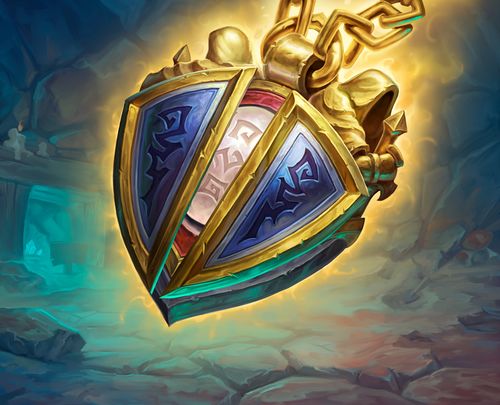
Most of the other spellstones described the effects that they did. The Amethyst spellstone was given to the warlock Rin, who embraced the darkness and slew her kin, and if the Rin card is anything to go by, became Azari's first disciple. The Diamond spellstone fell to 'those of faith', where it apparently had powerful restoration properties, but none who used it knew the true cost. The Emerald spellstone fell onto a Tauren tribe who sought to save their lands, but were instead driven to mindless rage. The Jasper spellstone corrupted an ancient wood and the elves who attempted and failed to purge the demons' shadow. The Mithril spellstone entranced some dwarves who were enthralled in their greed, but found themselves 'forever bound in mithril tombs'. The Onyx spellstone was found by trolls of old, but its influence was so corruptive that 'no party lasts who finds the stone, those wielding it soon stand alone'. The Sapphire spellstone was embraced by a tribe of murlocs beneath the seas, who used the power of the spellstone to replicate and swarm the shore.

The Ruby Spellstone's card text tells the conclusion of this saga, as the final stone was 'spun to wards by nameless caster', used to battle against the mighty Azari himself and eventually sealing the mighty demon in the twisting nether. It's a neat little self-contained story... and, of course, all the spellstones and Azari are original to Hearthstone.
Unidentified
Unidentified
item (Diablo 2)

Unidentified Elixir, Unidentified Maul & Unidentified Shield: The whole concept of 'unidentified' items was famously part of D&D, where any time you discover a magic item, you have to take it to someone who can use 'Identify Magic' to really benefit from the powers, otherwise you won't really know just what the item is. It's also famously used in another Blizzard RPG game, Diablo. I do especially love the 'Tower Shield +10' option for Unidentified Shield, though, which is such a D&D phrasing it hurts.

Potion of Heroism: Potion of Heroism seems to share its name with the Heroic Potion, an item in WoW, that increases strength and health temporarily, which in turn is based once more upon a classic D&D item called Potion of Heroism that tends to give those who drink it temporary hit points.
Image result for deck of many things d&d
D&D Deck of Many Things

Shifting Scroll: Shifting Scroll is original to Hearthstone.

Primal Talismans: Primal Talisman is original to Hearthstone.

Deck of Wonders: The Deck of Wonders is original to Hearthstone, and seems to be based on the iconic item Deck of Many Things from Dungeons & Dragons, which is a set deck upon which each card does a random thing when drawn, sometimes beneficial and sometimes not quite.

Candleshot: Candleshot is obviously original to Hearthstone, inspired by the whole kobold obsession with candles.

Bladed Gauntlet: Bladed Gauntlet is original to Hearthstone, although it seems to be conceptually and visually inspired by the blades of the Old Horde orc chieftain Kargath Bladefist, who cut off both his hands and replaced them with blades similar to the Bladed Gauntlet. 


Events:

Oaken Summons:  Oaken Summons appear to be original to Hearthstone, and it seems to be based on the 'summon monster' line of spells from D&D where some classes would be able to summon monsters. It's a bit of a long stretch, though.

Branching Paths: 
Branching Paths really describes the general exploration of a dungeon and that sometimes, y'know, branching paths come up and adventurers and players will have to make a choice on what to do.

Wandering Monster: A 'Wandering Monster' is a term in D&D that essentially is a random encounter in a dungeon. It varies depending on the version of D&D used, but the dungeon master will roll a dice and depending on a result, one of several possible wandering monsters will attack the party.

Crushing Walls: Crushing Walls is relatively original to Hearthstone, based loosely on the many traps that can be found in dungeons both in D&D and WoW.

Dragon's Fury: Dragon's Fury seems to be original to Hearthstone. The artwork displays a red dragon burning up an army of kobolds.

Image result for level up wowLevel Up!: Level Up, of course, is a reference to the act of, well, leveling up in World of Warcraft, and both the card art and the sound effect accompanying this card is a reference to the bright lights that accompany the act of a character in WoW leveling up after gaining enough experience points.

Sudden Betrayal: Sudden Betrayal is original to Hearthstone.

Gather Your Party: Gather Your Party is a reference to the well-worn trope of how at the beginning of a D&D campaign heroes would tend to gather together at a neutral location like a tavern and decide to, well, 'form a party'. 

Saturday, 9 June 2018

One Piece 907 Review: The Rulers of the World

One Piece, Chapter 907: The Empty Throne


Well, holy shit, this is a pretty bombastic chapter, isn't it? The cover story seems to herald the end of the Orlumbus arc, with him finally leaving the country to serve Luffy, which is what Sai wants to do post-Reverie. Which is neat, since the Orlumbus arc has been extremely... bland. 

But the actual chapter? Hoo boy, what an insane chapter. So much shit went down, and there are a whole lot of plot developments that I didn't see coming but in hindsight is pretty obvious. We start off the chapter with Big Mom still intent on pursuing and hunting down Luffy, and actually arguing with fellow Emperor Kaidou on the Den Den Mushi, arguing about past debts and who gets to kill Luffy. It's actually pretty fun that the events of the Whole Cake Island isn't quite done yet because Big Mom isn't the type of person to let things just go, and kudos to the manga for actually making good on the promise that Big Mom is the type of person that will hound down anyone who slighted her to the ends of the Earth. Also, having both Kaidou and Big Mom gunning specifically for Luffy? Yeah, it's a good thing Luffy's making friends left and right, because he's going to need them. 

The next scene is the Marine Headquarters, where everyone is panicking that Big Mom and Kaidou are contacting each other brazenly and paying no heed to Marine wiretaps, and we get a bunch of brief cameos of the minor marine vice-admirals. I think the one with the handlebar mustache is Momonga, and the scar-faced dude is called... Doberman? But clearly the big names here are Kizaru (who unless I'm mis-remembering things, makes his post-timeskip debut) asking Akainu about permission to go and make his own move... but Akainu refuses to let them do anything to Wano because it's outside the World Government's jurisdiction.

We get another conversation between Garp and a bunch of other Marine dudes we've not quite seen before. There is Hina, Fullbody and Jango, but the rest of the characters there seem to be new. Hina and Garp are basically discussing about how the two Yonkou are hunting down Luffy, discussing Akainu's orders and we get some delicious foreshadowing as Garp notes how he was hailed as the hero of the marines thanks to "the Rocks", who apparently ruled the world before Gol D. Roger? Interesting foreshadowing, especially since Hina notes that "their power is growing". 

We don't get any time to really think about this, though, because the chapter goes straight back to Mary Geoise, introducing the titular Empty Throne and delivering a huge amount of exposition. An empty throne that sits at the center of the world, with its vacancy symbolizing the peace in the world, It's surrounded with the 20 swords of the founding 20 kingdoms (Game of Thrones much?) and it sortr of symbolizes that just like the many kings, the Celestial Dragons and even the Five Elders/Gorosei, there is no single king of the world. It also confirms that the Gorosei stand even above the Celestial Dragons. All the kings have to make a pledge to never covet this throne, but of course, King Stelly is a piece of shit. We don't get to see how Stelly gets to do another faus pax, though, because we cut away to another thing that's honestly been inevitable.


In the socializing plaza, the Celestial Dragon Charloss sends out a giant slave to capture Shirahoshi, something that thankfully didn't get dragged on for too long. It really shows just how much insane clout the Celestial Dragons can pull, doesn't it, when even royalty isn't even immune? Vivi, Rebecca and Neptune's complaints fall on deaf ears because everyone else is just way too scared for the sake of their countries to stand against the Celestial Dragons. The only one to make a move are Leo and Sai, but they are swiftly dispatched by CP-0....

Who consists of Lucci, Stussy, Kaku and that one weird masked dude we saw on Dressrosa, who doesn't get identified here. Lucci goes on this rant about how the Celestial Dragons are the gods of the world and it's natural for them to get whatever they want from lesser humans. I've never bought into the fandom perception of Lucci as a decent guy since he's always been "orders first, everything else second" throughout the entirety of Water Seven/Enies Lobby, but this is definitely taking quite a leap in jackassery on Lucci's part when he starts going around talking about how "you can't reason with a god" and shit. 

Neptune basically loses his shit and resolves to abandon the surface world entirely, even the dreams of his late wife Otohime, while Vivi tells Neptune that "these people aren't humans!" and Shirahoshi still tells Neptune to not hate... It's actually pretty well-done, actually. The New Fishman Island arc gets a lot of flak for pacing and power-scaling problems, but the core story is probably one of the better ones that One Piece has given us, and it seems that this rampage by Neptune might very well wreck everything that Otohime, Shirahoshi and the Straw Hats had fought for in that arc. Oh, and very likely Neptune's life too.

But then someone whacks Charloss with a giant mace. Someone who identifies himself as a fellow Celestial Dragon, one who is indebted to the Fishmen Kingdom. It's actually very clever and I have to confess that I have completely forgotten that this one Celestial Dragon dude even exists. But this is the return and the introduction of the Celestial Dragon rescued by Otohime and sent back to the human world so many years ago... and we get his name as DONQUIXOTE Mjosgard. Yes, a member of the Donquixote family! Well, we have ourselves a Celestial Dragon ally, and that's a pretty huge twist, isn't it?

And then because the chapter still have one more page left, we get to see the Gorosei/Five Elders, who talk with a hooded figure... motherfucking Shanks, who wants to talk to them about "a certain pirate"... Holy shit. It's a pretty huge chapter, it's one filled with lots of sudden revelations and re-introductions of characters, and at this point I just really don't know where the Reverie arc is going to go. It's the culmination of 900+ chapters of One Piece history, with so many huge players and older characters interacting with each other, and it's glorious. 

Agents of SHIELD S05E06 Review: Inhuman Revolution

Agents of SHIELD, Season 5, Episode 6: Fun & Games


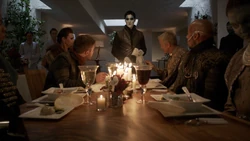
Kasius-EndingDinnerWe continue with the Lighthouse storyline after a brief detour, and we get a brief recap which establishes that Fitz has infiltrated Kasius's gathering of buyers as a member of the Marauders alongside a bunch of other unsavoury characters. It is neat seeing Fitz try to play up a bloodthirsty slaver while simultaneously trying to justify sending May to the husk of Earth instead of killing her straight-up, or to try and buy Simmons, and generally it's pretty entertaining. But Fitz ends up being unable to save Sinara from killing Ben, Daisy's mind-reading Inhuman ally.

There's a lot to like here as Fitz tries to peel back the layers behind Kasius. He's completely in control when interacting with Simmons and Quake, of course, but relative to Fitz and some of the other alien buyers, who he regards as sort of an equal, we get to see another side of Kasius -- one that is a bit over-eager to impress, perhaps, and one with some real beef with the rest of his family. Kasius's father has exiled him to rule over the Lighthouse because of some past mishap, and that is a sore, sore point for Kasius, who wishes to return to the Kree homeworld.

After some action scenes between Ben and May, Kasius orders Sinara to execute Ben for lying to him in regards to the amount of time-travelers in the Lighthouse... which I felt was a bit of an awkward scene to have in the midst of Kasius impressing his bidders. Of course, despite Fitz's insistence that all the violence isn't quite enough, he manages to trick Kasius into disabling Simmons' inhibitor, and then during the cage match between Quake and Sinara, Fitz and Simmons stab Kasius (not fatally), jump into the ring, have a big damn kiss, and then the trio plan an escape. Oh, and Enoch, disguised as a Kree, blows something up and apparently goes to the surface? Is it part of Fitz's plan, or his own agenda?

Oh, and of course, somewhere in-between all that, Kasius's jackass brother, Faulnak, shows up, clearly uninterested in anything that's going on, and is the one behind demanding that Quake fight a fully-blooded Kree warrior like Kasius's bodyguard Sinara, clearly wanting nothing more than to really show up Kasius in his own turf. Interesting to see how this brotherly rivalry will proceed.

On the lower end of the Lighthouse, one of Kasius's minions, identified as 'the Vicar', forces a bunch of teenagers to undergo terrigenesis in order to boost Kasius's inventory of Inhumans. Among these, a boy called Flint (who we spend a brief scene early in the episode following) ends up being one. Elena, Mack and Coulson end up sheltering Flint, but throughout their struggles, the Vicar kills their ally Tess anyway, and in a struggle against the douchebag Grill, Flint ends up manifesting his rock-controlling powers and killing Grill. It's an interesting series of scenes, and well-directed, but ultimately I wonder if a repeat of the whole 'confused Inhuman youth discovering his own powers' is really something that we need to plop into the already pretty-packed plotline. Ultimately, a pretty solid episode.


Marvel Easter Eggs Corner:

  • Fitz disguises himself as a Marauder, which is a band of space warriors that were briefly seen in the opening scenes of Thor: The Dark World. 
  • Kasius's dinner feast features Xandarian snails, referencing the planet Xandar, which was introduced into the MCU in Guardians of the Galaxy. Also, like the aliens in GOTG, the aliens here also trade in units. 

Friday, 8 June 2018

Krypton, Season 1 [2018] Review

Krypton, Season 1

[originally reviewed separately from May 2018 to June 2018]
___________________________________________________________

Krypton, Season 1, Episode 1: Pilot


http://static.tvtropes.org/pmwiki/pub/images/krypton_1.jpgWell, the TV series Krypton was announced as a prequel to the DC Extended Universe, or specifically, Man of Steel, since... shit, since 2014 or something. It felt like forever, and I didn't even realize that it's been released, what with the huge, huge abundance of other superhero material out there both in televized and movie forms. Krypton is a TV series that takes place prior to Krypton's explosion, an origin story of an aspect of Superman's origin story.  There's an inherent danger about telling an origin story so detached from everything that's going on about the character you're selling. Gotham works only because the main character is Commissioner Gordon, a character that Batman fans are familiar with. The Star Wars prequels only work as a story because it focuses on younger versions of our main characters. Prequels are a dangerous sort, especially if it doesn't really have anything in common other than the setting, but extra especially if the ending is sort of said-and-done. Whatever happens in the Krypton series, it will end with the planet erupting in a ball of death and radioactive green rocks, with a sole survivor being jettisoned towards Earth to become the future Man of Steel. (Also Supergirl, also General Zod, also Krypto...)

And... and, well, Krypton's first episode is certainly written with a neat visual flair in mind. There's enough to go on about the backstory of our main character, Seyg-El (parsed as Seg-El in this series, apparently), Kal-El's grandfather, and his role in this rigid society of castes and guilds. We're quickly introduced to the fact that the El family was stripped of its rank and house due to Seyg-El's grandfather trying to prove that other life in space exists, and we also get to see two other houses -- Vex and Zod. There's a love triangle thrown in for extra drama, and then we've got a more familiar face to DC fans, C-lister superhero Adam Strange (disappointingly, he wears a silly hoodie-and-cap ensemble instead of an adaptation of his comic book costume), apparently having traveled back in time to stop some catastrophic disaster, the Collector of Worlds Brainiac, from ending Krypton prematurely before baby Superman is sent to Earth. As rushed as the random revelation that Brainiac is the Big Bad of the series, and this adaptation of Brainiac's robot-skull-ship is pretty damn awesome.

I admit that the time travel aspect was something that caught me by surprise, but ultimately it's a somewhat smart move to keep this somewhat anchored in a deeper DC universe story that the audience would care a bit more about. It still doesn't instill me with that much confidence, though, because the characters feel more like pieces being moved around a board rather than actual characters. Seyg-El is just someone trying to figure out what's going on -- namely, the mysterious Fortress of Solitude that his grandfather (and his parents, at the end of the pilot) died to protect. He's 'bound' to the house of Vex, and the Vex patriarch was responsible for Seyg-El's grandfather's death, whereas the daughter, Nyssa-Vex, is 'bound' to him, some sort of loveless arranged marriage just to produce a child via the sterile Kryptonian birthing matrix (which is actually a cool scene).

Meanwhile, the house of Zod are warriors and protectors of Krypton, and Lyta Zod is secretly fucking Seyg-El, being the 'true' love interest, a fact complicated when Lyta's mom is responsible for killing Seyg-El's parents. Albeit it's a decision that's implied to be more merciful than malicious, but still. None of these characters really feel fleshed out, and I understand that it's just the first episode, but it really feels more like pieces of a puzzle. Instead of a pilot episode introducing to us these characters and who they are, it feels more like a proof-of-concept about how the characters would interact.

Overall, other than the rather lifeless and limp excuse of an emotional core, there's really not that much to talk about this pilot episode. It does great in world-building exposition, of course, and the addition of a time-travelling Back to the Future/Terminator aspect is certainly more than welcome (and probably the only reason I'll even continue watching Krypton) but ultimately it feels very dry. There are a lot of plotlines set up here, like the terrorist organization Black Zero, the whole time travel, Brainiac, the enigmatic and silent many-faced Voice of Rao... but Krypton really has an uphill battle to really prove itself as being any more interesting than 'it's tangentially connected to a superhero I care about'.

DC Easter Eggs Corner:
  • While initially billed as a prequel to Man of Steel and the DCEU movies as a whole, other than featuring some of the same producers, Krypton has been confirmed to be its own continuity. 
  • Seyg-El (not Seg-El, as he is spelled in this show) is Superman's paternal grandfather in the comics, and while he's got a fair bit of backstory detailed in the 80's series World of Krypton, this series is really the biggest role he's ever going to get. Seyg-El's named after one of Superman's real-life creators, Jerry Siegel. 
    • Old Seyg-El's narration that opens the pilot seems to be a homage to Marlon Brando's Jor-El in the original Christopher Reeve Superman movie. 
    • The entire aesthetic of the Fortress of Solitude, as well as the 'Sunstone' key emblazoned with an S-symbol,  is all taken mainly from the Christopher Reeve movie. 
  • Val-El, identified here as Seyg-El's grandfather, is a very, very minor ancestor of Superman's who appeared in a grand total of one issue of the 80's Krypton Chronicles series.
    • Val-El's cape has a black Superman symbol, which brings to mind the black S symbol on Superman's cape in the New 52 rebooted continuity. 
  • The events of this series takes place in Kandor, most famously known as the Bottled City of Kandor in the comics, where the entire city was reduced into microscopic size enough to fit inside a bottle, and the location of many, many adventures for Superman and Supergirl. As a possible homage to this fate, Kandor in Krypton is covered with a glass dome. 
  • Black Zero, in addition to serving as the supervillain names of several minor Superman enemies, is also shared with a group of Kryptonian terrorists -- which is what the Black Zero here seems to represent. The three Black Zero criminals that are sentenced to death are framed similarly to Zod, Ursa and Non in Superman and Superman II. 
  • While the members of the House of Vex are original to the show, one of Zod's minions in Man of Steel was called Car-Vex. While Seyg-El and Nyssa-Vex's child is also called Car-Vex, the Car-Vex of Man of Steel is a woman whereas their child here is explicitly a boy. 
  • While there isn't a specific entity called the Voice of Rao in the comics, Rao is the Kryptonian Sun God (as well as the name of the star Krypton orbits) and often used as an epithet by both Superman and Supergirl. 
  • Dev-Em, the man bethroted to Nyssa-Vex, is the name of a time-travelling Kryptonian who battled Superboy briefly in the comics before becoming an ally of the Legion of Super-Heroes. Some retcons in the comics ended up turning his race into Daxamite instead of Kryptonian. 
  • Seen in various signs and parchment are Kryptonian alphabet as codified in Jeph Loeb's Superman/Batman series which finally give A-Z equivalent symbols in Kryptonian. 
  • Val-El's Fortress of Solitude prominently features a Kryptonian man and woman holding a globe within them, which is the centerpiece of Superman's Fortress of Solitude in the comics, albeit the man and woman in Superman's Fortress are his Kryptonian parents. 
  • Adam Strange, while perhaps not a familiar name to DC fans, is one of DC's longest-running characters, an Earthman who was trapped and sent into space, into the planet Rann through a phenomenon called a Zeta Beam that linked Earth and Rann together. Adam became a staunch protector of Rann with his jetpack and space guns, defending Rann from various extra-terrestrial threats, although the Zeta Beam radiation would run out and send him back to Earth at various intervals.
  • Brainiac, a.k.a. Vril Dox, is one of Superman's most iconic and long-running enemies. Hailing from the technological race of the Coluans. Through his many, many appearances, Brainiac's most iconic modus operandi is to 'collect' intelligence and information about races, usually by shrinking and kidnapping entire cities or planets depending on the continuity. Brainiac's metallic skull-shaped ship was made iconic during the Silver Age, and his green-skinned form briefly seen here is based on his original appearance where he was a lot fleshier -- some modern interpretations turn Brainiac into wholly mechanical. 
___________________________________________________________

Krypton, Season 1, Episode 2: House of El

After all the awkward introductions of character dynamics and a clumsily handled origin story, we finally get a fair bit of a better quality from this second episode of Krypton. It's not that much better, though, as Seyg-El is essentially trapped by so many people telling him to do different things. His sponsors (who killed his grandfather) from house Vex want him to just join the house and discard everything from the House of El.  His betrothed, Nyssa-Vex, is a lot more sympathetic, giving him ashes and stuff for closure for his family. The mysterious Adam Strange want him to investigate the mysteries of Brainiac, Collector of Worlds, this mysterious threat that's going to come and devour Krypton. The computer fascimile of Val-El (because of course one of those exists) wants to know that, no, the House of El actually isn't speaking bullshit, and wants Seyg-El to continue that dynasty. 

And most of the episode we just see Seyg-El bumble around trying to do something and be indecisive, and it's not as entertaining as the show really thinks it is. Sure, it's acted competently and all, but it's also pretty bland. Brainiac is coming because Val-El discovered it in the past, except he isn't because Seyg-El's stolen access to Kryptonian sensors show nothing, except he is because Adam Strange and Seyg-El's bar buddy finds a Brainiac probe later on, showing that Brainiac's already arrived. Seyg-El just whiplashes between his plan to suicidally kill the killers of his family and the whole saving Krypton from a threat told by a future alien bit so much just so the other supporting characters can get a chance to exposit to him, and while the show might think that it's Game of Thrones, none of the expository scenes are really that interesting to watch. 

It does make the final scene where Seyg-El finally decides that he's had enough of being pulled around by everyone else and cuts off the House of Vex symbol from his shirt pretty neat, because finally the dude's developed a backbone and does something that is truly his own, but eh. 

Of course, the one sliver of fun character arc is the (admittedly very simple) story of Lyta-Zod. While her love interest Seyg-El is torn between what to do and his hatred towards Lyta's mother, Lyta decides to take things into her own hands, say "fuck you" to all the oppression towards the Rankless, and challenge her commanding officer Quex into a duel to the death, which she naturally wins. Oh, and she manages to impress her mother, who, while clearly caring for her, had never believed she had this much fire inside her. It's interesting, but when she's supposed to be a side-character and not one of the main characters of this venture, it really speaks just how very bland the whole Seyg-El storyline really is. 

Overall, it's really pretty flat, to be honest. There are definitely some good performances, notably from Lyta-Zod, Nyssa-Vex and Val-El, but it's still a bit of a struggling effort, I'd say. It's not that the concept isn't interesting, it's the execution and the over-reliance on exposition and very, very clunky coincidences -- like Adam Strange and Kem digging just in the exact spot to find a Brainiac probe, or the Voice of Rao popping up quite literally any time it's convenient...

DC Easter Eggs Corner:
  • The Phantom Zone is, of course, an integral part of Superman's mythos.
  • The whole concept of a paternal figure manifesting as a holographic AI projection is, of course, codified by Jor-El in Superman. 
  • Val-El briefly mentions an event known as the "Green Death", which in the comics is the Kryptonians' first exposure to Kryptonite, irradiated masses of their own planet, and one of the pieces of evidence that Jor-El had that Krypton is a dying world. 
  • Quex, the military guild member that Lyta-Zod defeats, shares his name with Quex-Ul, in the original Superman run, one of the many Phantom Zone criminals unleashed upon the world from imprisonment. He worked with General Zod and Zaora, and in punishment for their crimes against Earth, Superman evoked Kryptonian law and executed the three with Kryptonite -- an act that, while legal and justified, would haunt Superman for years. 
    • Of course, Quex dies with a neck snap at the hands of a member of Zod's lineage, which is likely a reference to Man of Steel's infamous scene where Superman kills Zod with a neck snap.
  • The Voice of Rao give a brief listing of the Kryptonian gods whose faces are sculpted into his golden mask. In addition to the primary deity Rao, the other masks represent Cythonna, Telle, Mordo, Yuda and Lorra, all of whom have been mentioned -- albeit in far less prominence compared to the primary deity Rao -- in the DC comics. Out of these, only Cythonna really has any sort of backstory, an evil ice deity who fought the sun god Rao in ancient times according to Kryptonian mythology, and the primary antagonist of the Superman: Last God of Krypton one-shot. 
  • Zeta Beams, the beams that allow comics!Adam Strange to travel between Earth and the planet Rann, is repurposed as the plot device that allows Adam Strange to travel back to the past. 
___________________________________________________________

Krypton, Season 1, Episode 3: The Rankless Initiative


I would enjoy Krypton a lot more if they actually didn't try to resort to exposition in every second line of dialogue. This episode is somewhat better than the previous two episodes in that we aren't stuck in 100% exposition mode, and the episode has a far more solid story than the previous two, but it's still not the most impressive or fun superhero show out there. 

While the show has mostly stumbled in trying to portray Brainiac as this world-ending threat (and part of it is reusing the same two or three shots of CGI Brainiac which just feels ridiculous), this is the first episode that really works in doing so, because the plot of the episode revolves around Seg-El, Adam Strange and Kem trying to hunt down the mysterious Brainiac Probe that's already been taken by someone among the populace, and this is Kem and Seyg's fellow Rankless buddy, Rhom, who's been working salvage outside of the city to make ends meet.

Of course, Team Seyg's attempts to hunt down the Brainiac probe ends up complicated thanks to the titular Rankless Initiative, where Lyta-Zod is forced to lead her Sagittari to crush the Rankless quadrants that Seyg lives in in order to root out the Black Order terrorist group. And while Lyta tries her best to be fair (arresting a Sagittari that shot a defenseless Rankless), police brutality and the beatdown of the Rankless still happens, which is portrayed pretty competently by the show. Oh, and there's the whole bit with Rhom mutating into a techno-organic cyborg monster, killing a bunch of Sagittari and causing Seyg to ask Lyta to lend him the Kryptonian equivalent of an EMP grenade and fry Rhom's circuits. Lyta is sort of brought into the loop of alien invaders, and the happenings there can be placed at the hands of Black Order terrorists, but the episode ends in a rather somber note as Rhom is still trapped as a Brainiac drone, Lyta's career is seen in an unfavourable light and Daron-Vex has to face the Voice of Rao for his failure. 

Again, the Rankless Initiative is a very interesting setup for a storyline and setting, and probably the highlight of the episode. It's a shame that the episode itself end up feeling so dull for long stretches of time, and not helping is the pretty contradictory bits in the series about Brainiac's nature. Last episode establishes that they can't get a reading in space for an anomaly because Brainiac is already here... but this episode immediately handwaves it, because Brainiac is still in space, it's just the probe that's here. And the probe, supposed to gather information about what planet it's on, just... hangs around in Rhom's body (seemingly pretty quickly too, in a matter of days) before going all alien-invader and trying to transmit its information back to Brainiac, noting that Krypton is worthy of collection. 

Overall, though, it's still a pretty strong outing for Krypton. it's a shame that the editing and repetitive expository dialogue makes this a slog. Thankfully, Seyg-El, Adam Strange and Lyta-Zod are starting to really feel more like people, so there's definitely that. 

DC Easter Eggs Corner:
  • The leader of the Black Order is identified as Jax-Ur, a Kryptonian criminal imprisoned in the Phantom Zone, who, ironically, in his original incarnation actually fought the Black Zero (there an alien force instead of a group of Kryptonian terrorists). In most continuities Jax-Ur tended to be a minion of the iconic General Zod, other than Superman: The Animated Series where Jax-Ur ended up standing in for Zod as the Kryptonian military leader released from the Phantom Zone. 
  • While not part of his standard modus operandi, Brainiac has been known to transform humans into his drones and agents, most notably Lex Luthor's daughter Lena in the "Our Worlds At War" arc.
  • Among the objects that Adam Strange is offered by the random trader is a Daxamite blade, which is a reference to Daxam, Krypton's more warlike sister planet and where Supergirl's Mon-El hails from.
  • Another thing that the trader notes is 'Gem City', which isn't a reference to a specific location (as far as I can tell -- it does sound very Golden Age-y) but DC's Central City and Keystone City are often collectively referred to as the Gem Cities. 
  • The design of the grenade that Seyg takes from Lyta is a visual homage to the Omegahedron, the plot device from the 1984 Supergirl movie that barely anyone remembers.
___________________________________________________________

Krypton, Season 1, Episode 4: The Word of Rao


It's a... weird episode of Krypton, for sure. We pick up from the previous episode, 'The Rankless Initiative', and deal with the fallout of that episode. Predictably, Lyta-Zod is put to trial, but far worse than insubordination, the Voice of Rao decides that he needs a fall guy in order to restore the Voice of Rao's standings among the Rankless, and decides to pull strings in order to get Lyta to be that fall guy. It's never really made clear just what the role of the Voice of Rao is other than some vague leadership/papal role, and just why he needs to maintain his standings among the Rankless when he was so eager to push the Rankless Initiative in the previous episode. But Lyta is framed for being an agent of Black Zero thanks to some fake testimonies, setting her up to get executed in the same way that Val-El was in the pilot. 

This ends up driving the whole Brainiac plot to a halt as Seg-El (fine, we'll use the show's spelling) decides that a Krypton without Lyta isn't worth saving, and Seg quite literally drops everything regarding investigating Brainiac to do this side-quest. And everything revolves around Seg's attempt to get Lyta out of jail, but at the same time  events are also unfurling for the ever-encroaching arrival of Brainiac, and that's a bit of a weird discrepancy there. 

And while Seg manages to get Nyssa-Vex to help out in getting Lyta out of jail from a legal way (Nyssa, conveniently, is the Kryptonian equivalent of a lawyer of some sort?) and Nyssa ends up being the only person left to fight for Lyta when Seg gets kidnapped by a group of... some other dudes that aren't the enigmatic Black Zero, but are allied with Black Zero. Colin Salmon's (Arrow's Walter Steele) currently-unnamed character notes that, yes, Brainiac is coming and they are an organization that knows this and is trying to stop this. Seg tries to get them to break Lyta out of jail, but instead tries to get free from this organization and attack their minions? Eh. 

Nyssa ends up confronting Jayna-Zod and pretty much tries to get her to stand up and overthrow the Voice of Rao, which is neat. This part of the storyline is fun, in no small part due to really strong performances from both actresses involved. 

Meanwhile, the Rhom-Brainiac gestalt is still indecipherable, but probably dead, causing Uncle Kem to have a talk with Ona about death or something, and this, in turn, causes Ona to rush forwards to the Voice of Rao when he visits the Rankless. Ona gives the Voice of Rao a little figurine, and the Voice of Rao plays with this to maintain his saintly prophet image and elevates Ona into one off the priests of Rao... but this is all a ploy from Brainiac's probe? Who has apparently infected Ona (or maybe just the figurine?), which in turn infects the little gift, which in turn infects the Voice of Rao -- not when he received the figurine, but when he's in his room? It's a neat plot twist, but it's definitely a wee bit too convoluted. Just how intelligent is Brainiac's little figurine? Isn't the whole mission statement of the probe to collect information and send it to Brainiac? Why is it trying to infiltrate the higher-ups in the Kryptonian government, then? Did Brainiac give the drone new standing orders? If he did, then why did the Rhom-drone need to find some huge communication device to talk to the real Brainiac body? 

Overall, it's a weaker episode of Krypton, I feel, for the simple reason that the show does a lot of exposition, but at the same time it also doesn't tell us enough about some aspects of the setting. Black Zero's mentioned a lot of times by practically all the characters, but is hardly relevant, never actually showing up. Adam Strange is some sort of Kyle-Reese-esque character, someone from the future trying to save the past, but half the time he doesn't do anything more than Kem does. The Voice of Rao shows up a lot, but we never really get any sort of real concrete note as to how he figures into Kryptonian politics. Ultimately, the show does have enough good points for me to be interested in continuing to the next episode, but it's definitely flawed in execution and plot-pacing. 

DC Easter Eggs Corner: [not much of these in this episode, surprisingly]
  • Lyta is imprisoned in Fort Rozz, which Supergirl viewers might recognize. Fort Rozz, in the comics, of course, is also a prison for Kryptonian criminals. 
  • The Nova Cycle is indeed a Kryptonian holiday in the comics, where in Nova Cycle, the Kryptonian Religious Guild has the right to absolve any criminal of his or her wrongdoings. 
___________________________________________________________

Krypton, Season 1, Episode 5: House of Zod

Huh. This is an interesting episode. On one hand, the running theme of Primus Jayna-Zod being challenged over and over to betray her duty in order to join in a conspiracy with the house of Vex in order to save her daughter while we flashback to how the House of Zod trains her and her brother to basically fight as if to the death, because mercy will cause them to be unprepared. It culminates in young Jayna-Zod being forced to leave her brother to die when the two of them are sent into some trial by fire (or by ice, as it were) to get to some spot in the wilderness of Krypton's icy wastes, onnly to find that there's only one respirator left. The mother-and-daughter pair of Jayna and Lyta has been the most interesting characters in Krypton so far, and the whole concept of the House of Zod being extremely driven by honour, combat and survival of the fittest is well-delivered. It leads to a different decision in the present day, where instead of choosing honour over a loved one, Jayna ends up paying the price to House Vex in order to secure her daughter's release. She gladly saves her daughter, but also tells Lyta in no uncertain terms that she is her greatest shame.
 
The Vex house is a bit less interesting, mostly because Daron's pretty uninteresting himself. He's apparently in love with Kol-Da, the false-witness that is meant to take Lyta down, but ends up being forced to order her assassination in order to get Lyta off the hook and in turn make the House of Zod (and thus the military guild) ally with him. That random wrinkle of Kol-Da being in love with Daron is so unnecessary. Nyssa-Vex, thankfully, is a lot more endearing, whether it's in her political machinations with Jayna-Zod or her conversations with her clearly less competent father regarding how to best take control of this situation. 

It's a shame that the rest of the storylines in this episode falls thin. We've got both Dev-Em and Seg-El confessing their true, true love for Lyta, and that honestly just feels like lobbing in a love triangle for the sake of a love triangle. Dev is a flat character, and I cannot honestly say I really care about him. Whereas Seg is still stuck in the rut of being a generic nice hero. Seg's storyline has him escape from the Not-Black-Zero dudes when Colin Salmon's character walks away, but before we get much clarification about this mysterious person (we don't get any hints about Colin Salmon until the final shot of this episode) Seg saves another prisoner... 

And then Seg is brought into a different cult who worships Cythonna, the goddess of ice, and hates Els, and also holds the key to saving Krypton from Brainiac. This revelation is done so haphazardly and feels so shoehorned in that it almost ruins any goodwill I have from the Zod stuff in this episode. It feels so convoluted for them to introduced this huge facet of Kryptonian society when so much about the other pre-existing ones they introduced in the past four (!) episodes are still nebulous. We haven't even met anyone that actually hails from Black Zero, and I can't even call Colin Salmon's character or faction by any proper name since they don't have one yet. The world-building is commendable, but it's done so clumsily and it really wouldn't hurt to give some space to both build up the facets of this world and make them memorable, or, failing that, actually build up the other characters. Out of the main 'save Krypton' team, Seg just feels mostly flat, I can't name you a single thing about Adam Strange beyond 'plot device that sometimes makes bad quips', and Kem... Kem's all right, I suppose. 

After being freed, Adam Strange and Lyta head off to rescue Seg, but not before Nyssa overhears Seg's anguished dying declaration of love for Lyta... and honestly? I really find it hard that both Nyssa and Lyta fall in love for Seg. We are told this, yes, and Lyta and Seg at least has the excuse of having a long history and a pre-existing relationship, but there is not much chemistry between either couple that makes the attraction really believable. Thankfully, this is quickly redeemed when Lyta and Colin Salmon's character face off against each other. Both of them have the same Zod necklace (as in, the exact same object) and Colin Salmon's character reveals himself to be Lyta's (possibly time-travelling) son.... which means that he's General Zod himself. Which is exciting, because General Zod's cool, and Colin Salmon's a great actor... but of course, we have yet to untangle the huge mess of introdumped world-building that we haven't really explored yet. 

Overall, the episode has some good points, but it's bogged down by trying to fit in too much without really spending the legwork or time to make me care about a lot of the plotlines, so it really just feels packed to the brim but hollow at the same time, Zods notwithstanding. All the Zods both time-travelling or otherwise are great. It's a shame they're attached to a bunch of other far, messier storylines. 

DC Easter Eggs Corner:
  • The huge revelation that Colin Salmon's character is, in fact, Lyta's son, implies extremely heavily that he is General Zod himself. Dru-Zod is of the same generation as Jor-El, Superman's father, and since Seg-El is Jor's father, General Zod should be a generation below Lyta-Zod as well. The fact that General Zod is older than Lyta implies further, of course, that he is time-travelling, just like Adam Strange.  
  • "You kneel to no one", says the elder Zod to Jayna, which, of course, is a spin on the memetic and infamous "KNEEL BEFORE ZOD" line from Superman II. 
  • As mentioned a couple of episodes back, Cythonna is the Kryptonian goddess of ice, and a rival to the god Rao. Apparently, she has a cult that worships her in this show. Cythonna herself features as the main antagonist in the one-shot Superman: The Last God of Krypton. 
___________________________________________________________

Krypton, Season 1, Episode 6: Civil Wars

Well, this is a very interesting episode, in that the points that are raised in this episode are genuinely interesting. In the midst of throwing in a bunch more plotlines, episode 6 of Krypton actually manages to tell intriguing storylines with both casts of characters -- the ones in the wasteland and the ones in Kandor. It's the first time that I've also actually come to care about Seg-El as an actual character as opposed to just being a designated hero, so kudos on this episode for doing that, even if the episode also throws in Doomsday as yet another layer of complications into this whole thing.  

The big debate here is a constant theme of "how much must you sacrifice for the greater good?" Both Primus Jayna-Zod and Dev-Em struggles with how much they are willing to suffer for the cause of overthrowing the Voice of Rao and installing the Vex/Zod alliance as the leaders of Kandor. It's interesting to see just how far they are willing to go. Dev-Em is willing to commit himself to the alliance, and while clearly conflicted, both Jayna and Dev are also willing to get rid of that one junior officer who's poking his noses too much into the release of a Black Zero bomber (who's meant to be the fall guy for the Voice of Rao's assassination). But when the Voice of Rao changes the terms of his address and fills the rooms with civilians, Dev-Em decides that it's not worth killing so many civilians for their cause, and warns everyone about the bomb.

Likewise, Lyta-Zod and Seg-El are forced to confront the two time-travelers about their true intentions, and for the most part both Adam Strange and General Zod tell the truth... with one small detail. Adam Strange conveniently leaves out the fact that Krypton will explode in a couple hundred years, and while Adam Strange's biggest priority is to preserve history and thus Superman's existence in the future, Zod cares far more about Krypton and wants to protect it. For Lyta and Seg, clearly the nebulous "your descendant is the mightiest hero of the future" understandably doesn't resonate quite as well as Zod's goals of wanting to rescue Krypton from its doom. It's intensely well-done, actually, with General Zod's brutal truth and Adam Strange's increasing desperation ("but we're friends, right?") being pretty well delivered. 

I do really wished the earlier episodes have been more consistent in portraying Adam and Seg's friendship and make it feel like something huge to be lost in this episode, and make General Zod not quite as cartoonishly evil with the torture and random killing of subordinates in episode 4. Which ruins this episode somewhat... but Colin Salmon's intense performance and how he keeps mentioning that, yes, he owns all his conflicts against Kal-El, but also damns Kal-El for integrating himself to mankind at the expense of Kryptonian culture. 

It all comes to a head when Seg-El and the two Zods fight their way through the Cythonnites and open a Zod/El seal to reveal the ancient weapon Doomsday, but they are talked down from unleashing Doomsday (not that, mind you, they have anything concrete like a skull-ship to unleash Doomsday upon anyway at the moment). 

The storylines in Kandor might not be quite as interesting as the time travel ethics debate, but the assassination attempt is interesting, as is Jayna and Dev's moral struggles. We also get to see Brainiac-Voice talk to little Ona (who's confirmed to not be mind-controlled) about destiny and the nature of faith and stuff, and it's... interesting, for sure. Ona's clearly a very devout and religious child, and it is interesting to see the clearly Brainiac-possessed Voice of Rao talk about giving her the chance to be part of what I assume is going to be some sort of sci-fi mind collective. If nothing else, when Dev-Em and his fellow conspirators get ready to gun the Voice of Rao down, he reveals his true powers and unleashes Brainiac robo-tentacles upon them. It's pretty interesting stuff, and honestly? This episode as a whole is a pretty strong winner, I think. Good stuff. 

DC Easter Eggs Corner:
  • The "Hall of Justice", is, of course,  a reference towards the Justice League's base, famously featured in the Hanna-Barbera cartoon Challenge of the Super-Friends.
  • Kryptonopolis is mentioned as another one of the cities on Krypton. It is, as you might imagine, the capital city of Krypton and where Kal-El would eventually be born. 
  • Doomsday, of course, is the spiky, unkillable alien who was infamous for being a monster that managed to kill Superman in the 1993 storyline "The Death of Superman". While initially introduced as just some random alien monster, later retcons revelations would reveal that the creature later known as Doomsday is a prehistoric creature native to Krypton that was the result of an alien scientist's experimentations to create the perfect, unkillable being. 
    • Tangentially, if Zod being played by a different actor doesn't already clue you in, Doomsday's presence as an ancient Kryptonian being quite fully separates Krypton from the DC movie continuity. 
___________________________________________________________

Krypton, Season 1, Episode 7: Transformation

This episode's more of a huge 'things happen' episode, and it's pretty neat. Brainiac has basically taken over the Voice of Rao, and through a pretty awesome cold open, used his tentacles to turn the military guild members into his minions. This Voice of Brainiac ends up interacting with Daron-Vex, and basically plays around and treats the whole thing like a test of worthiness. Brainiac can detect if people are lying, and Daron ends up giving up everything to Brainiac -- including the fact that his own daughter is a co-conspirator that he was well-prepared to give up to Brainiac, willing to even shoot Nyssa to prove his reality. I really kind of wish, just like everything else, that we've spent more time with Daron to really care about him beyond "huh, what an opportunistic scumbag."

Eventually, though, as the pieces on the board move around, the characters we root end up all on the same page. Seg-El, Lyta and Zod go off to try and take down Brainiac on their own, and then Seg goes off to save Nyssa, who's branded a traitor by the Voice of Brainiac. Meanwhile, Lyta seeks the help of Dev-Em, her 'betrothed', to track down Jayna-Zod... but Dev-Em's apparently already corrupted by Brainiac, forcing Lyta to shoot her. I guess the show tries to build up Lyta and Dev's relationship in the previous episode? It really feels like they're just handwaving the love triangle they've built up between Lyta, Dev and Seg, which is... eh? Dev's been built up a little past the last couple of episodes, but not that much, honestly. 

Nyssa is probably the MVP of the first half of the episode, where her interactions with her father and her utter disgust at being turned into ''the perfect political partner" is amazingly delivered, and her understanding that Seg is helping her out not out of love but out of friendship, is pretty well done, I think. 

This all leads to the final scene, where the Kryptonians all join together to assassinate the Voice of Brainiac. Or at least expose his true nature as an alien before the crowded masses of Kandor so they will rise up and become their army. Unfortunately, Brainiac one-ups them by hovering into the air, burning in flames and acts all glowing like an angel when one of the Rao priestesses call the Voice out for not being Kryptonian anymore. Apparently Brainiac's realized the importance of religion, and ends up masquerading as this godly being, turning the resistance's attempt to get the people of Kandor to fight back against them. 

Oh, and Adam Strange finally ends up developing into something resembling a character instead of just a plot device. He gets to talk with the computer program that is Val-El about just what it means to be a hero. And while "I want to be a hero" is a well-and-tried trope in these superhero stories, they tell it relatively competently. Unfortunately, Adam Strange draws the wrong conclusions from Val's motivational talks and decides to kill General Zod instead of joining the Kryptonian Resistance. 

Overall, it's an episode that feels like it cares more about getting all of its characters in place instead of telling any real character-focused story, but it still manages to give us some great moments with Nyssa-Vex and Adam Strange, and a wee bit for Lyta and Jayna Zod. There are still some iffy parts of the episode, pacing-wise, but overall still pretty fun, I think. 

DC Easter Eggs Corner:
  • Adam Strange makes blatant references to the Justice League from the present day, as well as not having a power ring, which is a reference to Green Lantern, one of the traditional members of the Justice League. 
  • Brainiac calls his brainwashed bodyguards the Red Shard, which is the name of a tactical response squad in the city of Kandor that Superman was a member when he returned the Bottle City of Kandor to its original size. 
  • Among the trophies in the Fortress of Solitude is the Black Mercy flower, which was introduced in Alan Moore's iconic Superman story, "For The Man Who Has Everything". 
  • Argo City, mentioned by Daron-Vex, is the birthplace of Supergirl. The name Argo was taken from Superman: The Animated Series, where Argo was initially introduced as Krypton's sister planet as opposed to a city.
  • Mentioned briefly by Kem are Rondors, which are a species of land animals native to Krypton, featured in some Golden Age stories. 
___________________________________________________________

Krypton, Season 1, Episode 8: Savage Night

I really think that if Adam Strange showed some real personality or some real capabilities at being a  hero, I'd be more invested in his character journey throughout this episode. As an avid comic-book reader, I'm already familiar with the character of Adam Strange, and I root for him thanks to that vague association. But Krypton's Adam Strange have been shown, time and time again, that he's... honestly not that good. He's nice, sure, but when he was blinked back to the present day (or the future, I guess) he gives this long, long speech about how saving space-time is his destiny, even though he stole the Zeta Beam Device and insists on going on it alone despite there being the potential of them sending someone more capable. Add that to how he's clearly making things up on the fly and has no real solutions to offer Seg-El and his Kryptonian buddies, and I find it honestly hard to root for Adam Strange and his delusions of grandeur, if we're taking Adam as a character solely based on his appearances in Krypton. Add that to Kem's not-wrong "stop talking about imaginary grandsons in the future" roaring speech, and honestly it's really hard to like Adam.

And that's without going about Adam's plan, which is to go to Daron-Vex with some sort of nebulous, ill-defined plan to get him and Brainiac to succeed as long as Seg-El is outside of Kandor when it happens, a plan that doesn't seem to work as the episode ends with Daron-Vex carted off by Black Zero.

At least he sort of redeemed himself at the end of the episode, right? The dual gut-punch of Adam jumping in the way to finally do something heroic instead of just stand around and drop Easter Eggs, as well as little Ona being used as a living bomb by Brainiac is a pretty powerful shot. Yes, it's a very cheap way for us to get a 'the stakes are HIGH!' moment by killing a little innocent child, but it's still pretty effective. I'm not quite sure just why the Voice of Brainiac chose Ona to do it in spite of showing an interest in her... is it because Ona asked one too many questions?

Meanwhile, the Kandorian Resistance (tm) is divided up into two groups in this episode as they go to take down the Voice of Brainiac, who, according to one of the scripture-tattooed priest ladies, is eating babies and turning the embryos into energy that he can feed on, Matrix style. Which genuinely feels like it came out of nowhere. Seg, Lyta and Nyssa go off to recover the body of Dev-Em and then use the Fortress of Solitude to cure him and use him as an entry-way to hack into Brainiac, while Jayna and Dru-Zod go off to talk to the leader of Black Zero, Jax-Ur (who is a woman). Jax-Ur's price for Black Zero's help? Dev-Em, which honestly no one, not even his own daughter, is going to contest.

And the Black Zero would really felt like it mattered a lot more if we actually see them doing... anything at all? I guess they were all sort of off-screen. Anyway, Val manages to free Dev-Em from Brainiac's control, and judging by the scenes, might start up a (sigh) love triangle sub-plot. Can I just say how utterly silly it is for them to leave Lyta, one of their strongest fighters and a soldier that has been assigned to the city not a couple of days ago, behind, just in service of a teary-eyed "yay Dev is alive" scene? Jayna gets to utterly be a badass in that corridor scene, while Seg and Zod ends up confronting the Voice of Rao and dropping him down the Genesis Chamber. It seems like an awful stupid thing for them (other than Zod) to just write him off as dead, though.

In other news, Jayna decides that Zod wants to rule Krypton because... Zod was honest to her about being imprisoned in the Phantom Zone? It's a great scene for Jayna to notice that Zod is suspicious, and might not be completely altruistic. It's another to make the leap from "I was in prison for a coup because of shitty leaders, the very same thing we are doing now" to "he is trying to rule us!" Overall, it's a pretty episode, one with a lot of action scenes and some decently-acted scenes, but all the Adam Strange stuff and just how all over the place Brainiac makes this a bit more of an iffier episode than I would've liked.

DC Easter Eggs Corner:
  • While they are unseen and remain as disembodied voices, Adam identifies the people he's talking to in the present-day as Sardath and Alana. The two of them, in the comics, are Adam's closest allies in the planet Rann, with the cantankerous Sardath being sort of a mentor figure and Alana being his eventual love interest. 
___________________________________________________________

Krypton, Season 1, Episode 9: Hope

Well, this episode... certainly raises the stakes, yeah? And this is where I really wished Krypton had treated its characters more like, well, characters as opposed to moving pieces on a chess-board in service of plot. Because a lot of the motivations of the characters ends with me shrugging it off because, well, why not? Add that to some very nebulous characters like the Cythonnite cult or Jax-Ur or the Black Zero or whoever's leading the Sagittaris that we barely spend any time with, and it really ends up getting hard to be invested in the well-doing of these characters beyond the general sense of "oh, these characters are doing something". The really generic 'hope' speeches from Val-El to Seg-El doesn't really work as motivation either.

And basically, the whole point of this episode is a huge internal conflict for the Kryptonians. Adam Strange and Ona remain dead (although I wouldn't rule out Zeta Beam hijinks) and this motivates Seg to... do... something? It's never really clear what Seg's big plan is, but he certainly get in the way of General Zod and Lyta Zod as they try to unleash Doomsday to take down Brainiac. Seg and Jayna will not allow General Zod to rule Kandor with fear... and honestly? I don't really buy any of Seg or Jayna's motivations, since the show doesn't actually sell the whole "General Zod is evil and wants to rule the world" beyond the audience perceptions knowing that, hey, General Zod is traditionally a villain. Honestly, judging Krypton by its own merits... Seg ends up feeling like Adam Strange earlier in the season where he rants about ideals but never really offers any sort of concrete solution. Jayna is likewise hypocritical,  but at least Lyta calls her out on it. The Zod family drama is highly all over the place in this episode, and despite the relatively consistent performances by the actors it's not a storyline that honestly really engages.

It doesn't matter at all, though, because Zod and Jayna end up fighting to the death, a fight interrupted by Lyta and allowing Jayna to escape. Meanwhile, the Cythonnites apparently broke Doomsday's pod upon moving it, ensuring that Doomsday will be unleashed, and so the Cythonnites threaten to kill Seg and Nyssa, while they move Doomsday to Kandor to unleash it upon Brainiac when he comes to collect and bottle up the city.

Somewhere in-between this, Seg and Nyssa manages to broker an alliance between Black Zero and the Sagittari, although it ends to be for naught because Brainiac easily manipulates the two groups into killing each other shortly before the climax. The Voice of Rao threatens to drop Seg down the building, but Nyssa charges in, stabs the Voice with the convenient Chekov's Alien-Crystal-USB-of-Hope that Seg gave her... but Brainiac reassembles himself in all his green-skinned glory. Oh, and somewhere along this, Nyssa and Seg are now an item and I genuinely didn't realize when this happened. Somewhere after Seg's ranting to Lyta that she has disappointed him or something? I dunno. Krypton's romantic storylines are never really told well.

Oh, there's also a sub-plot with Jax-Ur and Daron-Vex, with Jax-Ur finding access to the council's secret stash of high-class people clones, while Daron-Vex escapes but gets shocked remotely by Jax-Ur. It's... it's an interesting storyline, of course, but it also feels like half-baked world-building because I genuinely don't give a shit if Jax-Ur and Daron-Vex become Brainiac casualties next episode due to how little they are actually treated as characters.

Overall, the episode builds up to the climactic season finale with Brainiac finally arriving on Krypton, but there are so many moving parts and so few characters that I genuinely care about that I'm honestly not very optimistic for Krypton's finale. There is a lot of thought put into Krypton, but so much of it feels more like people acting out a rough plot draft instead of a character-centric story, and so much of it also relies on pre-existing knowledge about DC characters that doesn't quite gel with how the characters are portrayed on-screen. I dunno. I've tried to cautiously give Krypton the benefit of the doubt, but ironically it's the episode titled 'Hope' that makes me lose the very same thing in it.

DC Easter Eggs Corner:
  • Among Dev-Em's password is the phrase "Flamebird", which is the secret identity that Jimmy Olsen uses when he and Superman entered the Bottle City of Kandor. Inspired by Batman and Robin, Superman and Jimmy adopted the identities of "Nightwing" and "Flamebird" and acted as superheroes there. Various other superheroes connected to Krypton would later adopt the identity Flamebird as well. 
___________________________________________________________

Krypton, Season 1, Episode 10: The Phantom Zone

Huh, that was a season finale. Krypton's final episode is thankfully a lot more solid compared to the previous setup episode, which was extremely messy. In a sense, the tenth episode of Krypton doesn't really fix a lot of the problems I already have with it -- namely, the fact that Seg-El is honestly a character that I don't really care about even after spending an entire season with him -- but Zod, Brainiac, Nyssa, Lyta and Val-El all deliver compelling enough performances to entertain me throughout this final episode of Krypton's first season.

Visually, Krypton manages to deliver a pretty neat showcase as Brainiac's giant skullship descend upon Kandor and use giant tentacles to ram down all over the city, promising apocalypse. Of course, this being a TV show, the main focus is still dealing with Brainiac in the flesh, who has landed upon Kandor and is surveying his victory. Sure, there was a brief moment of neat CGI spaceship 
battle with the doomed Sagittari, but ultimately most of the conflict happens on the ground.

Most of our heroes end up running around trying to figure out how to stop Brainiac. Seg doesn't really give any sort of a plan beyond shouting really hard that NO HE MUST SAVE EVERYONE HERE AND NOW. Thankfully, General Zod has a better plan in tow, which is to pluck Val-El out from the Phantom Zone. It's a bit of a weird ass-pull, admittedly, to have Val-El apparently disappear into the Phantom Zone while faking his death in episode one, and that the Phantom Zone's weird "beyond space and time" bit causes Zod and Val-El to basically hang out together while imprisoned together. It's a bit of a wonkiness to it all, but I can let it slide. And then... Val-El turns out to be as clueless as Seg is in taking Brainiac down. Okay?

Then Zod decides to just trade Val-El and his knowledge of the future to Brainiac. Knowledge of the future which Val has, but Zod doesn't? How does this Phantom Zone really work? All of these new plot points are just bombarded to us with no real explanation. I mean, it could be worse, I suppose, but it really feels like clumsy storytelling that only Colin Salmon and Ian McElhinney's earnest acting manages to sell. Zod's confrontation with Brainiac is neat enough, but I'm not sure how much of it is planned, because Zod tricks Brainiac into standing on the platform that causes him to get sucked into the Phantom Zone, disabling his master ship.

Oh, and Brainiac pulls Seg-El with his tentacles into the Phantom Zone with him. It's kinda sad, I suppose, but if I had to be honest... I don't really care that much, considering Seg has been sort of a non-character all season long, mostly happening to be a storytelling device as a point of view instead of really working out as a proper character. It's a bold move, for sure, ending the first season with the possible death (undeath?) of the main lead, but if I'm being honest I don't really care.

The B-plots in this episode involve Lyta giving a big speech to drive Dev-Em and his shiny metal arm and the rest of the Sagittari to fight back, and then angsting over sending them to their deaths. Nyssa also goes to save her baby from the gestation chamber with a huge streak of motherly instinct which I don't think has ever been foreshadowed in any shape or form. Jax-Ur shows up and tells Nyssa that she's apparently one of the clones from the Vara Protocol, activated after the original Nyssa-Vex died. Okay? This ends up with Jax-Ur and Nyssa sort of starting a brand new alliance with Val-El to resist the reign of Zod.

Because stopping Brainiac ends up basically stopping the bottling of Kandor and the subsequent destruction of Krypton, and Superman's cape gets transformed into a Zod-insignia cape. Thanks to their victory over Brainiac, the Kryptonians have changed the timeline, forming a timeline where General Dru-Zod gives this huge speech about how all of Krypton and the rest of the universe will KNEEL BEFORE ZOD. I'm not actually being sarcastic here -- Zod's speech is actually pretty goddamn awesome.

There's a lot of random plotlines introduced in this first season that end up honestly being thrown out of the window or saved for season two, though. We've got Doomsday being a complete non-entity throughout the entire finale, while I was waiting for the inevitable breakout... which only really happens in the final scene. Why even introduce Doomsday as a huge plot point if he's not going to factor into the story? Likewise, Jayna has disappeared off stage left, not seen at all in the entire episode. We also get weird ominous scenes of Adam Strange apparently being teleported into a frozen Earth city in Brainiac's collection? It's weird.

Overall, Krypton ends its first season with an okay finale, all things considered. It's just that the entire season, while clearly the burden of a lot of distilled stories from DC comics that are relatively faithfully adapted, still ends up feeling entirely lukewarm. Maybe it's the fact that Seg-El and Adam Strange, who we spend a fair chunk of the screentime around, are both pretty bland and uninteresting characters. Maybe it's the fact that the finale randomly discards a bunch of plot points to focus on a bunch of new ones. There's definitely a pacing problem, for sure. Ultimately, while Krypton isn't unwatcheable, it feels dreary and dry. What it did right are the visuals, though, and as much as I decry the introdumps, it does the world-building (plot holes notwithstanding) pretty well. Overall, I can't say that I'm super excited for season two, though.

DC Easter Eggs Corner:
  • "Kneel before Zod", as mentioned before is, of course, the iconic catchphrase of General Zod's first live-action adaptation in Superman II.
  • Cygnus 4019 is Planet Salvation, the mysterious planet that the Earth government sends all impounded prisoners to during the Salvation Run storyline, which happened around the Infinite Crisis era. As Zod alludes to here, the comic book version of Cygnus 4019 is filled with strangely advanced Apokoliptan technology despite supposedly being a deserted planet. 
  • Doomsday hammering at the edge of his pod seems to be somewhat inspired by the lead-up in the comics to the Death of Superman story arc, where for the four or five issues preceding Doomsday being unleashed, each issue would end with a page of Doomsday's fist hammering onto the walls of his prison. 

Thursday, 7 June 2018

Agents of SHIELD S05E05 Review: The Story of Fitz

Agents of SHIELD, Season 5, Episode 5: Rewind


This is an interesting episode. In the third season, one of the most memorable episodes was "4722 Hours", an episode where Simmons, displaced through space to land at another planet, has to survive and find a way to get back to her team. In this episode, "Rewind", it is Fitz that is the other member of the pair to find himself displaced -- in time instead of in space. After being abducted by actual government people, and being left behind by whoever abducted Team Coulson, Fitz is interrogated by the government while SHIELD is branded as traitors. The first act spends mostly around Fitz trying to figure out what's going on from the confines of his cell, eventually managing to contact an old ally by sending messages to a soccer magazine... namely, Lance Hunter.

Poor Lance has had his TV show, Marvel's Most Wanted, cancelled before it could air, but apparently the adventures all happened offscreen anyway. (Plus, the crew of SHIELD is currently the most wanted people thanks to the actions of LMD Daisy last season) Lance manages to break Fitz out, and the two of them try their best to figure out what's going on with their allies, as well as provide a brief analysis of Fitz's mental space -- he's haunted by the things he's done in the Framework as a Hydra supervillain. This seems to be the theme of this episode -- that even good people are capable of some darker stuff, and sometimes that darker side is necessary especially when you're working as a secret agent.

Through one way or another, Lance and Fitz meet bargain bin Uatu the mysterious alien Chronicrom anthropologist called Enoch, an alien who spends his time on Earth to watch the history of our species for the past 30 thousand years, refusing to interact with humanity beyond observation. Enoch will only observe unless an extinction-level event threatens humanity, and someone called 'the Seer' has predicted it. Enoch being this mysterious all-powerful immortal is one who has abducted Coulson's people and sent him to the future, and is implied to be the one to have supplied whatshisface in the future with all  the prophecies as well. Oh, and he's the one who's able to freeze everyone, explaining Team Coulson's disappearance.

It's a neat little tie-in to season three that Robin Hinton (who I almost forgot until Fitz recaps the episode that his dad appeared in) turns out to be the Seer, with the little child's prophetic crayon drawings being particularly spooky. After stealing a bunch of resources from the military base and regrouping with Enoch at the bottom of a lighthouse (get it, lighthouse?) and leaving behind the cryptic postcard, Fitz puts himself into cryo-sleep for 74 years, waiting for the apocalypse in the confines of Enoch's satellite. And that's presumably when Enoch wakes Fitz up and snuck him on board the future!Lighthouse to bid on Quake, Destroyer of Worlds. Enoch is a pretty interesting character due to his unwillingness to aid anyone unless it's part of 'the prophecy'. Interesting how this will happen moving forwards.

And while Fitz is now in game and we can continue the Lighthouse plot, I'm curious if the post-apocalyptic future is necessary at all -- five episodes in, and I'm genuinely already bored of the Lighthouse and I went "aww, must we come back? I liked the setting of this episode". Thankfully, it seems that the show has a bit more to offer in the present-day stuff, as Talbot's replacement, General Hale, executes the two officers in charge of Fitz's imprisonment in cold blood. She's totally going to be a future antagonist, isn't she?


Marvel Easter Eggs Corner:
  • Lance Hunter returns, last seen in the third season of Agents of SHIELD, with their supposed spin-off being cancelled before it was even aired. Apparently he and Bobbi have been fighting ninjas, which may or may not be the same ninjas as the Hand. 
  • Polly Hinton and Robin "Seer" Hinton last appeared in the season three episode "Spacetime", where Robin's father, Charles Hinton, was a future-seeing Inhuman that was the focus of the episode. The events of that episode are briefly mentioned by Fitz and Polly.