Wednesday, 22 March 2017

Iron Fist S01E04 Review: Hand-Triad-Fist Three-Way Battle

Iron Fist, Season 1, Episode 4: Eight Diagram Dragon Palm


Ah, we get a kung fu scene featuring Danny Rand actually doing something actually kung fu-y. The battle in the first episode was nothing but a huge disappointment, and while Colleen Wing did deliver last episode with some cage deathmatch fighting, this episode finally starts to pick up on both the plot and on the action. Yes, the Iron Fist battle with the hatchet triad grunts in the corridor leading into the elevator didn't quite stand up against Daredevil's signature corridor scene, but it's still a pretty fun fisticuff beatdown. It's the first time that Danny Rand legitimately feels like a martial artist instead of 'dude with glowing fist of power'.

Where to start? Colleen's story is still more or less divorced from the rest of the Rand/Meachum/Hand storyline, other than briefly allowing Joy to shack up there while Danny goes to confront some Triad gangsters. She recognizes herself a hypocrite for fighting to get money, but her students love her for it. She continues fighting under the name of "Daughter of the Dragon", going into a pretty fun and brutal cage match in this episode... but refuses money from Danny for some reason? It's a bit odd, surely accepting money from a friend -- that's indebted to her, no less -- would be far more preferable than to bending her Bushido code, but perhaps she really, really likes fighting? The cage fight is a lot less impactful since it really feels like a retread of last episode. 

We peel back a bit more of Danny's past, and him telling Joy hauntingly about the abusive training he received in K'un Lun with the screams of a young Danny in the background being far, far more powerful than any flashback that actually shows us what happened. Thanks to some internal talk between Harold and Ward, the Meachums decide to restore Danny's identity -- though with Jeri Hogarth breathing down the Rand corporation and Joy being Danny's mysterious ally that gave Jeri the cup, it's a matter of time. Danny finds himself the lofty holder of 51% of Rand Industries' money, but at the same time it is kind of a stupid idea for the company to just, well, put him there. For fuck's sake, the dude was in the mountains dealing with jars and gathering chi for a decade and a half. 

As Danny mentions himself, it reminds him of his time in K'un Lun where he climbs up to a particularly powerful and important job (the Iron Fist title, I suppose) that everyone laughed at him because a Xiao Gui Lao like him can't ever do it... but once he reached said high title, he had no idea what he wants to really do with it. And as Jeri leaves him behind to his newly reclaimed office, Danny really looks like he feels the same thing about regaining power over Rand Enterprises. He's far more interested in stickers under daddy's desk than actually having a concrete goal as to what to do when he's the boss. 

And I'm equal parts fine with this development, and equal parts just shaking my head at the rather ham-fisted way that they portrayed Danny's return into the company. He literally just waltzes into a meeting, and in the words of Joy Meachum, "swings around his 51% shareholder dick" and basically shuts down the meeting, forcing the company to sell the leishmaniasis medication at cost. Because he's a kid mentally, you see. Yes, a tenfold price in increase is cartoonishly evil, but Danny's insistence that they sell the drugs at cost is very noble and all, but as the other board members note, all Danny's going to accomplish is going to slow down the actual research cost for future medicine and possibly even run out Rand employees out of a job.

It's not a show about how to run a company, though, and that scene shows Danny's childlike innocence pretty well without making him look absolutely stupid (like the first two episodes), and his later encounter with the Triads that attacked Joy shows the warrior side of him. The Yang Triad wants the pier back, but backs the fuck away when Danny tells them that Rand Enterprises is forced to purchase the pier by the Hand. 

Speaking of the Hand, Danny has no fucking idea -- or at least claims not to have any -- when Harold questions him about it. It's more of a myth, a boogeyman, in K'un Lun. Very curious.

The Meachums, meanwhile, continue to be interesting. Joy's confused about everything, knowing that something's up with Ward, and something's up with Danny, but the shock of being attacked by triads kind of freaked her out a little. It's revealed that she's not entirely evil -- when the lines are drawn she did stand next to Ward last episode, but at the same time she's the one responsible for giving Jeri the evidence she needs to help Danny reclaim his name. It's Harold and Ward that are the most interesting right now, with Harold's passive-aggressive abusive daddy role being gloriously shown to us. Harold recruits Danny into the small group of himself, Ward and Kyle as the only few people who knows that he's alive.

The fact that Harold didn't fake his own death, and actually died and was revived, is a very interesting and comic book-y plot revelation. Danny notes how Harold didn't seem to age, and him sleeping in that weird sci-fi glass pod is apparently out of necessity instead of eccentricity. Harold meets the Hand -- or, well, Madame Gao, who's shrouded but her voice is very evident -- who rewards him by allowing him to see his daughter. (The Hand apparently assumes that Danny's just Joy's bodyguard) And Harold dresses up as a Hand goon, confronts Triad boss Yang and kills the thug that slapped Joy, unknowingly setting off a bit of an 'enemy mine' relationship between Yang and Danny as Yang leaves Danny a cryptic note at the end of the episode about what he wants to know.

Meanwhile, Ward's caught in a rock and hard place. Danny's too nice of a dude, talking about how nice Ward and Joy are -- even including the psychiatric hospital -- during the press conference, and generally being out of the loop. Here's Danny, who his father just likes all out of nowhere. Harold wants Ward to drop all charges, reinstate Danny as the 51%-shareholder of the company, and is definitely very nice to Danny because he's the Immortal Iron Fist, destroyer of the Hand. Ward doesn't care, though. All he sees is this twat that got his father's love and adoration, something that he never seems to be able to get no matter how hard he tries to follow daddy's rule to the letter.

And oh, how he tries. Danny fucks up the drug business? Nope, it's Ward's fault for not being able to control Danny. Ward himself isn't the most competent person, of course, and his handling of Danny is suboptimal. He basically shrugs and bows down to the whims of Danny during the meeting, intent on driving a wedge between Danny and the other heads of Rand Enterprises. He tries to set up an interview, talking about what a jackass Danny is for wanting to sell at cost... but, of course, the reporter runs the story about what a heroic 'for the people' businessman Danny Rand is. Poor dude's so ineffective at being evil you can't help but pity him. 

Again, I'm still very unsure about Danny Rand himself as a character. There's a fair amount of great work done here, and the fact that he's not dressed like a hobo hippie anymore and having him actually do stuff helps a lot in making him have a fair bit more gravitas, but at the same time we're four hours in and we've only gotten scant hints and clues about Danny's time in K'un Lun and his responsibilities regarding the Hand. It's definitely slow burn. The scene with Danny, Harold and Ward is definitely the most interesting, with all three characters drawing their own lines and allegiances with the Hand. 

This episode's miles and miles better than Iron Fist's first two missteps, but there are still things that really felt off and repetitive, like Colleen's second cage match, or Ward being jealous with Danny. Still, we finally get to see the Hand figure out in all this, we get some development (and hopefully closure of a huge chunk of) the "regain my identity and my position in the company" subplot. 


Marvel Easter Eggs Corner:
  • When describing Danny scaling the walls of the Rand Enterprises building, Ward name-drops Daredevil as a comparison to him. 
  • The reporter apparently works for the New York Bulletin, as Daredevil's friend Karen, working for the same newspaper at the end of Daredevil's second season, is briefly mentioned by her.
  • Colleen's white hoodie during the cage fight is a reference to her white jumpsuit costume she has in the comics.

Justice League Unlimited S02E11 Review: JLA vs. Cadmus

Justice League Unlimited, Season 2, Episode 11: Panic in the Sky


So the previous episode was a huge, huge blow against the Justice League. The League's space cannon was hacked onto and fired upon civilians, and even members of the Justice League are starting to lose faith in what they're doing. The League's credibility is trashed, Captain Atom was turned against the League and beaten down, the Vigilante was tortured and out of the battle. Mercifully (and because this is a cartoon) Flash notes that there are no fatalities, but the destruction is clear that, yeah, a lot of damage is done.

None that he knows of, anyway -- I find it hard that no one's killed in that blast, and feel like it's something for the censors more than anything.

Superman calls a meeting of five of the seven founders -- Batman and Flash, being on the planet helping people, aren't around -- and asks "what have we done?" It's clear, now, to Superman, why the people has a reason to be afraid of him, of them, and they decide that the seven founding members will give themselves into custody until everything is cleared. Naturally, though, Batman's reply is a hilarious, incredulous no ("if you're feeling guilty, clear your own name"), but it doesn't stop six of the seven from surrendering themselves into custody like criminals as a gesture of goodwill.

Batman being the lynchpin of uncovering this episode's machinations is awesome. Sure, the gesture of trust is one thing, but Batman is used of being painted as the boogeyman of Gotham City, of being equalized to the bad guys, and unlike Superman and like the Question, Batman revels in it. And he knows people -- Waller shares so much of Batman's own paranoia without Batman's trust in his comrades, that Batman going off to fix everything and regain Waller's trust is a pretty awesome thing.

Steel gets to give a pretty awesome speech about why the First Seven are special -- it's not because they're the most powerful, but because they set the best example of what a hero should be, inspiring the small legion on the Watchtower, and surrendering for the greater good, a gesture of innocence and goodwill, trusting in the others to clear their name, is probably the right thign here.

Of course, the surrendering leaguers contains some of its most powerful fighters in terms of raw power -- Superman, Wonder Woman, J'onn and Green Lantern in particular are easily four of the most powerful beings on the planet full stop. And the fact that Galatea is arriving with an army of Ultimen to wipe out the entire Justice League... well, on the plus side, the episode finally delivers on something that the show hasn't really done since "Dark Heart", which is to show thirty-plus superheroes with unique abilities do battle. Having the enemies be the Ultimen, with their own superpowers, instead of dispensable generic mooks like Parademons or Thanagarian soldiers, is a great choice, too.


Surprisingly, though, the episode serves to humanize the spearpoint of this invasion, Galatea, who has grown from being a Supergirl clone into her own person, even considering Emil Hamilton her 'daddy'. It's a nice bit that still doesn't really make Galatea as awesome as her more fleshed-out Cadmus handlers, but Galatea has grown from being a bit of a meta in-joke to a relatively decent character, all things considered.

There's definitely a lot of parallels to the post-9/11 American administration about pre-emptive strikes, and Galatea and the Ultimen, as well as the Justice League themselves possessing a big-ass space cannon, are all symptoms of a similar mindset. To do harm to enemies because they have the potential to be dangerous, thereby provoking an actual response. Except we're using, y'know, colourful superheroes with powers instead of doing something more depressing. And, yes, showing that both sides actually have a point -- with Waller not being portrayed as a full villain since assholes like Luthor and Eiling are pulling a lot of strings in the background -- is a surprisingly mature bit of storytelling.

We get to see a huge ton of superhero fighting which is always a huge treat, but at the same time, Batman, the independent agent refusing to be beholden to anyone, shows up, knocks the raging Eiling and confronts Waller. Batman knows that Waller is as smart as he is, and tells her to reconsider -- moral considerations aside, Batman tells Waller that if they wanted to shoot the cannon, they would've aimed for a facility where the higher-ups would be instead of an empty facility, and Waller knows that. And that there's one person that can fire the cannon other than them... Lex Luthor. Batman doesn't accuse Luthor straight-up, but tells Waller to "start looking at him hard", telling Waller to do her own digging. Because as hard and as indifferent to collateral damage as the Wall is, she's not evil.

Yes, the huge full-out brawl in the Watchtower is amazing, with a lot of great character moments like Captain Atom finally choosing his side, or the faceless, nameless support staff joining up in defending their home. Supergirl fights Galatea, two women with the same drive to do good by their families -- Supergirl wanting to protect her Justice League family, and Galatea wanting to do her daddy proud. It's an amazing action sequence, least of all the awesome montage of all the superheroes on board the Watchtower doing battle with armies of superpowered Ultimen.

As amazing as it is to see background extras like Crimson Fox, Obsidian, Sand or Aztek actually having action scenes for once, a quick listing of some of the most memorable moments of the brawl:

  • STRIPE one-punching a Shifter that turned into a rhinoceros so hard he reverts back.
  • Ice creating a gigantic ice pillar that comes out of nowhere to rescue Steel.
  • Vigilante, Shining Knight and Atom Smasher holding the line, being far more successful than they do against Task Force X -- the three of them are three of the quirkiest heroes on board the Watchtower, and they do hang out together a lot, yeah? Kudos to Atom Smasher for pulling off some wrestling moves against a Longshadow, and despite Longshadow being able to expand himself into a larger size than Atom Smasher, he's still the better.
  • Black Canary literally being unstoppable against a half-dozen Ultimen by simply screaming.
  • Fire being so hot that her flames burn through a bubble of water Downpour creates around her. Type effectiveness, this ain't. 
  • The nameless guards hiding in a room, being confronted by a Shifter that turns into a dinosaur, and instead of running away (they're clearly scared shitless) they charge at the invader.
  • Starman and Dr. Light combining their powers to take down a Longshadow.
  • Red Tornado standing in front of not one, not two, but three Wind Dragons, very, very effortlessly raises his arm to summon a tornado that counters their three tornadoes, and while they look like they're straining Red Tornado's face is impassive as he shows that, yes, he is just the premier wind-controlling superhero.
  • Commander Steel, Wildcat and Hawk, three superheroes whose superpowers are punching, fighting back-to-back despite being outnumbered, and later taking down a Longshadow together.
  • The freaking Creeper, jumping around and headbutting a lightning-spewing Juice, before tossing two other Ultimen around. 
  • Huntress defiantly shooting crossbow bolts against a wall of tornadoes, and later Question rescuing Huntress by whacking a Juice with his bedpan. 
  • Captain Atom rising up from his bed to blast the Ultimen threatening Huntress and Question, showing where he stands in the end. Really, a bit of a shame that Captain Atom didn't have any meaningful screentime before the four-parter finale, otherwise this would be a far more badass moment than it already is.

It's all fun punchy-punchy stuff, but the real battle happens around Amanda Waller herself, who, alongside Emil Hamilton, discovers that Luthor has been stealing Cadmus technology under their noses, and, yes, he's the one responsible for triggering the Watchtower's cannon. Their attempts to stop the assault, however, fails because it's a bit of a stupid idea to allow Galatea to have control over the Ultimen without Cadmus having any real reason to control Galatea herself.

Galatea is blinded by rage, absolutely intent on killing Supergirl out of hatred and out of a misguided desire to be the only on. There's a bit of poetic justice where Galatea, despite being enhanced to be stronger than Supergirl, ends up being the one that falls simply because Supergirl has allies like Steel that can help her out. Galatea dies courtesy of Supergirl ramming a gigantic power line into her, and it's a gruesome end... yet she still manages to be a pretty memorable villain in her short life on-screen, making her a lot more interesting than just being a Supergirl Clone. Also, that image of her twitching, burnt-out corpse is a lot more graphic than I expected.

Supergirl herself really came through in this episode, doesn't she? The DCAU's version of Supergirl tends to ramp up the 'girl' part. Not that she's a female, but that she's very young, even compared to other younger heroes like Flash. And here, moreso than anyone else on the Watchtower, she ends up taking charge. She's grown into an adult, a full-fledged superhero of her own that isn't stuck under the shadows of her titan of a cousin. Supergirl and Green Arrow (and to a far lesser extent Captain Atom) were the first members of the expanded League that shows up in Unlimited's first episode, and where last episode puts a fair amount of focus on Green Arrow being the man who keeps the League honest, here we get to see Supergirl grow from a girl into a woman.

Steel and STRIPE also get a fair amount of spotlight, though nowhere as much as Supergirl. On the villainous side, Eiling and Hamilton both contrast against Waller pretty well, with Eiling being the very angry one that wants the League locked up o matter the cost, while Hamilton, despite his fear of heroes, is still willing to look at the information in an objective way.

With Cadmus venerated and Galatea dead, there's only one real threat left in all this, a bald scientist with too much money. Luthor has been creating a new body based on Amazo, but Batman and Waller show up to blow up the android body while Luthor monologues about his real goal -- to get superpowers, and then kill Superman in an act that will be seen as heroic now that the Justice League is evil in the public's eye. It's an amazing bit of chessmastering where even Cadmus itself is a chess piece in Luthor's plans.

Waller's a badass in this bit, yeah? She's a normal person, not even trained in superhero acrobatics like Batman, but she just shows up with a huge space gun and blows Luthor's android body up, gets an awesome one-liner "y'ain't got weeks, baldie." and her revealing that she's got far bigger guns in bringing the original seven members of the League with her is a badass moment.

And, well, Luthor gets overtaken by his new, mysterious robotic body as he convulses and reveals that he's actually... Brainiac! Well, part of him is, actually. It's a pretty horrifying transformation, too, with cylinders bursting out of the dude's back, and his arms transforming into tentacles, and the skeletal robotic face showing up in Luthor's stomach... It's a bit of a twist that's cool, setting up the two true masterminds behind all this. The Cadmus storyline is extremely integral, and while Cadmus isn't 100% villainous, it's a cartoon and we do need a villain to, at the end of the day, defeat before he can continue pulling the strings. It's a bit of a twist that comes slightly out of nowhere, yet at the same time explains Luthor's super strength and unexplained recovery from his Kryptonite poisoning, so I can't completely blame him.

A great episode with a lot of great moments for Batman, Amanda Waller and Supergirl... but shit, the big superhero battle on the Watchtower is just amazing. Sorry. I'm easily distracted. Yes, there are some problems with the episode and the finale as a whole. Like abandoning the more subtle 'should we use this great power given to us?' and 'how much should we be proactive against someone that's likely to be evil?' into 'oh god stop the mad scientist before he kills us all'. Introducing a definite villain like Luthor to band the two groups with good reason to distrust each other is a cheap conflict killer, and for a show that's been so intent on blurring the gray areas between the League and Cadmus it's a bit of a cheap get-out-of-jail card... but then again Lex is such a good villain and as everything is going on I'm just waiting for Luthor to unleash his big plan. Brainiac coming out of nowhere, even if it's awesome simply to have another major villain menacing out heroes, is less forgiveable, even if I really, really like Brainiac I do admit that his appearance this late and without much foreshadowing is kind of weak.

But shit, with so much that the climax did right, I'm willing to forgive a couple of things.


Justice League Roll Call:

  • Speaking Roles: Martian Manhunter, Steel, STRIPE, Flash, Green Arrow, Superman, Hawkgirl, Wonder Woman, Green Lantern, Supergirl, Batman, Atom
  • Non-Speaking Roles: Stargirl, Ice, Metamorpho, Fire, Black Canary, Question, Huntress, Red Tornado, Ray, Shining Knight, Vigilante, Atom Smasher, Aztek, Hourman, Crimson Fox, Blue Devil, B'wana Beast, Starman, Dr. Light, Commander Steel, Wildcat, Hawk, Sand, Creeper, Obsidian, Captain Atom, Dr. Mid-Nite
  • Major Villains: Galatea, Ultimen Clones, Emil Hamilton, Amanda Waller, General Wade Eiling, Lex Luthor, Brainiac

DC Easter Eggs Corner:

  • Batman's confrontation with Waller stems from their conversation in "Ultimatum" and "Doomsday Sanction", Galatea and Supergirl continue their rivalry from "Fearful Symmetry", Luthor's obsession and association with the Amazo android, as well as him seeing Amazo's blueprints, comes from "Tabula Rasa" and "The Return". The disassembler gun that Waller uses was also used briefly by Luthor in "The Return", though Amazo has evolved so much that it didn't work on him. 
  • Flash's response to the government about how Batman's absent because the "Batmobile lost a wheel, the Joker got away" is a variation from Joker's Jingle Bells remix, from Batman: The Animated Series
  • "Panic in the Sky" is a reference to a Superman story in the comics that starred Brainiac as the main antagonist, hinting at Brainiac's return at the end of the episode.

Digimon Adventure Tri. M04 Review: Unexpected Origin Story

Digimon Adventure Tri. Movie #4: Loss, Part 1

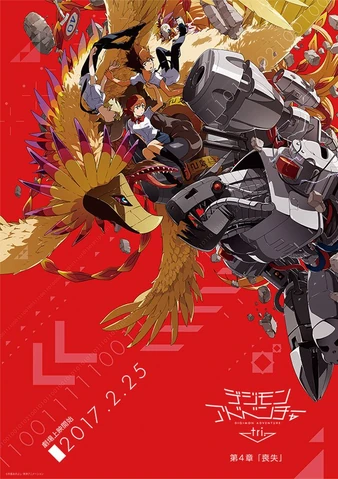
File:Loss (Promotional Poster).jpg

Well, I certainly didn't expect that beautiful, beautiful prologue piece that was absolutely super-meta, answering a lot about the origin story of the Adventure/02 continuity and the significance of which is probably lost to more casual viewers. I'll discuss it last, though, and talk about the rest of the episode first.

'Loss' is the fourth movie in this series, and I've made it clear that the slow start to the first three movies, while having its good points, does make the whole series when viewed as a whole feel like a very slow-paced story with the occasional climax. But the fact that it's a series of movies means that the proportion that's going to be relegated to simple buildup also increases. But 'Loss' comes with the advantage that the previous movie actually ends with a big enough cliffhanger to justify having a slower buildup, in that the partner Digimon have lost their memories, and the Chosen Children need to re-bond with them. Oh, an we're in a very familiar lakeside in File Island again, which is definitely tugging at the heart strings. It's a very nice series of cute moments and a very significant mixture of melancholy and happiness. Melancholy that the movie makes it clear just how much history that the Chosen Children and their partners have lose, but also happiness that they rekindled their bonds so quickly, all but Sora and Pyokomon (Yokomon? Pyocomon?), who quickly got off on the wrong foot.

But other than those pair, the rest of the Chosen Children bond very quickly with their partners, with only Joe and Bukamon not getting any real focus beyond a brief scene of them facing each other. But the rest? Making use of last movie's focus on them, we get to see that, yes, Mochimon is still very fascinated with Koushiro's curiousity about everything that's going on, and his Oolong tea obsession, which is a recurring theme last movie (did Tentomon love Oolong tea in the original series? I cannot remember) is shown as well as a nice bit. It's very nice that Koushiro, while not completely ignoring Mochimon and still exchanges dialogue with him, is also still very much intent in uncovering the secrets of the digital world, the same qualities that drew Mochimon to Koushiro in the first place.

Nyaromon finds a very comfortable scent in Hikari (thanks to the whistle that inexplicably appears there), and there's a nice bit of immaturity on Nyaromon's part when she asks to be thrown into the air like the other babies, which surprises Hikari -- Tailmon is such an adult thanks to her default state being the adult stage, but now she's as immature and childlike as the others and Hikari notes that allowing Tailmon to return to a childlike state is a blessing in disguise. Tokomon just goes 'kay, if you say so' when Takeru tells them that they're friends, Tanemon's very high-pitched, panicked shrill of 'don't eat me!!' is absolutely hilarious, Yamato doesn't really make a push to befriend Tsunomon but the end of this part shows them attached to each other anyway... it's all fun stuff, and we do kind of need the longer screentime to establish this.

Sora, meanwhile, starts off at the wrong foot with Pyokomon -- quite literally, as she steps on Pyokomon's petals. Sora is smothering with Pyokomon, insisting that they are friends and they should be friends, ironically repeating the same character arc that she herself went through in the late Etemon/early Vamdemon stages of Adventure, which is her own struggles with her own smothering mother who wants Sora to be more like her. And as teenagers are wont to do, they rebel when they are pushed. Adventure Sora's character arc is often criticized for reducing a strong, female character into one that ends up conforming to the stereotypical woman, but I see it differently. Sora's tomboy phase during early Adventure was her acting out because she's got problems with her mother, a combination of teenage rebellion and soul-searching, when really what's true to Sora is somewhere in-between the extreme tomboy image she tries to become in Adventure, ending up in 02 and Tri as, well, Action Team Mom, basically.

But Sora ends up making the same mistakes that her mother did, and pushes too hard for a friendship with Pyokomon, who quickly goes all edgy-teen and refuses to talk to her. It's the start of a conflict that runs throughout the movie, and while it doesn't end up getting resolved as well as I hoped it would, it's still a very interesting conflict that fits in with the 'Digimon loses memories' storyline.

The episode ends with the baby-level Digimon evolving into their child-level states after lunch, a nice nod to how in the earliest stages of Adventure evolving depends on how full they are. Oh, and I guess I have to talk about Taichi a little. He's regained his group leader status and confidence, rallying them to help search for Meicoomon because she's one of them now, but he's still not completely there yet, looking to Yamato for a reassuring nod. I guess it's also a sign that his new form of leadership considers the feelings of others more, or something?

Meanwhile, we don't get to see much of the other characters, other than the fact that Meiko ends up showing up at the meeting point too late to join in the other Chosen Children to save the world, which, considering Meicoomon's absolutely livid that her partner isn't around, is also going to be a conflict point for this movie. Mei also gets a brief flashback of crackling computers, a fire and a psychotic Meicrackmon, so she is actually hiding something, some dark past. We get a brief bit of Maki's answering machine, showing that she's disappeared, but not much from the woman herself in the present day.

Oh, and there's a hilarious bit when Takeru tries to communicate with the real world with his D-Terminal, which absolutely fails. Poor D-Terminals, they're kind of useless other than to store Armor Evolution Digi-Eggs, yeah?

And then we loop back to the stylistic prequel, something that was only implied in the dialogue of 02, and something that is later extrapolated from future unconnected series like Tamers and other supplementary material. See, 02 established that there are four Digimon Holy Beasts (or Sovereigns, which IMO is the cooler English translation) that ruled over the Digital World, battled the Dark Masters but were sealed... all prior to the start of Adventure. We only ever see Qinglongmon throughout 02 (though the four as a group would play a huge role in the alternate-universe Tamers), where he gives us all the backstory, and the Dark Masters in Adventure make no real references to the Holy Beasts. The thing is, while it's a cool backstory, everything about them feels so disconnected when we eventually learn about it in 02. The Dark Masters tie-in is cool but then they've already been defeated in Adventure, and Qinglongmon's only real contribution was as the mission control, basically, and other than worldbuilding it doesn't really change the goals of the 02 protagonists.

But tying in the Dark Masters/Holy Beasts backstory to Tri? And showing that there were other groups of Chosen Children who saved the Digital World in the past before Taichi's group? We've seen international Chosen Children in 02, but why not in the past? Apparently a different group of Chosen Children battled the Dark Masters during their first rise, and during the ensuing battle, when they were near death, four of the five partner Digimon evolved into the Holy Beasts -- Qinglongmon, Zhuqiaomon, Baihumon and Xuanwumon... but the fifth is destroyed and left for dead.

And the kicker? The two Chosen Children most prominently featured are actually Daigo and Maki, and Maki's Megadramon (great choice for a partner -- Megadramon is a personal favourite in Digimon World and the GBA games) was the one that was slain in the conflict. It's unclear who transformed the other four partners (Orochimon, Triceramon, Hippogriffmon and... -googles- LoaderLiomon, for those who are wondering), whether it's Homeostasis or Yggdrassil or something else. But the flashback is told in a well-animated, shaky-old-style-video style, voiceless and only instrumental manner, with dialogue only spoken like old-style movies as subtitles on a black screen, only for the distraught Maki to reflect that things grow stronger when they're chosen, but what happens to those that aren't, those that are discarded?

It's a very excellent backstory that really sells Maki's grief and motivations in ten short minutes, and as we've seen before in the past with other characters whose partners were slain -- Ken and Takeru in Adventures, but also far more devastatingly Juri in Tamers, who, like Maki, never got her partner back and fell into a dark spiral afterwards. Suddenly the revelation of Daigo and Maki as former Chosen Children puts a lot of their previous conversations and scenes in a greater light -- especially their talk about letting go of their childhood shows a tragic underlaying meaning because he's not talking about Taichi's group, but about Maki herself. 
________________________________________

Digimon Adventure Tri. Movie #4: Loss, Part 2


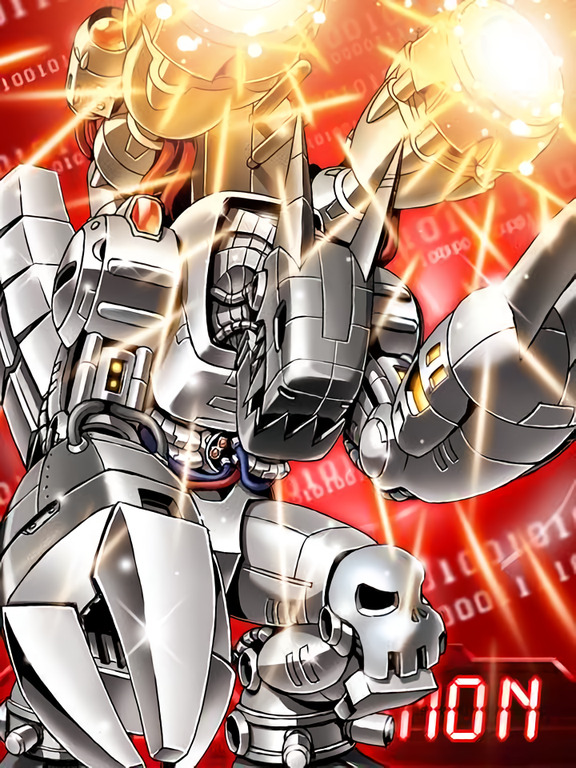
File:Mugendramon collectors card.jpgSo you know what happens when you walk into a movie blind without seeing the posters or trailers? Well, I don't know about you guys, but I literally lost my shit when Mugendramon shows up roaring like the god damned Godzilla randomly in-between a moment of character introspection. 

MUGENDRAMON, MOTHERFUCKERS!

I love Mugendramon. Giant cyborg frankenstein Terminator dinosaur-dragon of death that he is. He's the final boss in the old Digimon World PlayStation game, made up of various parts of other cyborg Digimon, and he looks absolutely badass. And him rendered in this wonderful, wonderful new animation? Worth the price of admission alone.

Of course, Mugendramon honestly has a pretty weak showing this time around. Sure, he rampages and is absolutely unstoppable, but he absolutely fails to kill -- or even hurt -- eight children and their eight child-level Digimon that are unable to evolve. Sure, he rampages and he launches the mother of all cannon blasts onto the kids, but that somehow... teleports them all around the Digital World instead of killing them. Because plot device. 

So, yeah, the fourth movie, despite the glorious inclusion of Mugendramon and the pretty spiffy prologue, doesn't quite do enough, and it's easily weaker than the first three despite the far more epic action scenes. And this part is an easy one to diss. It starts off strong if still slow -- Taichi and Koushiro continue to figure out what's going on with the distortions as they try to track Meicoomon, the group is stable enough and generally happy (other than Sora) but have their heads screwed on tightly enough to know their goal is to find Meicoomon... who, by the way, is missing Mei and in her grief goes berserk again. Everyone's bonding well with their partners other than Sora and Biyomon, who continue their tsundere game from the previous part. Sora gets a nice moment where she sits all emo, and Taichi and Yamato try to talk to her but realize that they have no clue how to solve social situations like this because it's Sora that usually resolves the team's conflict, and as Taichi points out whenever Sora has an emotional problem she tends to solve it alone, or with Biyomon's help. It's all pretty great stuff character-wise since Sora's the sole poster Chosen Child in this movie, but before we get any significant conclusion to their conversation, Sora's still sad and Taichi and Yamato are horrible at playing Sora, but all this is interrupted by MUGENDRAMON MOTHERFUCKERS

Mind you, as much as I joke about it, it's still a pretty great moment. Taichi says all the wrong things, Yamato is at the same time concerned yet pissed off that Sora isn't saying what's wrong, and Sora's full of tears, angry at her two closest friends for not caring for her while they're trying to. It's a pretty awesome, complex dynamic that, well, gets interrupted by the Mugendramon attack.

Which inexplicably splits up the group apart (with very few stuck with their Digimon partners) across various locales in the Digital World, and apparently Meiko shows up face-down in the hot scorching desert. Biyomon continues to be a bitch, stopping only when she realizes that she's been so horrible to Sora that she's reduced to nothing but a silent, teary wreck, before quickly being distracted with the near-dead Meiko in the desert.

Yes, it's probably Meicoomon's doing, intentional or not, that warped everyone, but it's not clear on so many levels -- is she sane when she's doing it? Did Meiko come by herself? Did Meicoomon draw Meiko in? Who's Mugendramon working for, and why is he silent? Only the last question is answered as the movie goes on, but the rest remain mostly unanswered.

In fact, the real-world plotline raises even more questions as Daigo hacks into the missing Maki's laptop. He finds out correspondence with Gennai, some mysterious references to Yggdrasil (dun dunnn DUNNNN!) before being confronted by Hackmon. But we get no answers, no introdump, not even a cryptic reference to the true nature of Gennai or Meicoomon. 

So yeah. This part is awesome simply by its inclusion of Mugendramon, but simultaneously is brought down by it just showing up out of nowhere and separating the team for no real reason other than 'plot plot plot'. The Sora/Biyomon storyline is semi-decent, and Sora interacting with Taichi and Yamato are great, but after Mugendramon tries to murder-kill everyone it's the last you'll see of the plotlines before they're almost magically resolved. So... yeah. Not the most well-paced movie, even if I'm gushing over Mugendramon all the time it's pretty uneven, not being satisfactory in the teen drama, giant monster battle or sci-fi mystery sections. 


Digimon Easter Egg Corner: (because it's honestly time for one of these)
  • Meicoomon shacks up in the train carriage in the Dragon's Eye Lake, which was the setting for the third episode in Adventure with Seadramon, and the train would be a recurring setting, as well as the final spot that the Chosen Children leaves the Digital World in at the end of Adventure.
  • Mugendramon (Machinedramon in the English dub) is one of the four Dark Masters, briefly seen in this movie's prologue. In Adventure, he was the second-last Dark Master to fall, slain by WarGreymon. The fact that Mugendramon doesn't say anything at all (while not chatty, he definitely speaks a fair bit in the anime series) seems to mean that something's up with the dude.
  • Mugendramon's blast sent our heroes to various locales visited primarily in the first season of Adventures:
    • Sora, Biyomon and Mei are in the desert with electrical poles (the Gear Savannah), a location that featured, appropriately enough, near a Pyokomon village where Biyomon and Sora bonded in the original Adventure series and unlocked Birdramon.
    • Joe's group are at the top of Infinity Mountain, where likewise his partner Gomamon evolved into Ikkakumon.
    • Mimi and Tentomon are teleported in front of TonosamaGekomon's (a.k.a. ShogunGekomon's) palace, where Mimi ended up in when the group split up in the post-Etemon arc.
    • Takeru ends up in the Village of Beginnings, where he and Patamon ended up in when the group was split up prior to battling Devimon, and we get a brief cameo by Elecmon, the custodian of the baby Digimon there. In Adventure, Takeru and Patamon fought and later befriended Elecmon during their stay there.
  • In another nice nod to maturing dynamics in Adventure, in the earlier parts of the anime Mimi used to tease Palmon about her weird plant monster look, but here she gushes over how beautiful she is. Aw, Mimi, you do care.
  • Yggdrasil was a concept introduced in later Digimon series (most prominently in Digimon Savers and the one-shot movie X-Evolution, but also various other manga and games), the master computer that reigns over the Digital World, and tends to play an antagonistic role when it decides that Digimon are a virus, or that humanity is a blight, et cetera. The Royal Knights (among them Alphamon, Jesmon and Omegamon, to name a few that's shown up here) are a group of powerful Ultra-level Digimon whose task is enforcing the will of Yggdrassil. 
__________________________________________________

Digimon Adventure Tri. Movie #4: Loss, Part 3


I'm not sure why the previous movie lasted for five episodes/parts, and the fourth movie reverted to the four-episode formula. I honestly think that the previous movie hit on all the emotional and action beats simply because of the length it's given, allowing it to fully realize the scope of what that particular part was trying to do, whereas the first two movies are simply, well, not that ambitious. This part is where the fourth movie falters, which is a shame. The fourth movie easily has the most memorable action scenes down pat, it's the movie that starts answering a lot of the questions raised in previous movies, it's the one that moves the plot forwards a lot... yet at the same time it feels disjointed because plot lines aren't give enough time to breathe.

And a huge reason, I think, was separating everyone up onto different locales, establishing where they ended up in the Digital World... and then doing absolutely nothing but a glorified montage before bringing them back together. All it really does is bring Meiko, Sora and Biyomon together for a scene, and the movie didn't really need to jump through so many hoops to get there. And the conflict kind of... resolves itself. I wouldn't say abruptly, because we did have some scenes of Biyomon slowly acting less of a bitch to Sora thanks to the two of them putting aside their little spat to help out Meiko, and later Sora risking herself to save Biyomon when Mugendramon attacks again, but on the other hand we didn't really get into Biyomon's mind enough to really understand her sudden change of heart. I guess the scene on the boat was supposed to be that, with Biyomon telling Sora she's a big soft idiot, and she likes that in her... but it doesn't feel anywhere as well-done as any of the previous partner-bonding moments in the previous movies.

We also get some discussion between Daigo and Hackmon, who introduces himself as a messenger for Homeostasis, who also tells us that Gennai, who was the previous caretaker of balance, have fallen into darkness, as well as telling us that Maki has been allied-slash-manipulated by Yggdrasil, and the two of them are trying to use 'Libra', a.k.a. Meicoomon. Then Hackmon disappears, and we don't see Daigo for the rest of the movie. It does answer some questions, mostly just who's allied with who. Hackmon and Homeostasis are one team, while Yggdrasil, Gennai and Maki are on the other team. The thing is, the movie doesn't really give an establishing moment as to who the fuck Homeostasis and Yggdrasil are, and even if you watched the previous one that only answers Homeostasis's identity. I'm not a big fan of unnecessary recaps, but the fact that these movies are separated by a half-year gap means that the movie really should've kind of made some of its introdump less cryptic. 

What's not ambiguous at all, though, was Maki's motivations behind it all. Between the flashbacks in the previous part, and Daigo's flashbacking to the prologue, as well as the brief scene of Maki wandering the Digital World later in this episode, it's clear that Maki forcing the Reboot and allying herself with Yggdrassil to accomplish that was a way to bring back her old partner, Megadramon. Or, well, its child-level form, Bakumon.

The rest of the Chosen Children/partner Digimon split up would, in theory, raise a lot of interesting character interaction potentials. I dunno, maybe Biyomon feels more comfortable as Meiko's partner? Maybe one of the other Digimon partners latch on to another Chosen Child? But all we get are the different humans telling the Digimon stuck with them how nice they were with their original partner. It doesn't last too long before we go into quick-montage territory, but it did feel slow and unnecessary, especially after the tension that was caused by Meicoomon and Mugendramon showing up in the previous part just evaporating. The moment with Team Yamato was especially grating as none of it really felt like it mattered. Did we nee to spend so much time repeating what Mimi and Tentomon just said, just with different partner Digimon? Did we need the train scene? The only real moment during the first fifteen minutes of this episode that really resonated was Hikari reflecting that Plotmon is happier this way, with all the memories of her abuse prior to meeting Hikari being erased.

And, yes, the Takeru/Elecmon scene kind of establishes that the other Digimon we saw from Adventure are all around (though the jury's still out for those that died in the human world, I think) and mostly the same, just, y'know, rebooted.

Of course, it's not all filler. The Sora/Biyomon/Meiko stuff was... serviceable, even if the eventual resolution leave something to be desired. Meicoomon finally confronts Meiko, and Meicoomon attacks Meiko with a wind blade, angry that her partner didn't come looking for her like the other eight. It's a nice, raw moment of reconciliation, where Meicoomon's angry at Mei for not coming after her, and Mei's angry for all the shit Meicoomon's put her through... but then accepts her partner, faults and all. Of course, 'Ken' and Mugendramon show up again to interrupt all this mushy stuff. Well, at least that felt resolved with Meiko and Meicoomon hugging each other. The fight causes another montage of portals opening, allowing the other Chosen Children to return which really brings the question of what the point of the last fifteen minutes was if all it seemed to do was to get Sora, Biyomon and Meiko separated.

'Ken' reveals himself to be Young Gennai, but he's not the nice mentor we're familiar with, as proved with his creepy manhandling of Meicoomon and that lick of Sora's face is absolutely sending NO vibes, which at least causes Gennai, who seems to going to be the main villain (if not the second-in-command to Yggdrasil) to have this absolutely creepy vibe. There's some revelations about how Yggdrasil was the one that caused the reboot instead of Homeostasis, I think? It's not entirely clear.

Biyomon attacks Gennai, Mugendramon bats her around, Sora hugs Biyomon as Mugendramon sends a big yellow beam of death... and then somehow Taichi and Yamato manage to... do something about the beam or some such? The action in this bit is unclear, really, because it looks like they deflected the beam instead of grabbing Sora and Biyomon away, which would make more sense. Also not quite making sense: Plotmon's Puppy Howling disabling Mugendramon. Plotmon is a child-level. Mugendramon is an Ultimate-level. I can get things like Biyomon surviving being whacked aside by Mugendramon, but Mugendramon is a Digimon that took on all eight of the partner Digimon in their Perfect forms and didn't even break a sweat... so either it's just a cheap way to get the kids out in a way that didn't quite make sense (why not like, have the Digimon throw a smokescreen by attacking the ground, or something?) or Mugendramon is really an inferior copy. Or something.

Gennai and Mugendramon chase after the kids and their Digimon, who are unable to evolve, trying to sow dissent by saying that the partners are enslaved... but it's a throwaway line that didn't really manage to reach them. Now if Gennai said all that to Biyomon before you attacked and went all creepy molester on Sora, maybe you'd be successful in selling your 'for the Digimon' spiel. And honestly, beyond the short picnic at the beginning of the movie, the interactions between the various partners didn't really felt earned, so to speak.

Ultimately, the final few minutes of this part just wraps up the Sora/Biyomon plotline as they acknowledge each other, and the team sets off to make a plan, splitting up and working like a well-oiled team. Meanwhile, Gennai brings in another Dark Master, MetalSeadramon, who proceeds to continue rampaging without causing any casualties. MetalSeadramon, like Mugendramon, is also mute in this movie, and he's definitely a lot chattier than Mugendramon in the original anime, so there's definitely something up with those two. Psycho-Gennai's doing enough talking for three villains, mind you, being easily a very entertaining villain as he puts the Chosen Children's previous choices to allow the Reboot to happen in doubt as they briefly entertain the idea that they fucked up in thinking that the Reboot really is the solution when it's Yggdrasil's will. For... for some reason.

It could've been a lot better in so many regards -- the Digimon/partner relationship, the Yggdrassil/Homeostasis revelations, to some extent Sora/Biyomon, the action scenes -- and the sheer amount of wasted potential is just a huge shame. Mind you, the movie's still enjoyable in spite of all its problems. Meiko/Meicoomon was amazing, some parts of the Sora/Biyomon story was still pretty great, Gennai as a villain is entertaining, the revelations about Maki and her role in all this was well-done, and the fanboy in me is just geeking out at Mugendramon and MetalSeadramon. But at the same time there's still the nagging feeling that this could all be so much better.


Digimon Easter Egg Corner:

  • Team Taichi, previously stuck in a nondescript jungle, reach the plateau with television screens, glimpsed briefly during the Yukidarumon episode in Adventure.  
  • The giant cruise ship is also a setting from Adventure, piloted by Cockatorimon during the Etemon arc. Despite being anchored near a lake in this movie, it was originally made for desert cruising. Because Digimon.
_____________________________________________________

Digimon Adventure Tri. Movie #4: Loss, Part 4


Man, that series of transformation sequence really killed the momentum of the final battle, didn't it? Jeez, I love Digimon transformation sequences as much as the next nostalgic kid, but at the same time I remembered how they did the Alphamon/Omegamon battle in the first movie, how Agumon and Gabumon just go through their adult, perfect and ultimate forms in quick succession before combining, showing us their various forms without breaking the momentum of the final battle. Even in the second and third movies, the bulk of stock footage-ing happens before or early of their respective final battles, instead of stopping every five minutes to show how Tentomon evolves into Kabuterimon, then AlturKabuterimon, then HerculesKabuterimon. And the thing is, the child-to-adult-to-perfect-to-ultimate transformation scene takes up way, way more time than the simple child-to-adult transformation, which is a lot less of a momentum killer. 

And we had three of those! Biyomon, Tentomon and Patamon all go into Ultimate forms with full transformation sequences. That was definitely not necessary. That said, though, the action scenes are spectacular as they tend to be in these movies. 

There are some things being wrapped up too, of course, as MetalSeadramon and Mugendramon falls to the combined might of five Ultimate-level Digimon -- considering they both individually fell to a lone WarGreymon in one-v-one battle in the past, having WarGreymon assisted by four others as powerful (and inarguably more powerful, in Seraphimon's case) just absolutely turns the tides.
Sora goes absolutely action hero as she jumps onto Mugendramon's claws to try and break Biyomon free from his grip, and while I could argue about Mugendramon's badass decay in his complete ineffectiveness of taking down Child-level Digimon, it's still a pretty badass scene. How's Sora's ribcage not shattered, though? It's the kind of 'partners bond and life-risking unlocks evolution' thing that the very first few episodes of Digimon had, but instead of simply allowing Biyomon to evolve into Birdramon, she goes all the way to her Ultimate form and becomes Hououmon. 

We also get a nice scene of Maki's reunion with Bakumon in a very beautiful, dreamlike field of flowers, and Bakumon acts just like Biyomon did. Maki's as pushy, if not more pushy, than Sora was in the beginning of the movie, and Bakumon just absolutely rejects this stranger. It's heartbreaking, really, and yes, Maki's not all right in the head, but you can't help but feel pity for her. She makes all the wrong decisions, and it's actually not hard to see how her story runs parallel to the spotlight Chosen Child in at least the second through fourth movies. The most obvious is this movie, of course, but in the third movie, she is also withholding crucial information from her partner Daigo, similar to how Takeru's doing the same thing about Patamon's infection. In the second movie it's less apparent, but she does have some discussion with Daigo about balancing life as a Digimon partner and real-life responsibilities, the same troubles that Joe is struggling with. We don't get to see much of her after that scene (and freaked-out Maki is terrifying) but I'm definitely far more invested in her character than I thought I would.

So, yeah, the Child Digimon put up a relatively good fight even if none of them managed to actually stun Mugendramon the way Plotmon did in the previous part, they did manage to fool Mugendramon with holograms, make use of the icy terrain to evade Mugendramon's cannons, and both Patamon and Joe go straight for a more manageable target than a giant walking dinosaur-shaped arsenal -- Gennai. Joe straight up goes all action hero and wrestles Gennai to the ground, prompting Gomamon to send an army of fish to whack Gennai in the face, and for Palmon to tie him down. It doesn't last long, but it's still a far more believable and entertaining effort than their previous ways of cheesing out of escaping Mugendramon. Joe's really proving himself awesome in this movie, isn't he? Between lunging at Gennai and catching a falling Sora later on during the Ultimate clash, dude's proving himself to be quite the action hero.

Gabumon manages to surprise MetalSeadramon a little with a blast of fire, but he's not as awesome as Plotmon and it really only causes MetalSeadramon to submerge for like twenty seconds before rampaging again. Taichi and Yamato throwing their partners to safety while they are pulled under, before talking to their partners through some trippy mind-space where they acknowledge their bond and boom, straight WarGreymon and MetalGarurumon... is a bit too quick, I think, and while Yamato and Gabumon have their brief "should I call you Yamato-kun or just Yamato" thing going on to show their bond, Taichi and Agumon don't... really? I guess it's just a matter of trust between the two pairs, and the moment that the bond is re-ignited it just re-unlocks something they've unlocked before? Nice to know that Taichi and Yamato don't have to get shot in the heart by angels again to unlock Ultimate forms. That shot of WarGreymon and MetalGarurumon bursting out of the lake is just bad ass, and it's a very brutal, quick yet absolutely awesome set of action sequences as the two original Ultimates take down MetalSeadramon. It's absolutely effortless and brutal... and honestly, considering WarGreymon solo'd MetalSeadramon in the original, having two of equal power means poor MetalSeadramon just stands no real chance.

It's cheesy, it kind of comes out of nowhere, sure, but I guess I'd rather have a quick 'hey, we trust you humans' moment than to drag it out through the entire runtime. On a less spectacular but still awesome vein, Hikari and Plotmon are the final pair to unlock evolution, though it's a more modest Child-to-Adult evolution so Tailmon can protect Hikari from a falling chunk of ice. 

Meanwhile, over on Team Sora, the Child-level Digimon managed to trick Mugendramon into burying himself under an iceberg, but if Tailmon can break an iceberg so can fucking Mugendramon. We go through the Sora/Biyomon moment, and we get Hououmon versus Mugendramon, and it's pretty awesome to see Hououmon and Mugendramon duke it out. But while all this is going on, Gennai runs over to Meiko, who's hidden in the ship while the more battle-hardened original eight fought the Dark Masters. And Gennai gets really up and personal with her. It's not quite as creepy as licking Sora in the face, but shit, man. In retrospect, while Biyomon's evolution did kick-start Tentomon and Patamon's confidence to them taking down Mugendramon... probably not the smartest idea to leave Meiko and Meicoomon on the ship alone, Sora. 

Tentomon and Patamon both go Ultimate as well, and it feels a lot less earned. It's definitely a lot more symbolic on Takeru's part, though, where he's confident enough to let Patamon fight the moment his partner wants to, learning from the previous movie to trust his partner as an equal and not just a weaker buddy to protect. And besides, Takeru and Patamon missed achieving Ultimate evolution in their spotlight movie, I guess they get to do so now. The three Ultimates literally spend a few seconds tearing Mugendramon apart, blowing him up with a combined attack... and really, if we didn't spend four times the length of the fight to see three stock evolution sequences it'd be a lot less of an anticlimax. 

A little part of me is kind of sad that Mugendramon and MetalSeadramon are turned into voiceless flunkies that die quickly -- though at least they die to multiple Ultimates -- but at the same time once I got past the stock transformation sequences and see the beautifully-rendered action scenes the fanboy part wants to forgive the showmakers.

Yes, MetalSeadramon and Mugendramon are defeated, but the movie still ends in the cliffhanger with our heroes at easily their worst point. Their victory is pyrrhic because Gennai chokes Meiko and apparently snaps her neck, causing Meicoomon to go absolutely insane, evolve into Meicrackmon and the movie ends with an angry Meicrackmon, Gennai laughing like a maniac and telling Meicrackmon to destroy the world, our heroes all gathered in the ice fields with five out of eight de-powered into baby forms, and Meiko unconscious, maybe dead. Meiko and Meicoomon aren't protected by the 02 epilogue, unlike the original eight, so their deaths, while still unlikely in my opinion, isn't something that's entirely out of the question either. It's a very 'WTF' way to end the movie with another six-month gap between this than the next, the one true cliffhanger without anything really good to come out of it.

So, yeah. This movie is very, very uneven, but it manages to introduce a brand-new villain, Gennai, that's easily one of the creepiest that the Digimon franchise's ever done. Whether he is truly an avatar reflecting Yggdrasil's wishes or just a particularly hammy underling, or if it's Piemon's mysterious black ball that corrupted him, his rant about how his main goal to do the Reboot is to unite all the Digimon in a front to wipe out humanity is a nice bit. Yes, the movie could've been a bit less oblique with the revelations about Homeostasis and Yggdrasil, and it did have a lot of padding in its second half, but it still accomplishes what it set out to do. Still, the fourth movie's easily the weakest of the main four, trading off consistency in storytelling for huge action pieces and flashbacks. 


Digimon Easter Egg Corner:
  • While this time it did include MetalGarurumon freezing him first, the way MetalSeadramon is killed in this movie -- destroyed by WarGreymon's Brave Tornado -- is also the same way that he died in Adventures
  • So this never came up before, but during evolution sequences, the names of the Digimon in various languages slide across the Digivices in different languages. In a nice touch and acknowledgement to the changes made by the English localization, the English words and names for Plotmon, Tailmon and HolyAngemon all use their dub names of Salamon, Gatomon and MagnaAngemon (the Japanese kanji are still their original Japanese names, naturally). However, rather inconsistently, AtlurKabuterimon is still rendered as AtlurKabuterimon in English, instead of his localized English name of MegaKabuterimon.

Tuesday, 21 March 2017

Iron Fist S01E03 Review: Past Faces

Iron Fist, Season 1, Episode 3: Rolling Thunder Cannon Punch


Can I just say how much I like the opening? The combination of the entrancing, dance-like kung fu moves and the Mao Bi-esque inkmarks that opening!Danny makes as his fists and feet swing through the sky? That's beautiful. And finally, I can say that the show at least finally attempts to do some pretty martial arts moves in a pretty cool (though basic -- I have watched way too many kung fu movies than is healthy) action sequence between Danny and Wing early in the episode, plus a brutal one between Wing and some jackass ring fighter. 

Oh, and there are some nice drops to Chinese culture with the Buddhist offerings, animal-style kung fu and references to hungry ghosts, which are pretty cool, I suppose. Doesn't make up for the fact that a Caucasian man is teaching a Chinese woman how to do Chinese martial arts, though, which I am trying very hard not to go on a full-on rant about, only justified by the explicitness that Wing is a practitioner of Japanese Bushido instead of kung fu.

But more importantly finally, the plot moves on, and Danny gets some semblance of interest beyond being a crazy super-sheltered dude. We get a proper goal for him beyond being an enigmatic kung fu hippie -- he wants to prove his identity. He gets to shack up in Wing's dojo, and later on in-between plot moments gets pissed at the disrespectful students and gives the a little lesson... though his self-righteous attitude pisses Wing off because, well, as much as she's a stern sensei with a code of honour she also acknowledges the real-life problem of bullies and the dojo is as much an escape and a hobby instead of a warrior-training regimen like what Danny's used to. Danny's characterization in this episode is a lot better compared to the previous two episodes, and him being uncomfortable on a hotel bed and instead opting to sleep on the floor is far, far more effective at portraying Danny's 'not used to the modern world' thing more than any stupid comment he makes in the previous two episodes. 

The Meachum family's pretty fucked up, yeah? Harold is a very abusive parent, a different kind of abusive than Patsy's mother in Jessica Jones. He refuses to tell Ward the reasons why he wants things done, why he wants to have Danny Rand on their side, why he wants the mysterious piers, yet he keeps talking about how he loves his child, how he wants to leave a legacy to his child, but in the same breath demeans him, physically abuses him with a kidney punch and thinks he's absolutely incapable, all the while stringing his kid along with words of 'I love you'. Harold is a dick in a different way to Joy, not telling his daughter that he's even alive, and no doubt stringing Ward to keep it a secret from her... and she hasn't known that since she was thirteen. Her pouring her heart out to Danny is a cheap 'oh man her life is so tragic especially because her family's fooling her' trick, but it's still pretty effective. 

Joy and Danny's conversation go straight to money, and Joy offers Danny what's basically reimbursement, a fair amount of money as long as he changes his name and doesn't continue being Danny Rand, something that Danny takes absolute offense to... though to be fair, Joy did keep the company afloat for more than a decade, while Danny knows jack shit about running a company. It's more about the way she did it more than the money itself, though, I think. 

Danny looks up Jeri Hogarth, Jessica Jones's old lawyer boss, and finally realizes how people think, and quickly rattles off an anecdote from their shared past. See, why couldn't you have done this in episode one in front of Joy and Ward? Jeez. Very convenient that Jeri's so indebted to the Rand family that she's willing to front Danny for new clothes and to represent him, but if the alternative is spending 60 minutes trying to recruit Jeri, I'll take this. 

Meanwhile, Harold is definitely under the employ of the Hand (or is that Madame Gao? She's certainly not part of the Hand, unless something changed since Daredevil's second season...) who is pissed off that Harold left his post stuck pretending to be dead in his penthouse, and forces him to kneel and hurt his hand on glass. Yeah, suffer, you abusive jackass! Meanwhile, his children go off on a little jaunt to earn the pier Harold needs by some blackmail to the seller, basically promising an organ donation that his dying son needs... but Joy is pissed that Ward isn't telling her the whole story, especially when Danny shows up, telling him that he's allied with Hogarth after Ward's men tried to burn down some hospital records... and Hogarth comes through by producing a fingerprint on some old sculpting arts'n'craft thing of his. Ward is flustered, but even more so when his father reveals how powerless even he is in all this.

There's a nice parallel to Cottonmouth and Mariah from Luke Cage as this, too, is a family-team formed of a brother and a sister. Ward is privy to all the dirty stuff, like being a huge jackass to Danny, sending men to kill Danny numerous times and generally acts as the bigger threat, but he balks at actually killing Danny himself, and is visually uncomfortable at his sister's cruel manipulations involving a child's donor organs. Joy, meanwhile, is the more supportive of Danny, with the M&M message and taking him at face value and not knowing about her father, but at the same time her methods are more cutthroat, making use of her friendliness and niceties to manipulate both Danny and the dude they're buying warehouses from. It's a far more interesting take on them, where both have their varying shades of gray, not just 'good sibling, bad sibling' as the first two episodes implied was the simple solution to the two of them.

Oh, and Wing goes to the illegal underground fighting arena that her student has been participating in, and it's a pretty awesome and brutal fight that mixes both dirty fighting and some cool kung fu moves. It's clear that Wing's a lot less experienced than her stern discipline would have her, because while she wins, her 'clean' way of fighting did leave her exposed to some biting and dirty shots. A bit hypocritical, because as we learn she's not there to make an example out of her student or something like that, but to get money to pay for the dojo.

Overall, a fair bit better than the previous two episodes. It's still nothing particularly special that'll stand up to the other Netflix superhero shows, but at least it's being an interesting, if not innovative, superhero show. 

Monday, 20 March 2017

Iron Fist S01E02 Review: Psych Ward

Iron Fist, Season 1, Episode 2: Shadow Hawk Takes Flight


Oh, definitely an improvement over the first episode, though it's not a super large bar to clear. The series is still bogged down by the show's strange need to focus on 'is Danny Rand really who he says he is, or is he hallucinating?' Which absolutely makes sense in-universe, and the note that so many people believe they have superpowers since the 'Incident' has increased, but we, the audience, know that, yes, Danny Rand is the Iron Fist. It's why we're watching the show in the first place. We're two hours down, and we're still playing a bit of a mystery story and spending an entire 60-minute episode on whether Danny Rand is just having vivid mental delusions or an actual mystical superhero just isn't the right way to go. Hell, Legion got through that phase halfway around its first episode, not at the end of its second. 

I understand the need of some scenes of this episode. Harold slowly learning about what Danny thinks is true, how he's threatened by the hand; the doctor and Joy both realizing that Danny's delusions are in fact true; Colleen Wing picking a side and refusing to take Ward's bribes; the activation of the Iron Fist near the end... but the sheer amount of surplus scenes are also a lot. Did we really need another repeat of the entire plane crash scene literally ten minutes after I closed the previous episode? This is Netflix, where the entire season is aired together, not a weekly show. Did we really need the long sequence with Colleen Wing being stalked by her students in a sparring exercise? Did we really need Simon trying to stab Danny in the neck and later act as tour guide, who, while well-acted, was absolutely superfluous to the story?

The slow burn on revealing that, oh no, the main character is actually who he says he is is absolutely ridiculous and unnecessary, and both these episodes could've easily been crammed into one. Not doing any favours is the scripting on Danny Rand that goes all the way beyond 'naive' and into 'idiot'. Yes, the doctor was ready to let you go, just shut up about the chi and the Immortal Iron Fist, destroyer of the Hand and all that stuff and just accept it.

There are some nice moments of Danny ascending to a strange spiritual plane in Chinese garb, the titular 'Shadow Hawk', and the mention that K'un Lun is another dimension that intersects Earth every 15 years or so, as well as the fact that Danny Rand can only activate the Iron Fist when he's not drugged... but none of it really justifies taking up such a huge chunk of screentime. And, yes, the plot moves forwards -- Joy and Wing are allied with Danny, or at least believes in him. Ward is chafing under his father's strange orders, and Harold himself seems to know what the Hand is, and when he returns a handprint and the words "where have you gone" are etched into his office window... from the outside. And he's on a skyscraper. 

The Hand, of course, is the mysterious ninja organization that debuted in Daredevil's second season, and it's apparently not destroyed. The tie-in into the Hand is unexpected but welcome, and I'm pretty sure the show'll keep the Hand mostly standalone with minimal references to the Black Sky plot from Daredevil season two, and Harold himself being seemingly in employ or in cahoots with the Hand is an interesting bit, especially when Ward's apparently been buying empty warehouses for no reason other than daddy dearest has been ordering him to, the same modus operandi that Nobu did during Daredevil's first season. 

But it's too little, too few and far between that really doesn't justify the episode running this long. Yes, I get that all other Netflix-Marvel shows do start off at a slow burn, but even at its slowest, Luke Cage, Daredevil and Jessica Jones all showed their titular superheroes be, well, superheroes or at least wrestling with whether to be one or not. They certainly don't spend an entire episode cooped up in a mental institution with a doctor second-guessing whether this is a crazy man (and to be fair to the doctor, Danny's not helping matters) or some weird miraculous incident. Honestly, the character I can relate to the most is Harold, watching Danny's psych sessions via a hidden camera, asking the television "ask him where he's been the past fifteen years! Ask him why he's back!" Also what was Joy's plan to get the M&M's back from Danny if Colleen didn't show up coincidentally?

So yeah, the pacing is absolutely snails-pace, and unnecessarily so. You could have had more information told to us, you could have had our hero have far more proper screentime when he's not just trying to defend himself that, yes, all the zen and K'un Lun gibberish is true. Hell, Colleen and Ward feel like more well-rounded characters at this point in time, even if they're just a generic supporting character and a clueless antagonist respectively. Poor Danny's either drugged up or insisting that he's telling the truth, which, other than telling us that Danny's unbelievably naive and/or an idiot, doesn't really tell us much about the titular character. He's erratic, and after two sixty-minute episodes, the second one being a nearly action-free episode, we come no closer to learning who Danny Rand truly is. Really, both these episodes could've been compressed into thirty, forty minutes without losing anything important.

Still, credit where credit's due, the ending with Iron Fist and his glowing Chi-empowered fist is a pretty cool ending, so the next episode's hopefully going to be detached this absolutely weak opening two episodes and have more mystic wars and mysterious hidden not-actually-dead fathers.

Iron Fist S01E01 Review: I Rant About Racism

Iron Fist, Season 1, Episode 1: Snow Gives Way


It's really, really hard for me to review this show in a bubble, and initially I decided against reviewing it at all, or simply making a review for all ten or so episodes. It's a show I'm going to watch, if only to get some context for when Defenders comes out... but it's not an easy show to get myself hyped to watch. Mostly because I loathe the idea of Iron Fist as a character. A white dude who comes into a predominantly Chinese culture and turns out to be suddenly better in everything that the Chinese people can do after minimal amount of training (yeah, 12 years, whatever -- the rest of the Chinese monks trained their entire lives, right?) feels very, very reminiscent of the Mighty Whitey/White Saviour trope. As an ethic Chinese myself, you can understand why I'm not very fond of the concept of Iron Fist. It really dances around being offensive, embodying a time with different values. I tend to avoid 'hot' topics like racism, feminism and all that jazz while doing reviews on this blog, but let's just talk a bit about Iron Fist. Not the show, not just yet, but the concept of the character himself.

And, yes, a very rich white man finding himself in the tutelage of an Asian mentor or an Asian environment after a near-death or soul-shattering experience is the premise of many other superheroes as well. On top of my head, Arrow (with the added bonus of Oliver returning after being thought dead for years), Batman Begins, Daredevil, Doctor Strange and arguably the Wolverine all feature white leads who learn from Chinese or Japanese mentors. But none of these four end up feeling anywhere as encompassing of being a 'white man adopting Chinese culture and being better at it than the rest' as Iron Fist does. Green Arrow's got a whole bunch of other teachers too and both him and Batman merely learned some skills instead of modelling themselves as China's-best-fighter. It's one thing to have Green Arrow learn kung fu and archery from the martial artist Yao Fei. It's another thing to suddenly, inexplicably be better than every single fighter in K'un Lun, inherit all their sacred skills and simply be better than all the ethnically Chinese fighters in the setting. I'm not asking for Batman, or Green Arrow, or Doctor Strange to be transformed into Asian people. Just Iron Fist, because the dude's a guy dressed in an stereotypical Chinese outfit with a fucking dragon tattoo doing Chinese martial arts and hails from a Chinese magical kung fu land thing. But he's not Chinese. And after its predecessors Daredevil dealt with disability, Jessica Jones dealt with women and victims of sexual/emotional abuse, and Luke Cage dealt with the African-American race, for Marvel and Netflix to jump a huge, huge step back and adopt the "white boy getting a dragon tattoo" storyline for Iron Fist wholesale just doesn't sit right with me.

But perhaps I need to give him a chance. I'm not the most well-versed in Marvel characters, after all, maybe I'm exaggerating a bit because I don't know my Marvel lore. Netflix has done wonders in making characters I don't know (Jessica Jones), I don't care (Luke Cage) or I find stupid (Daredevil) be awesome, so maybe they can do the same for Iron Fist? Unfortunately... they got a white guy to do it. Finn Jones is an actor whose performance in Game of Thrones as Ser Loras Tyrell was absolutely enjoyable, and it's no real fault of the actor, but keeping the character white instead of turning him Asian or half-Asian is very, very irritating especially since Chinese people are very, very unrepresented in superhero material. Agents of SHIELD gets massive support from me even in its worst because it's not afraid to cast a Chinese woman (Melinda May) and a half-Chinese woman (Quake) as main leads, and Jiaying as a Chinese main villain. Gotham is another rare example of a white character being race-lifted into Chinese with their take on Hugo Strange.

But compare it to other shows, and let's just limit it for superhero adaptations for simplicity's sake... the MCU changes Chinese characters villainous and heroic alike to white people. Two incarnations of Mandarin and the Ancient One (yes, s/he's supposed to be Tibetan, but still) are all played by white actors. Very good white actors, but still. Both the Nolan Batman movies and Arrow cast white actors as the Chinese-and-or-Arabic Ra's Al Ghul and Talia Al Ghul (Arrow's Nyssa is half-Chinese, which is fine by me). Wong, the only Asian character in Doctor Strange to have a line, was added last minute because of complaints over Ancient One's whitewashing. I tend to not care very much when a character's race is changed -- the movies and TV shows are made by Americans, after all, and yeah, it probably has to represent the largest ethnic group in America, and I generally don't complain much because, hey, if I wanted to watch a show with Chinese people, then I watch a Chinese-made show. And besides, the white actors they cast for roles like Mandarin, Ra's al Ghul and Ancient One are actually pretty great actors. But then again their character is not a dude in a Chinese suit using Chinese martial arts appropriating Chinese culture and getting a dragon tattoo. Coming off Luke Cage, which tackled racism pretty well, this is a huge leap backwards.

And the sheer amount of bad online press that Iron Fist has gotten in the week leading up to its debut hasn't made things any more conducive to making me want to watch the show. Again, I try to keep an open mind and try to be objective, but it's still pretty fucking annoying. So, for the purposes of the reviews of Iron Fist, let me just try and avoid all the racist overtones as best as I can, and just state it here, in the opening of my review for episode one:

I want Asian characters in the center of a story of their own culture. Herehere and here are articles about someone else who's far more verbose about this point of view than I am. I've gotten the rant out of my system, so I'll try to avoid mentioning this topic in my subsequent Iron Fist reviews. If I do them.

Whoo.

Okay, got that out of my system. No more racism rants, I promise, and I'll just talk about the episodes and review them as they stand. Let these episodes be judged over their writing and characters and plot.

Mind you, compared to the opening episodes of its Netflix brethren, Iron Fist... struggles to really find a tone. It doesn't really help that the first we see of our hero, Danny Rand, he's introduced as this crazy hobo who waltzes into a big company building claiming to be the long-dead son of the previous owner. We know it's true, of course, but the fact that the entire 45 to 50 minutes of the runtime mostly involves the uninteresting efforts of Danny trying to convince Ward and Joy Meachum, his childhood friends and now showrunners of the company, that, hey, it's really Danny Rand! Back from the dead!

Sure, there are references to zen philosphies, K'un Lun, and the pretty decent but not spectacular fight between Danny and the Rand Corporation's thugs, and when Danny's not being "hey I'm totally not crazy!" he's somewhat likable especially in his interactions with the hobo Big Al (who died at the end of the episode), but otherwise despite running for nearly 50 minutes the episode didn't do a good job in introducing to us who Danny Rand really is. In fact, all it does is to have Danny try to claim that he's totally this dude who died, and while we know he's telling the truth, he's doing all kinds of absolutely stupid things to try and get Ward and Joy to see that it's actually him -- and unless our her's supposed to be a little crazy, it doesn't paint a very flattering picture of our hero.

We've got the meeting with martial arts instructor Colleen Wing (who's ethnically Chinese but is teaching Japanese kendo) and gets turned away because she thinks he's a hobo, but she manages to see Danny pull off some kung fu moves. No doubt Wing's going to important later on. Oh, and the Meachum patriarch, Harold, is actually still alive and being a very jackass, controlling father to Ward.

Ultimately it's hard to really hate Ward. Yes, he was a dick to Danny as a kid, but between his condescending douche of a father and the fact that Danny's hounding him like a madman doesn't really help Danny's case. Ward is a bit extreme in telling his gunmen to murder Danny, yes, but at least his choices are steeped in logic. This is possibly a con artist from a different company that's trying to take over Rand corporation just when they're expanding into China. He makes no real secrets about breaking into his sister's house, and has already proven himself dangerous by beating up his guards, and taking his car on a joyride-slash-interrogation. No doubt Ward'll get more chances to be a villain in the future, but the episode's scripting doesn't really do Danny a lot of justice.

Also Harold (a.k.a. Faramir from Lord of the Rings) is totally the guy that crashed the plane, isn't he? Obadiah Stane vibes aside, the fact that he's faked his death and hiding in a creepy basement Bond-villain-esque lair really is ringing a lot more alarm bells than Ward's "send my hitmen to kill a crazy hobo" plan.

Again, we do know that Danny's telling the truth, but it's one thing to be unfamiliar with the outside world and be amazed at the pretty interactive monitor and be surprised that the company wants to kick him out or not knowing people died in the interim, but it's another thing to basically break into people's houses and cars and demand answers for no real reason. And honestly, he should've opened to Joy and Ward in the first place with personal information "okay, I know this sounds crazy, but I survived the plane crash, just got back to America. You know, we used to play monopoly and you didn't want to pay toll fees because you're a dick?" Things like that. But no, let's just insist you're Danny without really proving that.

The episode ends how you expect someone who does the things that Danny does would end. He gets drugged by Joy and Ward, and gets sent into an asylum. Whoops.

It's definitely not the strongest opening for our kung fu fighting superhero, and neither is it the most flattering, either. And the big appeal that I hoped would happen? The fighting scenes between Danny and the gunmen, while not bad by any stretch, was... disappointing. Yes, I get that Danny's probably holding back on his awesome kung fu skills, but for a superhero who's whole gimmick is that he does kung fu very well, there's very little art in this episode. Not to mention some rather... sub-par dialogue choices. Really hope this will change.

So yeah, not the strongest start, which might prove the bad reviews right after all. But we have twelve more episodes to go, and I'll at least attempt to not drop this series mid-way. Because, man, as much as I want to like this, I still can't really muster up any enthusiasm to watch this.

The Flash S03E16 Review: Return to the Speed Force

The Flash, Season 3, Episode 16: Into the Speed Force


Hey, another Speed Force episode! Barry enters the Speed Force for a bit of self-discovery... and it's honestly not as good as 'the Runaway Dinosaur' a season ago. The buildup in this episode was well done, but the end wasn't all that good.

With Wally's loss at the end of last episode, and Barry being forced to return to the Speed Force once more, it's a pretty tense episode. Wally's lost, Barry is almost lost halfway through when he breaks Cisco's interdimensional anchor, and Jesse Quick, filled with rage, knocks H.R. out and runs off half-cocked to fight Savitar on her own.

Let's cover the meat of the episode, though, which is Barry facing against the Speed Force again. This jackass godlike mystical force is pissed off at Barry for abusing his speed and creating Flashpoint, and this time he manifests with the faces of every fallen ally in Barry Allen's life. Eddie Thawne, Ronnie Raymond, Lenoard Snart.... Yes, it wasn't technically these three characters, and it's all just the Speed Force being a prick to elicit emotions from Barry, but the impact is still felt. Snart tells Barry that he was responsible for inspiring him to be a hero. Ronnie and Eddie both confront Barry that the two of them also sacrificed themselves, losing the happy lives they could've had with Caitlin and Iris respectively.

The main point of the Speed Force is that, well, Barry needs to realize that Flashpoint was his fault, his fuck-up. Savitar, ergo, was also his fuck-up. It was irresponsible for him to ask Wally to fix his problem by being the one 'fast enough' to stop Savitar, because as much as Wally is a hero, Barry's mistake is his own to fix. Mind you, Barry's willing to immediately take Wally's place in the very cruel prison that the Speed Force put him in -- reliving the death of his mother over and over again -- but the Speed Force runs on a bit of a different set of moralities because it's a weird disembodied cosmic force.

Barry's brief struggles against the Time Wraith and the unexpected showing up of Black Flash was pretty cool, even if it's more symbolic of the Speed Force's punishing him than anything, but Jay Garrick showing up is amazingly awesome. Jay is a character that I really wish we see more of, but he shows up, helps Barry defeat illusory Captain Cold, and takes Wally's place in the Speed Force prison. 

But as much as the Speed Force asks a lot of cryptic questions and forces Barry to do a fair amount of soul-searching, the episode ends with... nothing much, really. Jay's trapped in the Speed Force, but neither Wally nor Barry really felt like they're very changed by the ordeal, other than Barry being more confident that he has to take the fight to Savitar himself. 

Jesse, meanwhile, goes off to take on Savitar, but doesn't really accomplish much beyond showing that Savitar can be hurt (mostly by stabbing him with his own Megatron-esque exoskeleton), and them going 'yes, he's not a god, he's human under it all!' which isn't the biggest revelation ever. Maybe if we get some more information from the Speed Force about the function of the Speed Force prison or whatever, it would shed some light, but as it is I just feel more confused and underwhelmed than anything. I guess the Speed Force is satisfied that Barry's finally standing up for himself when he punched the Snart avatar in the face? But on the other hand, why the obsession with Barry, Speed Force? Why not pick Wally, Jay or Jesse as your champion?

It just all seems to be a big convoluted way to get Barry as the only speedster, because Jesse's gone off to Earth-3 to be the Flash there (what about Earth-2? Does no one care about Earth-2? Without Jesse and Jay, who's stopping crime there? Fucking Solovar?), Jay's trapped and Wally's out of the game for the moment. Oh, and what's the point of Barry pushing Iris away? There is absolutely no real reason for that other than Barry punishing himself for some arbitrary reason to be miserable. 

So yeah, an episode that really started off strong but ends up dropping the ball around halfway through. The roles by the show's recurring guest stars are definitely amazing, though, and the rather subtle undertone that the Speed Force might've allowed Zoom to kill Henry as a test to Barry (he failed) is a bit of a nice dark undertone to it all, but ultimately the Speed Force's mysterious ruminations and conversations all end up being a great buildup with no real conclusion.


DC Easter Eggs Corner:

  • Black Flash (a.k.a. Zoom) made his debut a couple of weeks back in Legends of Tomorrow. Eddie Thawne died at the climax of season one of Flash, Ronnie Raymon in the premiere for season two, while Captain Cold at the climax of season one of Legends of Tomorrow.
  • SpeedForce!Snart tells Jay Garrick that he's gotten slow in his golden age, a reference to how Jay Garrick originated in the Golden Age of comic books, and is often known as the 'Golden Age Flash'. 
  • The prison that Wally's trapped in is a reference to a similar 'relive your worst memories' prison that Hunter Zolomon was trapped in for a while in the comics.