
Well, I tried not to add more posts for Mordenkainen's Tome of Foes, but I guess I ended up speaking quite a bit on some of the entries here. I do think that my original coverage of the monsters in these segments of the books were absolutely unfair, with a lot of comparisons to the Monster Manual without really appreciating what the monsters are doing that are unique. Not every new addition needs to add something revolutionary like the Marut or Oblex!
Again, taking more time and words to talk about each and every entry did give me a fair amount of chance to appreciate these monsters a bit more than I had back in 2020 when I initially reviewed these monsters. I think I have made some initial judgements on my favourites and just tried to blaze through the rest of the entries. And it's not that I like each and every single monster from Dungeons & Dragons, but I feel like I really should try and give the flavour and concepts a chance, and make a good argument as to why I don't like the monster, or at least 5E's interpretation of the monster.
Anyway, this should be the second-to-last entry for Mordenkainen's Tome of Foes, so enjoy this eclectic batch of monsters!
- Click here for the first part
- Click here for the next part
- Click here for the index.
[Originally published in May - June 2020; revised in May 2026]
____________________________________________________
Kruthik
- 5.5E/5E: Small Monstrosity; Unaligned; CR 1/8 (Young Kruthik)
- 5.5E/5E: Medium Monstrosity; Unaligned; CR 2 (Kruthik)
- 5.5E/5E: Large Monstrosity; Unaligned; CR 5 (Kruthik Hive Lord)
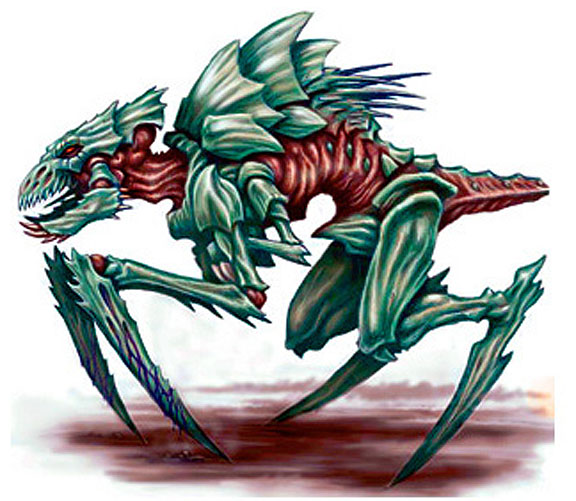
The Kruthik debuted at the tail-end of 3.5E, but was featured in the first Monster Manual for 4th Edition. The Kruthik are the ravenous lizard-insect trope that is popularized by beings such as Alien's Xenomorph, Starcraft's Zerg and Warhammer 40K's Tyranids. 3E previously had the Kythons, a similar type of monster, which was phased out of 3E due to perhaps being too derivative of the Aliens? Having the same name as the Kyton Chain Devils probably didn't help the Kythons either.
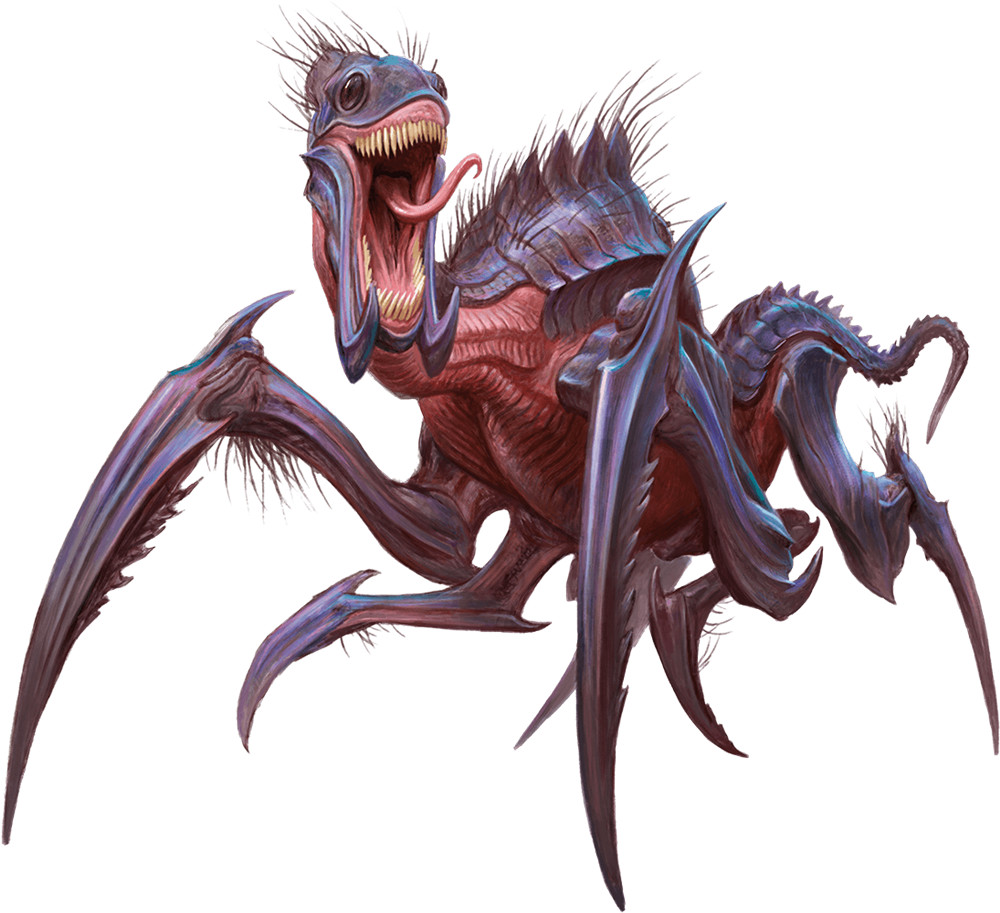
Anyway, the Kruthik! Their 5E incarnation is a pretty cool design, feeling actually a lot more reptilian than their previous counterparts. Their main body visibly has a serpentine or lizard-like texture, but is armoured and appear to have segments almost similar to an insect. Its head has massive fangs, a tongue and reptilian eyes, but mandible-like parts to its lower jaw. And finally, the Kruthik has six very insectoid legs, exaggerated to look like blades. The front pair are particularly pronounced, and the rear two are smaller. 3E and 4E's incarnation had the middle pair of limbs be manipulator arms, and I wished that the 5E version had kept that.
Kruthiks in 5E are noted to be 'chitin-covered reptiles', which makes them a bit less buggy and separates them a bit from other insect monsters like Ankhegs, I suppose. They create massive sprawling subterranean warrens, lairing around sources of heat such as pools of lava... or dwarven forges. Of course, Kruthik prefer live prey, impaling and grinding their foes into food. Their lairs are massive, winding, and sound perfect to be a dungeon crawl.

Kruthiks are essentially beasts, but they are smart enough to coordinate and communicate with each other through a series of chittering noises and hisses, which is a nice environmental build-up to a Kruhtik encounter as the adventurers travel through the Kruthik hive. This also means that attempts to breach the hive will usually attract attention from the entire hive. Even if you kill the scouts and sentries, their tapping noises would be detected by the rest of the colony through the tremorsense that every single individual in the hive shares.
Interestingly, Tome of Foes's lore also notes that Kruthiks have an almost ant-like quality where they can smell an area where many Kruthiks have died, and Kruthiks will avoid and even migrate out of a location where enough of their kin has died. This might be a way to solve your Kruthik-slaying quest... but the hive might just be a problem for whoever is next down the road. It is also noted that even if you kill the Hive Lord of a hive, the surviving Kruthiks will migrate, and whichever is the largest among the Kruthiks will simply metamorphose into a larger body and become the new Hive Lord.
Tome of Foes gives us three stat blocks for the Kruthik. The 'Young', the 'Adult' (which can lob detachable spikes at enemies), and the 'Hive Lord' (which is larger and can spray acid). Tome of Foes also notes that Kruthik abide the presence of non-living creatures in their hive, like oozes, undead, constructs and elementals. I also really like the descriptions of Kruthiks barricading up tunnels, digging up new ones, and making fake tunnels for ambushes or to mislead invaders from their eggs. A pretty simple concept for a giant bug monster species, if we're being truthful, but I do like the simplicity a fair bit. I would still at one point like a more elaborate set of insectoid monsters, but the Kruthik are pretty cool on their own merits!
____________________________________________________
Marut
- 5.5E/5E: Large Construct (Inevitable); Lawful Neutral; CR 25
My boy, the Marut! This thing is one of the favourite things that is original from D&D. The Marut debuted with little fanfare as a golem servitor of gods in 1E. But 3E reinvented the Marut a type of 'Inevitables', which are a group of lawful interdimensional constructs whose purpose is to enforce inevitable laws of cosmic order. This included the Maruts (enforcers of mortality who really don't like the undead), the Kolyarut (enforcers of contracts) and the Zelekhut (enforcers of law). 4th Edition rolled everything together into a single 'Marut' faction, a group of cosmic enforcers created by gods who realized their gods were breaking the same contracts they expect them to enforce, and fought against the gods.
5th Edition combined the 3E and 4E roles into one, making the Maruts a lot more grandiose and cosmic like the 4E, but keeping their allegiance to a higher power (and as a part of the Inevitables) from 3E. It's easily one of my favourite combinations of lore, and the end result makes the Marut easily one of the most interesting things in Mordenkainen's Tome of Foes.
In 5th Edition, the Inevitables are now folded as creations of the lawful, mechanical Modron Primus. Due to their reputation and certainty as beings of law and order, they perform the robotic, mechanical arbitration of law -- heedless of morality, bias or compassion. The Marut combine all three functions of its 3E brethren into a single, impressive CR 25 unit. A cosmic police force that will abduct dealbreakers and take them to be judged by a divine court -- the Hall of Concordance in the multiversal hub of Sigil. They are cosmic lawyers and law enforcement rolled into a singular robotic being. Even if you didn't want to use the whole Primus or Kolyarut plotline, having the Maruts be logical, silent enforces of a god of law, or even the universe itself, is really cool.


Any deal made in the presence of the Inevitables is carved by The Kolyarut (who would receive a 5E statblock in Planescape) into a golden disc that is placed within the Marut's chest. Until the contract is fulfilled, the Marut will enforce the terms of the law. It won't result to lethal force unless it is required or a contract is broken... but they will enforce the letter of the contract. Law is absolute for them, and I love this great, more sinister take on the 'True Lawful, or I suppose 'Lawful Neutral' alignment. The Marut doesn't care for nuances, or changing situations, or compassion, or free will -- all of that should have been discussed within the eyes of the Kolyarut. Justice is blind, and the Maruts will not compromise, will not stop, until the contract is done.
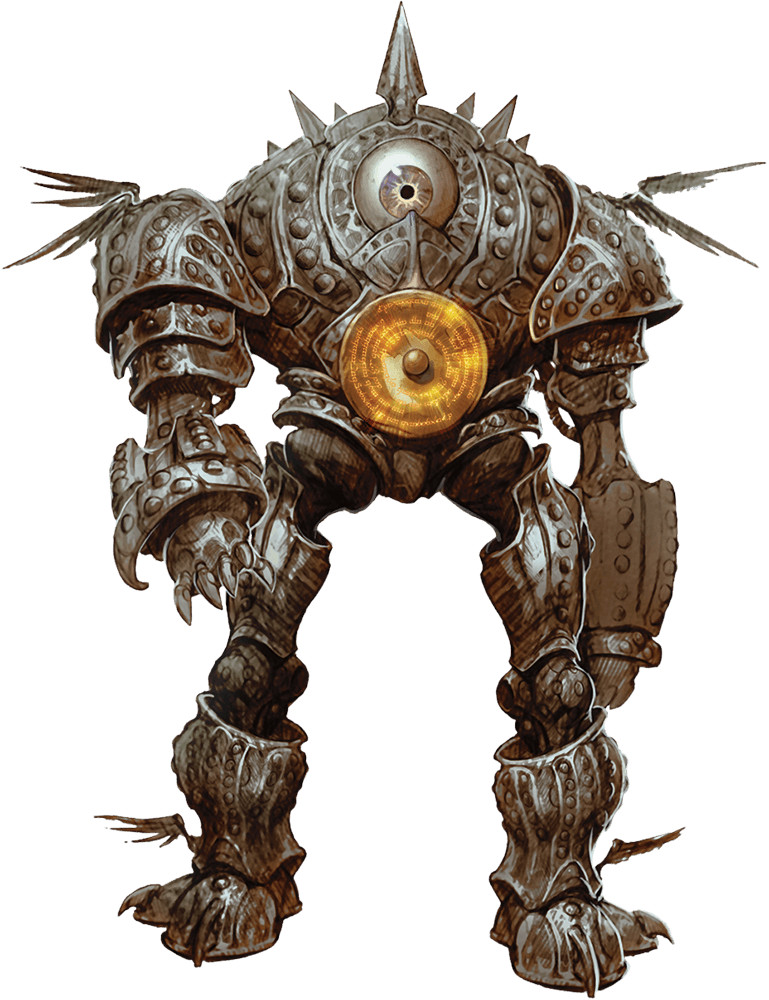
I haven't talked about the Maruts' design either. In 3E and 4E, they had a relatively consistent design as a golem-like suit of armour with a vaguely Greco-Roman aesthetic... in stark contrast to the other Inevitables that debuted with it, which were very much in the 'clockpunk humanoid' aesthetic. 5th Edition reinvents everything, though, giving us a more unique and distinct look. Normally I would decry this, but I found the original Marut designs to be so underwhelming that I find the 5E version so much more impressive. A humanoid, metal robot with wide shoulders, a golden disc in its chest, and a single ominous eyeball at the center of the torso? Tiny little Modron wings complete the look, which look more sinister than comical.
And in combat, the Marut is a simple, difficult-to-stop juggernaut. It cannot be transformed, it unleashes mighty 'blazing edicts' to stun those around it, and it can at any time grapple its prey to plane-shift away to the cosmic court of Sigil, which would probably be game over if they did break the law... there's probably a lot of these Maruts in Sigil. Or it could use its 'Justify' attack to point and just choose to teleport a target, with them only dodging this if they can succeed a save throw.
I find the idea of these cosmic enforcers so satisfying. Whether the Maruts are a greater threat due to a misunderstanding, or just a plot device to keep the plot going, there are so many stories to work around these unstoppable, unfeeling enforcers of a contract that cannot be negotiated with... reading between the lines, the only time that a Marut would even stop to negotiate is if someone can point out how they are not breaking the law, or if the other party is breaking it. I also like that the little plot suggestion of Yugoloths being more ready to enter contracts when Inevitables are present, which could be a double-edged sword for those fiends! It really is a nicely interesting antagonist that represents cold, unfeeling law.
____________________________________________________

Meazel
- 5.5E/5E: Medium Humanoid (5E)/Monstrosity (5.5E); Lawful Evil (5E)/Neutral Evil (5.5E); CR 1
I'm not going to lie, going and re-reading my articles for Mordenkainen's Tome of Foes, there are some monsters that made me go 'oh right, this guy, I forgot about him'. But I completely and utterly forgot about the Meazels entirely. Debuting in the original 1st-Edition Fiend Folio, the Meazels are yet another 'sub-humanoid underground race that attack regular people'. They are also distinguished by their very comic-book spiky hair, which they have rather impressively consistently kept across most editions of D&D.
5th Edition gave them the backstory of being malicious hermits to fled to Shadowfell to escape their mortal existence. That part sounds okay, seemingly either a veiled reference to suicide or to achieve a form of immortality like undeath. The latter part of their motivation to move to the Shadowfell, however, is to 'contemplate their misery'. Okay, so they are just emo. They are of course transformed by the Shadowfell's energies into twisted, cruel Meazels driven by hatred, and they want to kill any intruders.
Monsters of the Multiverse changes the Meazel's properties from a lawful evil humanoid into a neutral evil monstrosity -- with 5.5E removing the humanoid tag from a lot of anything with innate abilities. Not sure if I agree with that, personally.

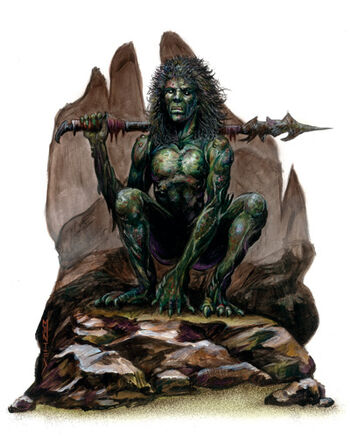

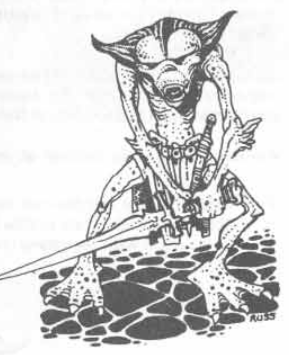
Meazels are empowered with the ability to move through shadows, both teleporting through shadows and being far stealthier as they melt into them. As the artwork shows, their preferred method of killing is by garroting them with rope, even getting a special action to do so in the statblock. Meazels can also teleport other people through the shadows... and this causes undead, Sorrowsworn, and other beings of the Shadowfell to instantly be aware of the poor 'marked' soul.
It's neat, I suppose, as a mechanic -- a lesser gremlin that lives in the Shadowfell that isn't really powerful enough to be anything more than a nuisance to most healthy parties, but one that can attract bigger, stronger things. It's a cool mechanic, I just wished the Meazels either looked a bit more unique than just Gollum with anime hair; or even had more to do with the emotions they are feeling or something about their motivations and culture.
____________________________________________________
Nagpa
- 5.5E/5E: Medium Humanoid (5E)/Monstrosity (5.5E); Neutral Evil; CR 17
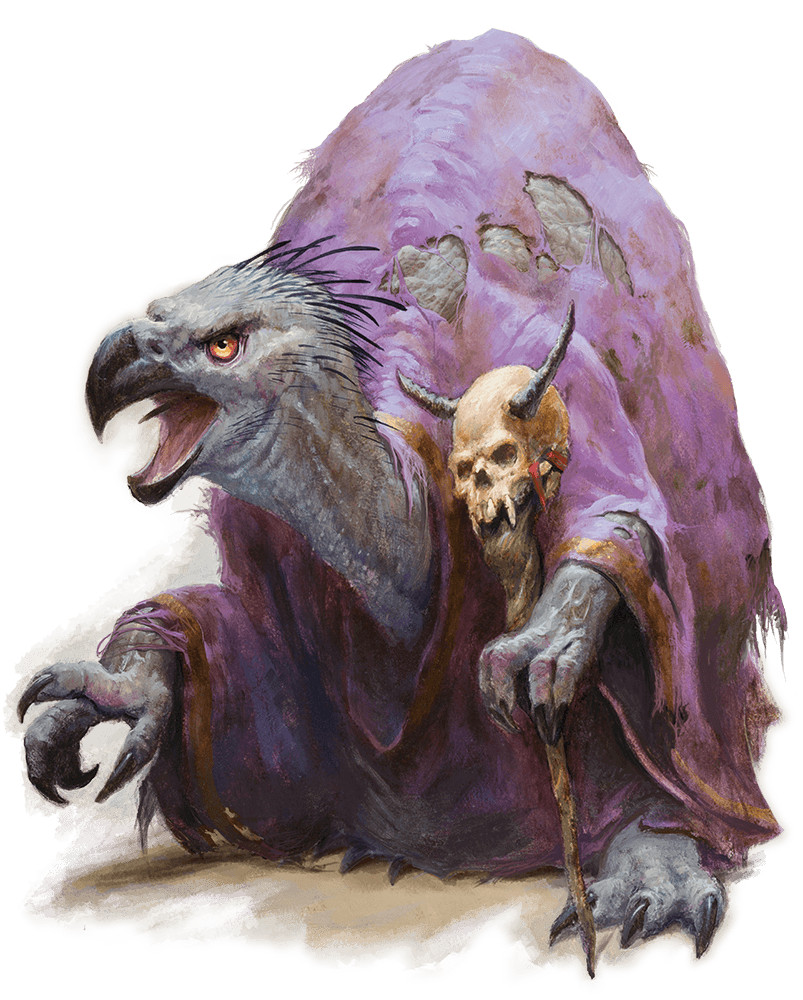
Apparently a shout-out to villains from the Dark Crystal franchise, the Nagpa has appeared sporadically throughout the different editions, with very differing origins depending on the edition. I've not really managed to read through all the different Nagpa incarnations over the years, but 5th Edition has its own spin on the creature.
In 5E lore, the goddess of death, the Raven Queen, cursed a cabal of powerful wizards for meddling in a ritual that ended up causing a war between the gods. These wizards are transformed into the Nagpa -- vulture-headed monstrosities. The curse extends to a rather specific race-wide inability to do something, though -- they are unable to retain or acquire new lore and magical power, unless they scavenge it from the ruins of fallen civilizations.
Being a group of wizards who dared to challenge the gods, the original cabal of thirteen Nagpa -- and any subsequent Nagpa created -- find this punishment intolerable. After all, they want their knowledge! They want their power and magical lore. But what can they do, if they can only steal them from fallen civilizations? Well, they make plots to bring destruction and calamity to these civilizations. That's such a twisted way to get around their curse, I love it.


The Nagpas themselves are quite formidable CR 17 spellcasters, with a mixture of destructive and utility spells, some of which include methods do dominate minions or enemies mentally, but they wouldn't want to show their face in the battlefield, not unless it's absolutely necessary. The original cabal of 13 Nagpas are alive, but it's also implied that other Nagpa are out there. Whether descendants of the original 13, or if you adopt other backstories from earlier editions of the Nagpas being loner wizards cursed by gods, the backstory doesn't specify that only the original Cabal exists.
Nagpas are manipulators, schemers that use their spellcasting or minions to influence political events and start war, or to prevent a city from evacuating in the face of an imminent natural disaster (which the Nagpas may cause). They are patient, cunning, and execute multiple schemes together. And once they deliver their final blow to a civilization, they emerge to claim their prize, plundering vaults, libraries and spellbooks. The only thing that can cause a Nagpa to panic and lose their Machiavellian composure is the Raven Queen's agents, which will reduce a Nagpa into a panicked, cringing wretch.
That's quite a specific backstory, but one I really have grown to appreciate over the years. Admittedly, I was a bit turned off by the visual design, going 'oh, another bird-man, but a vulture this time', and even the bit about creative sterility felt similar to the Kenku. But the Nagpa's twist on causing calamity to get around their curse is a neat one.
____________________________________________________

Nightwalker
- 5.5E/5E: Huge Undead; Chaotic Evil; CR 20
Debuting in 2E, the Nightwalker is actually a type of a creature called a 'Nightshade', which are undead creatures made up of solidified shadow. The Nightwalker is the humanoid version, with other variations (like the Nightcrawler, Nighthaunt, Nightwing) being based on beasts. Depending on the edition, they either come from the Negative Plane, the Plane of Shadow or the Shadowfell. They are somehow all different! 5th Edition mixes several of the origin stories together, noting that the Nightwalkers arrive when one 'reaches the Negative Plane from the Shadowfell'. That's a bit needlessly complicated, but okay.
Spellcasters that attempt to tap into the power of the Negative Plane and fail to control the power usually just die; their souls sucked into the plane of death. Those that are not destroyed are instead pulled within the Negative Plane itself and are replaced by Nightwalkers -- towering, giant humanoids made up of shadow. 5th Edition Nightwalkers have demonic horns, and a particularly cool mouth that bisects the face more than a regular mouth should.
I don't really like super-specific origin stories, although I suppose 5E does present their Nightcrawlers as rather powerful, CR 20 bosses. This does have an interesting 'replaced by your reflection' fairy tale vibe, except instead of your reflection, your replacement from the magical plane is a giant shadow monster with an aura of death. The trapped creature can't leave unless the Nightwalker is lured back to the Negative Plane, and they would be trapped forever unless the Nightwalker is devoured. The Nightwalker itself is attracted to elements of the Material Plane that is associated with the creature responsible for its creation... to destroy.

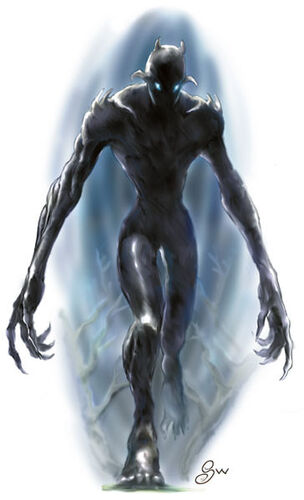
It's... it's a bit odd on how exactly you're meant to do this, since the Nightwalker is also noted by the Tome of Foes to be attracted to the elements of the world associated with the creature that released it, and they 'exist to make life extinct'... so I don't really think luring it to the Negative Plane would be that easy. That sounds like the setup for a proper boss fight that needs a fair amount of planning, which I suppose is all right?
In addition to being massive shadow giant, Nightwalkers are able to unleash the 'Finger of Doom' attack that paralyzes and frightens their prey; has a passive annihilation aura that constantly damages those around it, and those killed by the Nightwalker cannot be resurrected without a Wish spell.
My original reaction to the Nightwalker was a bit more negative because i was more familiar with the 3.5E lore and was confused that a 'weaker' creature was given such a grandiose setup. But just like how the Marut debuted ahead of its Inevitable brethren, the idea to debut the Nightwalker alone and as a 'boss' monster for the Negative Plane/Shadowfell is a fun one! It's at least memorable due to the 'trapping someone in the Negative Plane' deal, and helps to give the Shadowfell a 'boss' monster of sorts.
____________________________________________________

Oblex

Shadar-Kai
____________________________________________________
Skulk


Oblex
- 5.5E/5E: Tiny Ooze; Lawful Evil; CR 1/4 (Spawn)
- 5.5E/5E: Medium Ooze; Lawful Evil; CR 5 (Adult)
- 5.5E/5E: Huge Ooze; Lawful Evil; CR 10 (Elder)
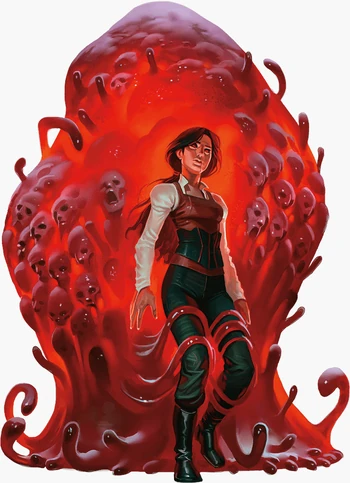
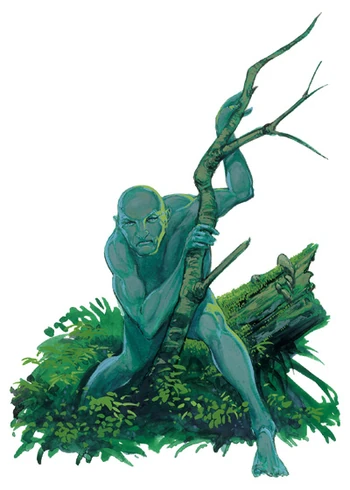
The Oblex gained a fair bit of prominence for being marketed during Mordenkainen's Tome of Foes' release for being one of the most terrifying monsters in the game, and is original to 5th Edition. I must say that they did do quite a good job at crafting this creature! The Oblex is a slime, but not just any other slime. Tome of Foes identifies them as being the results of Mind Flayer experimentation on the slimes of the Underdark, creating a sentient, cunning psychic slime. The prose (and name) also implies some interference from the slime demon god Juiblex.
Oblexes feed on thoughts and memories -- having the same predilection towards intelligence and sharper minds that their Illithid creators have. Oblexes wrap around their prey and consume their mind instead of the flesh, leaving their victim befuddled... or dead. Most importantly, however, when an Oblex feeds on thoughts, they gain the ability to form weird copies of their prey to use as lures, allowing them to harvest even more victims. That's the lynchpin of this creature. We've got so many Mind Flayer creations that are of some variety of stealing minds, but the Oblex steals minds and identities.
The youngest Oblexes, the Oblex Spawn, is more or less just a regular ooze with a predilection for brains, but the Adult Oblex is where things get interesting. They devour memories and thoughts, twisting whatever they gain with its own 'foul nature'. These memories act as food that expands the Oblex's size, and once they become large enough, they 'shed' some of the personalities they have absorbed, or else they will become erratic. That's an interesting take on the twisted hivemind trope!
Adult Oblexes can do a 'sulfurous impersonation', extending a pseudopod that morphs into one of the creatures it has stolen. The only things that this copy is strange about is that it smells faintly of sulfur, and also connected to the original slime body with a slime tether... which would require the Oblex to hide it! Perhaps the copy is standing behind a counter, while the main slime body hides inside the counter. Perhaps the Oblex is puppeteering these humanoid copies as couriers, hiding within the package they are carrying. The Oblex is as intelligent as whatever humanoid it has consumed, so it's able to impersonate appearances perfectly.
The Elder Oblex, shown as a glorious amorphous blob of goo with screaming faces of every mind and face it's stolen, while picking one of them to manifest, is able to impersonate more than a dozen individuals, meaning that an entire tavern or farmhouse might all just be extensions of the Elder Oblex. That is so cool, isn't it? Several Elder and Adult Oblexes might even be able to impersonate a whole creepy town! Really love that the 'true' form of the Elder and Adult Oblexes are not just slimes, but slimes formed of roiling, creepy faces.
These slimes, by the way, are also spellcasters. Common to both Adult and Elder Oblex are the spells Detect Thoughts, Hold Person and Charm Person, a combination of spells to disable enemies or to understand their vulnerabilities. The Elder version has a bunch more powerful debilitating spells (Hypnotic Pattern, Confusion, Fear, Dominate Person), offensive ones (Telekinesis), and even Dimension Door to escape. I really find these to be a bit odd when I first read it, but then I realize that the creepy buildup to discovering an Oblex needs to lead to an interesting combat encounter, and giving the monster puppeteer slime creepy spells is a great way to do it. Some interpretations (which is not canon to 5E) is that the Oblex learns and steals the spells of whatever intelligent wizard that they have consumed, so feel free to give your Oblex a different set of spells!
I wouldn't say that this is 'the scariest thing in D&D', as even the idea of a hivemind masquerading as regular people most certainly has appeared in previous editions before... but the presentation of the creature both visually and narratively, and the theme of what's essentially an anglerfish for humanoids, is done well!
____________________________________________________
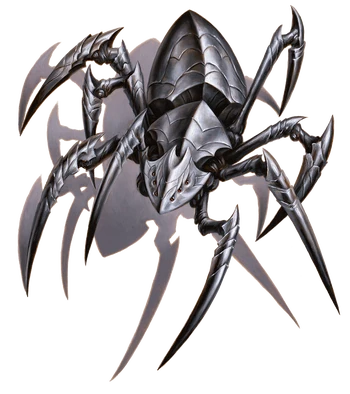
Retriever

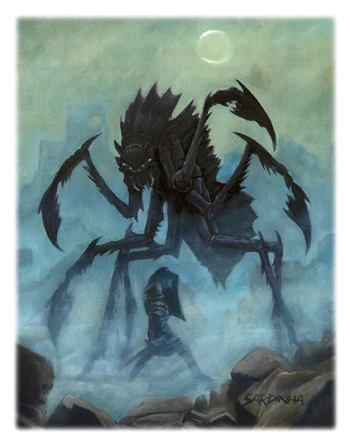

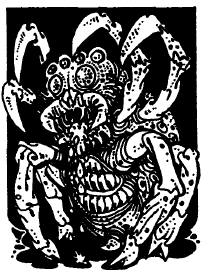
Retriever
- 5.5E/5E: Large Construct; Lawful Evil; CR 14
Retrievers are spider robots, but one with a bit of an odd backstory. They are designed to retrieve specific prey, but in older editions, Retrievers were created by demon lords to capture runaway targets. In 5th Edition lore, Retrievers are created by Drow worshippers of Lolth to capture demons themselves. It's an interesting change, and I suppose you could have a combination of the two lores where the original Retrievers were a demon creation that was reverse-engineered by the Drow.
Lolth and her minions in the Abyss being demons themselves really don't want the knowledge to create the Retrievers to get out of her clutches, although I suspect it wouldn't be easy for most other civilizations to replicate the creation of the Retriever. The section for the Drow in of Tome of Foes also goes into a bit of detail on what the Retrievers are. They are powered by captured and bound spider-demons called Bebiliths... a type of demon that so far has not actually appeared in 5th Edition.
Retrievers are spider-robots that possess a 'force beam' and a 'paralyzing beam' in addition to regular melee attacks. But the most important part of the Retriever is its 'Faultless Tracker' ability, and can immediately sense the location of both its quarry and its master. Retrievers are also able to planeshift itself and its quarry away, if needed be. I almost wished that there was something in the Retriever's statblock that actually aligned with its new 5E lore about catching demons or being powered by one, though, which I felt was a missed opportunity.
Overall, construct enemies don't tend to always be the most interesting to me, since theoretically any 'Golem' or 'Clockwork' can be in any shape or form; so specific construct enemies need to have a twist. And I don't feel like the 'demon hunter' gimmick for the Retriever is interesting enough nor is it reflected well enough in the statblock. Cool art, though.
____________________________________________________
Shadar-Kai
- 5.5E/5E: Medium Humanoid; Neutral; CR 9 (Gloom Weaver), 7 (Shadow Dancer), 11 (Soul Monger)
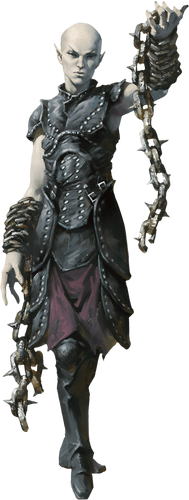
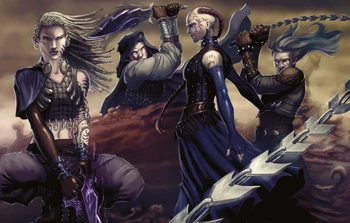
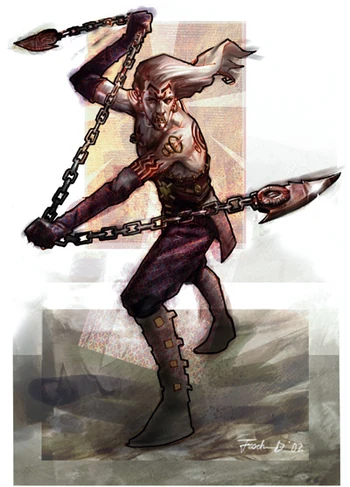
Oh, the Shadar-Kai. We get to talk about the Shadar-Kai, now. Introduced in 3E with the general concept of being the 'emo' race to match the Drow's gothic energy, the Shadar-Kai are always shown with chains, spikes, pale skin and leather outfits. However, what their deal is has never been solidified across the different editions. To wit:
- 3E: The Shadar-Kai are fey, trying to curse the Material Plane into eternal twilight, but failed and cursed themselves into being bound to the Plane of Shadow and turned them xenophobic denizens of that plane.
- 4E: The Shadar-Kai are humans, who made a pact to the Raven Queen and achieved immortality, but are transformed into her minions and bound to the Shadowfell.
- 5E: The Shadar-Kai are elves, who were bound to the Raven Queen. During a three-way struggle between the Raven Queen and the elf gods Corellon and Lolth, the wizards who would become the Nagpa interfered, causing a chain reaction that banished the now-divine Raven Queen and her followers into the Shadowfell.
Since we are talking about 5E lore here, we'll be focusing on just that. But I would like to note that most of the times, at least there is some consistency between two or three versions of the lore. 5E kinda-sorta combined the lore of 3E and 4E while also making the Shadar-Kai a subrace of elves. But as the near-immortal beings have stayed in the Shadowfell for eons, they have been physically and mentally transformed. They exist in a limbo state between life and death now. When a Shadar-Kai dies, the Raven Queen, driven mad by her transformation, will pluck their souls back and resurrect them eventually.
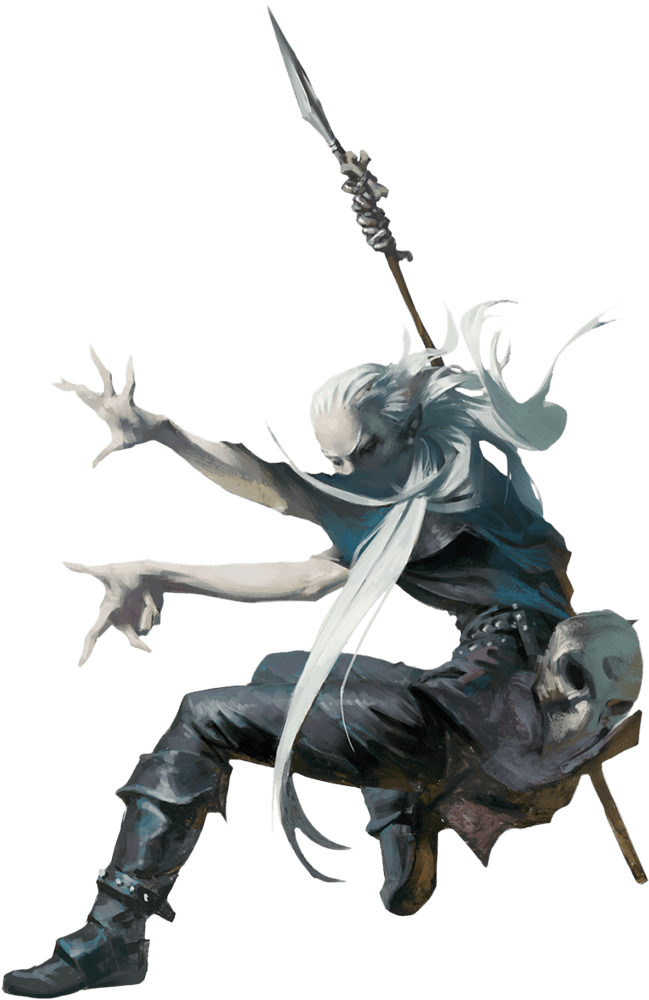
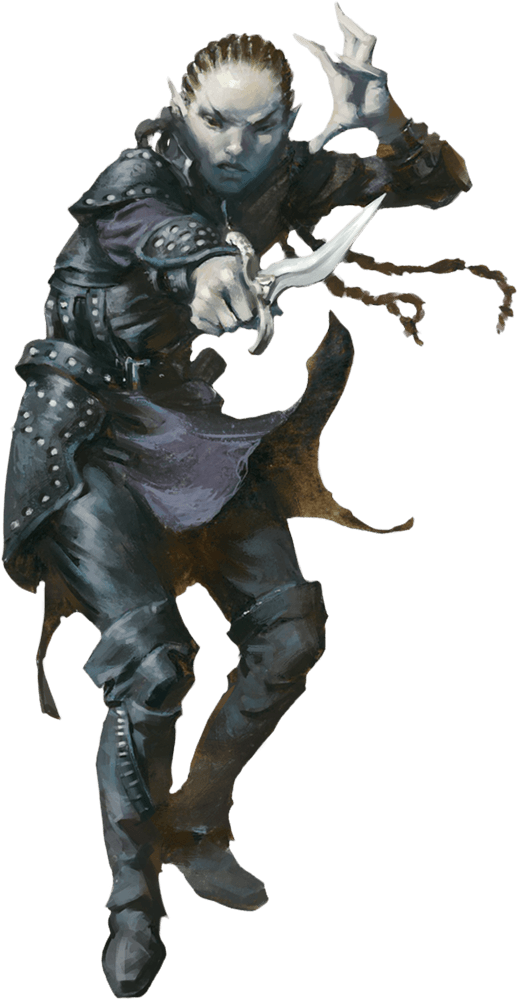
Shadar-Kai are have pale hair, wrinkled gray skin and 'swollen, corpselike joints'. That last bit tends to be ignored in all artwork I've seen of the Shadar-Kai. They interestingly look younger in planes outside the Shadowfell, although still ashen and emo. It's a reprieve for them, and they loathe going back to their dark realms in the Shadowfell where reflections and mementos remind them of their long age. The Shadar-Kai do not like their long lives, as life is suffering, and being elves, their functionally immortal lives just means immortal suffering. They are joyless, they are dour, and they seek out items tinged with sorrow. It's so emo, I like it.
There is some discussion about the Raven Queen as well, who is both a goddess of death and memory. That 'memory' bit probably isn't something that the Shadar-Kai minions take particularly well. The Shadar-Kai technically serve the Raven Queen, although unlike 4E, not every Shadar-Kai is bound to the cryptic, mad goddess's will. Those that do serve the Raven Queen go out to gather those that the goddess asks them to, or to take trinkets and baubles, anything colourful to temporarily remind them of what they have had and lost.
Tome of Foes makes the Shadar-Kai a playable elven sub-race, explicitly noted to be the opposite side of the Eladrin. Where the Eladrin are all about acceptance of strong emotions, the Shadar-Kai hate emotion and is all about the pain and the lack of it. After all, for a Shadar-Kai, emotions are useless and even their body is just a temporary shell they'll discard. Death is temporary for a Shadar-Kai due to their bond to the Raven Queen. As a special move, playable Shadar-Kai are able to meld into the shadows to teleport, and when they do that, they gain temporary resistance to all damage.
As enemies, all the Shadar-Kai statblocks are a combination of spellcasting and stealthy, teleporting fighters. They do have some thematic emo abilities, though. The Gloom Weaver has the 'Burden of Time' aura, described by the flavour text as 'the dark energy weighing down the heart, causing those around it to feel the approach of death'. How emo! The Shadow Dancer leap and teleport between shadows like a dance, using their spiked Hellraiser chains to bind and deal necrotic damage to their quarry. The Soul Monger is wracked by despair over the loss of her memories, and crave the vitality of others. They can unleash a 'Wave of Weariness' and the 'Weight of Ages', described as 'the aching void within the soul' that radiates outward, and the sound of this void of emotion is 'the moan of a tortured soul lost in a bottomless well of tragedy', which sticks with the victim.
It's emo, it's over-the-top, and... I actually do kind of like them. I would like to think that I've outgrown what the anime fandom would call the chuunibyou phase that all nerds go through, but whether you play the Shadar-Kai straight for horror and tragedy, or if you play up some of the descriptions, I feel that they are a really neat addition to a D&D setting. Notably, I feel like the Shadar-Kai are important for actually bringing a civilization into the Shadowfell plane, which otherwise is just filled with the undead or other shadowy abominations. The Shadar-Kai give the Shadowfell a nice 'face', and their combination of suffering, pain and twisted (or devoid) emotions are a nice distillation of 5E's version of the Shadowfell.
Skulk
- 5.5E/5E: Medium Humanoid (5E) / Monstrosity (5.5E); Chaotic Neutral; CR 1/2
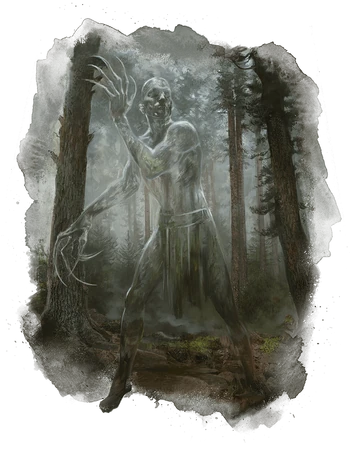
“Some children have imaginary friends that their parents can't see. Sometimes those invisible friends aren't imaginary.” Thus is the very cool, atmospheric line that is snuck as an in-universe description of the Skulk. I love it! That's very cool! The Skulk debuted all the way back in 1E's Fiend Folio, and has been depicted very differently over the years. They are always almost-humanoids with some kind of permanent invisibility about them. In 3E, they were even a race of human offshoots!
5E gives us a brand new spin on the Skulks, tying them again to the Shadowfell. I find these to be far more thematic than the Meazels for sure! The Skulks are the soulless shells of travelers who wander the Shadowfell too long until they 'lost all sense of self'. Due to the dark, negative-emotions energy that suffuses the Shadowfell, the travelers are now 'so devoid of identity' that they have become permanently invisible. Always love a bit of a dramatic, thematic origin story to these monsters! Originally classified as humanoids in Tome of Foes, they are reclassified as monstrosities in Multiverse.
A Skulk always leaves behind no tracks, and they have a permanent -- but fallible -- invisibility. I love this bit, by the way, because the fallibility sets up a nice mood, and differentiates the Skulk so much from a random wizard that has cast the invisibility spell. Children can always see Skulks. A Skulk's reflection appears in the mirror. A special candle made up of corpse fat (which is in the DM's Handbook) can outline the Skulk. These specificity makes the Skulk feel a lot weirder than just 'invisible man'!
Skulks are so devoid of identity that they are all hairless, featureless humanoids with long claws even if you get to see their outline. Their personality is just vaguely chaotic, 'creating bloodshed and mayhem with no regard for their own lives'. Again, being creatures that were transformed due to being devoid of emotions, it kind of makes sense!
We get several exceptions where a Skulk's lack of features or identity is subverted, though. A summoner that does a ritual to call a Skulk from the Shadowfell will have the Skulk mimic a vague likeness of its master while it's trapped in the Material Plane for the duration of the ritual. That's a cute little puzzle feature! Skulks that are stuck in the Material Plane sometimes take up silent mimicries of their victims, and Tome of Foes details ghost towns where all the inhabitants are killed by Skulks, and the strange, invisible beings take up a mimicry and 'automate' all of the things that people normally do daily -- flavourless food is prepared, livestock is shifted from pen to pen until they starve, and colourless clothes are hung. That sounds creepy!
Whenever I complain about a creature being unmemorable, the Skulk is one of the examples that I think could be so interesting just by taking the 'invisible man' concept and crafting so much around it. Visually, there's not much about the Skulk that sets it apart, and even the gimmick of being invisible is done by a lot of other monsters. But I find the Skulk a lot more memorable than something like the Invisible Stalker because of the vibe, and the integration of themes together to inform the Skulk's properties and behaviour.
____________________________________________________
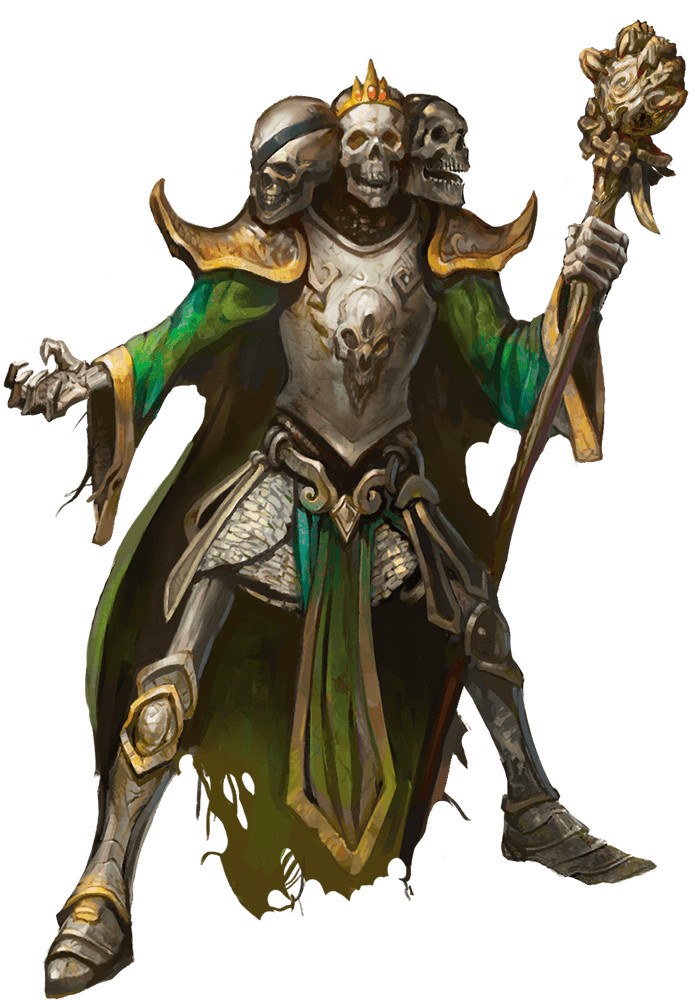
Skull Lord
Skull Lord
- 5.5E/5E: Medium Undead; Lawful Evil; CR 15
I like these guys! A lot of the 'skeletal enemies' like the Skeletons, Wights, Liches, Death Knighs, Zombies, Deathlocks, Dread Warriors, Heucuvas, Eyes of Fear and Flame, Crypt Things and many other 'reanimated corpse' undead just look like skeletons dressed in different armour or clothes. They're really missing that je ne sais quoi that differentiates them; like the worm gimmick for the Spawn of Kyuss or the fashion sense of the Mummy.
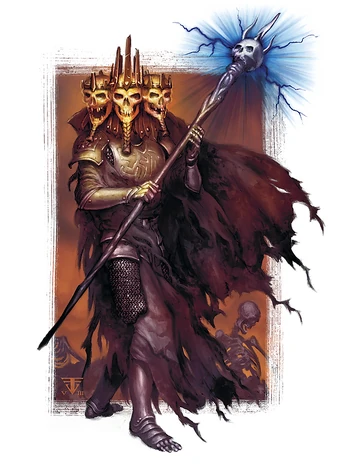
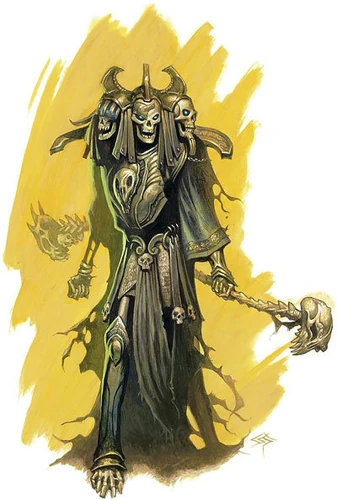
The Skull Lord is simple... he's got three heads. That's a simple differentiator, but it makes the Skull Lord instantly recognizable from artwork as a Skull Lord instead of looking at a skeleton in a robe or armour and trying to figure out which of the dozens of skeletal undead it is. The Skull Lords are particularly associated with the Shadowfell, commanding hordes of undead and trying to establish dominance of it.
The Skull Lords are their own worst enemies, however -- as they each come with two personal Wormtongues and Starscreams, little scheming treacherous bastards lashed to their own skull. The Skull Lords arose from the treacherous minions of longtime D&D villain, the arch-lich Vecna. Vecna bound these traitors in groups of three and fused them together into the first Skull Lords, and cursed them to be lashed with their own worst enemies for eternity. Since then, other traitors would sometimes rise as Skull Lords.
The Skull Lord itself is essentially a 'mini Lich', or a 'mini Death Knight'. It has auras that buff its undead minions, is able of creating more undead minions, and has a long list of spells that are more socerer/wizard-oriented than the Death Knight's evil paladin spell list or the Deathlock's warlock-themed one.
I do really wish that the 'three heads' thing was highlighted a bit more in the design other than the rather situational 'evasion' trait. As it is, the Skull Lords' three squabbling heads appear to be much more of a roleplay or cosmetic choice. Nothing wrong with that, I would absolutely love to roleplay a Skull Lord with three completely differing personalities... but 3E had the mechanic of the Skull Lord starting off very strong, but slowly losing some of its resistances and abilities as each head gets progressively destroyed. That would have been so much more memorable.

Love this group of oddities and nightmares. Fun fact, I used 3 of these creatures in campaigns.
ReplyDelete1. The guildmaster in my setting was able to polymorph into a Nightwalker, leading to mass confusion and hysteria against the guild's enemies
2. Played out a scenario where a boy and the friendly Shadow Mastiff he helped raise where on the run in a town taken over by Skulks
3. Made a Shadow Elf Barbarian who played up all the scars they had gained over their long life as "moments of agony never forgotten", not mentioning she got them from being super clumsy.
...using some of these monsters, like Nightwalkers, as Polymorph targets for 'super modes' has never actually crossed my mind! That's actually cool especially with some of these monsters with more highly-specific origins and backstories like the 5E Nightwalker.
DeleteEvil Skulk Town vs. friendly Shadow Mastiff! I generally do really like monsters that can conceivably 'take over a town' and lead to a horror sequence -- Skulks or Oblexes give very different vibes on what would happen.
Clumsiness, too, are moments of agony never forgotten.
The players & guild were definitely wondering what the hell the Guildmaster turned into, who responded by answering nothing and using Plane Shift to leave lol.
DeleteThe end revealed kid was one of the current stablehands in the present setting. He still has his dog, and a few other odd pets.
There were a few close calls, but she managed to get halfway through the sessions before the truth came out.
Typical mysterious stranger behaviour. Transform into an epic form, explain nothing, leave.
DeleteI like the idea of a strange little kid just surviving the Skulk takeover because he's buddies with an even more deadly monster. I had been in a campaign where there's a character called the Houndmaster that's just collecting all the 'monster wolf' monsters and taming them -- Shadow Mastiffs, Blink Dogs, Yeth Hounds, Cerberuses, Death Dogs, Wargs...
Houndmaster sounds like a cheery fellow
DeleteHe likes doggies, how bad can he be?
Delete